Plant snapshots
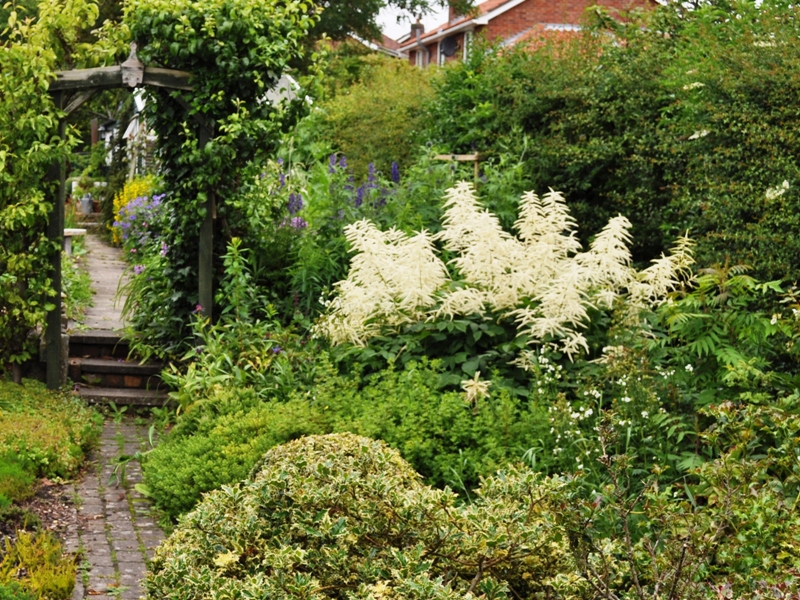 Goat's beard before summerhouse building
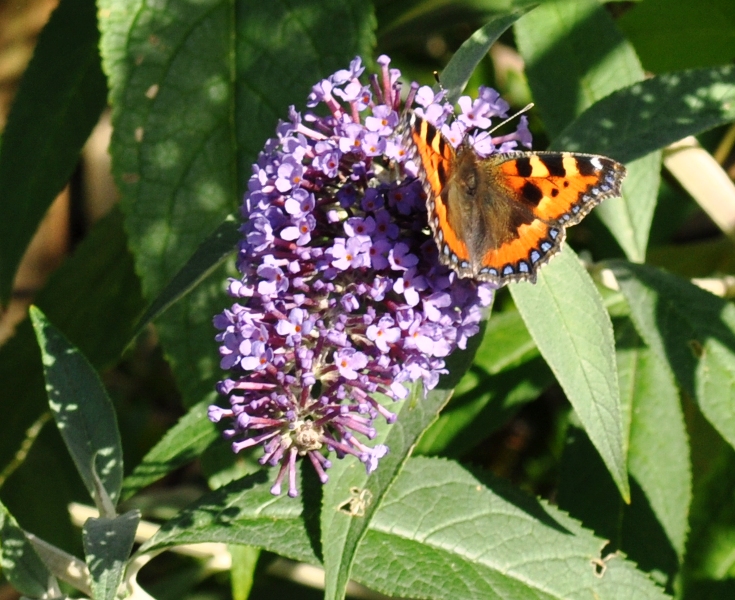 Tortoiseshell on the buddleia in late August
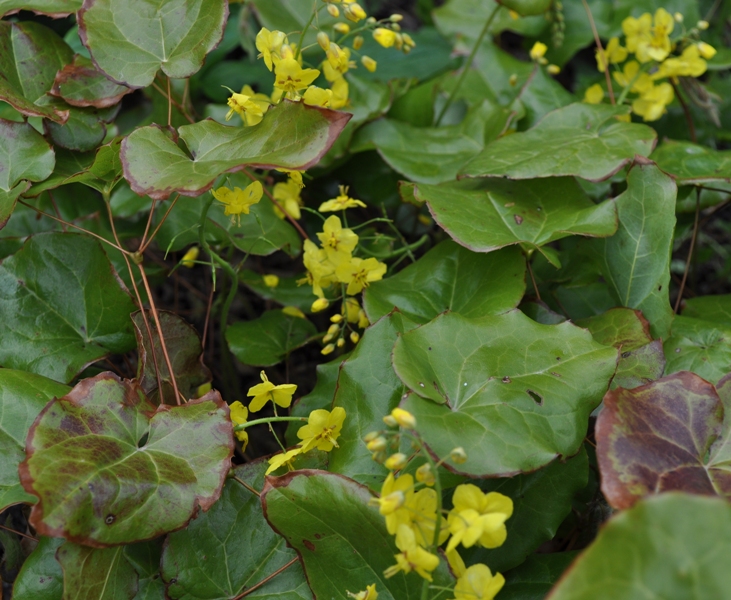 Epimedium in flower, April
Summerhouse
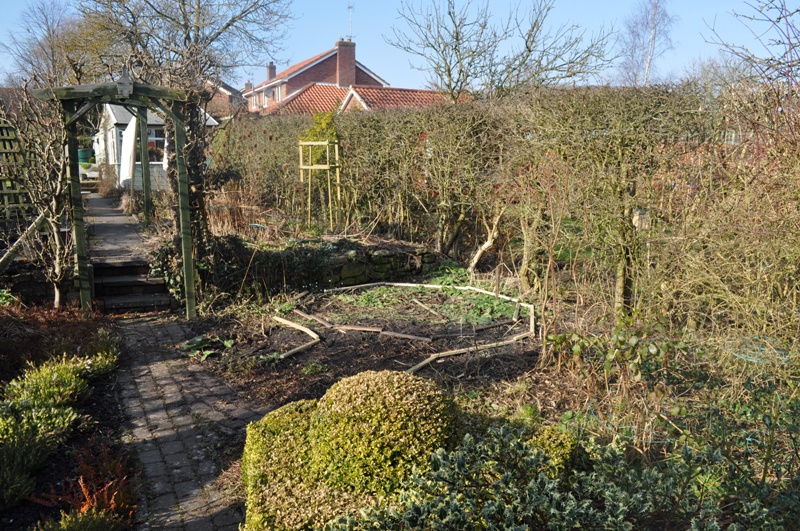 Summerhouse site location
1. Early planning
Management decided she would like a summerhouse to sit in; a place that would NOT be filled with garden tools or other items, but furnished with chairs and homely things. It should be close enough to the house to allow a short trip with tea and coffee. It should get some sun, and have a pleasant view.
There was an area of the garden which used to have a very large conifer in it, which never really developed with other planting after the tree was removed. Investigations were undertaken, and an 8 foot diameter octagonal summerhouse was planned out and imagined.
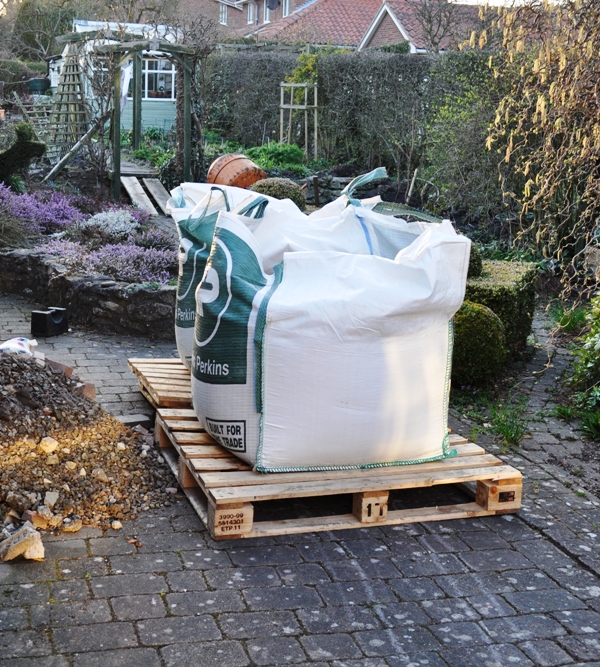 Two tons of ballast
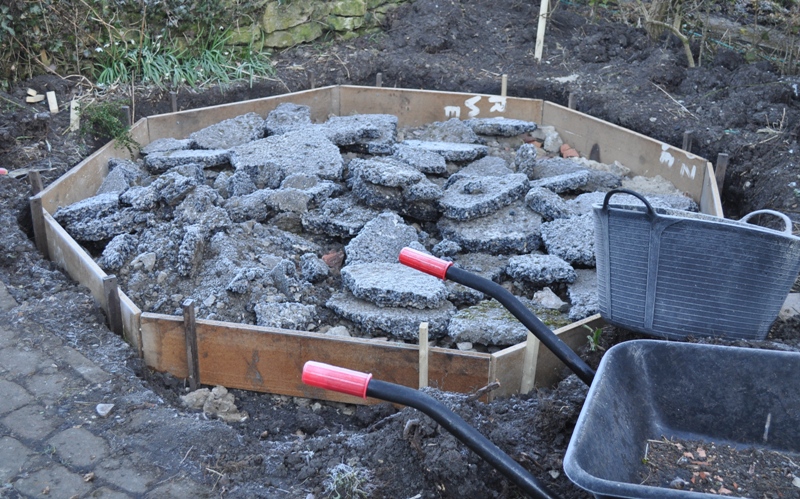 Summerhouse foundations
2. Foundations
At the same time as planning the summerhouse, we had the old tarmac drive replaced with block paving. The tarmac was good and stony, so I broke it all up with a lump hammer to make a good foundation: quite a satisfying job as it all broke up and settled into place - and recycling at its best as well. Two tons of ballast and ten bags of cement arrived for a 4" concrete base on top of the rubble.
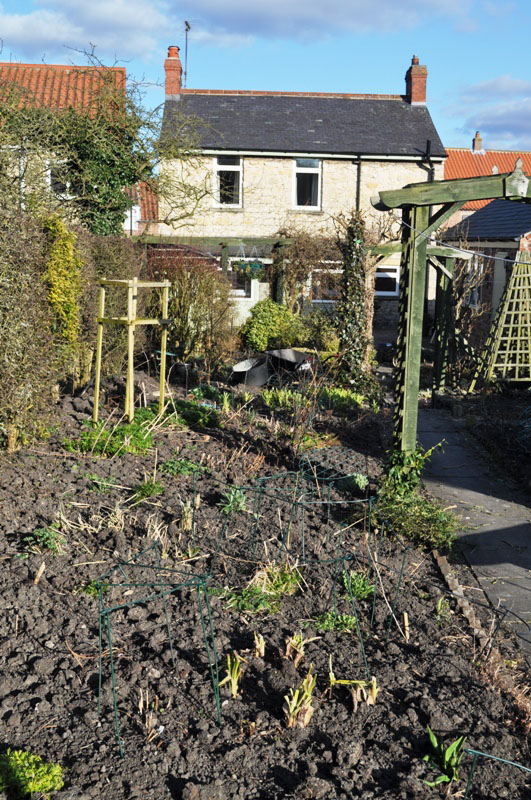 Topsoil redistributed
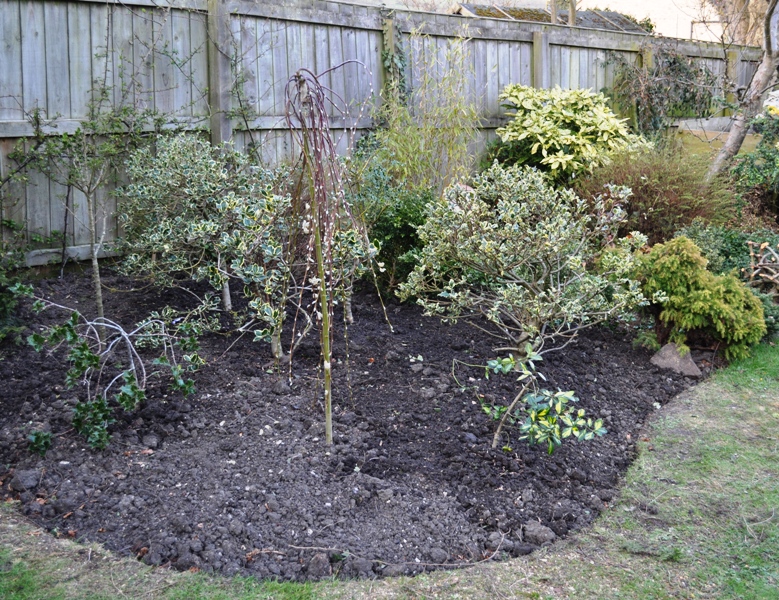 Holly bed
3. Soil relocation
Having dug the foundations, there was a lot of soil to dispose of. Wherever possible I don't throw anything away, and certainly not good soil. It was spread as topsoil a couple of inches thick over the herbaceous border, and a couple of other beds in the garden, including the area where a tree was recently felled and hollies had been transplanted from near the summerhouse site.
Being early spring, the plants simply grew up through the extra layer. A large, 25 year old goat's beard (aruncus) was divided and transplanted, and also a good opportunity was taken to remove as much of the ground elder roots that blight this area of the garden. The only other plants worthy of saving were peonies, which were transplanted near to where the new summerhouse would be.
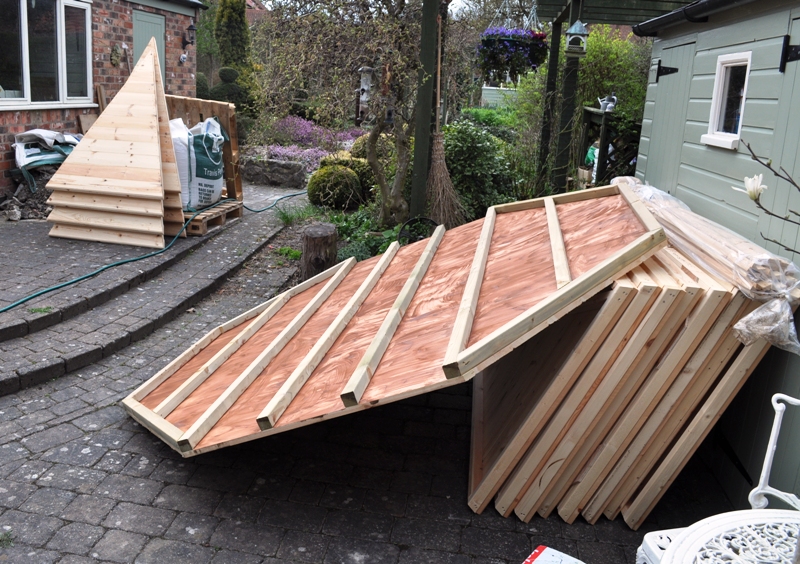 Untreated panels
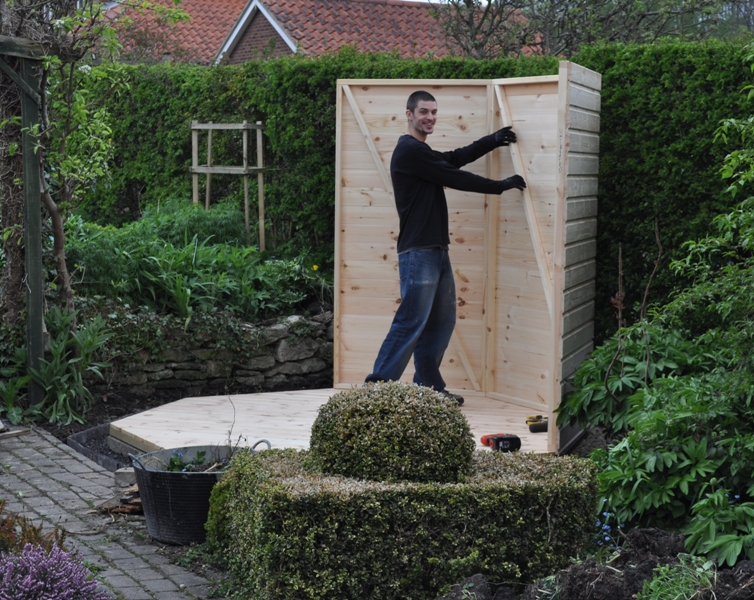 Three sides up
4. Panels delivered
The building came as 1 floor, 8 side panels and 8 roof panels, with doors and windows already fitted. All that was required was a couple of screws between each panel. I opted for untreated wood rather than coated in preservative, as the intention was to paint the whole structure. My son gave a much needed helping hand - not a solo job keeping everything up until it was all fastened together.
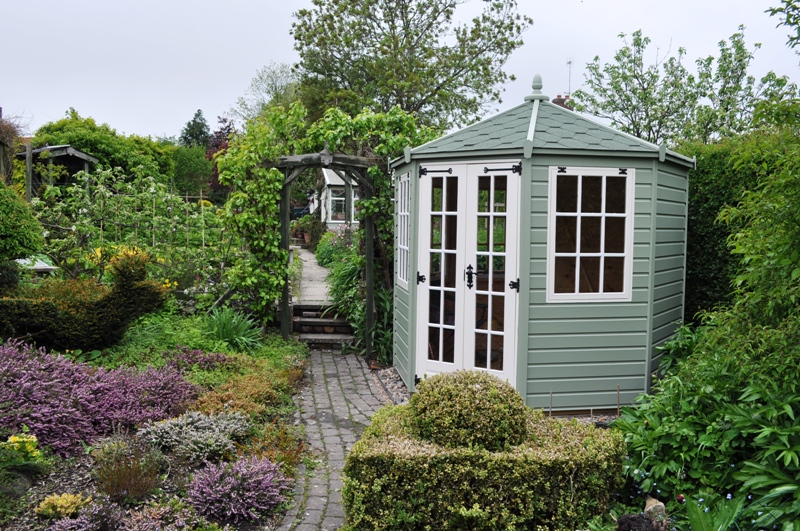 Summerhouse finished
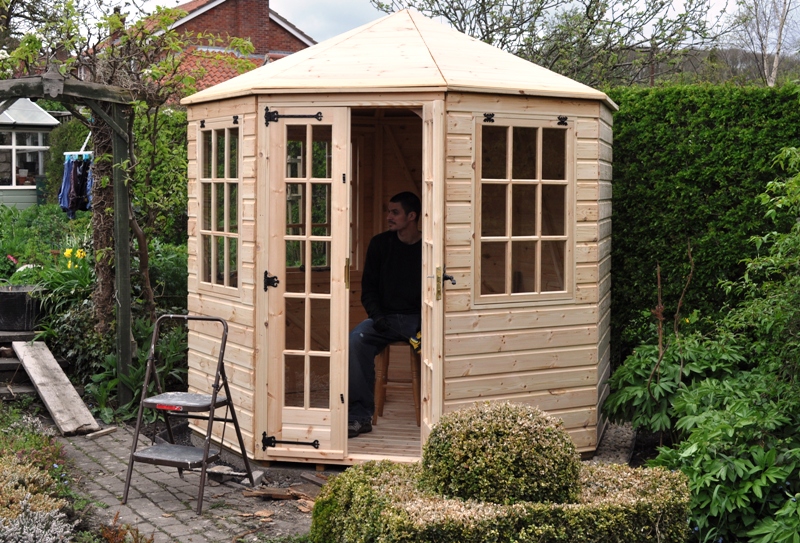 Assembled ready for painting
5. Up and ready
All screwed together. Then a couple of days cutting and fitting the hexagonal shingle roofing felt, more days painting outside and inside - quite a challenge with 47 glass panes in the windows and doors - Farrow and Ball Lichen and White Tie. Also varnishing the roof and floor with Le Tonkinoise oil based varnish.
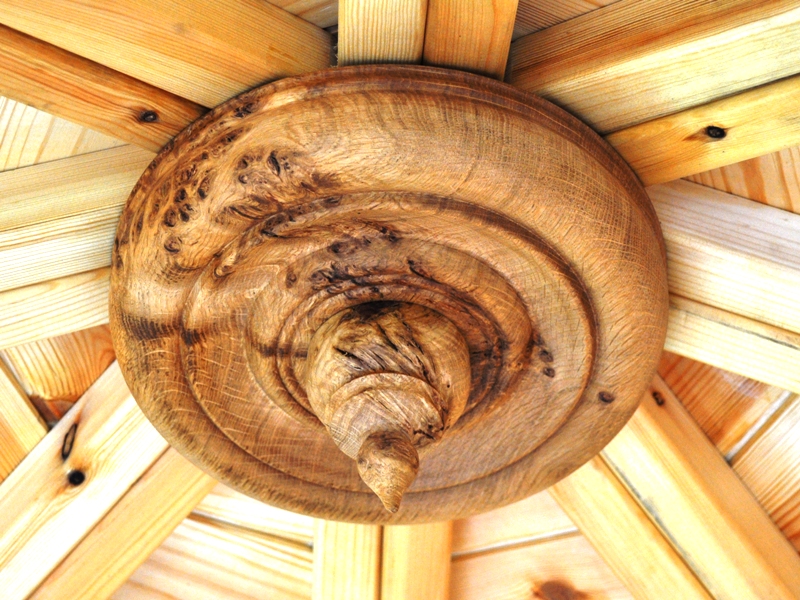 Oak burr roof boss
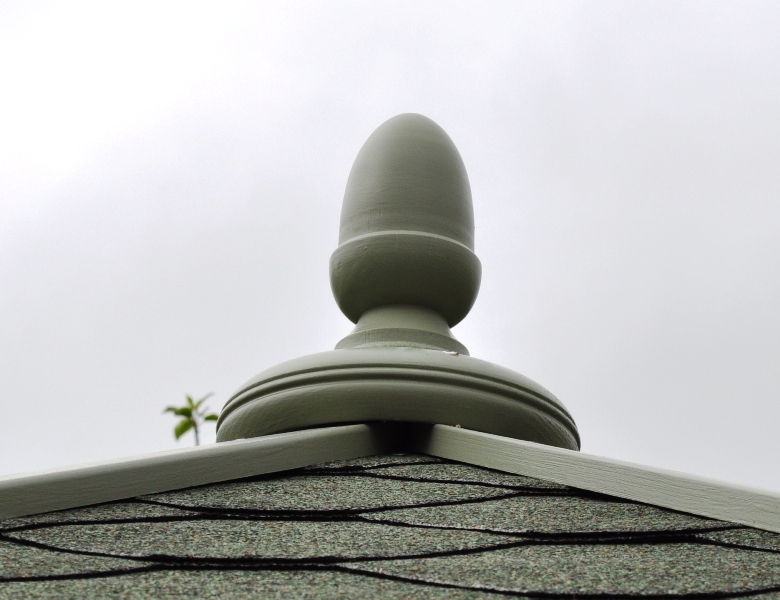 Acorn roof finial
6. Finishing touches
The building kit came with a rough cut circle of plywood to screw on the inside centre of the roof, and a sawn circular pine ring and acorn on the outside. I took the opportunity to turn something a little more decorative from a nice piece of oak burr, and a cedar blank for the top. I kept the acorn sent with the building as it was a good shape and size.
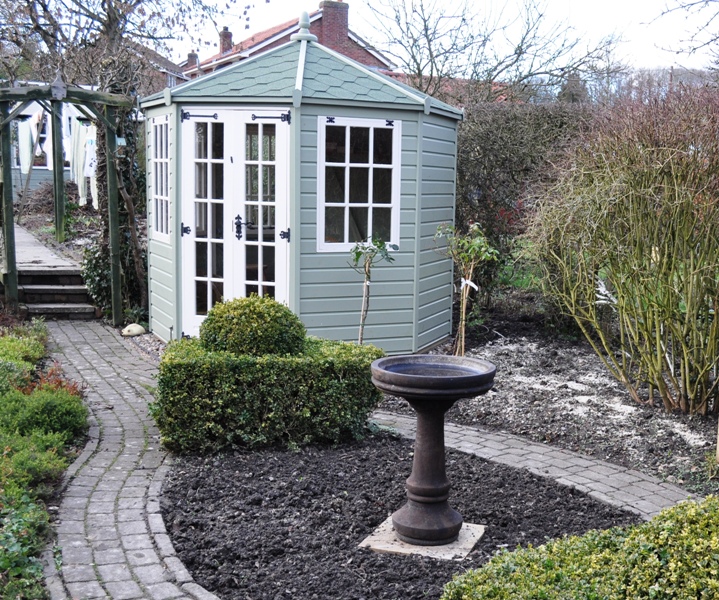 Bird bath
7. Around the summerhouse
With the area around the new building under some upheaval, it was appropriate to tidy up and renew. The bed to the side had 3 standard roses planted, to rise abouve the peonies that grow here. Paving to the log store was put in, and one of the paths was lifted and relaid to level it out and remove some of the pernicious weeds that had worked their way between the blocks. The central bed was dug over (heavy clay) and a Hamac Plain and Simple bird bath was installed in the centre. The next step, once the soil has settled and broken down a little, is to plant box hedging around the bird bath, and then put gravel over.
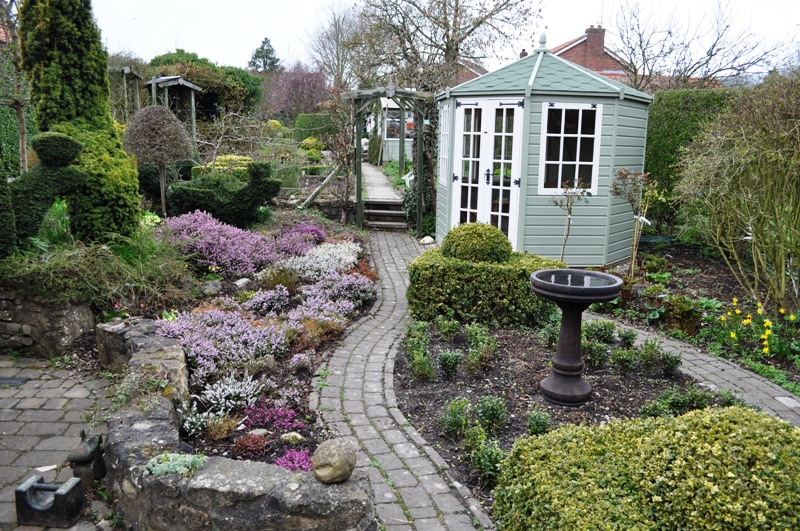 Bird bath
8. Box hedging
The soil is settling down, some compost was added, and March is a good time for planted bare rooted hedging. These 50 little bushes were supplied by Castle Howard nurseries, and were the last of their stock for the year. They look a bit sparse in parts, but the roots were good, so hopefully all will thrive and flourish. The design intention is to leave a cross path radiating from the bird bath. The final stage will be to lay gravel over the soil, after waiting to see if any serious weeds appear(dandelion, ground elder or violets).
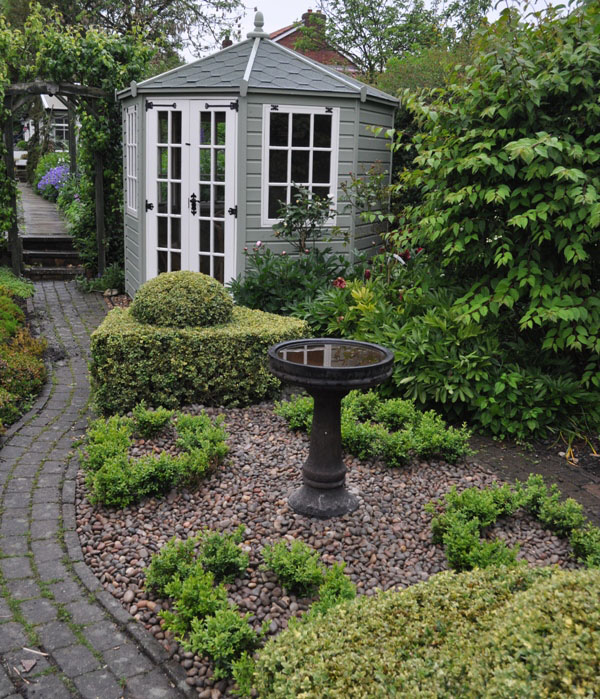 Scottish pebbles
9. Scottish pebbles
Two dumpy bags of pebbles were delivered - one for the front garden, and one for this bed around the bird bath. They set off the box nicely, and look particular appealing when wet, and the white dust they are covered in at present is washed away. The pebbles are quite large and round, not far off hen's egg size, and should provide paths around the box as the box fills out and is clipped to shape. I considered putting an underlay of some kind down, but decided against. So far the pebbles are doing enough to supress any significant weeds - the whole area was weeded quite closely before putting the pebbles on, and they are a couple of inches thick.
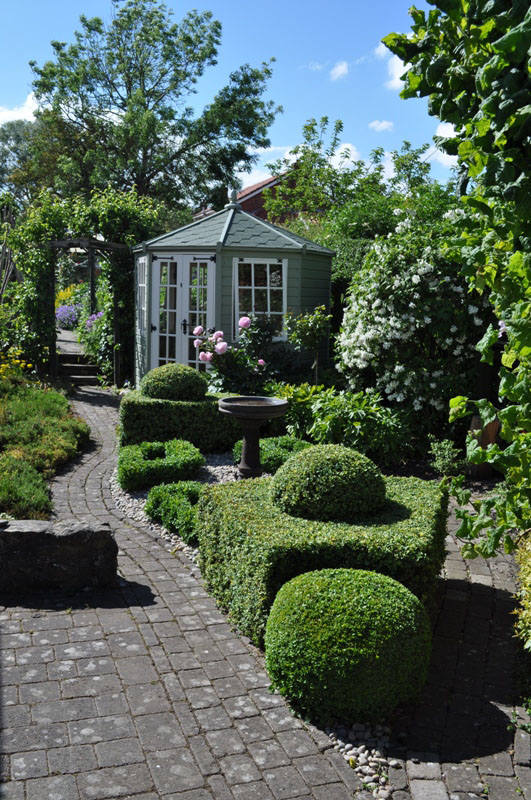 Topiary clipped
9. Box clipping June 2015
Two dumpy bags of pebbles were delivered - one for the front garden, and one for this bed around the bird bath. They set off the box nicely, and look particular appealing when wet, and the white dust they are covered in at present is washed away. The pebbles are quite large and round, not far off hen's egg size, and should provide paths around the box as the box fills out and is clipped to shape. I considered putting an underlay of some kind down, but decided against. So far the pebbles are doing enough to supress any significant weeds - the whole area was weeded quite closely before putting the pebbles on, and they are a couple of inches thick.