Pergola refurbishment
This page and its linked pages are in development. More pictures of this area over the years to follow.
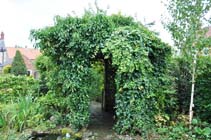
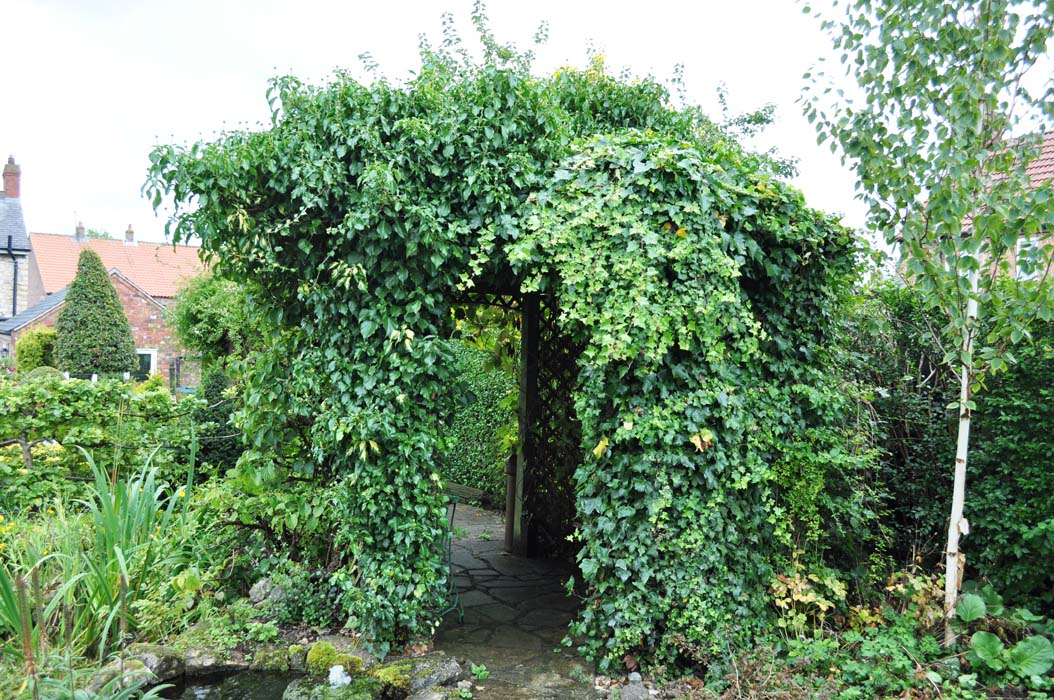
Twenty years of growth around and over the pergola
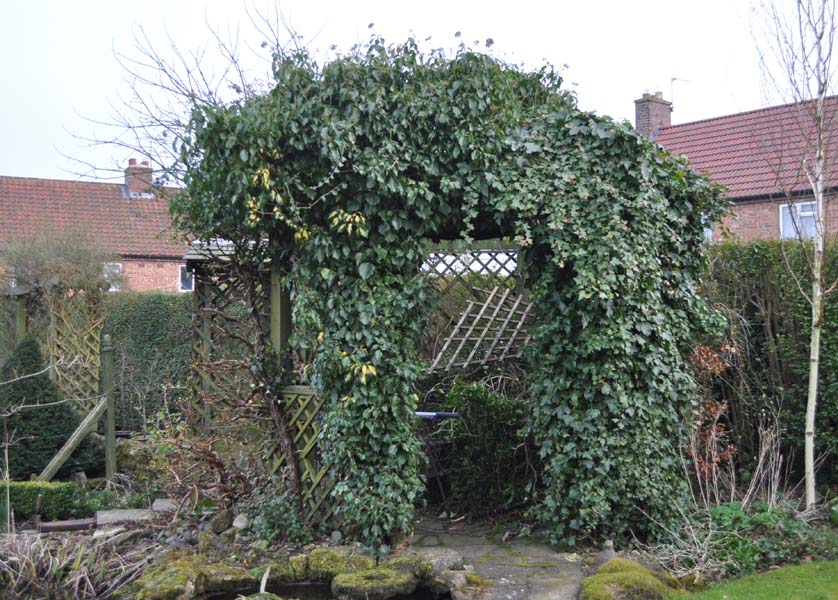
Dense ivy on the pergola
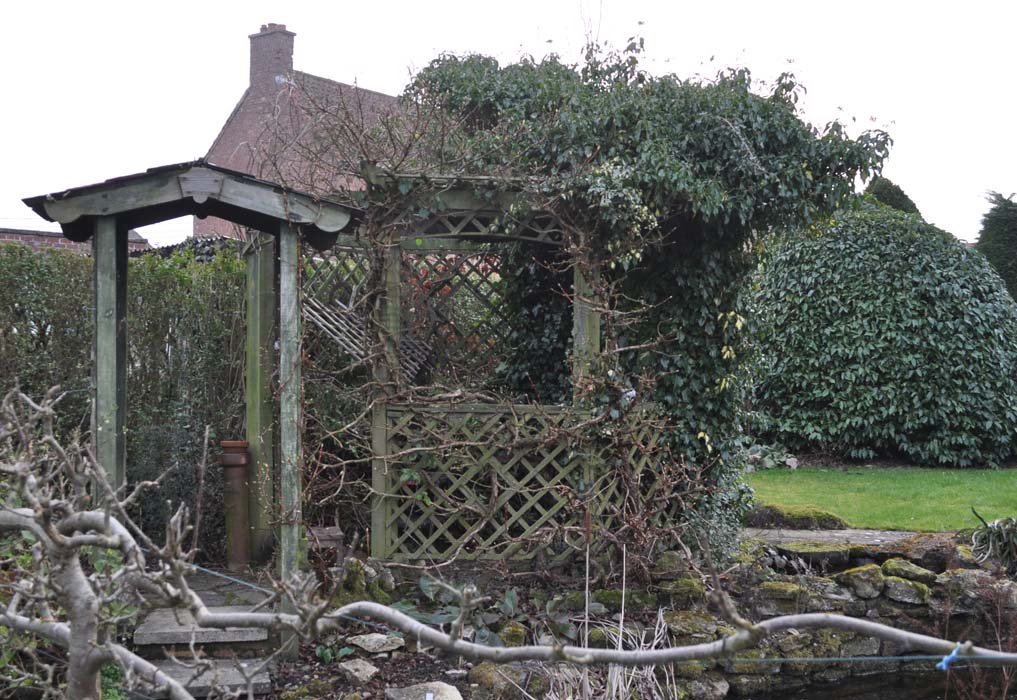
1. Overgrown pergola
Twenty years after building a pergola in the garden, and planting decorative ivy to clamber over the structure, things had got a little out of hand. The ivy had grown well, mingling with native ivy, and the weight of its branches on top of the pergola had collapsed the trellising and beams at the top of the framework. The ivy had also penetrated some of the wood and caused some rotting.
Time for a renewal programme.
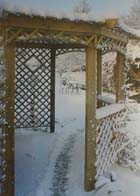
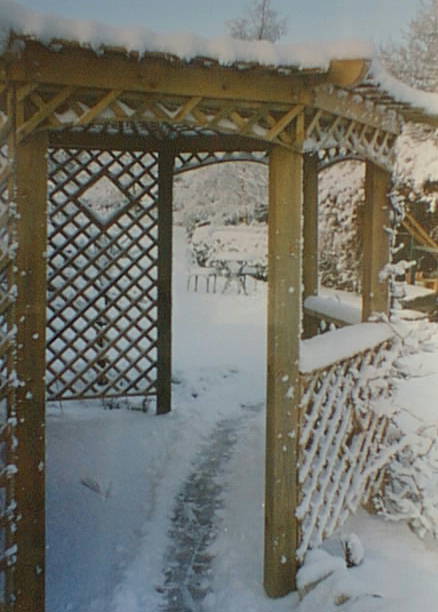
A pergola constructed from tanalised timber
Winter 1995
2. Early days
The pergola was constructed in 1995, using a design in a book by Geoff Hamilton on Cottage Gardens. It is octagonal in design, with eight 4 x 4 inch posts holding up trellis on each side, and eight "roof" beams converging at a centre, with trellis triangles in between. All the trellis work was custom made to fit from one inch by half inch tanalised laths.
The structure was completed over the summer of that year, but not stained until the following year - I think time just ran out and then the weather prevented it. It was stained green.
A silver leaved ivy and a golden leaved ivy were planted to cover the trellising. Over the years there has also been climbing roses (Madame Alfred Carriere was particularly good), winter jasmine, golden hop, climbing hydrangea and beech. Some are still there, some have gone, probably strangled by the relentless ivy.
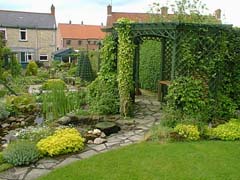
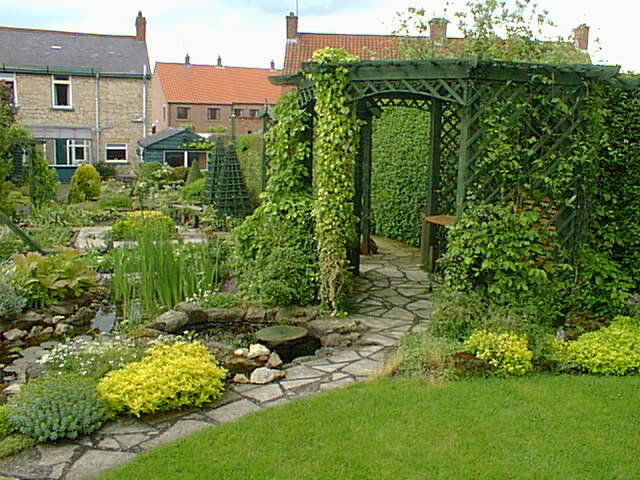
Octagonal pergola planted with ivy
The pergola in 2000
3. Maturing
After five years the golden ivy had climbed pleasantly up one of the pillars, the silver variety half way up another. The planting around the edges had matured nicely, the pond in front had established well. This was probably the state that it should have been maintained in, by judicious pruning of the ivy, but it seemed quite appealing to have it grow over the top and make a kind of living roof.
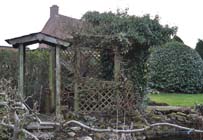
Octagonal pergola planted with ivy
Starting to clip the ivy
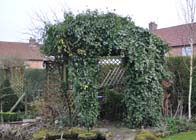
Overgrown ivy on the pergola
Starting to clip the ivy
4. A start made
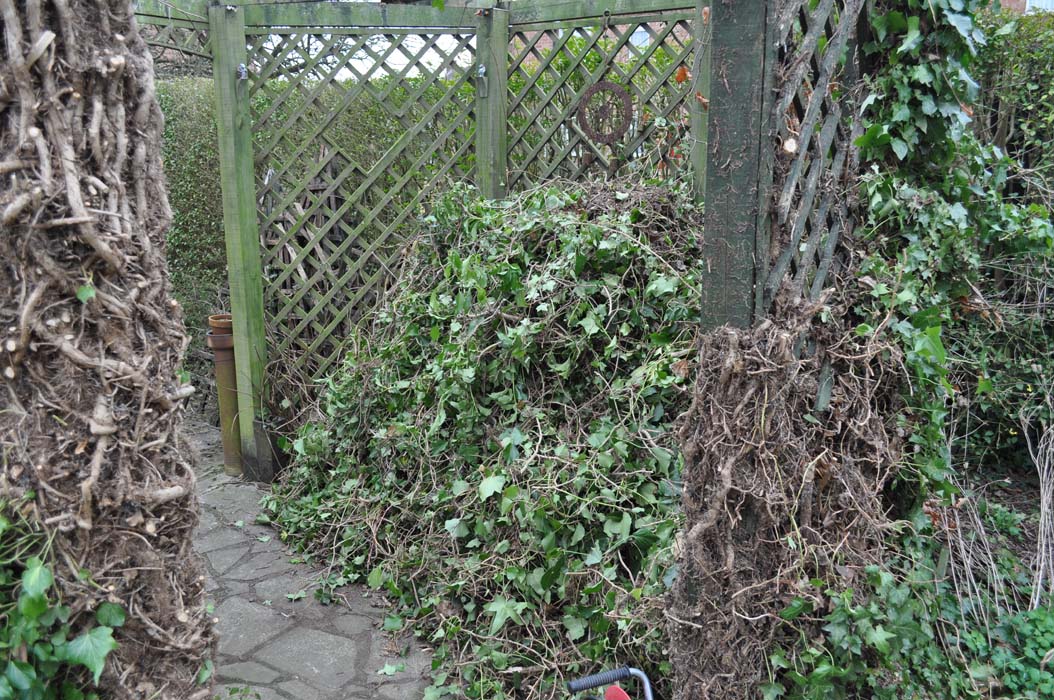
March 2016 and time to begin clipping back the overgrowth. I had clipped the ivy in the past, but stopped when I came across a wren's nest one year, and a blackbird's nest another. Hopefully March was ahead of nesting time, and no nests would be disturbed - which was how it turned out. Also the top trellis panels were dismantled.
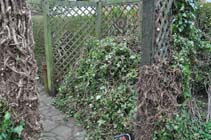
One of a number of piles of clippings removed from the pergola
Ivy clippings ready for shredding
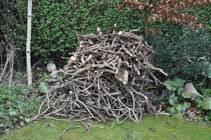
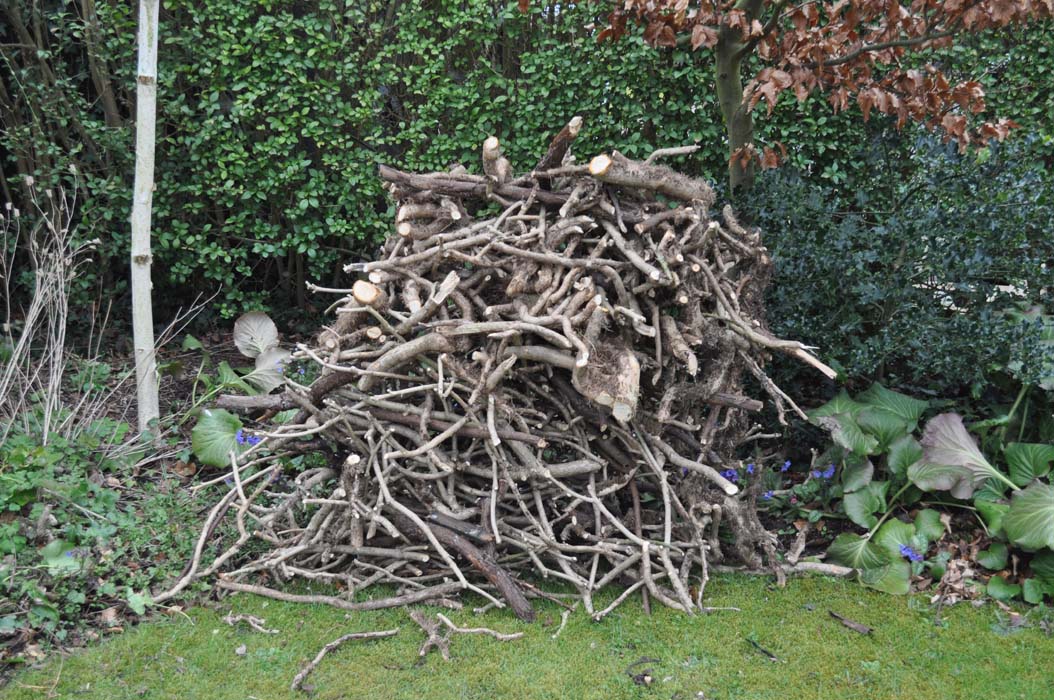
Thicker ivy stems cut for kindling once dried out
Thicker stems cut for kindling
5. Recycling
The thinner ivy clippings were all shredded for composting. The thicker stems were cut into sticks which will dry and be used for kindling for our wood burning stove over the winter. Ivy can produce some quite thick stems. Stems were left on the posts to sprout and regrow.
The top trellis was also cut up for kindling.
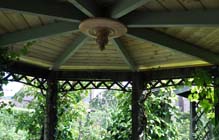
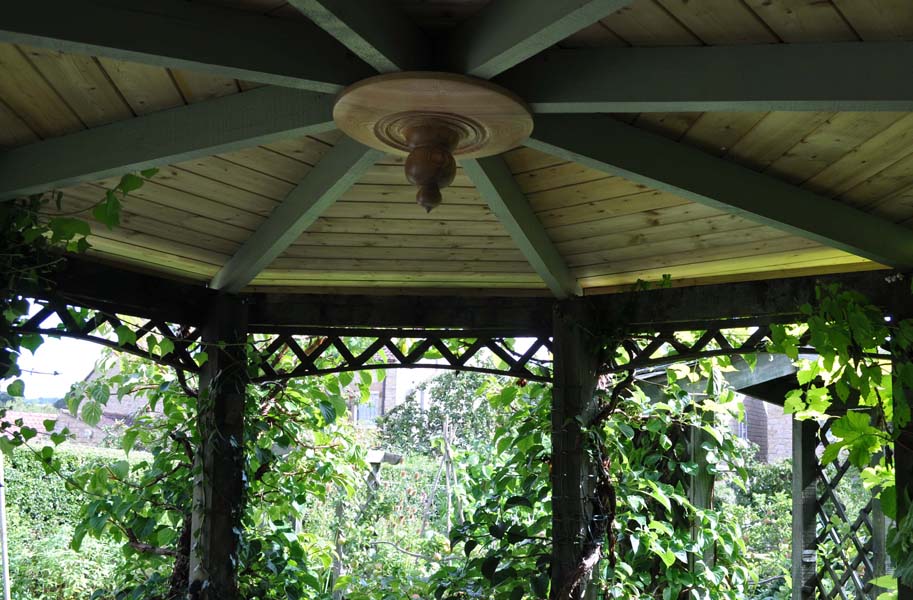
A turned roof boss under the new pergola roof
Roof and roof boss
6. Roofing
Instead of replacing the trellis top panels with more of the same, I decided to build a solid roof from tongue and grooved timber, and cover this with felt shingles similar to those on the summerhouse. I kept seven of the eight roof timbers, just replacing the one that had rotted badly. On reflection I wished I had replaced these, in order that I could have raised the slope on the roof, but it is done now and I am not taking it apart.
Once roofed I then put a roof boss in the centre turned from olive ash, covering a plywood fixing plate.
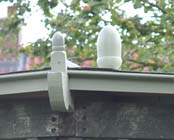
Cedar turned endstops for a pergola roof
Eight acorn endstops

Acorn finial in painted ash for a pergola roof
Acorn finial
7. Finishing touches
On top of the roof I put an acorn finial resting on a large base, the finial turned from cedar, the base from ash, both painted to finish. Similar but not the same as the summerhouse finial. At the end of the wooden strips covering the felting joints I put eight little turned acorns.
And with that and some painting, the old structure had a new roof. The ivy is already invading!

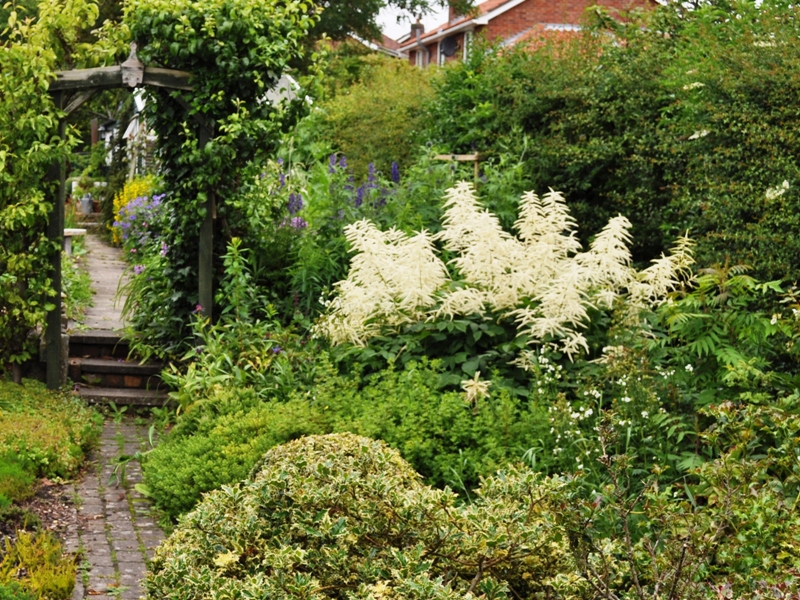 Goat's beard before summerhouse building
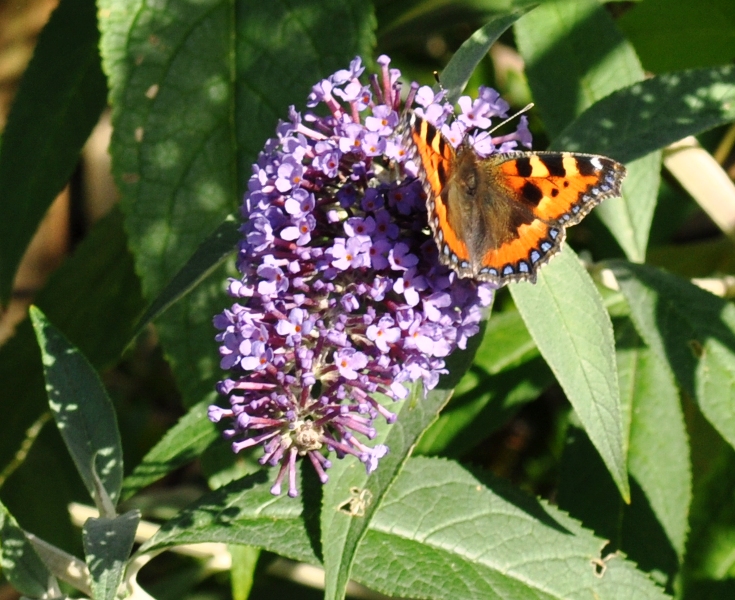 Tortoiseshell on the buddleia in late August
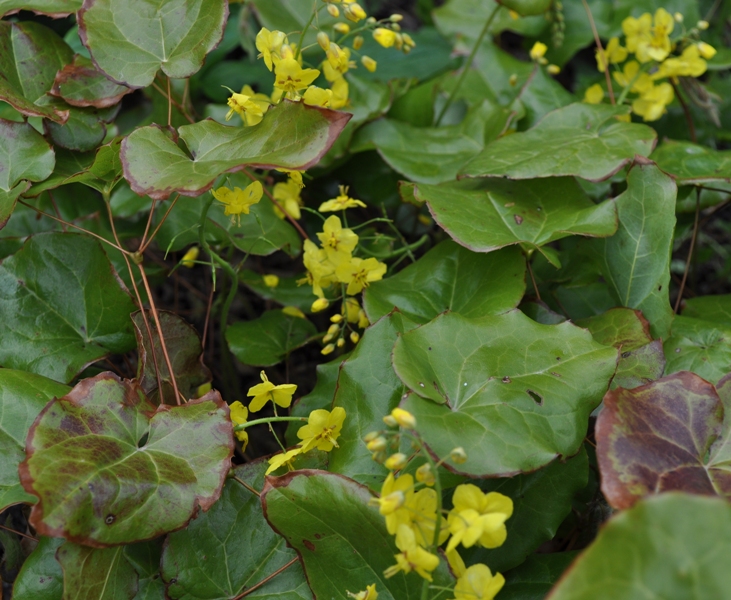 Epimedium in flower, April