Tree felled, hollies planted
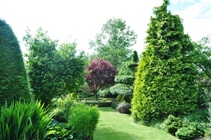
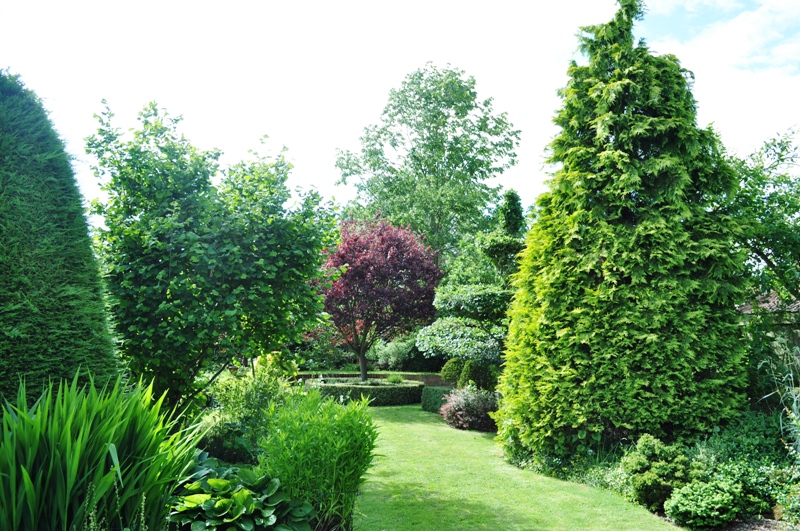
The area in 2012
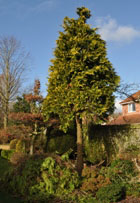
Golden cypress growing in 2012
1. Golden cypress tree in 2012
This tree had been growing steadily over the years, but unlike the ordinary leylandi next to it, it proved difficult to clip to shape without losing the golden needles, having a more open growth pattern that tended to flop into layers. It was getting wider and wider, and dominating a large area of the garden. The ground around it was infested with couch grass and periwinkle, with a bit of bindweed thrown in for good measure. The decision was made: time for it to go.
Trees are lovely things to have in the garden, but are really just like other plants: they outgrow their space and need clipping, or eventually felling. Although they are a loss, the space created when they are removed presents a new opportunity for planting.
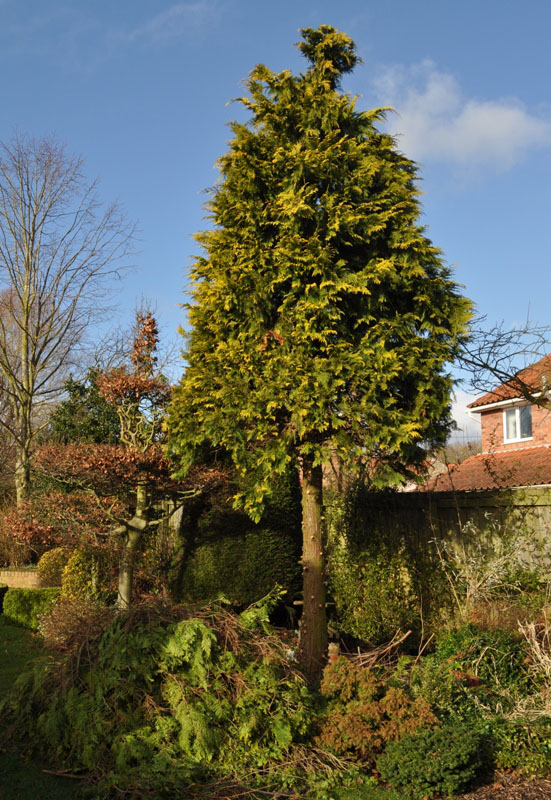
Side branches lopped of to half way up
Half way up
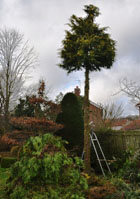
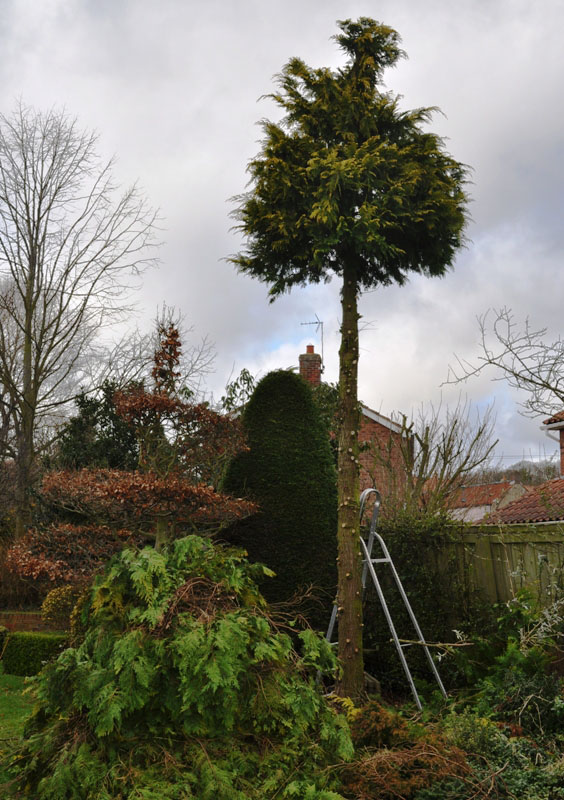
Nearly at the top
Nearly at the top
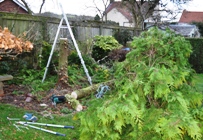
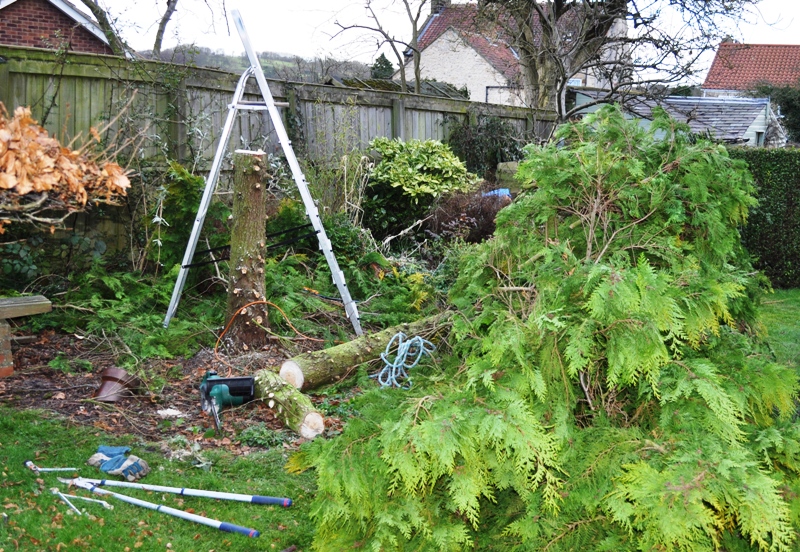
Tree felled ready for cutting into logs
Half felled
2. Felling
On a late winter's day I started felling by lopping all the side branches off the tree as far as i could reach. The plan was then to saw across the trunk as high up as possible, and attach a rope to pull the top into the garden rather than over the neighbour's fence. A bowsaw was used, as I didn't trust myself up a ladder with a chainsaw. This worked, much to my relief. My electric chainsaw was then used to cut what was left to a stump, and cut up the trunk for logs for our stove. All the branches with any thickness were lopped up as sticks for the fire, and the thinner parts were fed through the shredder for composting.
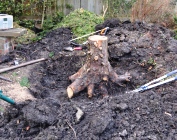
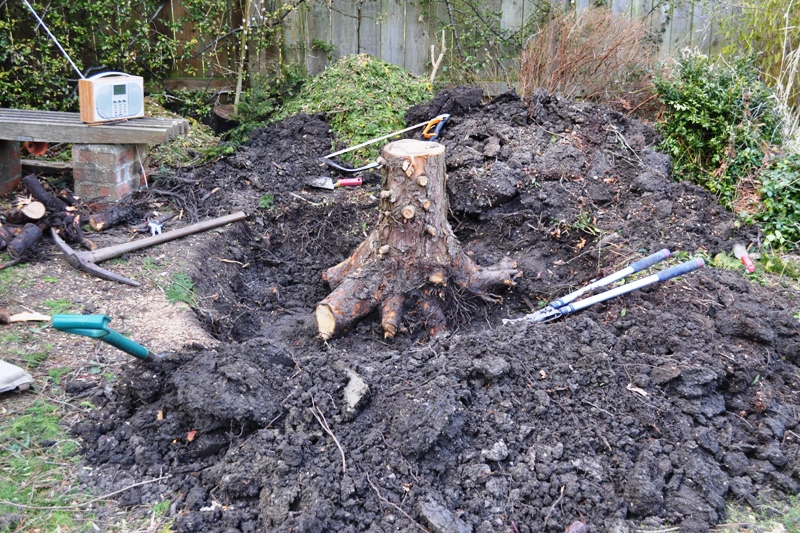
Cypress tree stump in the process of being dug out
Stump removal
3. Clearing out the stump
I decided to dig out the stump so that I could plant a new tree (not another cypress!) and some shrubs. What a job - a couple days of sawing, digging, lopping, levering before it finallly moved. Slimy clay did not help. Then I dug the whole area over to remove the bindweed and periwinkle that had invaded. Quite a job in the end, even for such a shallow rooted tree.
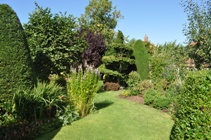
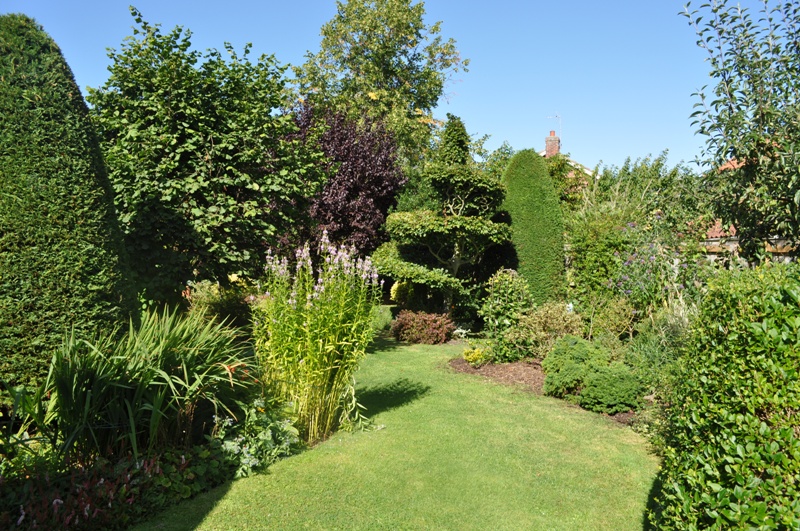
Kilmarnock willow and hollies replaced the large tree
Holly and willow bed
4. New planting opportunities
By August the transplanted hollies and new kilmarnock willow were establishing. An added bonus was a better view of the spiral beech tree that has been clipped to shape over the years. This project renewed about half of this bed, which you can see on the right of this picture. The other half
was tackled later in the year, when more periwinkle and bindweed were dug out, and a crab apple and euonymous bushes were planted. (I always try and plant at least one tree to replace any that I cut down.) This is described in a separate project page, Malus Sun Rival.

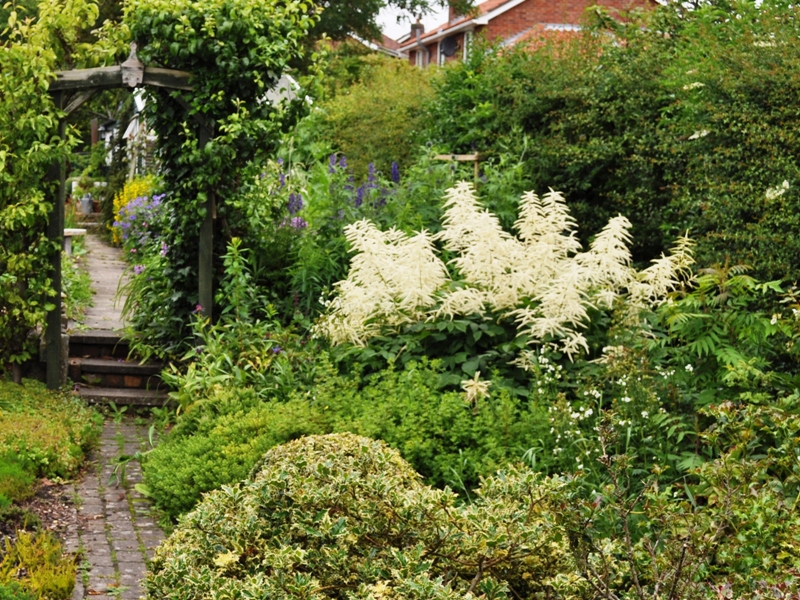 Goat's beard before summerhouse building
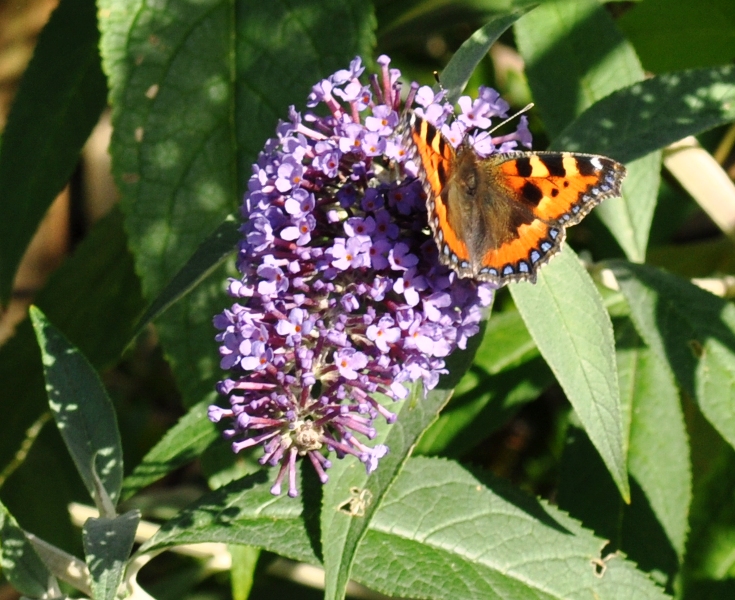 Tortoiseshell on the buddleia in late August
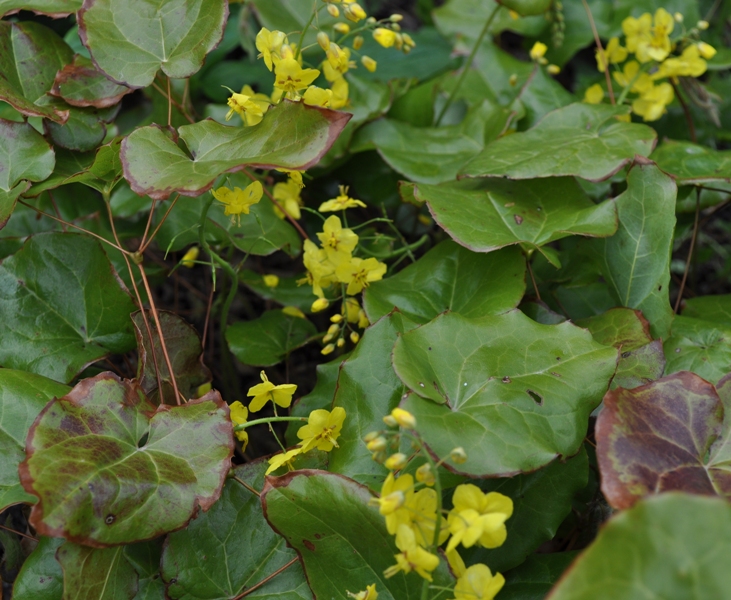 Epimedium in flower, April