
ARCHIVE PAGE: this website is gradually being updated from April 2022
Woodturning
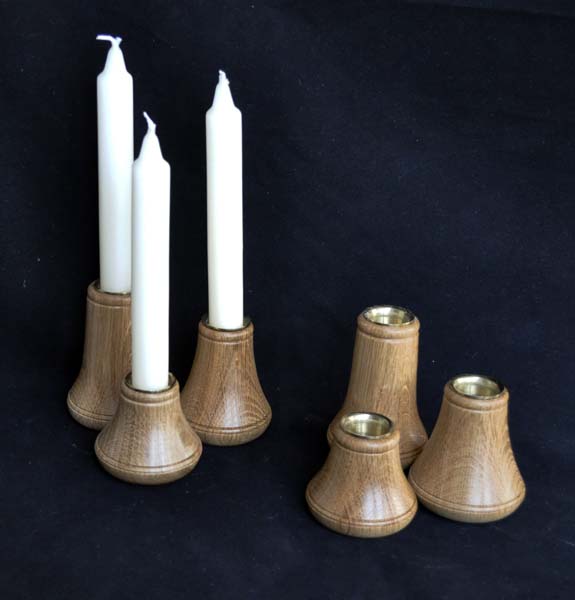
Candle holders
20 December 2017
Six oak candle holders commissioned by Heather, for her Christmas table, a slight adaptation of a design she suggested. They are made in two sets of 3, designed to hold dinner candles, and vary in height 2 inches, 3 inches and 4 inches, with a base diameter of about 3 inches. They have solid brass inserts.
More on candlesticks and tea light holders.
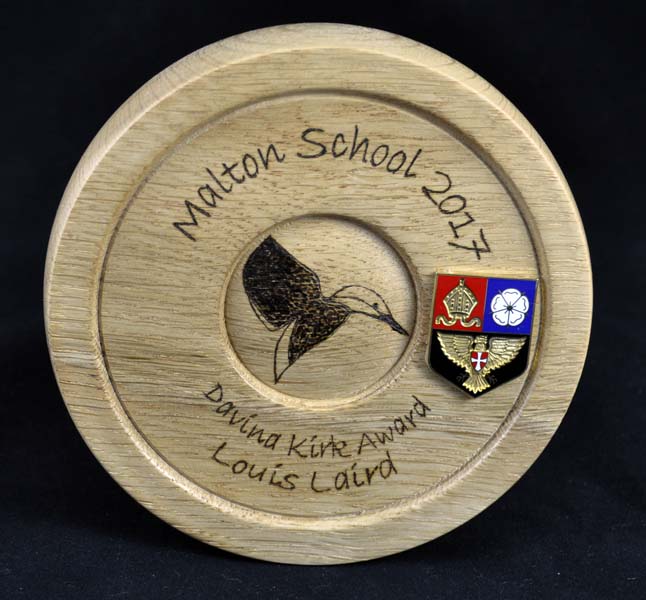
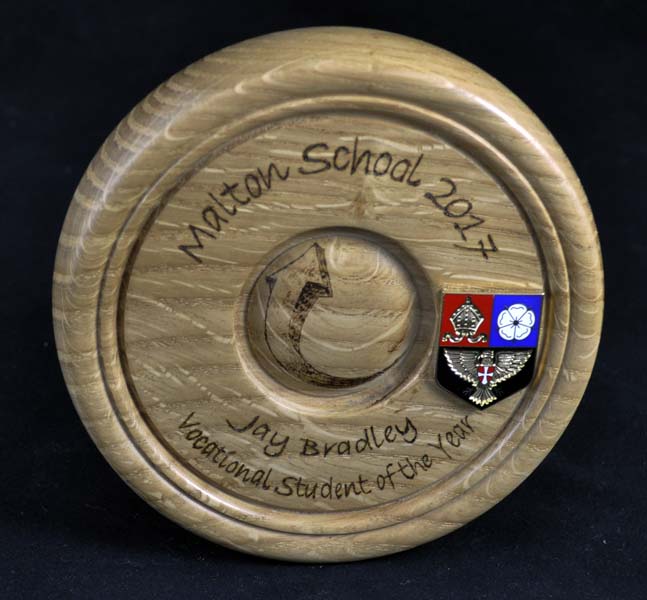
Davina Kirk and Vocational Awards
20 December 2017
27 trophies for the annual Malton School senior celebration evening. Here are just a couple.
More in the 2017 trophy gallery

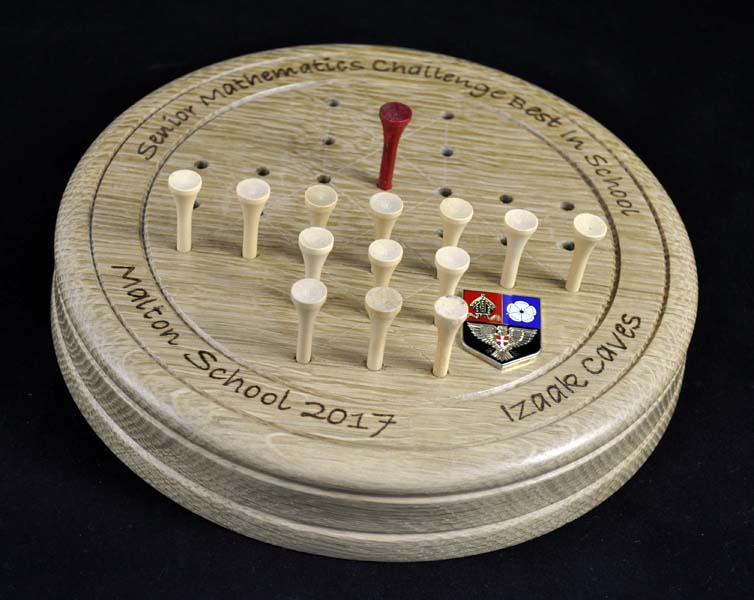
Geography trophy and Fox and geese
20 December 2017
Two more trophies for Malton School - a geography award and a maths puzzle given to the UK Maths Competition Best in School winner.
More in the 2017 trophy gallery

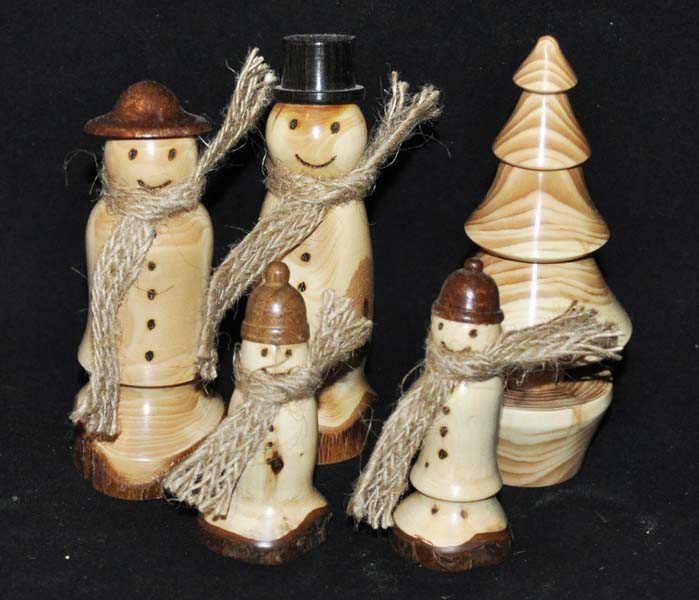
Christmas trees and snowpeople
18 December 2017
More small groups of Christmas ornaments - all turned from yew. Snowman, snowlady, snowgirl, snowboy.
More on snowmen figures

Rugby trophy
20 December 2017
Liz requested a rugby trophy to presented weekly. I suggested this design: a rugby ball on a kicking tee. The ball is turned in sycamore, the base is ash. Around the plinth five very appropriate words are inscribed: Teamwork, Respect, Enjoyment, Discipline, Sportsmanship. I think the trophy is to be awarded weekly or monthly to the best player or contributor in the club (a junior club).
More on this rugby trophy and sports trophies.

Snowmen and families
4 December 2017
This group of snowmen flew off to Melanie for Christmas in Boylston, Massachusetts. There are four families each consisting of a snowman and snow woman, snow boy, snowgirl, and snowtoddler. At the back are Christmas trees. All turned in yew, with ebony and mahogany hats, and woven jute scarves. More on snow people.
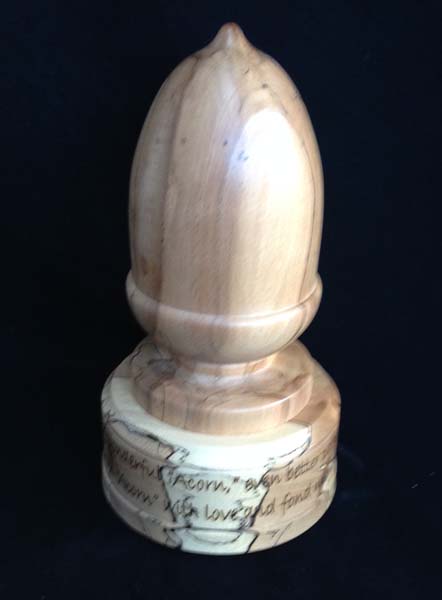
Acorn gift
2 December 2017
Johnnie requested a leaving gift for a colleague, based upon acorn trophies seen elsewhere on this website. This one is turned in spalted beech, and has a somewhat cryptic inscription to the departing member of staff.
Acorns have a lot of symbolism, and can be used to the birth of ideas, the growth of mighty things from small beginnings, the hope of renewal. This is probably why they continue to prove popular.
More on acorn trophies.
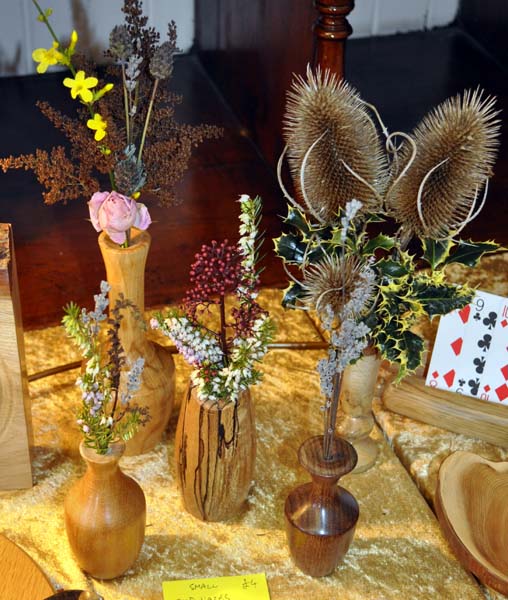
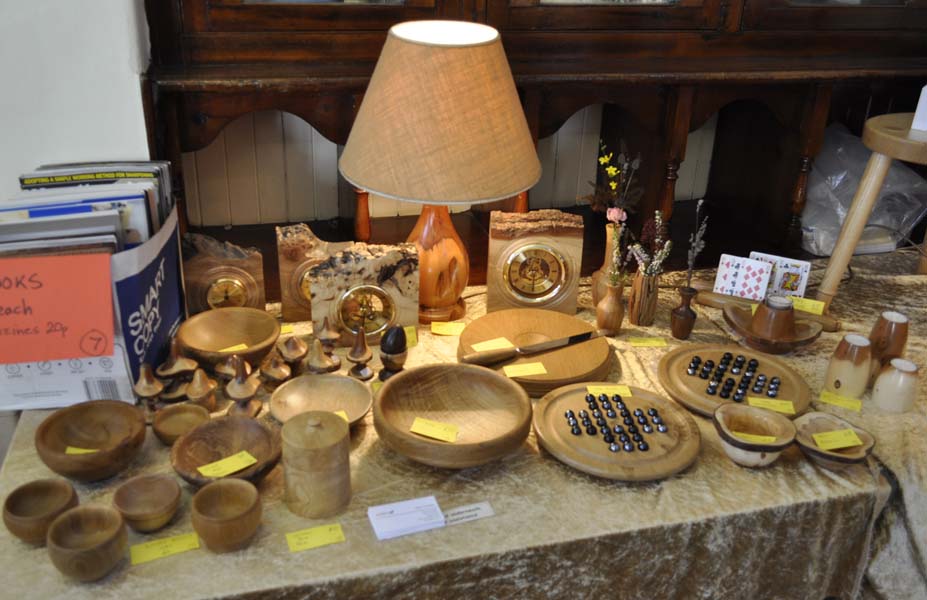
A few exhibits at Ryedale Woodturners show
25 November 2017
A selection of items at my woodturning club show. More from the turning exhibition.
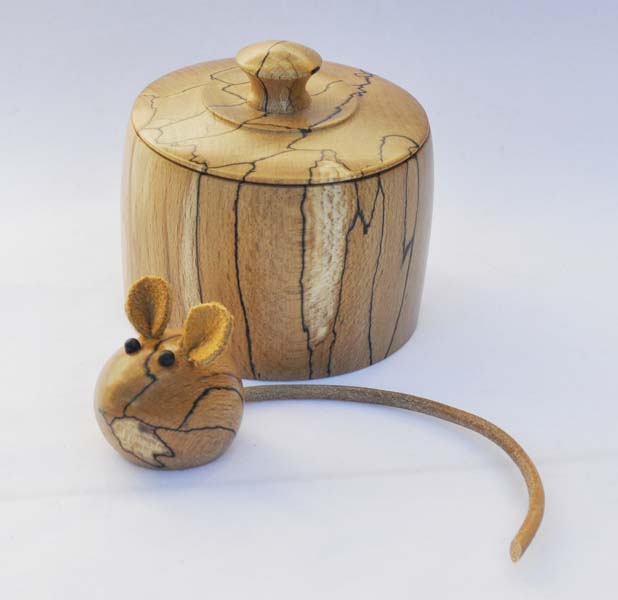
Mouse and house
14 November 2017
A small mouse in front of his house, a lidded box made from the same spalted beech. He fits in snugly, if he curls up his tail. Leather eyes and tail, and African blackwood eyes.
Requested by Margaret for a Christmas present.
More on turned wooden mice.
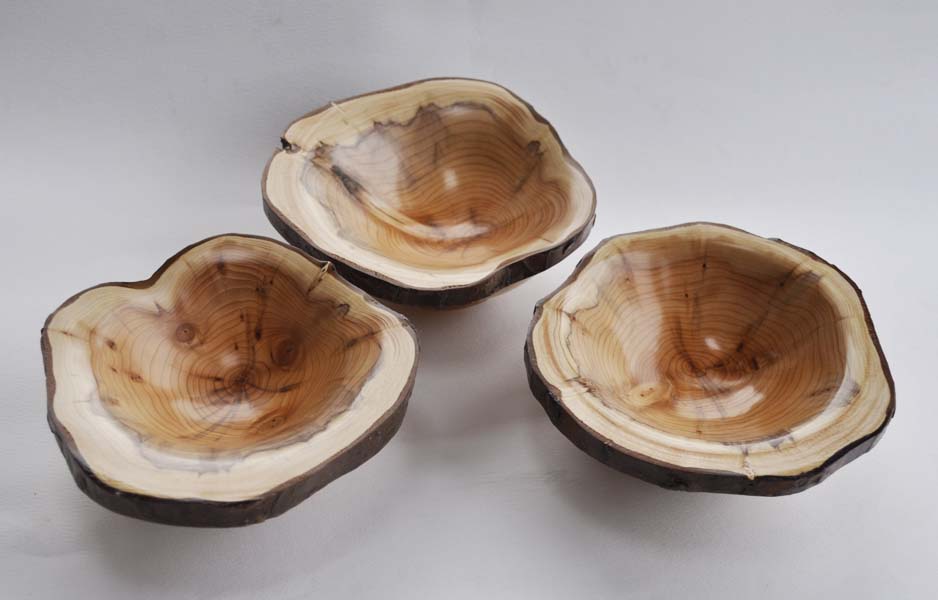
Yew dishes
14 November 2017
Small dishes made from a yew log, retaining some of their natural bark around the rim. These are about 5 inches in diameter and a couple of inches high. They were made following a request from Margaret for a small bowl to put keys and coins in.
More on yew natural edge bowls.
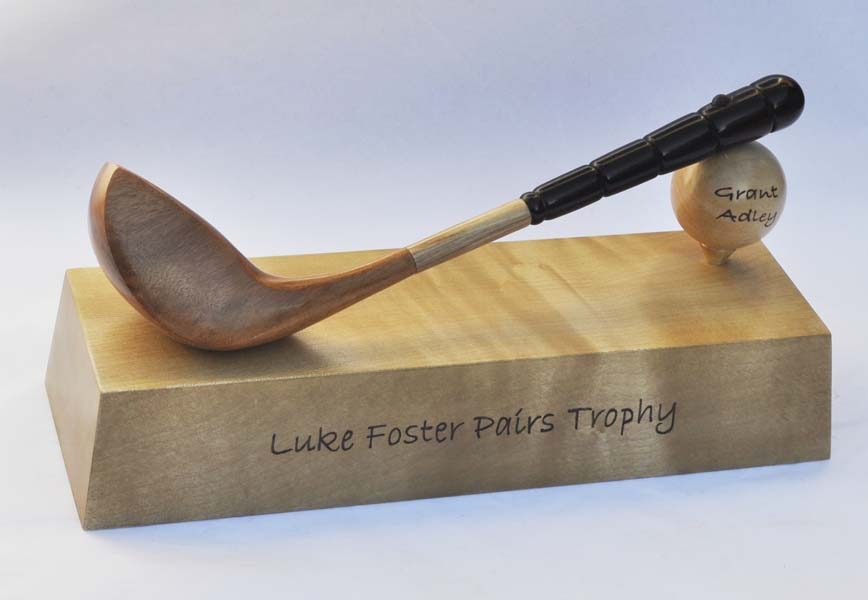
Golf pairs trophy
5 November 2017
Nigel asked if I could make a golf trophy based on a shortened wood. This one has the club carved from goncalo alves, an African blackwood handle, and an oak shaft. The plinth was made to a 2 inch depth to accommodate some engraving plaques at the rear. More on sports trophies.
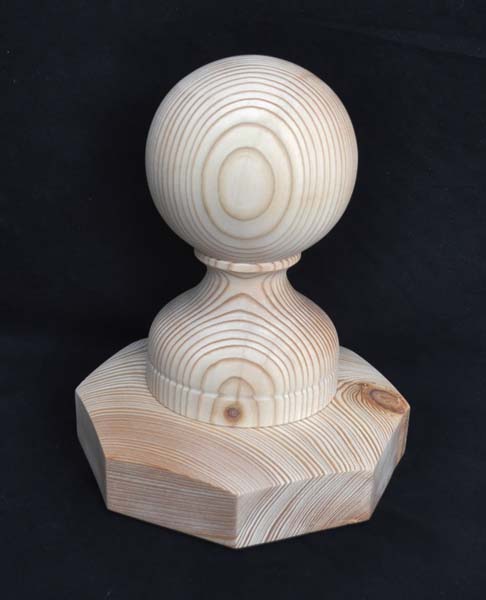
Ball finial
24 October 2017
Carol asked for a large ball finial for her summerhouse in Newcastle under Lyme, Staffordshire. This one is a six inch diameter, resting on a 10 inch diameter octagonal base. All in larch, left untreated ready for painting or staining.
More on summerhouse finials.

Acorn trophy
24 October 2017
Andy in Auguerstertal, Switzerland, requested a trophy in the shape of an acorn on a circular plinth. This one is made from spalted beech. The acorn is 4 inches in diameter, the base 5 inches, and the whole trophy stands around 10 inches tall. It bears the inscription Baarbierians Open Water Swimming, and will be awarded by the Baarbierians club for swimming competitions in lakes surrounded by oak trees (hence the acorn). More on acorn trophies.
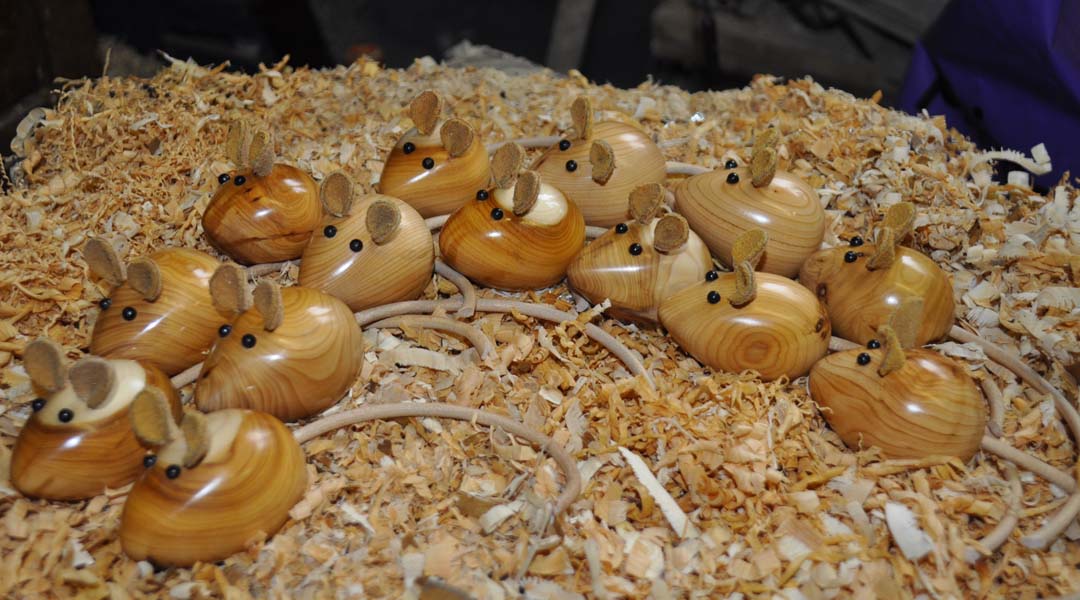
12 mice found in the shavings
20 October 2017
A dozen small mice found in my workshop amongst the shavings. As usual these are turned from yew branches, with African blackwood eyes and leather ears and tails. About 2 inches long. More on turned wooden mice.
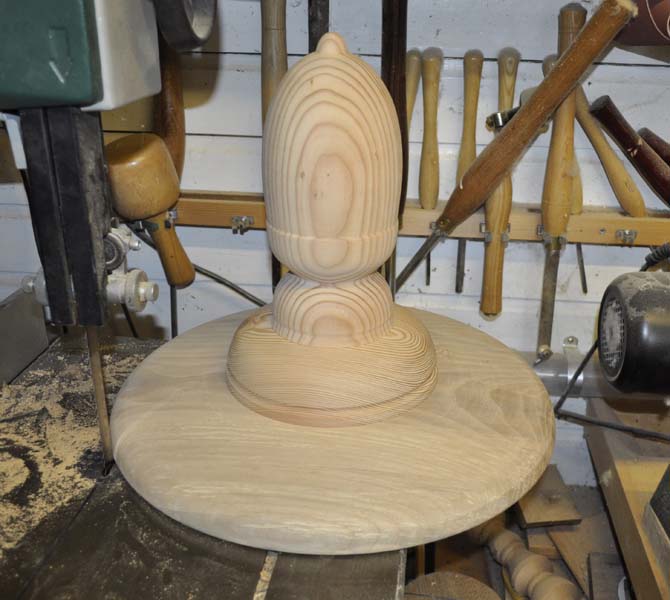
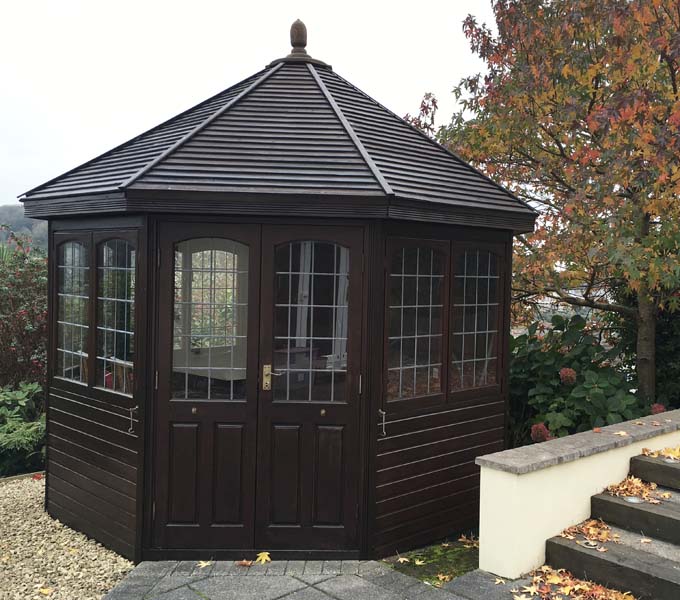
Summerhouse finial - acorn
18 October 2017
Chris sent me a photo of his summerhouse in Braunton, Devon. One of the largest bases I have been asked to do, with a 45 cm diameter. In larch and ash. More on summerhouse finials
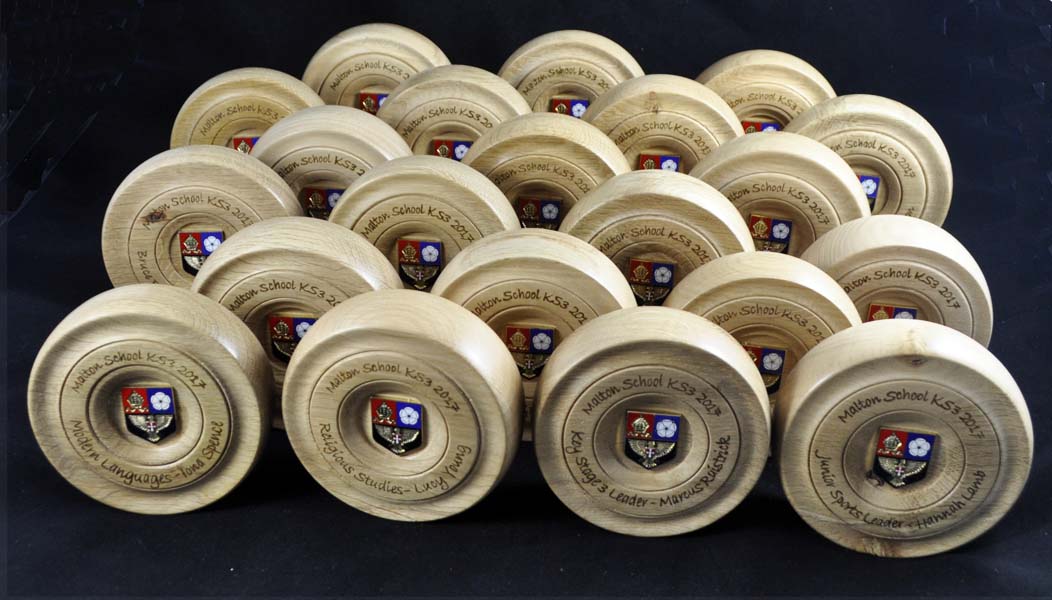
21 disc trophies for Malton School
18 October 2017
Into production mode in recent days, producing 21 circular oak trophies for Malton School's annual Celebration evening for their Key Stage 3 students. Each has the winner's name pyrographed on, and an enamel school badge. More on disc trophies

Young cricketer and House Cup trophies
10 October 2017
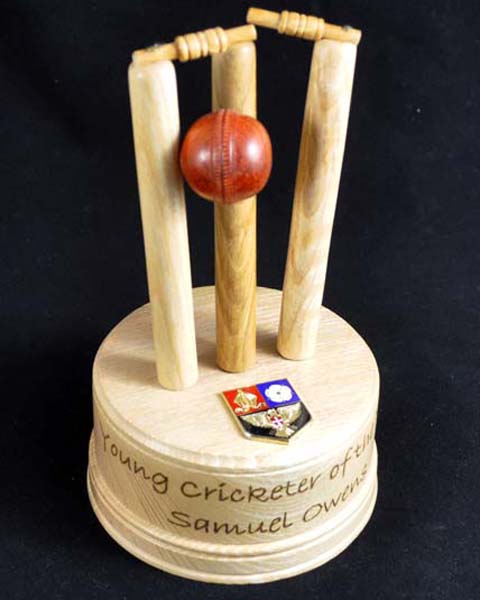
A Young Cricketer of the Year trophy turned from ash and padauk, and a House Cup in horse chestnut, presented to the student with the most housepoints in the year.
More on cricket trophies and trophy cups
Fox and Geese maths trophies
18 October 2017
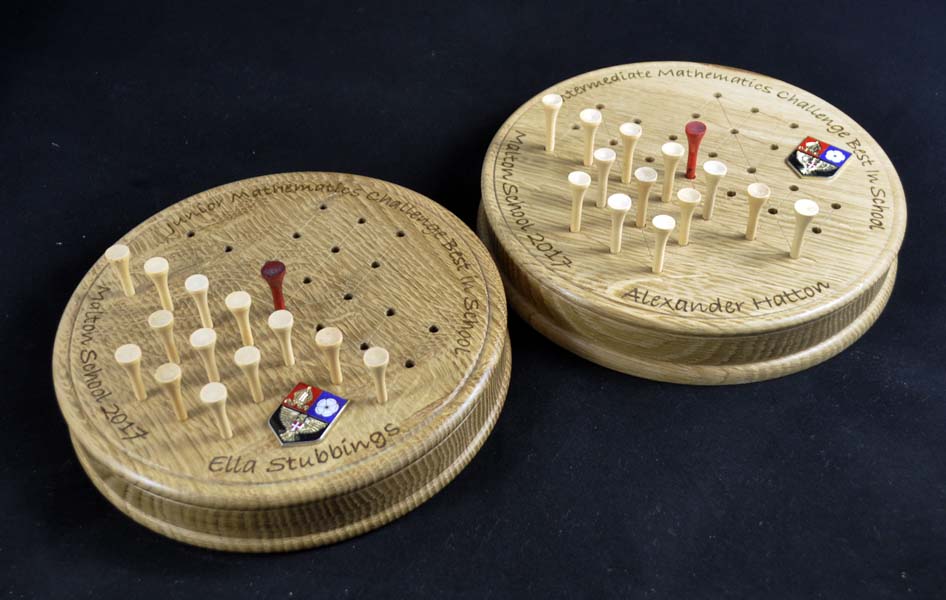
Two Fox and Geese pegboard games inscribed and presented as Maths trophies to the winners of the Junior and Intermediate maths challenge competitions at Malton School. Made from oak, with wooden golf tees used for the pegs. More on maths trophies

Summerhouse finial - acorn in situ
10 October 2017
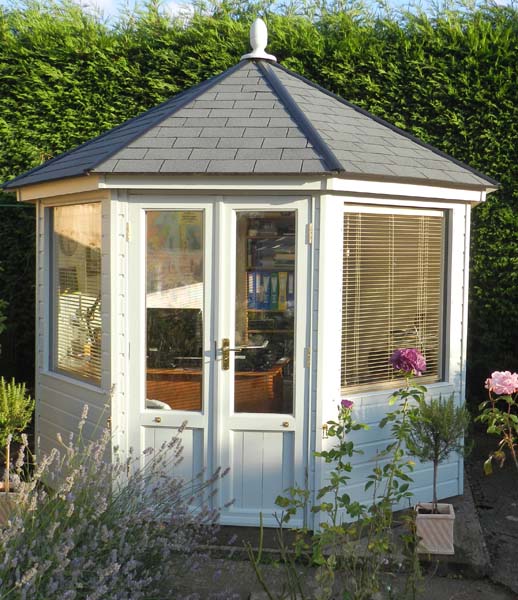
Peter was kind enough to send me a photo of his summerhouse in Tamworth, with the finial I made installed and painted to match the house. The summerhouse is used as an office, when Peter is not looking out of the windows!
More on summerhouse finials
Orienteering trophies
27 September2017
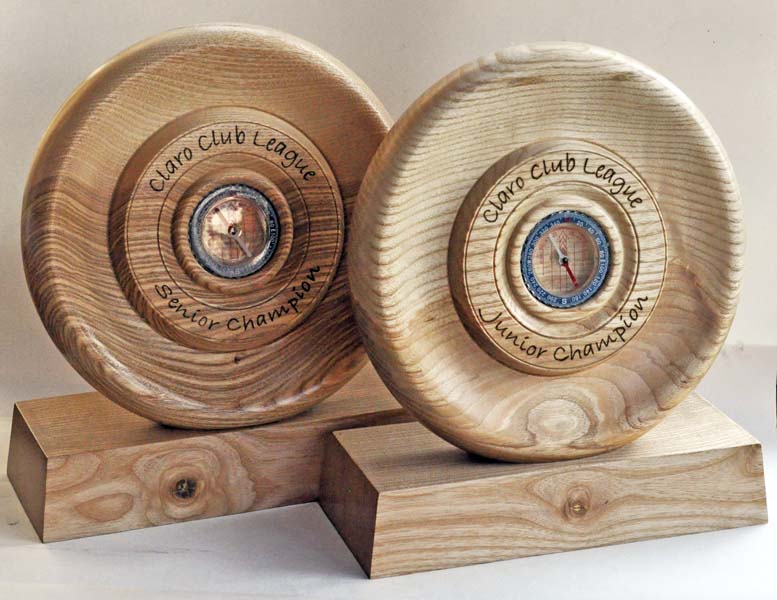
Linda requested two trophies for the Claro club orienteering league, based around the Harrogate area. These have the now standard features of a central orienteering compass, inscription, and a plinth for adding engraving plaques. About 8 inches in diameter, made from olive ash. More on orienteering trophies.

Money box
8 july 2017
Valerie requested a small money box barrel for Olivia Rose's forthcoming christening. This one is made from olive ash, and is about 4 inches wide by 6 inches high. There is an inscription giving the date of birth and other details on the underside of the barrel. The barrel is a tight push fit, so Olivia could get her money out when she is a little older, unless the top and bottom are glued together. More on money boxes
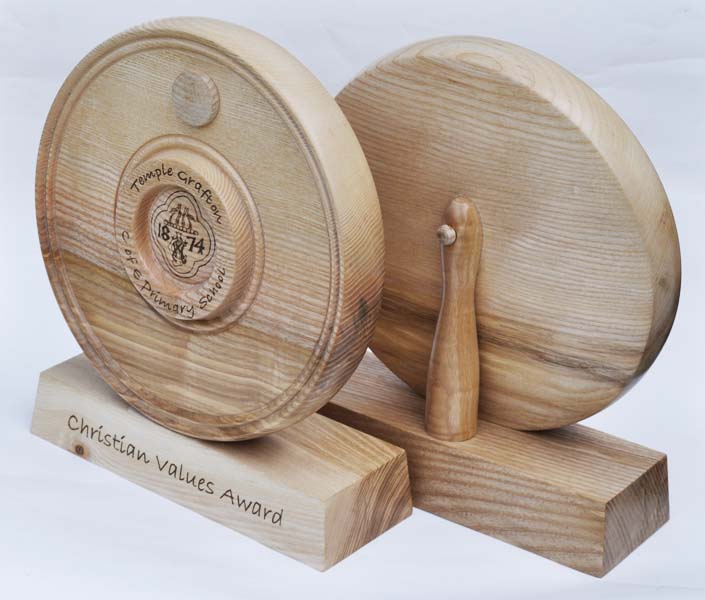
Growth Mindset Award
8 July 2017
Two trophies for Temple Grafton School. One is the Christian Values Award, the other the Growth Mindset Award. They are turned from olive ash, and the discs are 10 inch diameter. Small discs will be added around the trophy to mark the winners each year. The disc rests at a slight angle on a plinth, supported by a peg at the rear.

Strategy of the Genes
11 July 2017
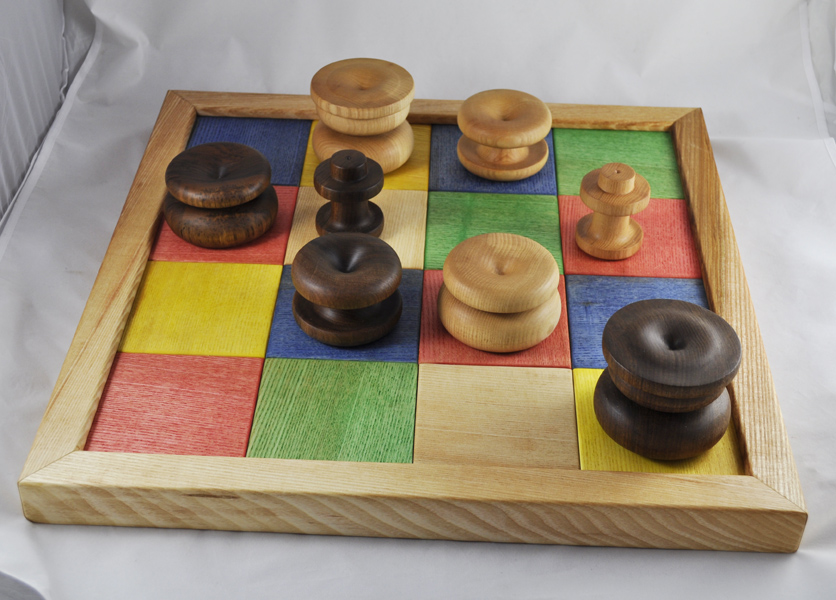
Penelope tells me that the "chess set" I made back in April, now named The Strategy of the Genes, has been on tour around Edinburgh. It has been to the Assembly rooms - where the two ladies in the picture are looking at it - a shopping centre, and a conference with Dr Pippa Thomson, who originally inspired the work. It may next move to the foyer of the University psychology building in George's Square.
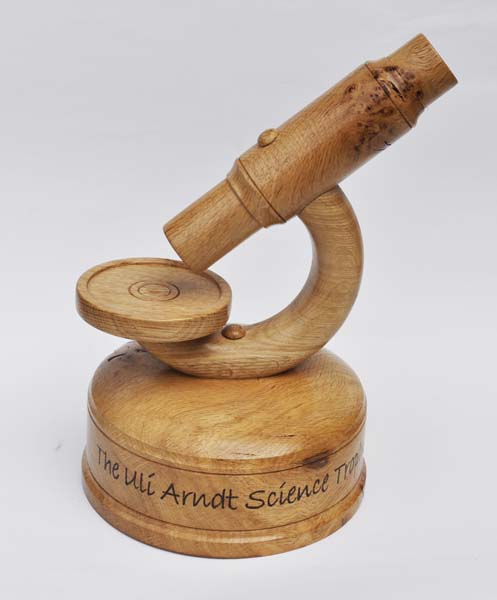
Uli Arndt trophy
8 July 2017
Annabel requested a science trophy for a primary school, to be presented in memory of her father Uli Arndt (1924-2006), who worked at the Medical Research Centre Laboratory of Molecular Biology, specialising in X ray crystallography.
The trophy is based on a similar version made in February of this year. This version is made from burr oak. More on science trophies.


Summerhouse finials - an acorn and a ball
1 July 2017
Two more large finials for the tops of summerhouses. The one on the left is made from cedar, on the right the ball is cedar, the octagonal base is larch (cedar is not always easy to source in the right size). More about summerhouse finials
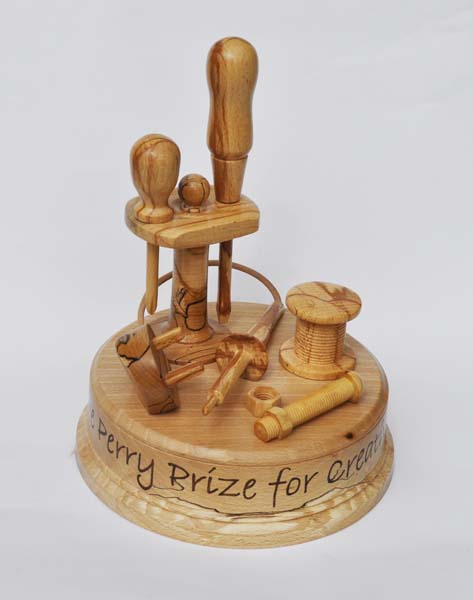
Young Inventor
17 June 2017
A request came from Ali for a Young Inventor's trophy for The Roche School. Made up of elements that a young inventor might use, all turned from spalted beech: two screwdrivers in a stand, a soldering iron and plug, a reel of solder and nuts and bolt. All standing on a pyrographed spalted beech plinth, inscribed with The Perry Prize for Creativity.
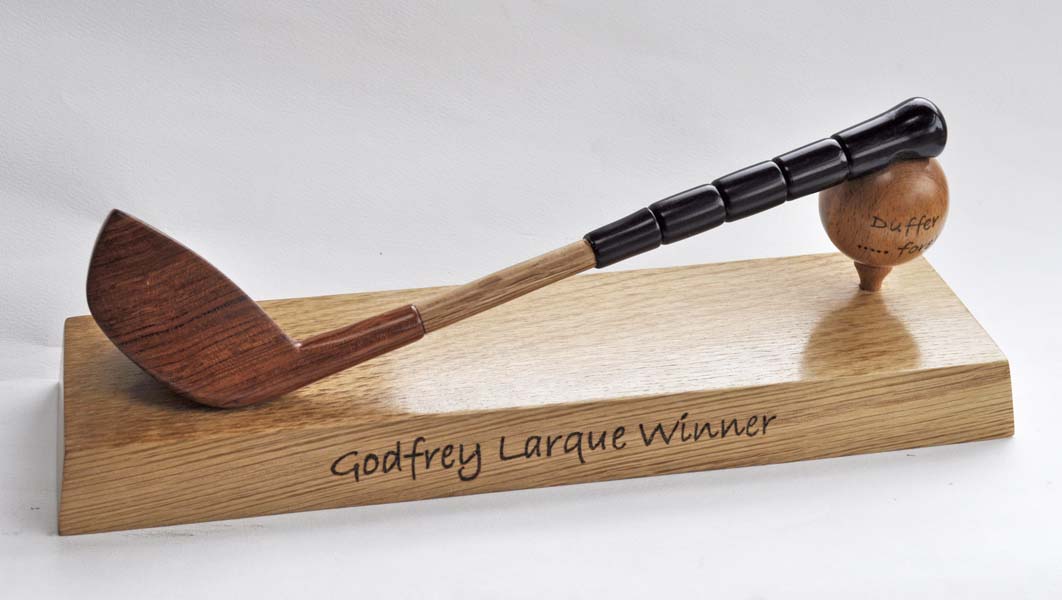
Golf driver trophy
5 June 2017
A request from Gary to make a golf trophy which was based on the chisel trophies and a previous golf trophy, but with a driver head, and resting on a golf ball. The result was this trophy made from a variety of wood. Golf trophy
Leadership trophy
5 June 2017
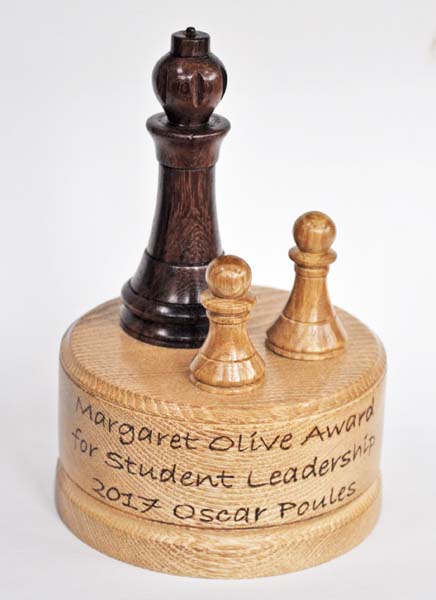
A request came from Lyssa at Ringwood School to see if I could make an individual trophy for Leadership, to complement the larger perpetual trophy that I made for the school last year. The result is a four inch diameter trophy reflecting the shapes used in the original - chess pieces - and olive ash was used once again to tie in with the name of the lady who originally commissioned the trophy. More on this Leadership trophy
Mice in boxes
16 May 2017
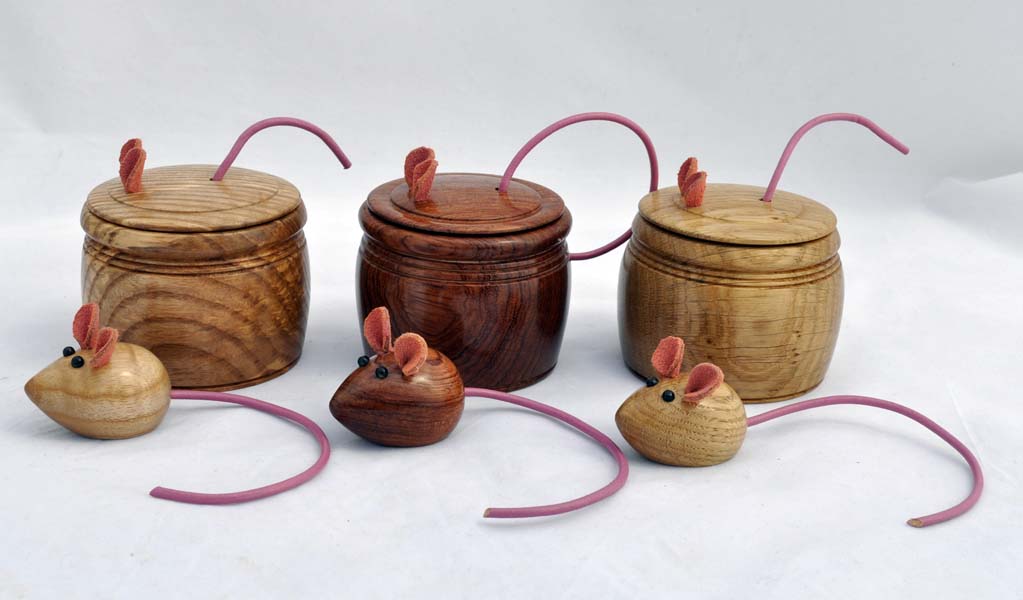
A request for three mice with matching boxes came from Paul, for his granddaughters. His idea was to have ears and tail poking out of the lids, and for the mice to make their nests in felt inside the boxes. Ash, bubinga and oak were used. Mice in boxes
Football trophies
26 April 2017
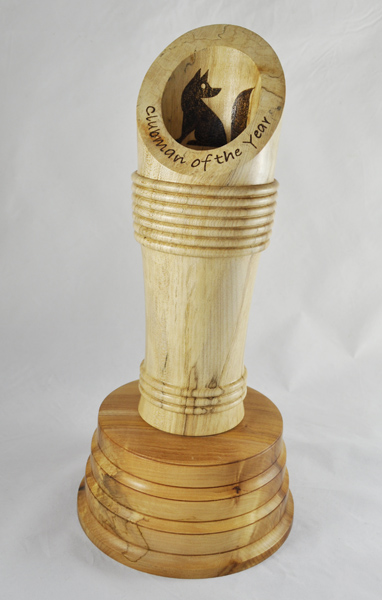
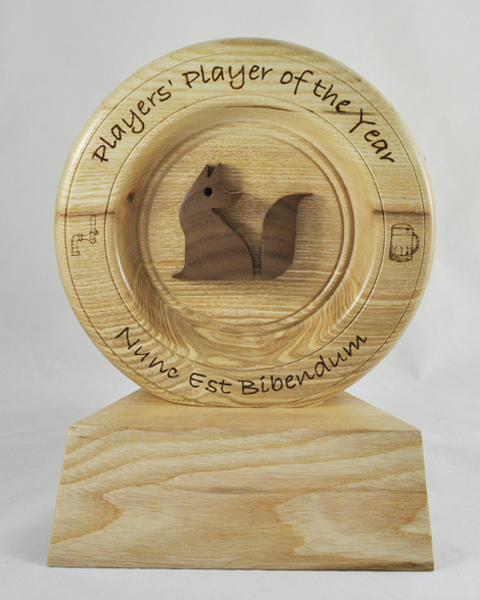
Two more trophies for the Fox football team in Derbyshire. The vase shaped version is in sycamore with the fox hiding inside the vase. The second is a disc standing on a triangular plinth, made from ash, with the fox cut from contrasting sapele wood. Football trophies
Strategy of the Genes
26 April 2017
An unusual commission from Penelope, a sculptor who designed this piece for the Royal Edinburgh hospital. It is based on shapes created by revolving the four letters used in coding DNA - a c g and t - to form pieces similar to chessmen. These were then placed on a board made from 16 coloured squares. Strategy of the Genes
Oak key fobs
28 March 2017
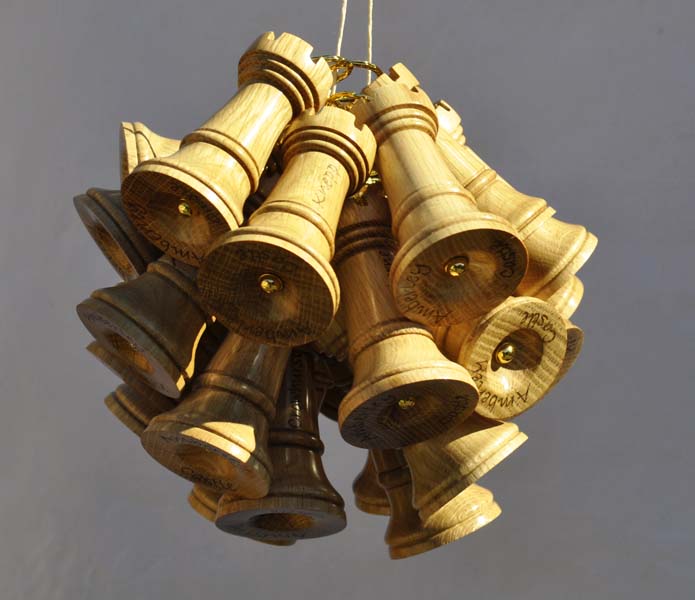
Rather than a bunch of keys, here is a bunch of key fobs!
A second batch of 25 key fobs made to the same design as those below. This allows the hotel to have two key fobs for each room, plus a few spare for sale to guests.
Castle key fobs
22 February 2017
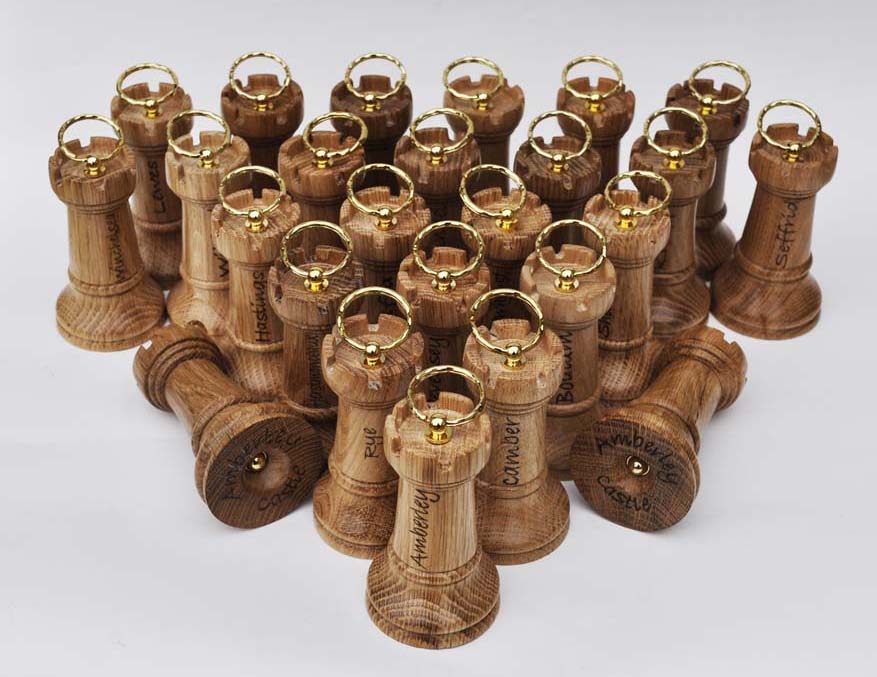
A batch of 25 key fobs, turned in oak and based on the shape of a Staunton chess castle. They were made for Amberley Castle Hotel in West Sussex, and each is pyrographed with the name of a castle, reflecting the names of their rooms. The design is based around a gold plated keyring set, and is obviously adaptable to other shapes. Oak key fobs

Duke of Edinburgh
20 February 2017
A trophy made for Denefiled School in Reading, to be given to the best student on their Duke of Edinburgh Award programme. CHARACTER is an acronym for something, but I cannot remember what it stands for.
The trophy is made from ash, with a map reading compass in the centre. The base is designed to hold a 6 x 2 inch engraving plaque to record annual winners. D of E Trophy
Football trophy
20 February 2017
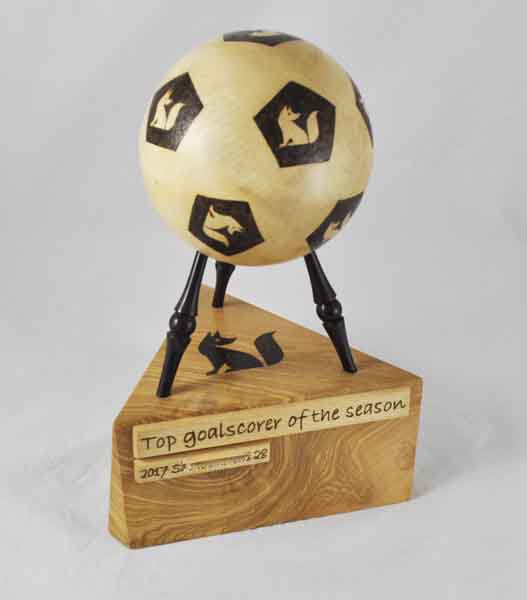
This trophy was developed in consultation with Richard, a customer who provided an initial idea for his football club's Top Goalscorer trophy. A few emails back and forth and we agreed upon this as the final version. The ball is 5 inches in diameter, made of sycamore with 12 pyrographed pentagons, each with the club's fox logo. The three struts are rosewood, and it stands on a triangular olive ash base. Football trophy
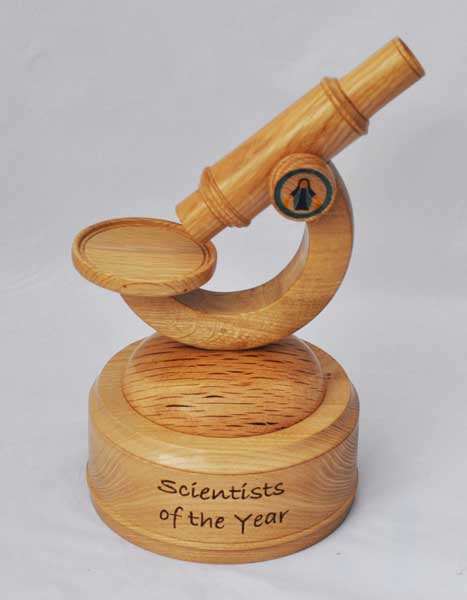
Science trophy
15 February 2017
A request from David for a primary school science trophy resulted in this microscope design. The piece is all turned from oak, and stands about ten inches tall on a seven inch diameter base. Science trophy

Acorn finial
12 February 2017
Another finial for a summerhouse. This one is on an 8 inch base and is about 11 inches tall. It was supplied untreated, so that the customer, Gary, can paint it to match his summerhouse. I am told the summerhouse is hexagonal in shape. Acorn finial
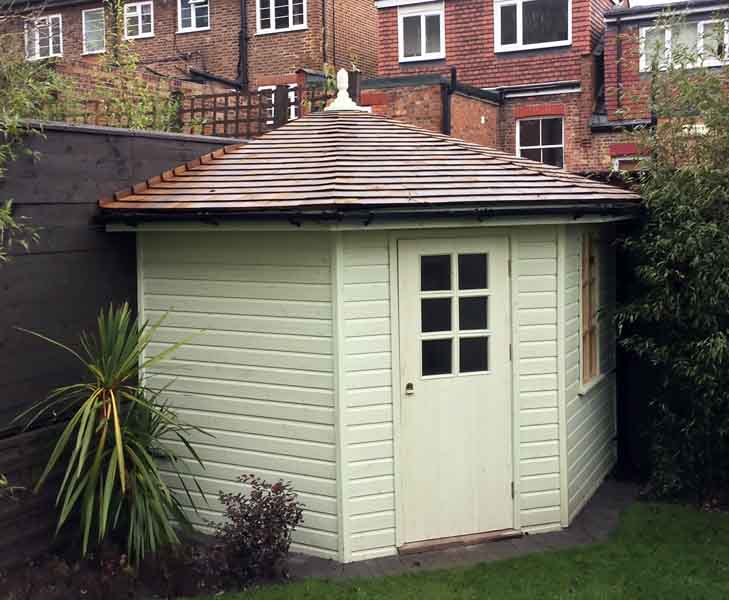
Summerhouse finial
12 February 2017
Linda sent a picture of the finial I made for her, on top of her newly built summerhouse in London. The room is cedar shingles, on top of painted walls. The finial was provided untreated, for painting to match the main summerhouse. This is one of the largest finials I have made to date. Summerhouse finial

Airsports trophy
5 February 2017
Hugh requested a trophy based on a design with a disc resting on a plinth, but with some specific details. An osprey pyrographed in the centre, space to attach a horseshoe on the front, a map of Rutland on top of the base, and an inscription on the base. This is to be awarded to the first person to complete a circuit of Rutland water by paraglider, a feat apparently as yet unachieved. Airsports trophy
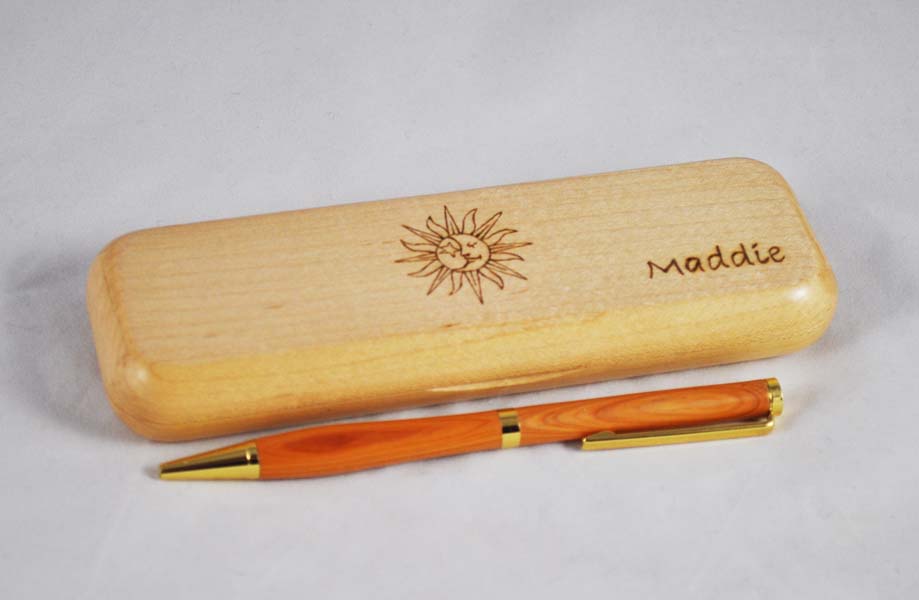
Maddie's pen
20 January 2017
A slimline pen turned in yew. The box is pyrographed with a sun, moon and stars emblem: the pen was made for Maddie, who is fascinated by the night sky and astronomy.
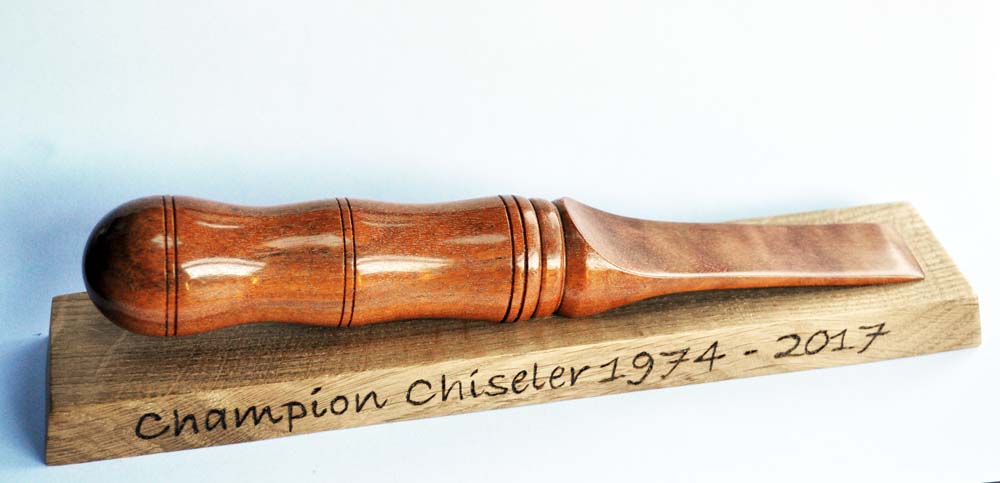
"Chiseler" retirement gift
11 January 2017
My first use of a timber from Mozambique known as brown ivory. A hard, closely grained wood which turns well. Used for this retirement gift for champion chiseler Nick. Wooden chisel gift
Gardening
Queen and male wasp
6 October 2017
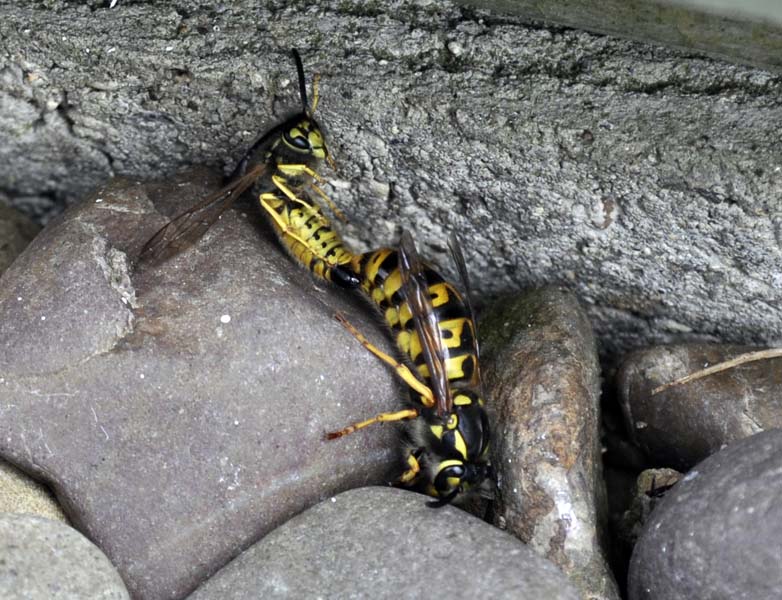
We spotted this pair of wasps clasped together for at least half an hour, flying and on the ground. The larger one is a queen, the smaller one with the large wings is a male, who exists at this time of year simply to fertilise the queen who will then hibernate over winter and found a new colony next year.
October pears
October 2017
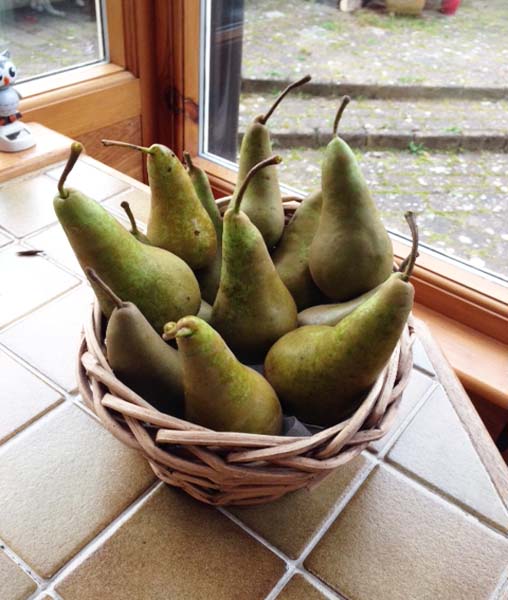
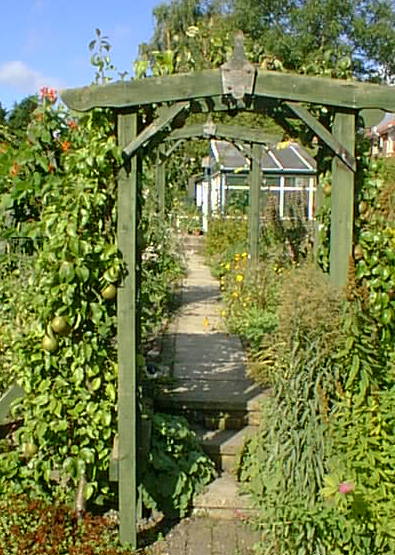
This year seems to be a bumper one for pears. We have never had so many and in such good condition since we planted our Conference pear about 25 years ago. We have one bush planted and trained either side of a trellis arch. The trick now is to catch them just when they are ripe!
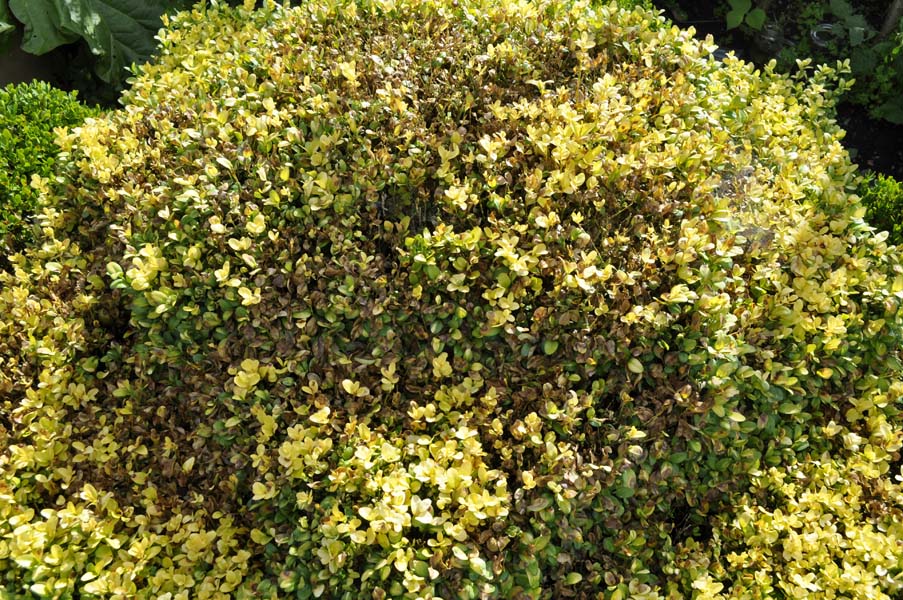
Incineration of box badly affected by blight
4 Sept 2017
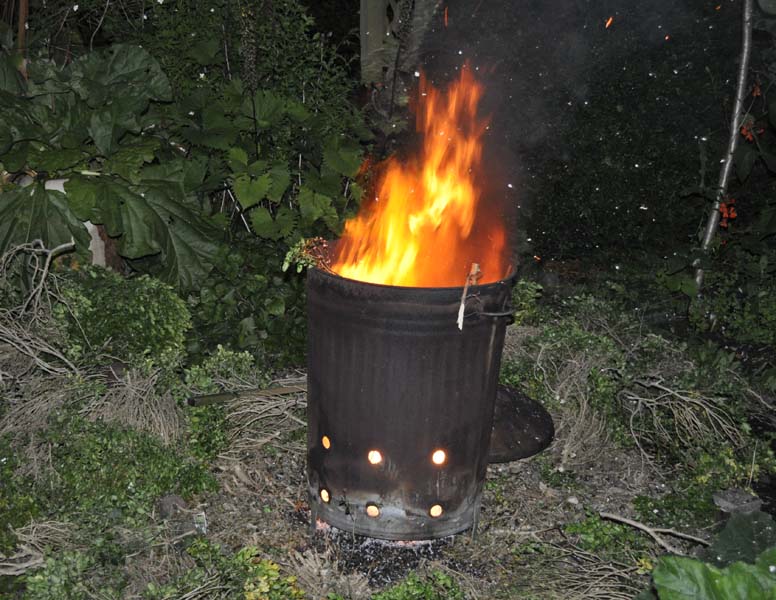
Severe box blight led to a decision to cut down and burn some 18 year old topiary. A hard choice. More details about this drastic treatment of box blight
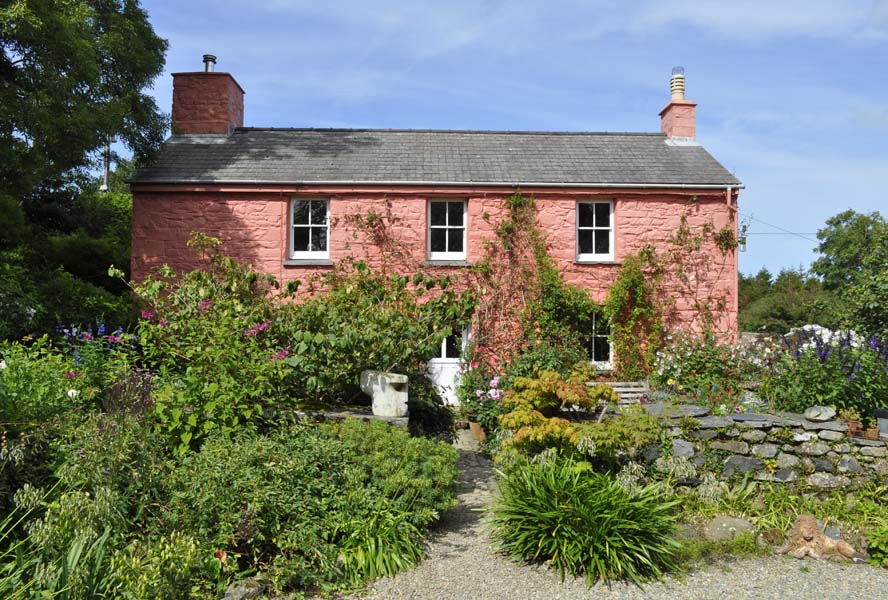
Dyffryn Fernant garden
August 2017
Set in a valley near Fishguard in Pembrokeshire. A private garden open for people to ramble through the different named areas and enjoy the casual feel of a garden belonging to someone. Grasses, bog plants, cannas, ferns, are just some of the memorable features. More on Dyffryn Fernant garden
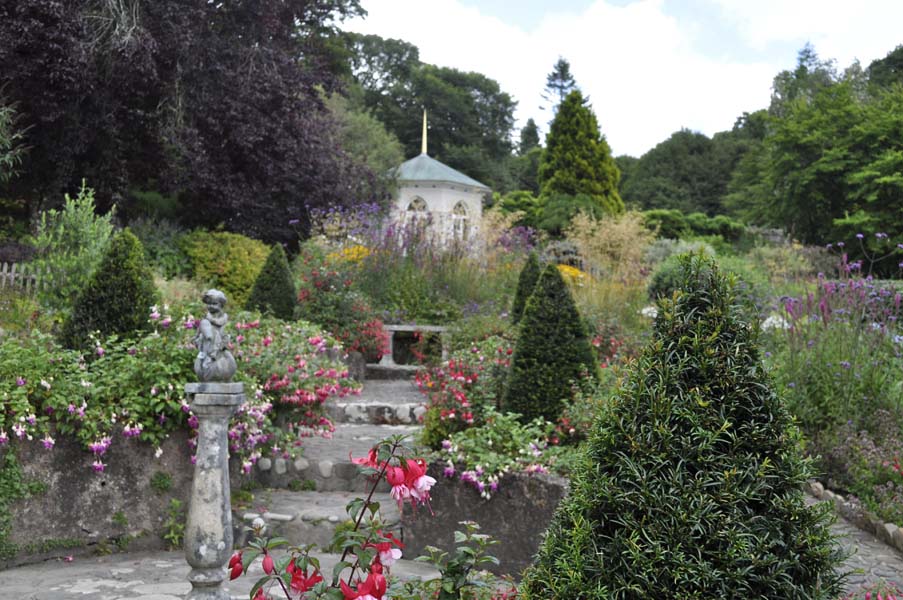
Colby Woodland Garden
August 2017
A return visit to Colby Woodland garden near Amroth, Pembrokeshire - 20 years on from our last! Open spaces and wildflowers complement the ornamental walled garden near the entrance, with stone and trickling water offsetting the established planting. More on Colby Woodland garden

Laugharne Castle garden
August 2017
An unusual setting for a garden, inside the ruins of a medieval castle. This is actually a restoration by Cadw of what the gardens might have looked like when they were established in the early 19th century, as part of Castle House's grounds. More on Laugharne Castle
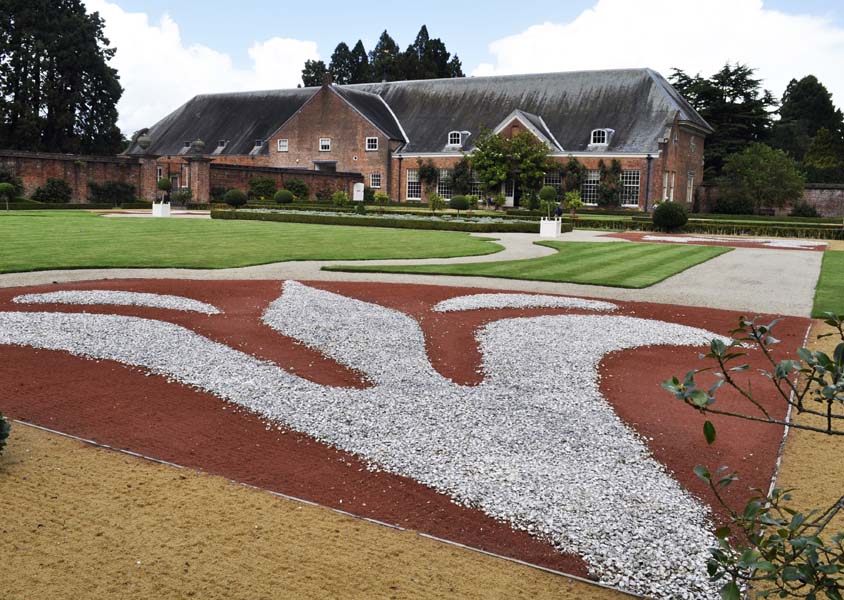
Tredegar parterre
August 2017
A parterre in the Orangery Garden is shaped from different coloured sand, shells, lime, coal and other minerals, complementing the mown grass and minimal planting. Elsewhere is a wilder Orchard Garden and a colourful Cedar garden (dominated by an old cedar). More on Tredegar House
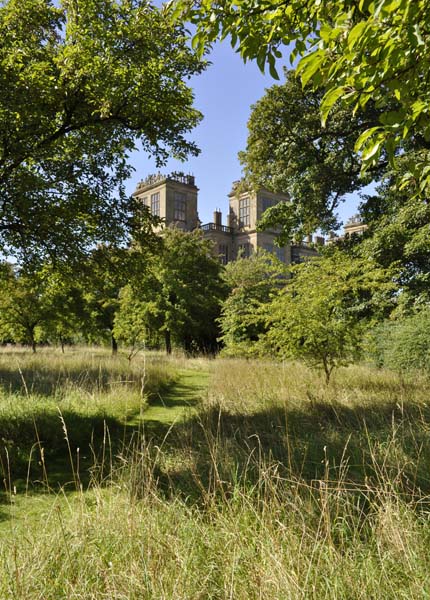
Hardwick Hall
17 August 2017
Hardwick Hall is a fine Elizabethan house in Derbyshire, not far from the M1 (sadly near enough to hear the constant drone of traffic). Since our last visit some years ago the stable block has become the entrance and cafe, leaving the ktichens in the house more authentic. There is fine herbaceous planting iin the courtyard at the front of the house, and a walled garden with a mix of wild areas, orchard and herb garden. More on Hardwick Hall
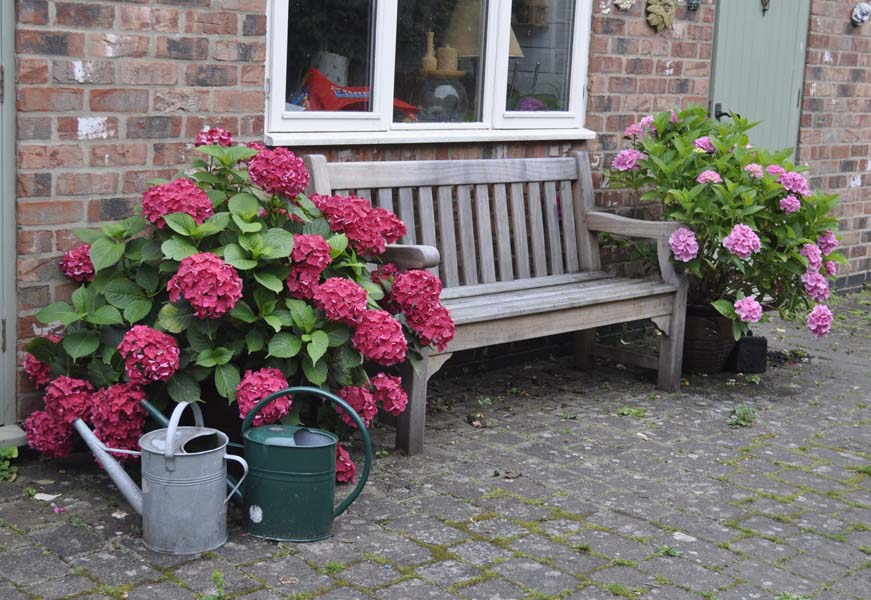
Hydrangeas heavily laden
August 2017
Hydrangeas heavily laden with bloom this year, after a year without any flowers in 2016. Pruning at the wrong time was no doubt the cause of the missing blooms last year - I cut them back in winter. This year I didn't prune at all, and the flowers came in abundance, though on leggy stems.
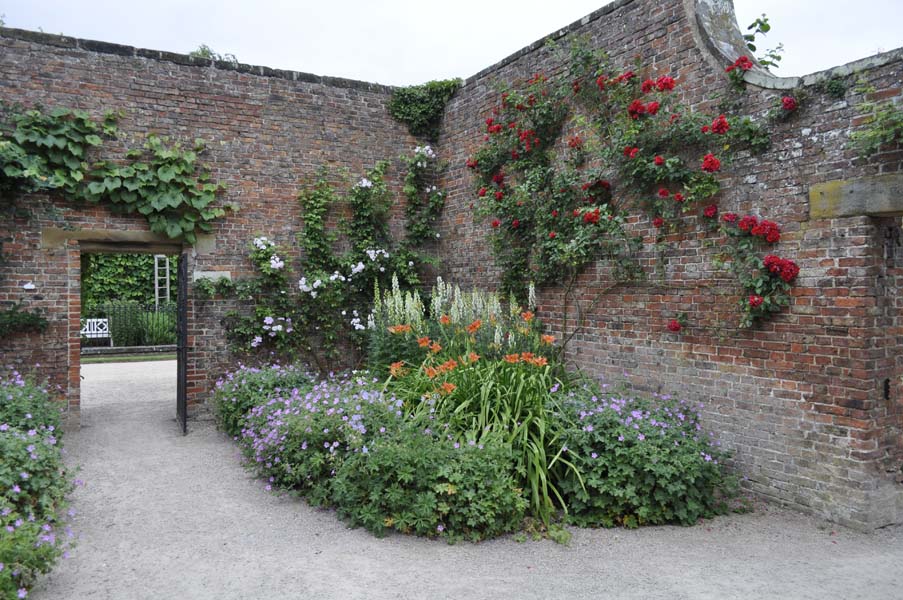
Beningbrough Hall
23 June 2017
Every time we visit Beningbrough Hall gardens there is something different that catches the eye, either because of the change of season or because of a new development. This corner has an enticing view through the doorway. More on Beningbrough Hall
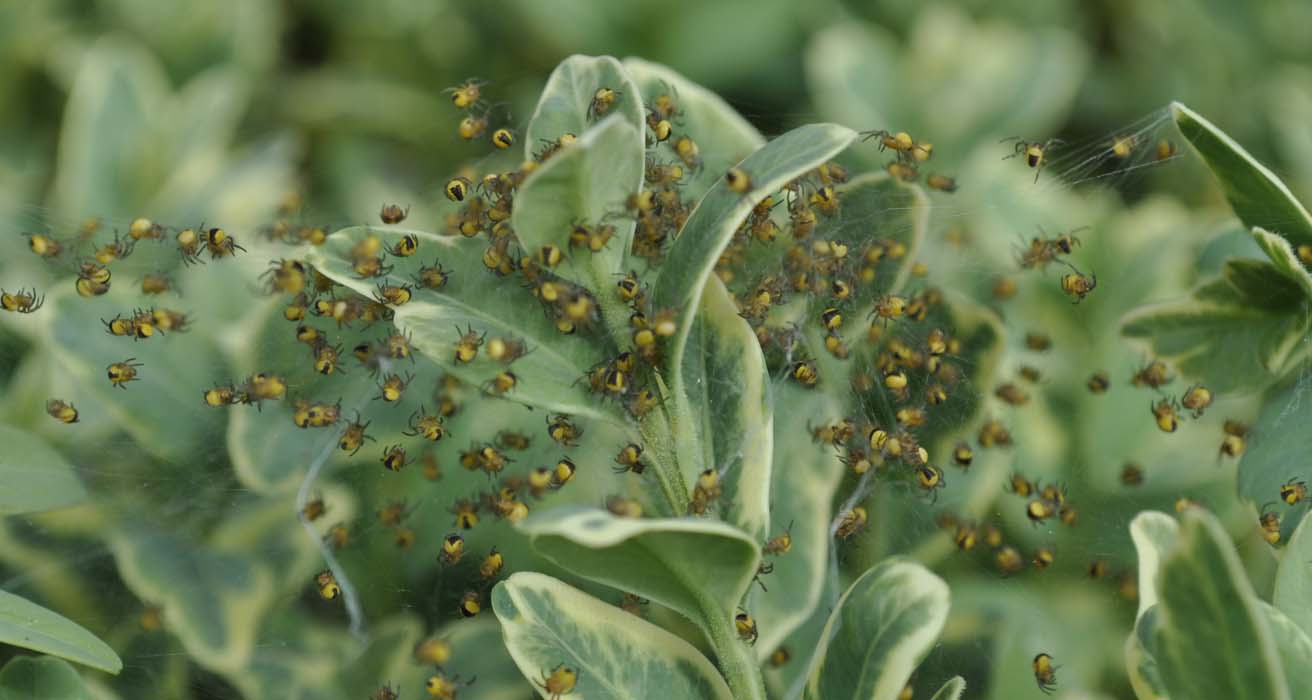
Baby spiders in their nest
7 June 2017
Two fuzzy balls appeared in the garden this week, both on the box plants. Closer inspection revealed hundreds of tiny spiders. When the bush was disturbed slightly they all spread out, only to regather in the ball once things had quietened down.
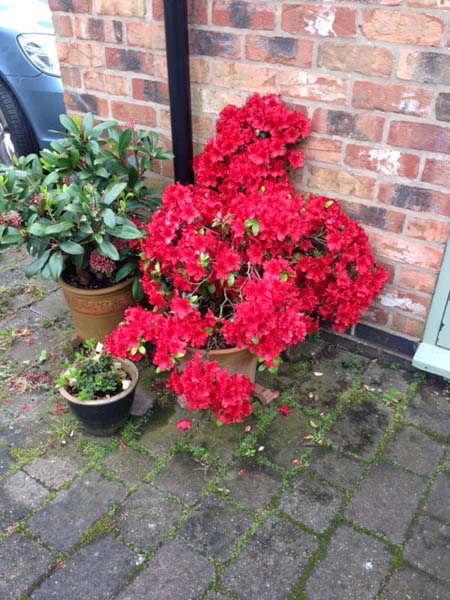

Azaleas in pots
20 May 2017
I don't have acid soil, so azaleas need to be grown in pots, where they do quite well. They also have the advantage of being able to be moved into a position for best viewing during flowering, and then moved away to a shady area when they fade. As is often the case I cannot remember the varieties.

Acers at Sizergh
22 April 2017
Cold but sunny on a visit to Sizergh Castle, where the rock garden excelled with the old acers coming in to colour. Elsewhere the new stumpery was well planted, and now leads up to the long herbaceous bed in a natural progression on going through the gate to the gardens.
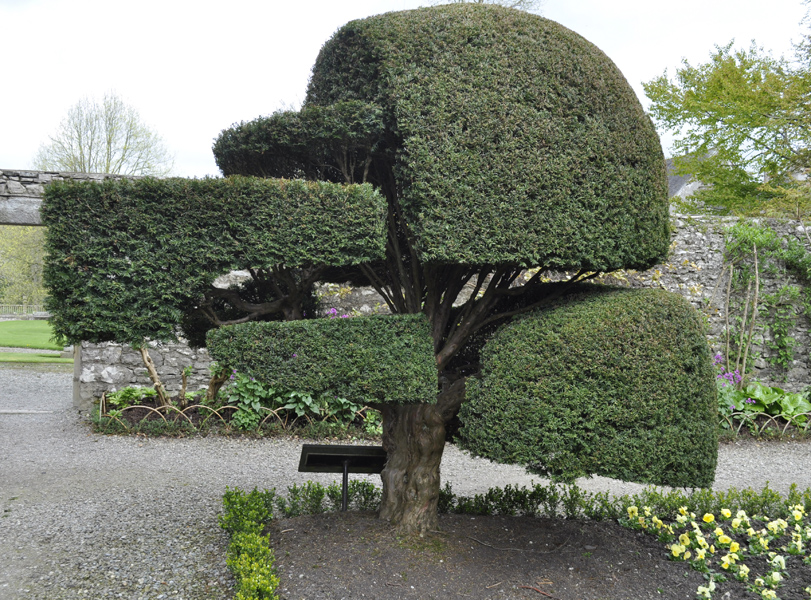
Topiary at Levens Hall
20 April 2017
Topiary at Levens Hall is amazing all year round, but particularly good in Spring, underplanted with primroses and with tulips. The structure of the garden comes to the fore, with hard pruning of limes and other shrubs, all waiting to burst back into growth. Blighted box borders have been replaced with ilex crenata and willow wands.
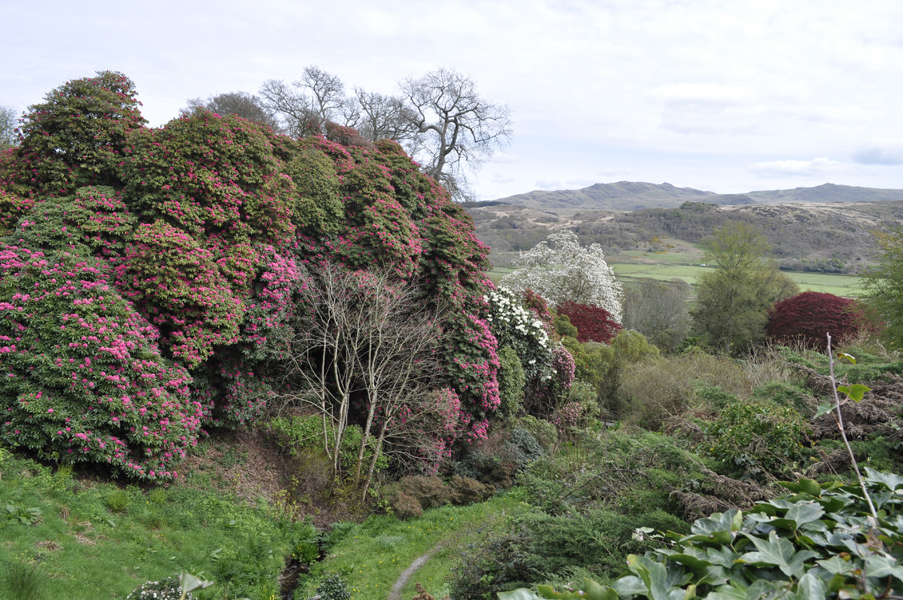
Rhododendron at Muncaster
18 April 2017
The rhododendrons, azaleas, camelias andmagnolias at Muncaster Castle in the western Lake District are enormous in places, and covered with colour at the end of April. This view is from the castle terrace, looking out towards the hills of Birker Fell.

Tulips and structure Holker Hall
17 April 2017
Holker Hall is a stunning garden all year round, with something of interest always happening. The old tennis court garden was planted up with early tulips, and the bare structure of the shaped ornamental hawthorns is almost as appealing. As the daffodils were fading elsewhere, the rhododendron were coming in to bloom.
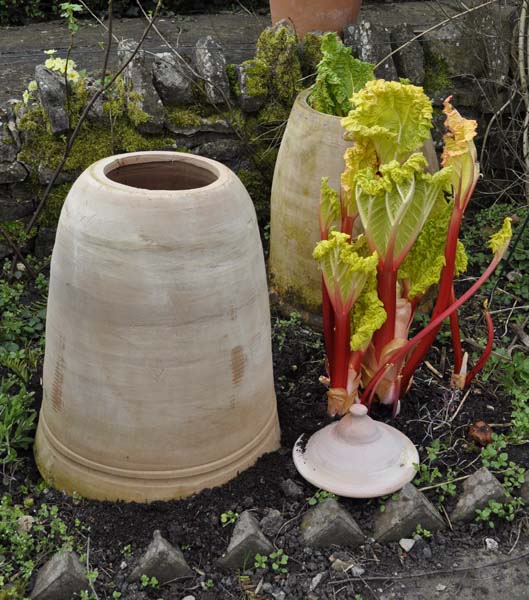
Rhubarb forcer
April 2017
Two terracotta rhubarb forcers do their job in the vegetable plot, producing bright red and pink shoots on the new growth of rhubarb. We have to be careful though, if left too long the force their way out of the pot, knocking off the lid. Last year this resulted in a cracked lid as it landed on the path. The stalks taste much sweeter than if grown naturally, hardly needing any sugar when cooking.

Frogs' arrival
12 March 2017
The frogs arrived this week with the onset of a few days of mild weather and sunshine. Lots of frogspawn resulted in between the rushes and irises. Hopefully this will survive the inevitable frosty days yet to come. Newts are also in the pond - but harder to photograph!
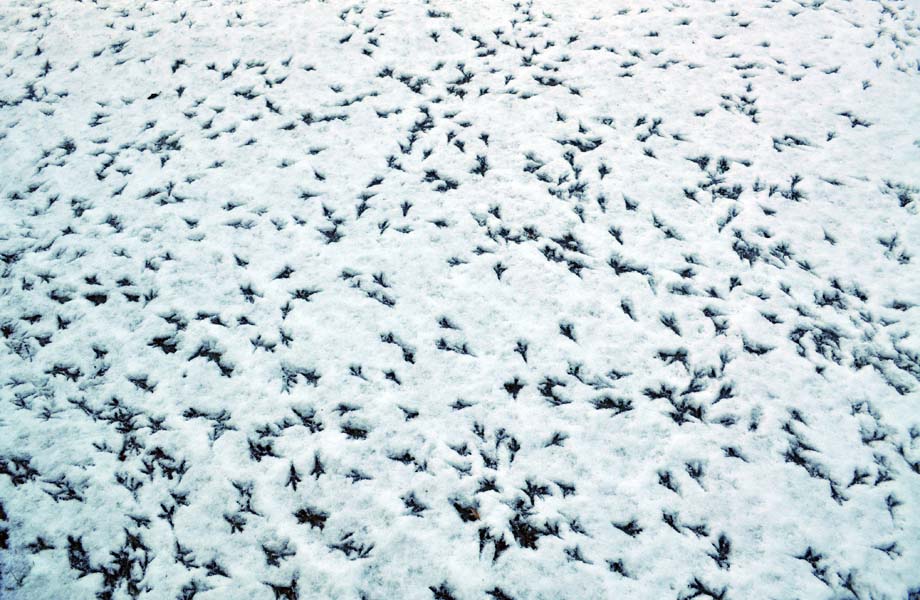
Footprints in the snow
18 January 2017
Not much exciting happening in the garden at the moment, though the heathers are coming in to flower and snowdrops are beginning to push through. At least the birds provided some patterns in the brief snowfall last week, before the grey damp misty days returned.