
ARCHIVE PAGE: this website is gradually being updated from April 2022
Woodturning
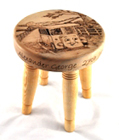

Bertie Bus child's stool
28 December 2013
A small child's stool, with turned "Windsor" pattern legs in ash, and a sycamore seat on which Bertie Bus, from the Thomas the Tank Engine stories, has been pyrographed.
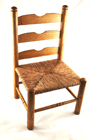
Child's chair
28 December 2013
A small ladderback chair turned from a single piece of oak, with the seat done in rush fibre (at least the paper cord version). This one is for my granddaughter to sit on when she visits. The chair was based on a plan from a 1955 Woodcrafter magazine which has been made freely available on the internet. The chair is two feet tall, with the seat 10" high. A very simple design: were I to make a second version of this I may make the leg braces and the back pole ends a little more ornate.
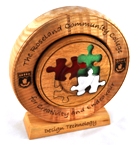
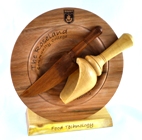
Roseland Design and Food Trophies
12 December 2013
Two new design trophies for The Roseland Community College in Cornwall. Resin, pewter and felt were used in the first, mixed woods in the second.
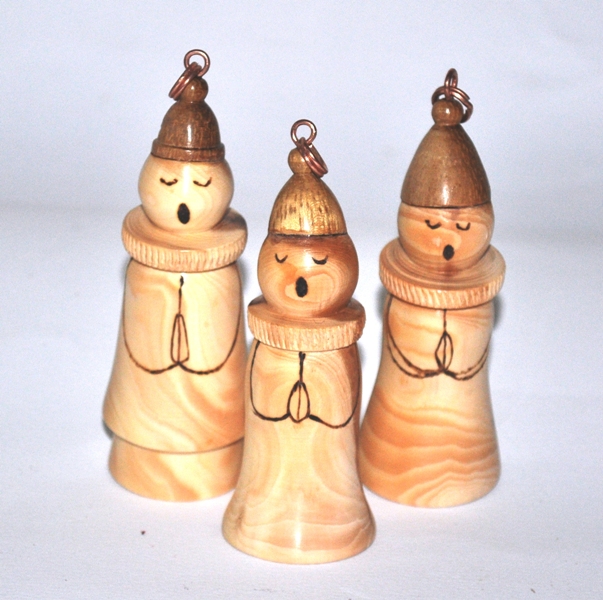
Three Choirboys
3 December 2013
Choirboys evolved from the snowmen found elsewhere. They are hollowed out to make them light enough to hang on Christmas trees. Their shape may yet develop a little more - it is always a problem when turning to cope with arms, which really should stick out a little, but not all the way round. More experimentation as time permits

45 Snowpeople gather
3 December 2013
Yet more snowmen, women and children have appeared. A batch of narrow yew branches became available - just what is needed to make the most of the creamy white sapwood and provide these little snowpeople with their coats. They splashed out on some ribbon for scarves this time.

2013 Celebration trophies
21 November 2013
Malton School's annual Celebration Evening, and all prizewinners receive a trophy to take away with them, as well as having their name added to a subject trophy that stays in school through the years. That meant 44 trophies this year, gathered here before delivery. Some individual pictures are also available
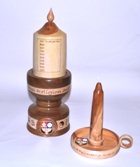
Religion and Philosophy Prize
28 October 2013
With less than a month to go to Malton School's annual celebration evening, there are over forty trophies to make. This is a new one, for the best student in Religion and Philosophy classes. The large candle and holder will remain in school. the smaller candle is for the winner to keep. A combination of walnut, sycamore and yew were used for the pieces.
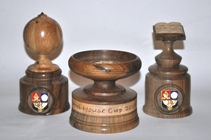
Geography, House and English Trophies
28 October 2013
Three trophies for individual winners to keep - a globe for the geography winner, a cup for the highest housepoint score, and a lectern with book for the English winner. These three trophies are made from a mixture of walnut, spalted beech, ash, and sycamore.

Snowmen are gathering
1 October 2013
Snowmen are gathering! A little early for Christmas, but my niece asked if she could have some. This year the men have been joined by snowladies, and inevitably some snowchildren. Only a certain thickness of yew branch will do, so production is limited by availability of the wood.
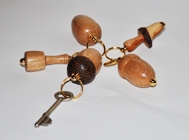
Selection of wooden keyrings
19 September 2013
A well made gold plated keyring kit is at the centre of these small keyring designs. One of the acorns has its base pyrographed to mirror the acorn cup of nature. A small mallet, a mushroom, acorns - a variety of shapes are possible, limited by being round, and 2 inches long.

Music Trophy Shield
12 September 2013
A number of pieces are in production - trophies for Food, Design, Religion and Philosophy, plus tea-light holders and snowmen - but all are awaiting final details. So I thought I would add a couple of oldies to the site. I made shields for English and Music eight years ago, long before I started woodturning. Made from reclaimed oak, this one has a modified brass doorknocker inset into the wood.

Wedding egg
19 August 2013
A request from a lady in London for a wedding present in the shape of "a large egg" - no more detail than that. I have made eggs before, but had never thought to make the egg cup integral to the piece, until I saw a picture in Woodturning magazine of such a piece. Thanks to Neil Farrer who sent it in - I also adopted the finial his piece had. The egg is of course hollow, with base and lid, so it fits the woodturning description of a"box". An egg box!

Acorn trophies
16 August 2013
A request from UPM Tilhill for some wood-industry related prizes led to these ten trophies being designed based on the acorn. Spalted beech was used for the acorn (I did consider oak for the acorn connection, but the patterning in the beech was irresistable), and walnut for the plinths. It was important to the company that the wood was native to Britain. The trophies are about 9" tall, and are all slightly different.
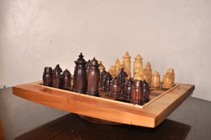
Chess set
8 August 2013
A former colleague asked if I could make her a chess set back in January, but said "summertime would be fine" for delivery. I experimented with shapes almost straight away, but then left the project as I tackled other things, and have only finished the set, including the board, in the last week.
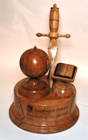
Humanities trophy
8 July 2013
A governor of Goodwyn School - a London preparatory school - contacted me with an interest in presenting a trophy for excellence in the humanities subjects - history, geography and religion/society. After an exchange of ideas via email, I came up with a globe, a sword and a book to represent the different elements. All turned from spalted beech, and pyrographed with the school's name and the trophy's title: "Humanities Award"
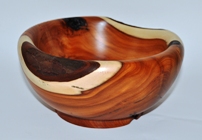
Yew bowl
14 June 2013
I was given a number of yew logs by the father of a maths student I tutor. I always try to return a piece from such gifts, in this case a bowl. It was to be a natural edge hollow form, but the wood in the end did not lend itself to this shape. It was left quite thick and was well soaked in oil, to limit the effect of the shakes in the log.
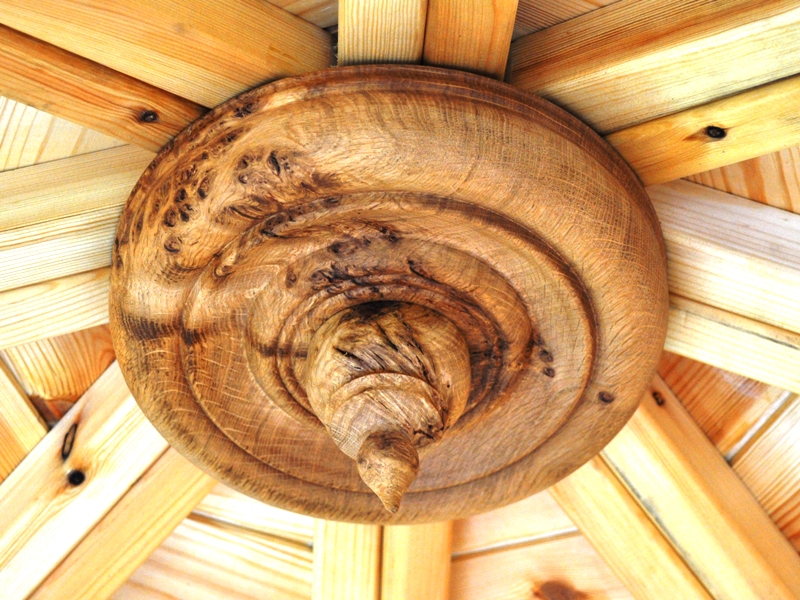
Roof boss summerhouse
11 June 2013
The new summerhouse in the garden is octagonal, so has 8 triangular panels meeting in a centre. The suppliers of the prefabricated kit provide an 8" plywood disc to fit inside where all the panels meet. I thought something a little more decorative would be better, so I turned a roof boss from a piece of burr oak.
Trio of acacia tea-light holders
30 May 2013
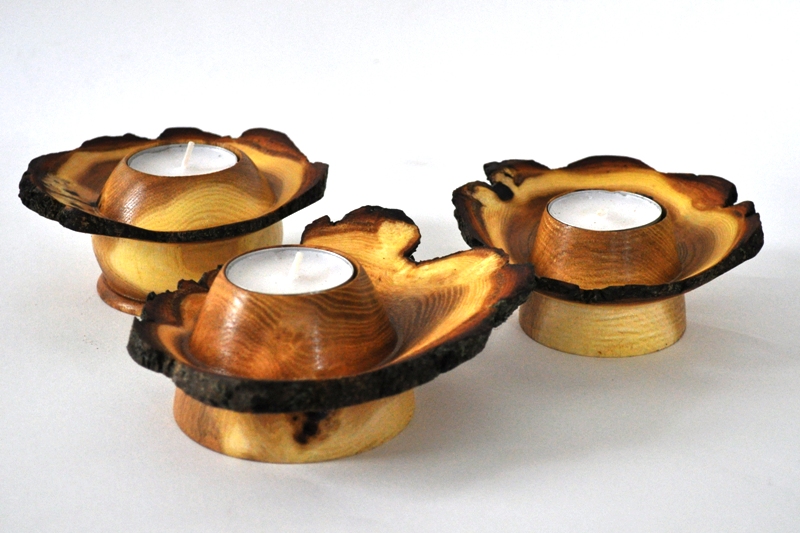
Garden and building work continue to limit woodturning activity, however some pieces have been completed. Here are 3 tea light holders turned from an acacia log. As with other similar pieces, the intention was to leave the natural edge from the diameter of the log, but have a form running through it.
Masonic gifts
2 April 2013
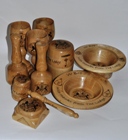
Made some time ago, but only presented on 27/4/13, hence the delay. A set of 9 gifts for a masonic lodge to be presented in recognition of various officers' long service to the lodge. All made from acacia wood - symbolic to the masons - and pyrographed with the Lodge's coat of arms, a dedication and the worshipful brothers' "jewel of office". Personal names have been blurred out to respect privacy of individuals.

Deep set wall clock
21 April 2013
Garden work has been dominating over woodturning, with the dry weather, light nights and spring finally here. However I did turn a new wall clock to replace an oak one sold last week. This one is from a lovely piece of dark olive ash, with lots of patterning radiating from a large knot. Quite a chunky design, about 3" thick and a 3" surround to the 6" diameter clock face. The clock is set into the wood at about an inch depth.

Chisel trophy with inscription
25 March 2013
A small trophy turned and carved in the shape of a chisel, commissioned by a lady in Scotland who wanted something appropriate for her Dad, a retired joiner. The pyrographed dedication continues on the rear of the base. The chisel is shaped from a single piece of walnut.
Corporate trophy
10 March 2013
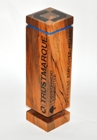
It seems a long time since posting anything, but this is because most of what I have been working on has been for special commemorations - so should not be shown here until presented. This one is a little different: square section with just a little turning between the main body and base. Pyrography for the writing, on a piece of spalted beech. The trophy is to be presented every quarter to the "greenest" employee at Trustmarque, an IT solutions company.

Tree plaque for Oliver Hudson
30 January 2013
Spot the difference? A commemorative tree plaque for a tree planted in memory of Oliver Hudson. Unfortunately the wrong date was given for the first attempt, and pyrography with hard gloss varnish is difficult to rub out, so a second copy was made.
Small oak offcut bowls
29 January 2013
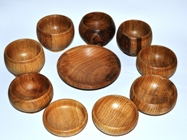
Along with the big lump of oak that made the two bowls below came a number of small ceiling-beam offcuts of a similar nature. Each lent itself to a different small bowl as shown on the right. The splits and defects by and large have been left in the pieces. The bowls are typically only 3" to 4" in diameter. The centre dish has a very pleasing ray pattern coming from a knot on one side. It may split in time?

Oak hollow form and bowl
29 January 2013
An oak hollow form and bowl, turned from an offcut of green oak which came my way from a friend who is renovating a house. The offcut, being the end of a beam, did have some "checks" (splits) in the endgrain. These have been left untreated and unfilled as part of the character of the wood.

Chess sampler
23 January 2013
Having had a commission for a chess set, I have been playing with different shapes before coming up with this set - at least with one of each piece. In different woods to explore the best choice - elm, goncalo alves, rosewood, walnut, box, and beech.
Great fun - the trick will be getting all the duplicates the same!
Gardening
Holly wreath
17 December 2013
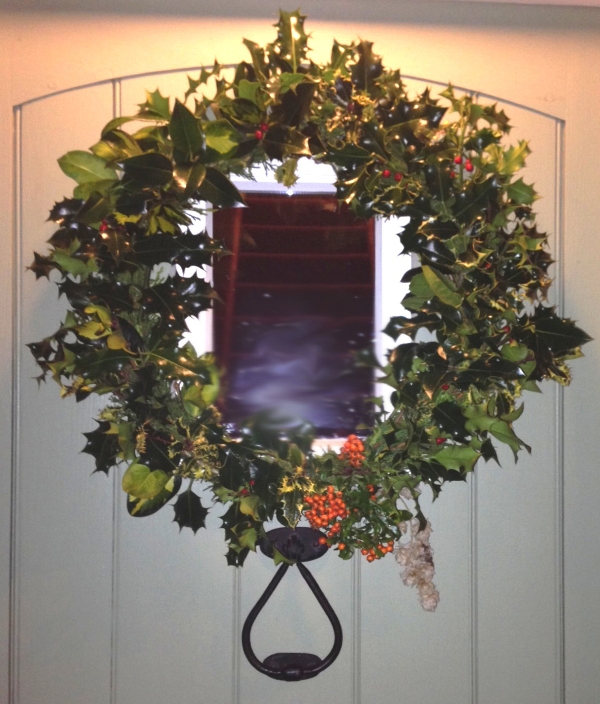
Not much gardening going on in the winter weather, despite it not being as bad as recent winters. I did make the annual holly wreath for the front door. Based on a hoop of hazel, padded out with leylandii, wrapped with green twine, then clips of holly pushed through the string. Lots of berries this year. A mix of common holly and variegated varieties, with a few pyrancantha berries and hops at the bottom. All from the garden.
Random stone wall complete
24 October 2013
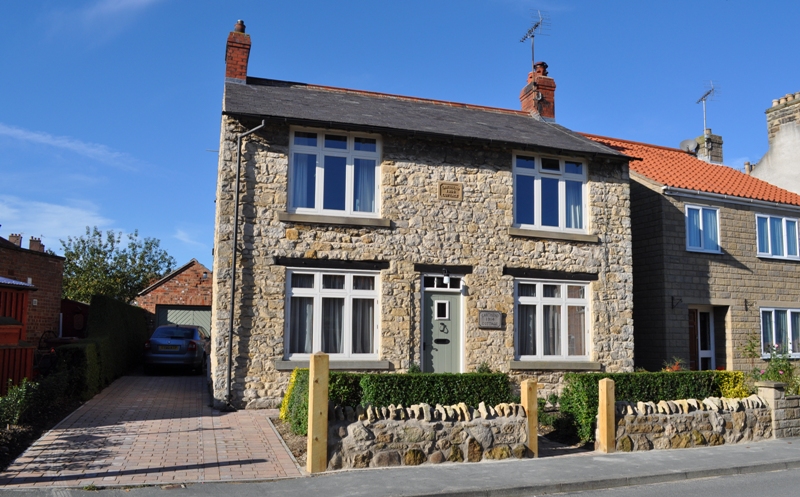
Finally the weather and my time coincided and I got the wall finished on a beautiful sunny autumn Thursday. Next is the gates, and then next year hard pruning of the rear of the privet hedge, letting the front grow out again to rest on top of the wall.

New random stone wall
1 October 2013
The privet hedge was severely cut back earlier in the year, in preparation for this new small wall to be built. New gate posts were installed in anticipation of new gates, local stone was procured to match the house, and the wall was begun in earnest at the end of September. Digging the post holes revealed there had been a wall here before. More
Bindweed roots
1 September 2013
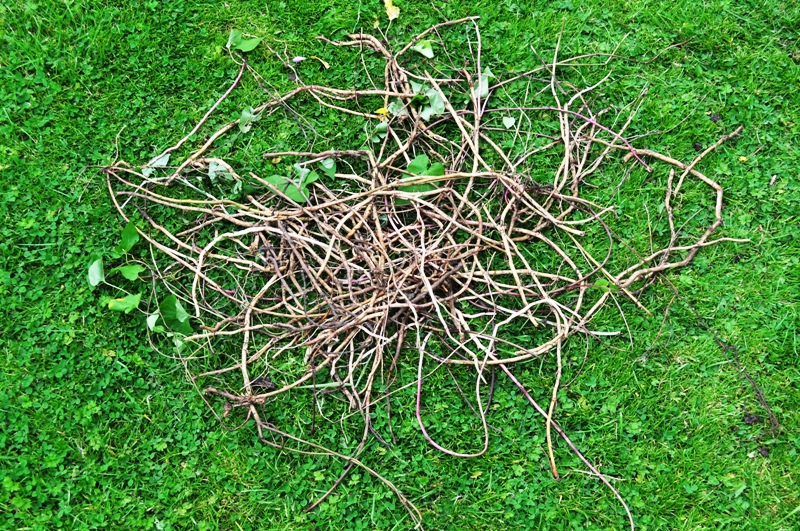
Having planted hollies earlier this year in a bed now mainly shrubs, the grasses and bamboo seemed out of place. So out they came, providing an opportunity to clear some of the pernicious bindweed which persists in my garden. The area was cleared of grasses, bindweed and periwinkle, and a Malus Sun Rival was planted. More
Topiary
8 July 2013
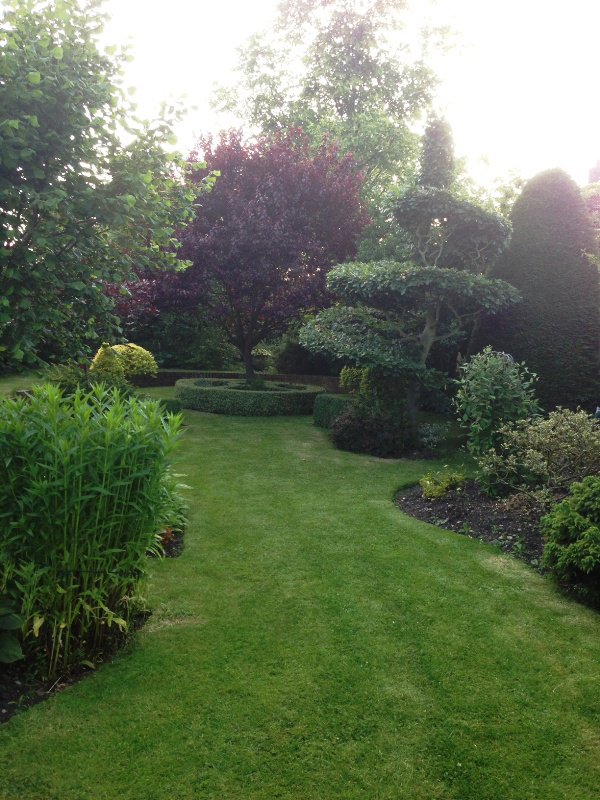
With Thornton Dale Open Gardens approaching on Sunday 14 July (1-5pm), all those summer jobs in the garden need doing at once. The biggest, after weeding, is probably clipping the topiary and hedging. The spiral beech tree at the top of the garden is a little more visible this year, with the conifer that used to be next to it felled over winter time. Also up here are clipped box and golden privet, and the newly transplated holly bed - where the conifer used to be. The hollies are just about hanging on.

Pergola boss
6 June 2013
I built an octagonal pergola to a Geoff Hamilton design many years ago (1995). It is now overgrown with ivy, golden hop and climbing hydrangea - as intended - and provides a pleasant shady retreat on a hot day (!) The central support - a plywood disc screwed on to the 8 beams - has rotted away and collapsed. I have tried a replacement oak boss for now.
Summerhouse
26 May 2013
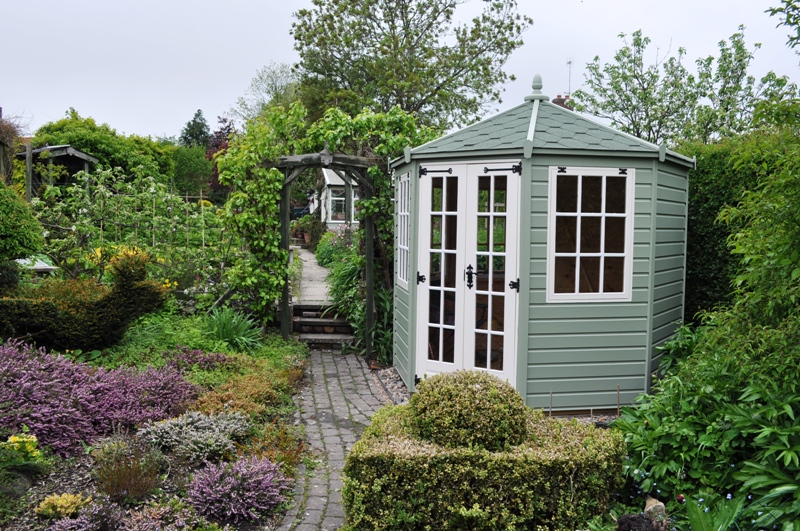
The summerhouse is up and moving towards completion. 8 prefabricted panels (from Regency Garden Buildings ) screwed together, and 8 roof panels likewise. Felt shingles on the roof, and a top boss turned from cedar. Painted in Farrow and Ball estate eggshell Lichen and full gloss White Tie. Still the inside to paint.
Erica in spring
28 April 2013
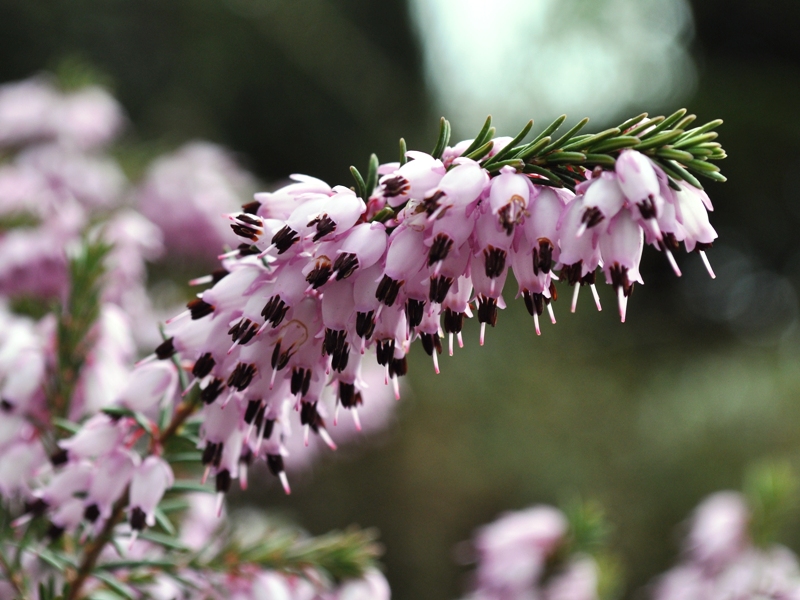
Some plants (perhaps most plants) are much better in closeup, and with heather this involves getting down on your knees and looking upwards. Three clumps of these plants were bought for £1 at the end of their season last year, when they were grubby, with left over brown husks of flowers, and clearly not appealing enough to be bought without a discount.
New paving and box hedging
23 April 2013
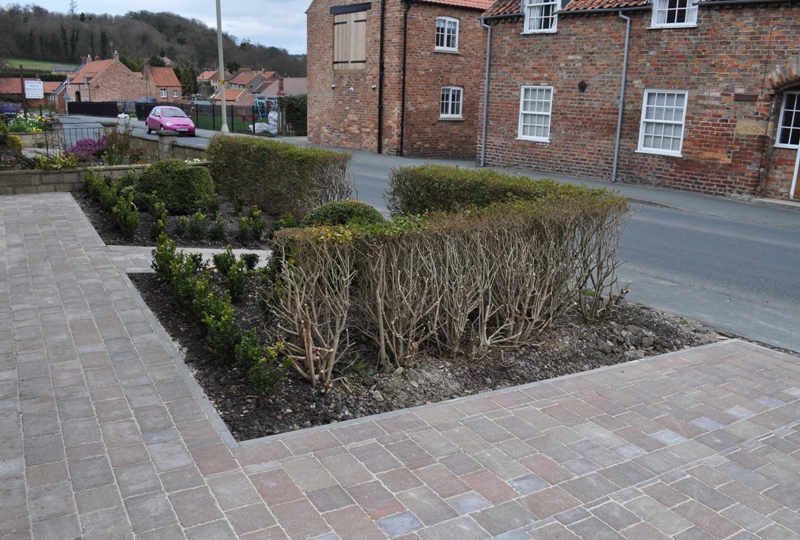
Finally the builders have laid the new drive and paths when the weather broke, and I have been planting box and privet. The cut-back hedge is starting to bud up. Everything is connected in my garden, so the tarmac removed was broken up and used as hard core for a new summerhouse base.
Spring heather (ericas)
April 2013
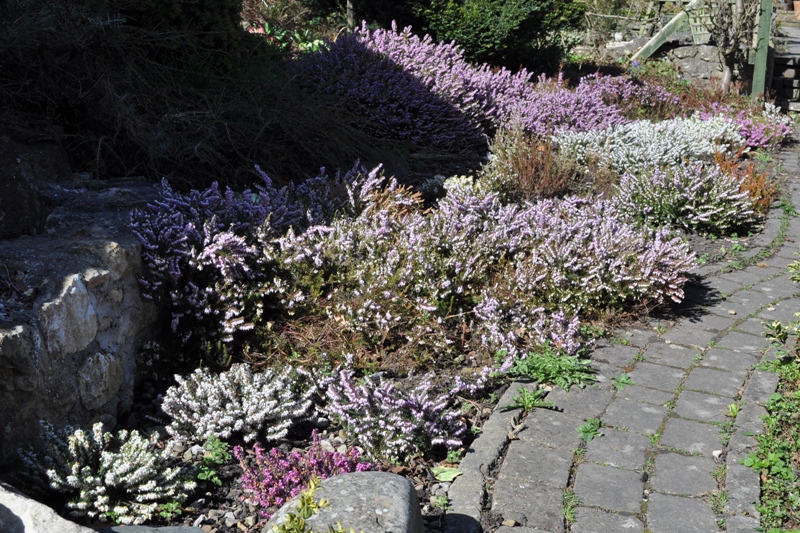
The late season and some judicious pruning and planting in autumn appears to have produced a fine spring display of ericas, much to the delight of the bumble bees. This area had become very overgrown, and it has taken three years to get it back to some kind of shape.
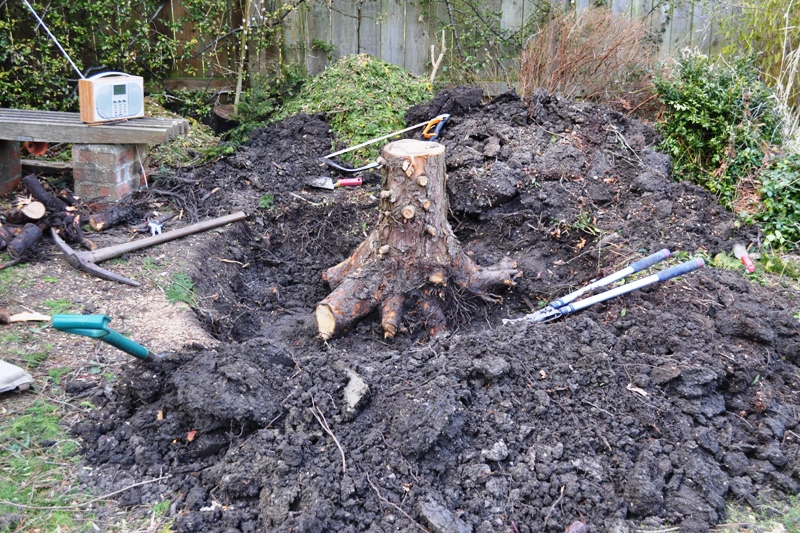
Cypress stump for removal
March 2013
I cut down a large cypress tree in the garden over winter, which was too tall and dominating a large area. I decided to dig out the stump so that I could plant a new tree (not another cypress!) and some shrubs. What a job - a couple days of sawing, digging, lopping, levering before it finally moved. Then dug the whole area over to remove the bindweed and periwinkle that had invaded. Quite a job in the end.
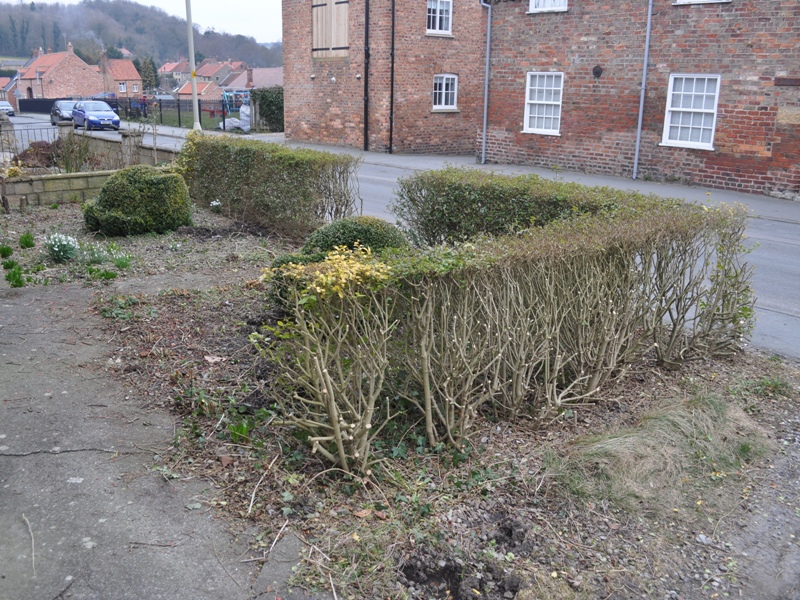
Severe hedge pruning
Feb-Mar 2013
The weather has not been condusive to gardening, but quite a lot of hard pruning and felling has gone on. We are planning a re-vamp of our front garden and tarmac driveway, so the privet hedge has been cut back drastically to where it should be. Further up the garden a tree has been felled, and some cotoneaster has been cut out. Lots of shredding to do!