
Oldfern woodland and parklands gallery - Scampston page 2
Ryedale, North Yorkshire
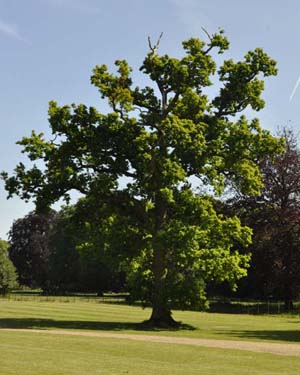
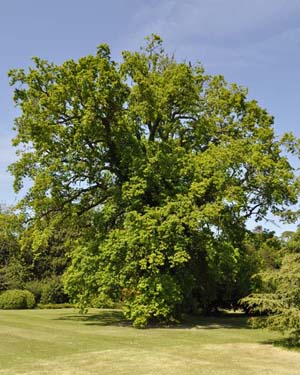
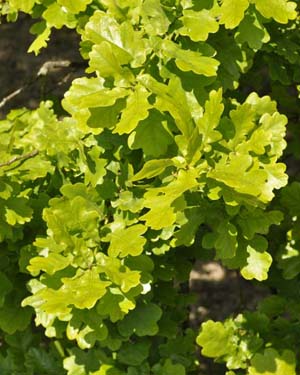
Quercus robur
English oak
There are many oak trees in the parkland. Here are just a couple, looking splendid with their fresh spring leaves. Some of the oaks are listed on the Woodland Trust's Ancient tree Inventory, though only as "notable" or "veteran", not having reached "ancient" status as yet.My favourite timber for turning, especially if there is some burr in it, which is almost inevitable with the larger specimens. It seems to have become less available in recent years.
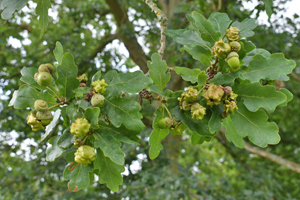

Andricus quercuscalicis
Knopper gall
Caused by a small wasp, whose larvae then feed inside the gall. They cause little damage to the Quercus robur host tree. More ...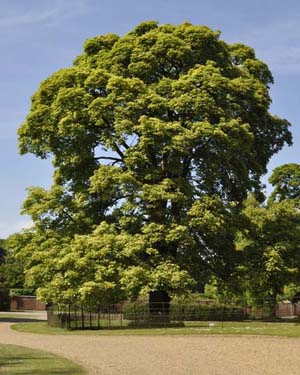
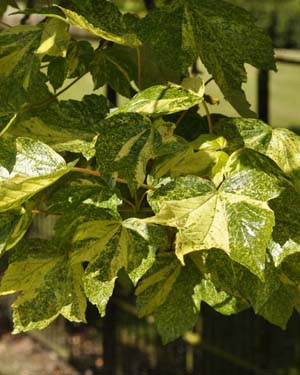
Acer pseudoplatanus forma variegatum
Sycamore
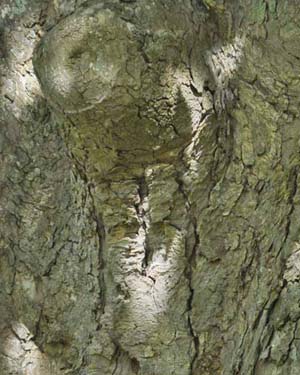
A large sycamore with curiously light coloured leaves, marking it as the forma minor difference to the species, such as leaf colour, flower colour or fruit variegatum. This one had a name plate on it, which only signified the standard sycamore variety, and not the form.I find that sycamore is the best timber for pyrography, with its smooth, tight grain making for even burning, and its light creamy colour providing good contrast for burns.
The Tree Register lists this as a "remarkable tree" in 2009. Girth 365 cm at 1.5 m high.
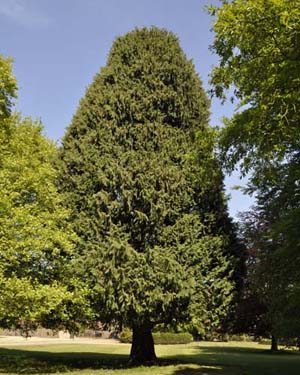
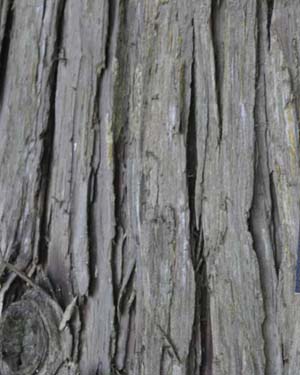
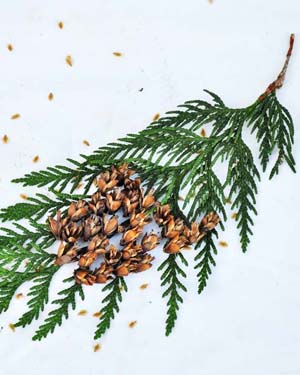
Thuja plicata
Western Red Cedar
A tree native to North America, but planted in the grounds of most British stately homes from the 1740s onwards. Canadian specimens exist at 70 metres tall and perhaps 700 years old.This one is, I think, a little younger.
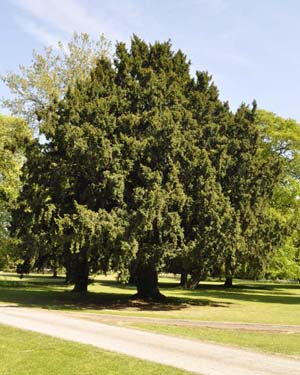
Taxus baccata
Yew
A large yew tree, quite unusual to be standing as a specimen tree on its own. Large yews are often seen in parkland in rows, having escaped from their original purpose as hedging and allowed to grow to their naturally large dimensions. This one looks like it is planted to reach maturity. I can't help thinking of the woodturning potential growing here!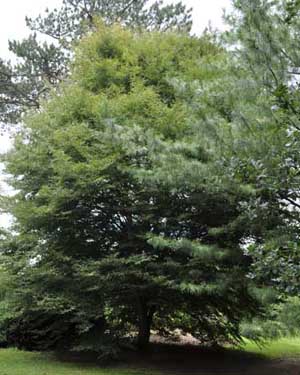
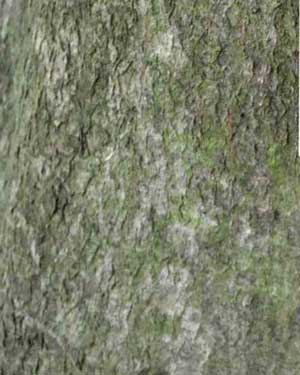
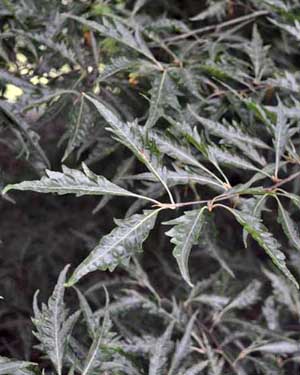
Fagus sylvatica asplenifolia
Fern-leaved beech
A cultivated variety of the common beech, with long, toothed, fern-like leaves.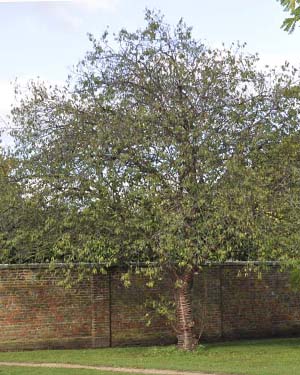
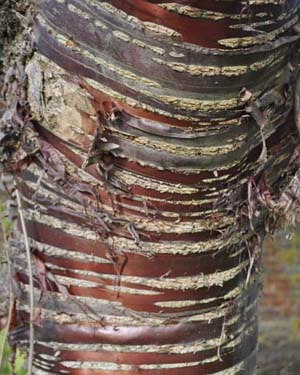
Prunus serrula
Tibetan cherry
Standing next to the American black walnut is a Tibetan cherry, a popular ornamental tree in parks and gardens across the country. The main attraction is its bright red papery bark, with horizontal lenticels a loosely packed mass of raised pores in the bark of a woody plant, visible on the surface of a stem as a raised powdery spot, through which gaseous exchange occurs banding around the trunk.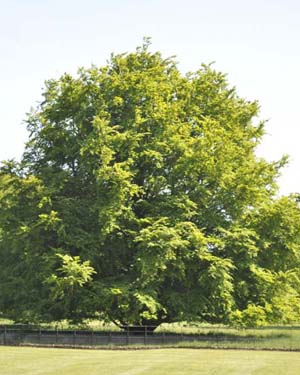
Fagus sylvatica
Beech
This fine large tree was in the distance, and I couldn't help but take a photo, though I didn't have time to get close enough to see if it had a name, or see what the leaves were like. Inspection on subsequent visits confirm it as a beech.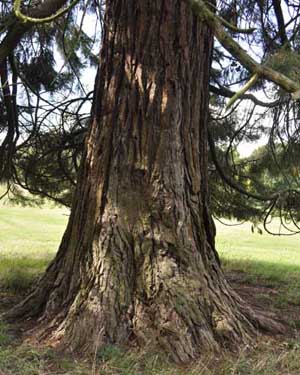
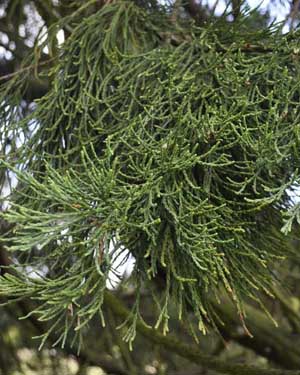
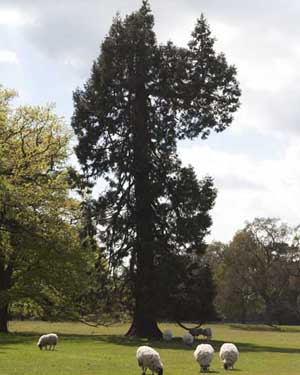

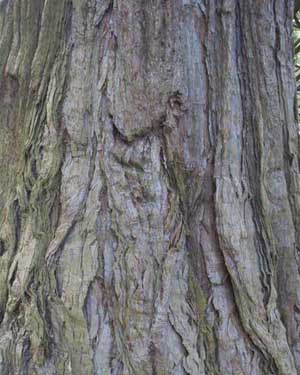
Sequoiadendron giganteum
Giant redwood
Wellingtonia or Californian redwood, growing to enormous heights in its native range - 100 m is possible, 50 m in Britain - and enormous girth. There was something of a craze for planting these in Victorian times, following their discovery in America in 1852.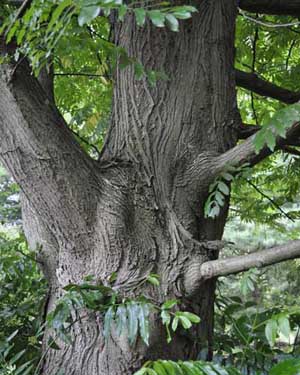
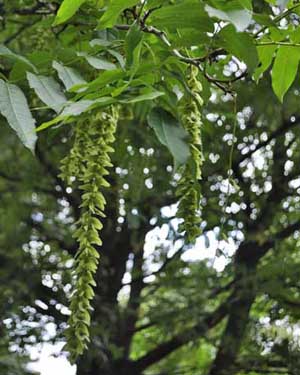
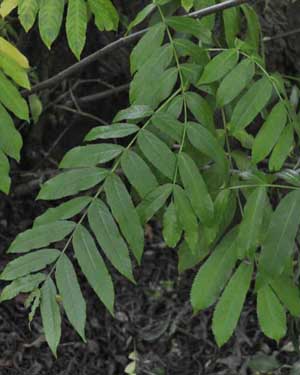
Pterocarya fraxinifolia
Caucasian wingnut
Introduced to the UK in the 1800s. Related to walnut. 30 - 50 cm catkins with a chain of green wingnuts.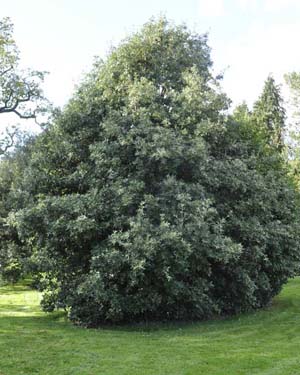
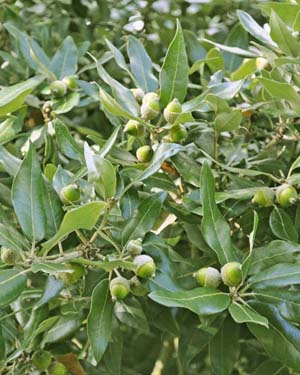
Quercus ilex
Evergreen oak
Introduced to the UK in the 1500s , an evergreen broad leaved tree. Pictured here are immature green acorns, smaller and more pointed than those of the common oak. This one has possibly been pollarded the process in which the main branch systems of trees are pruned heavily to short stubs at some point - it has a thick trunk, but branches break out right down to ground level.

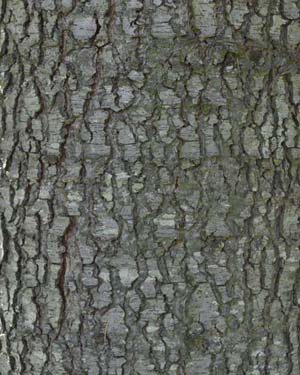
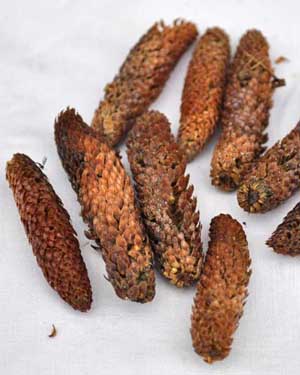
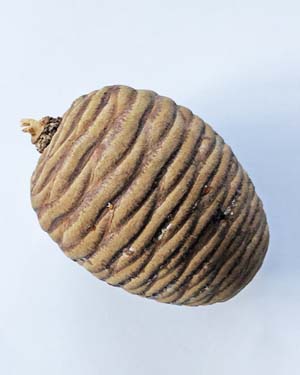
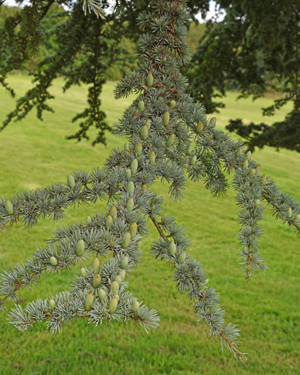
Cedrus atlantica
Atlas Blue Cedar
A native of the Atlas mountains in Morocco. A large, evergreen tree, conical when young, as here, broadening with age with horizontally-spreading branches and downy young shoots. Narrow, needle-like leaves to 3.5cm long are a dull green to grey-green colour.Barrel-shaped, erect cones ripen to brown and mature over two years, breaking up whilst still on the tree. This one is planted on the East side of the small lake, on the Cascade Walk. The cones shown here on the left are male "stroboli". On the right is a picture of a female cone - though it is not actually from this tree.