×
![woodturning]()

Trees gallery - Beningbrough Hall
York, North Yorkshire
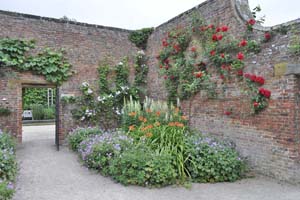
More from the informative National Trust Beningbrough Hall site.

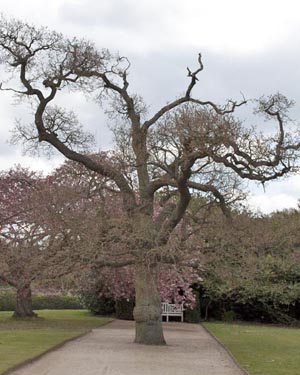
Quercus robur "Variegata"
The Duke of Cambridge Oak
A nationally significant tree - the fourth largest variegated English oak in the country. This tree was planted in 1898 by the then Duke of Cambridge, the 79-year old grandson of George III.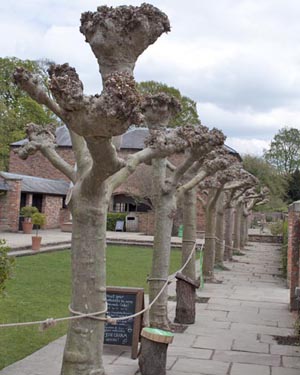

Platanus x acerifolia
London plane pollards
Heavily pollarded the process in which the main branch systems of trees are pruned heavily to short stubs London plane trees lining the terraced garden in the restaurant area. These provide shade for outdoor dining in the summer, and sculptural forms in the winter.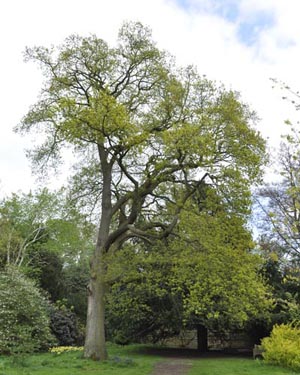
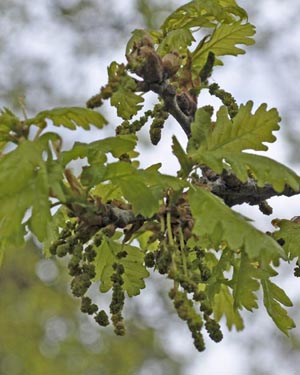
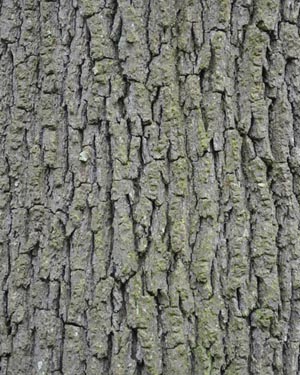
Quercus robur
Oak
A tall oak in the American garden, with bright green young leaves and catkins. This could be the lightning oak, with a lightning strike scar down its side, but it may be that is another oak nearby. Another trip necessary to confirm.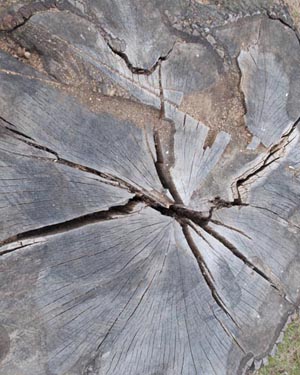

Quercus cerris
Tree stump
Trees eventually succumb to disease and die, or become too dangerous and need to be felled. Peter Garbutt emailed me in 2023 to tell me this was a large Turkey Oak, damaged by gales and disease.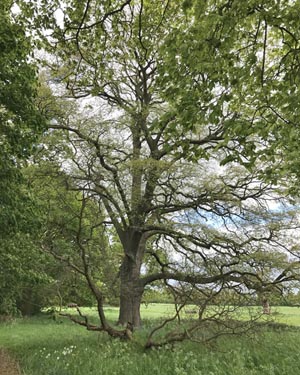
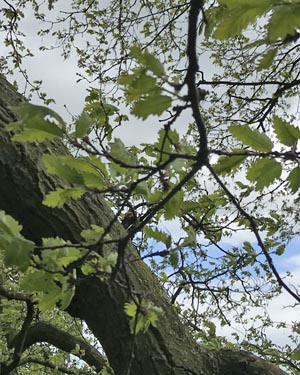
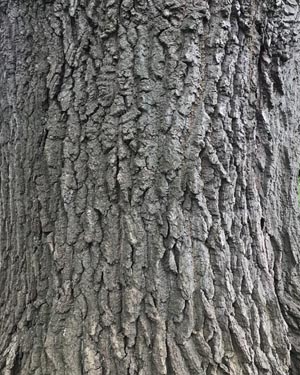
Quercus cerris
Veteran Turkey oak
According to the Ancient Tree Inventory, there are still two Turkey oaks standing on the HaHa walk, near to the stump shown above. One has lost its crown, the other is looking good - pictured here.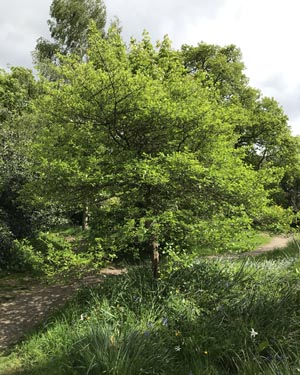
Crataegus persimilis prunifolia
Cockspur hawthorn
A small, broad-crowned, deciduous tree with four seasons of interest. In late spring, it is generously covered in dense clusters of strongly fragrant, white flowers and provides a spectacular floral display. Later it has bright red berries in profusion. It is also called the plum-leafed thorn, which reflects the Latin name.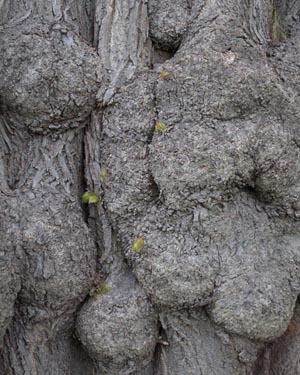

Tilia
Lime
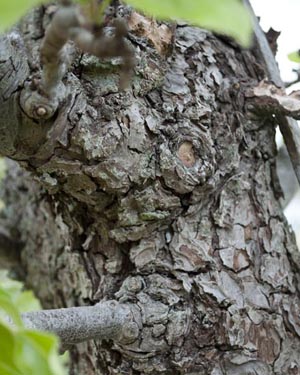
This lime is covered in burrs it will make some beautiful woodturning one day, but hopefully not before it has lived a long and fascinating life. The clock is made from a lime burr.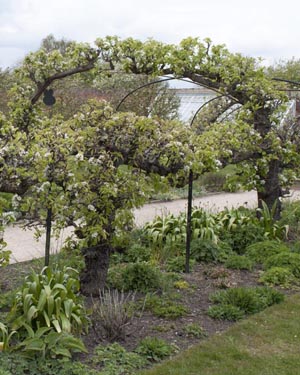
Pyrus communis
Victorian pear arch
Arguably the most iconic feature of Beningbrough's gardens, the pear arch is made up of 20 individual trees. The arch was planted in the 1890s and is an original feature of the Victorian walled garden, along with the greenhouse.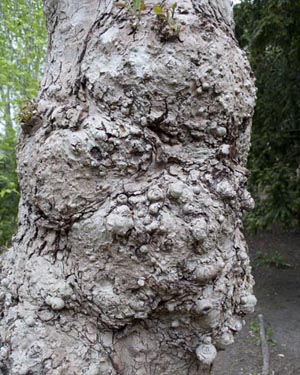
Platanus x acerifolia
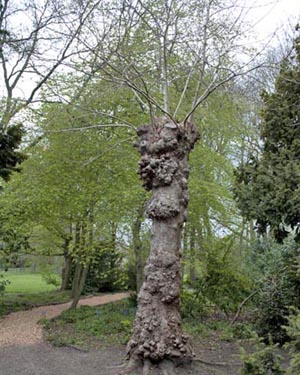
London plane burrs
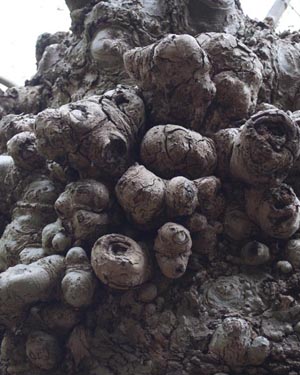
A large stump near the ha-ha at the rear of the Hall, covered in burrs from roots to crown. Head gardener Sam Shipman says it is a London plane which has been heavily pollarded over the years.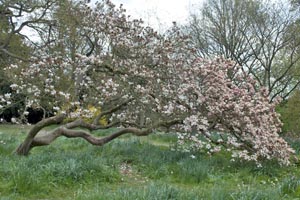
Rhododendron
A large spreading rhododendron in flower in the American garden. This is possibly the variety "Cunningham's blush". Native to the Himalayas and China, the 'ponticum' variety of these spectacularly colourful trees has become enemy number one in woodlands where plants that have escaped from stately home parks have colonised and blocked out native flora and fauna.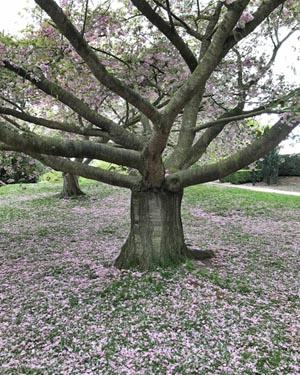
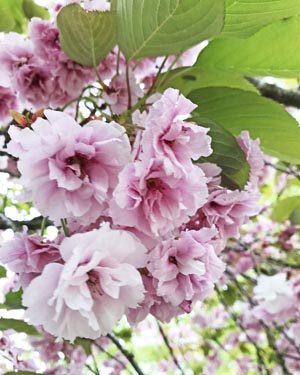
Prunus spp.
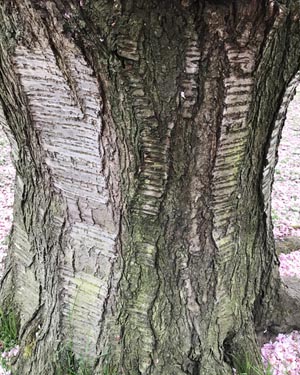
Cherry
Noted as a veteran tree in the Ancient Tree Register, with a girth of 2.43m. Absolutely masses of flowers, on the trees and like pink snow on the ground.
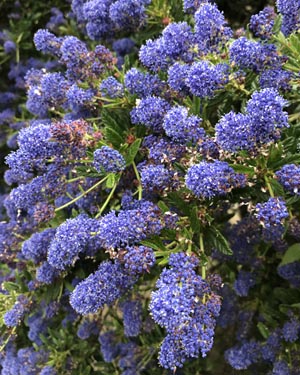
Ceanothus concha
Californian lilac
A large ceanothus growing against the wall on the path between the walled garden and the hall. These can grow to 3m tall, and are one of the few true blue flowering shrubs. They can be fairly short lived.

