×
![woodturning]()

Trees Gallery - Scampston Hall
Ryedale, North Yorkshire
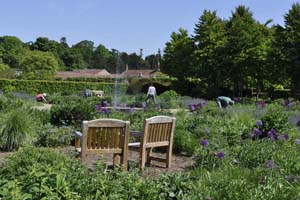
In the walled garden at Scampston
Scampston Hall is owned by the Legards, with a wonderful contemporary walled garden, designed by Dutch plantsman Piet Oudolf in 1999, and opened to the publc in 2005. It's 80 acres of parkland evolved in the 18th century, culminating in a design by Capability Brown in 1782. Scampston Hall website. Leaflet Map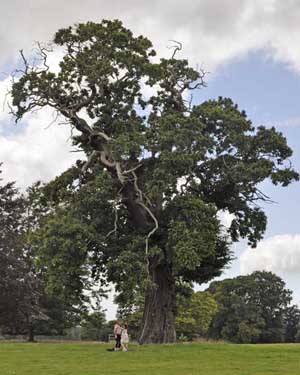

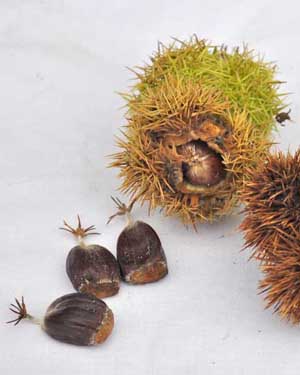


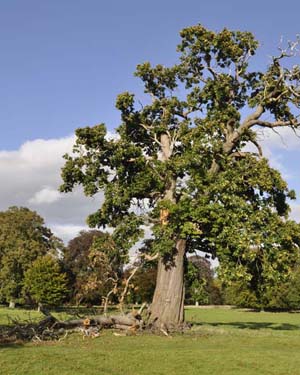
Castanea sativa
'Spanish' sweet chestnut
This old chestnut was planted in the middle of the 18th century - in the reign of George III, making it more than 250 years old (they can live to over 1000 years). The trunk shows the classic twist of large chestnuts. A native of southern europe, introduced to the UK by the Romans, and popular for estate planting from the 17th century onwards. In September 2021 a very large branch broke away. I asked what was to happen to it, the result being that Ryedale Woodturners chopped it up and removed it for woodturning projects.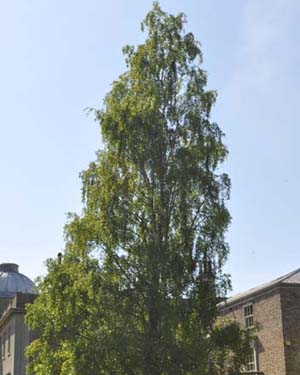
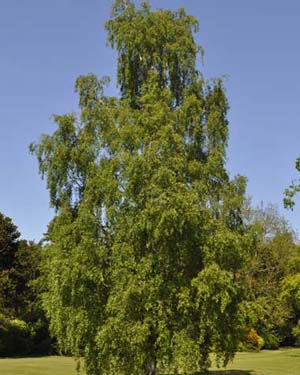
Betula pendula
Silver birch
The parkland has many fine specimens of native British trees, standing alone in the cut grassed areas, allowing their size and shape to be admired. Here are two birch trees on the East side of the house.
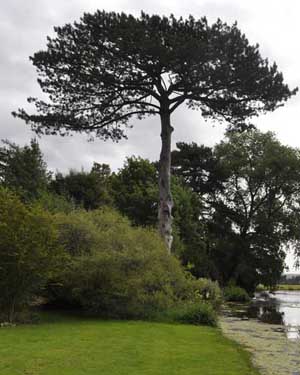
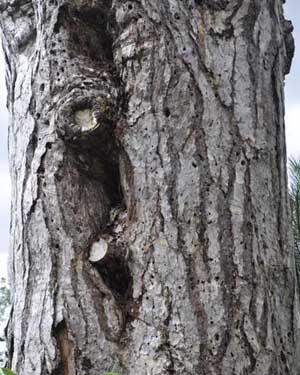
Pinus sylvestris
Scots pine
The only native UK pine, and one of only 3 native conifers. It can grow to 35m, and live for 700 years. This one at Scampston has lots of holes in the bark, probably made by woodpeckers. It grows near the lake, and always seems to have plenty of cones on the ground (for collecting!)
Fagus sylvatica purpurea
Copper beech
A huge copper beech, showing what height and width this common tree is capable of - a warning to anyone planting the native variety in their garden! Better to look for the "nana" version. (Yes - I have one in my garden, though I didn't plant it. It was there as a young tree before I arrived. 35 years on and it is getting a bit large!)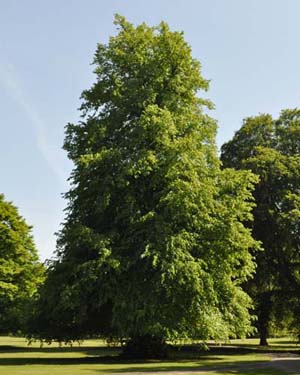
Tilia x europaea
Common lime
Tall and slender, with a wide trunk bursting with burrs. A very common tree, much prized for woodcarving, slightly less so for woodturning, though there are some interesting burrs to be cut on this one.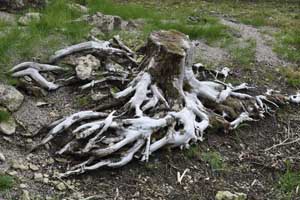
Tree stump
An old stump left in the old rockery, which in 2021 was undergoing restoration - a complete clearing of all plants, and probably chemical treatment, to rid the area of invasive weeds ahead of replanting. There is a page of tree "features" such as stumps, roots, lichen, moss and mistletoe.


Platanus acerifolia
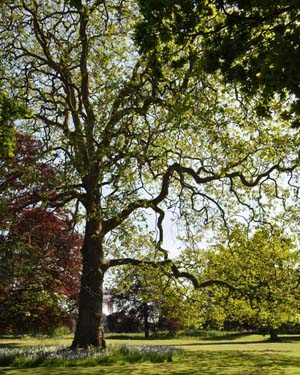
London Plane
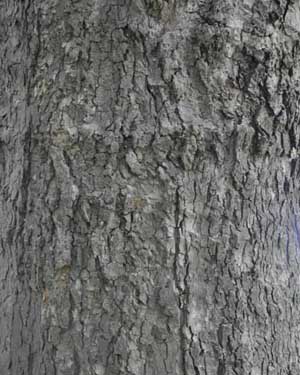
Contorted twisting branches silhouetted through the relatively sparse covering of leaves on this London plane tree. At its base is a circle of bluebells (some of which are white).A later visit in August found another London Plane. Glossy leaves with the typical five point acer family shape. A tight, scaly bark on a trunk has a tall stand before branching out. This particular tree does not show the more typical scaly, flaky bark common to plane trees, perhaps because of a slower growth rate.
Araucaria araucana
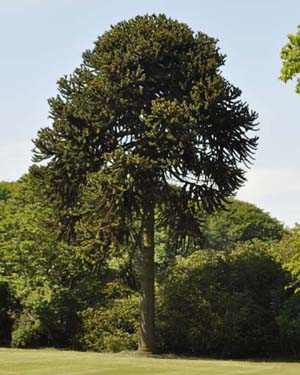
Monkey puzzle tree
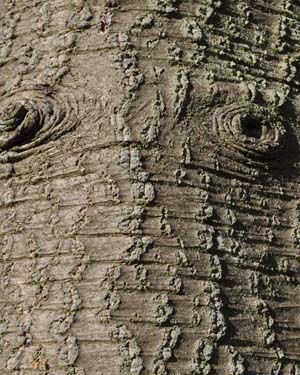
The monkey puzzle or Chilean pine is not one of the native British trees in the park, having being introduced to Britain by the Victorians. It is now a fairly common sight in the UK, including some planted in fairly small gardens which would do well to check out the mature heights - this one is probably still quite young at around 150 years old.