×
![woodturning]()

Oldfern woodland and parklands gallery - Scampston page 3
Ryedale, North Yorkshire
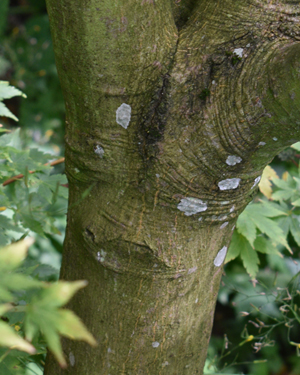
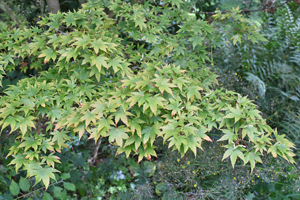

Acer palmatum sango-kaku?
Coral bark maple
There are two handsome acer trees in the parkland, on the east side of the lake near the large Scots pine. Both acer plamatum, I think this one is possibly sango-kaku, the coral bark maple (compare ones at Antony House and Trelissick). I have asked the Hall for identification if possible.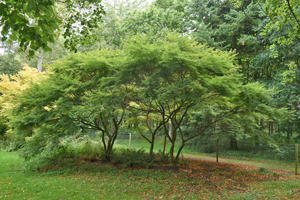
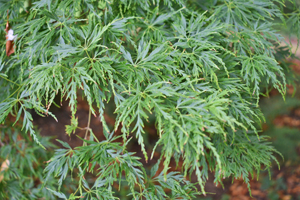
Acer palmatum dissectum
Cut-leaved maple
Another acer, this one with lace-like delicate cut leaves, growing next to the sango-kaku in the parkland.
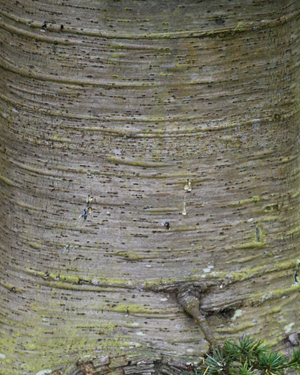
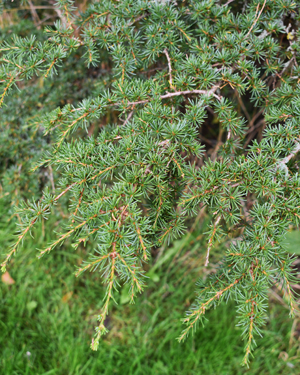
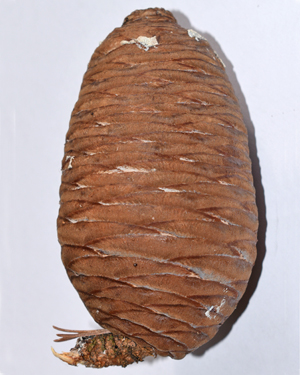
Cedrus libani
Cedar of Lebanon
This is a young version of what will become a majestic, large tree (have a look at three large versions at Constable Burton). One of three "true" cedars, the others being the Atlas and the deodar. Calocedrus decurrent, thuja plicata, and cryptomaria japonica are called incense cedar, western red cedar and Japanese red cedar because of their scent, but they are different species.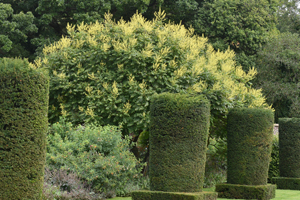

Koelreutaria paniculata
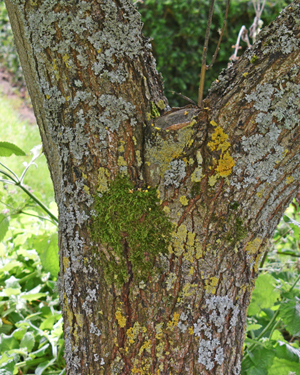
Golden rain tree
Also called Pride of India or Chinese lantern tree. A medium sized (10 - 20m) deciduous tree native to S and E Asia. It bears masses of small yellow flowers on panicles loose branching cluster of flowers , which become 3-lobed papery capsules holding nutty seeds. They have long pinnate compound leaf that has leaflets arranged in 2 rows either side of a midrib like a feather leaves. They are being grown here to divide the Quiet Garden from the swathes of molinia grasses, cutting out the view from one to the other.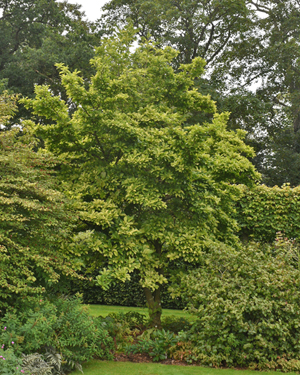
Magnolia x loebneri
Magnolia
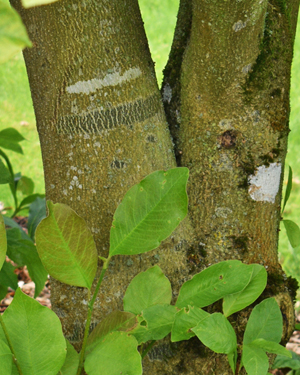
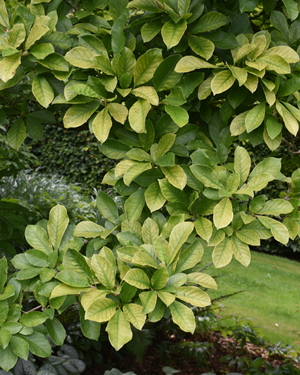
A hybrid developed by Max Loebner, crossing M. kobus and M. stellata. It would be covered in white flowers in spring, but our visit was in August, so we had to make do with leaves and overall shape. Growing in the corner of the Serpentine Garden.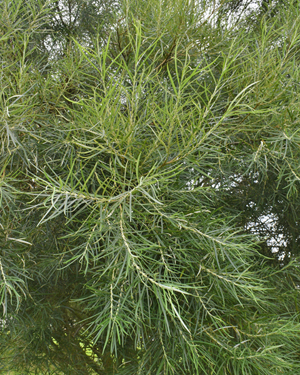
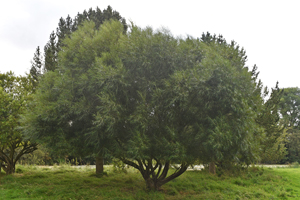
Salix Elaeagnos
Olive willow
I am reasonably confident of my identification of this large shrub growing on the edge of the middle lake. Also called bitter willow, hoary willow, rosemary willow, or elaeagnus willow. A neophyte a plant not native to a region, introduced and escaped into the wild in recent history (after 1500) in the UK, originally planted in the early 19th century as an ornamental.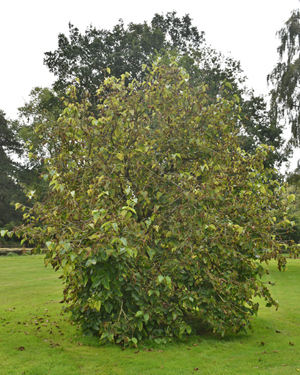

Morus nigra
Black mulberry
A native of SW Asia, it has been cultivated in the UK since the 16th century, and is a neophyte a plant not native to a region, introduced and escaped into the wild in recent history (after 1500) , with escapes mainly in southern England. If allowed this bush could develop into a medium sized tree - 12m tall, 15m wide.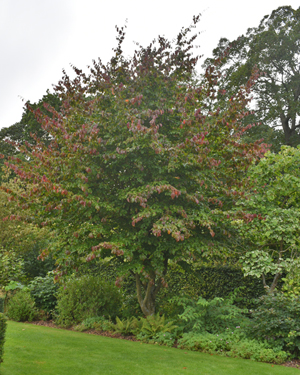
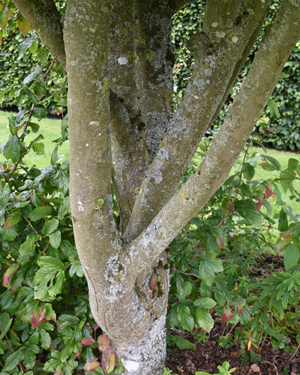
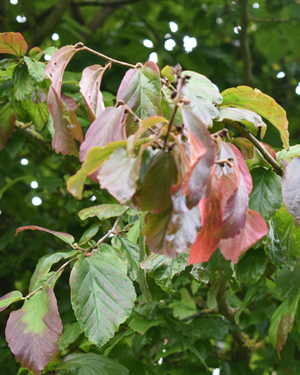
Parrotia persica
Persian ironwood
A native to Iran, it can grow quite quickly to 30m. Widely planted in gardens and parkland for its brilliant show of colour as the leaves turn in autumn, and for its smooth exfoliating loss of skin (bark) bark.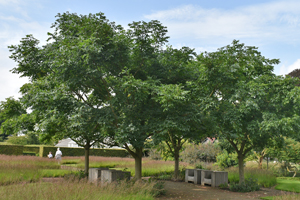
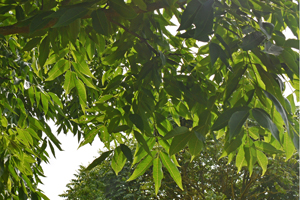
Phellodendron Chinense
Chinese cork tree
A group of four phellodendrons form the centre of the molinia grass garden. Medium sized (10-15m), they are Chinese natives.
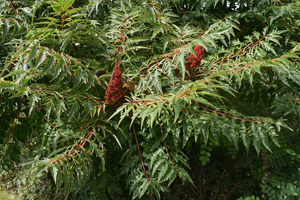
Rhus typhina
Stag horn sumac
A native to E North America, with impressive flower spikes, and brilliant red autumn colour.
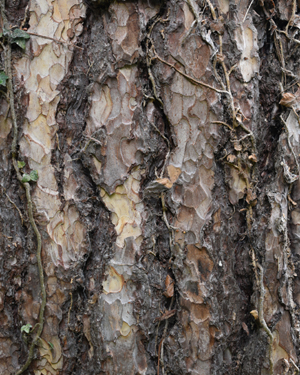

Pinus nigra maritima
Corsican pine
A subspecies of the black pine, with good resistance to coastal weather. Less branched than its close relative the Austrian pine (subspecies austriaca). Native to the mediterranean island of Corsica, it has been planted across Europe for ornament and for timber, having a straight trunk and horizontal branches.