×
![woodturning]()

Trees gallery - Isle of Man
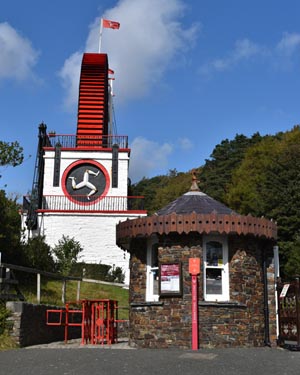
In terms of spotting trees we visited the national park and arboretum at St John's, the gardens at Milntown (an RHS Partner Garden) and at Grove House (Manx National Heritage), both near Ramsey. We also saw many interesting trees as we drove around. Sadly we didn't get any distance into the many wooded glens, nor to the Garey ny Cloie on the A40 route between St John's village and Foxdale, a public garden with an assortment of trees and shrubs garden (though I did find a leaflet).
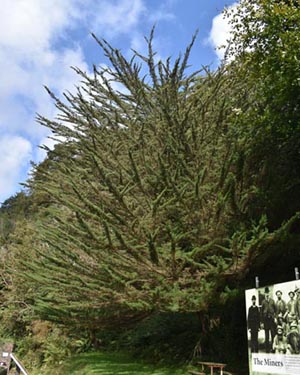
Cupressus macrocarpa
Monterey Cypress
A compact version of this tree, growing by the Great Laxey Wheel. Possibly an escape, probably amenity planting. There were a number of similar shaped specimens around the island on roadsides or in gardens, compact with the upward facing needles on almost horizontal branches. In contrast to the tall, sparsely branched versions with multiple trunks in the Scillies.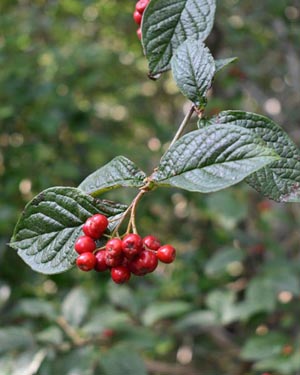
Cotoneaster bullatus
Hollyberry cotoneaster
A common sight around the island in gardens, hedgerows and moorland. A large deciduous shrub, with bright shiny-red berries, found naturalized in woodland, scrub, hedgerows and quarries, and on railway banks, roadsides, sand dunes, cliffs, walls and waste ground. Reproduction is by seed, which is frequently bird-sown. (BSBI Plant Atlas description). A neophyte a plant not native to a region, introduced and escaped into the wild in recent history (after 1500). in the UK, originating from W. China. It is listed, aong with other cotoneaster species bullatus, horizontalis, integrifolius, simonsii, microphyllus , on Schedule 9 lists non-native plants which are established in the wild which may not be released or allowed to escape into the wild unless authorised by a licence. of the UK Wildlife & Countryside Act as an invasive species.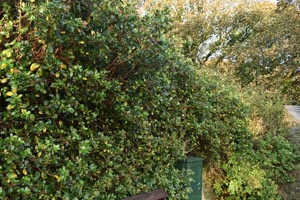
Escallonia
Escallonia
An evergreen shrub, planted as a hedge, windbreak and wall-covering especially near to the coast and found naturalized in woodland and on cliffs, banks, roadsides and waste ground, and as a persistent relic of cultivation. Reproduction is by seed although it appears to be rarely self-sown. Lowland. (BSBI Plant Atlas description). A neophyte a plant not native to a region, introduced and escaped into the wild in recent history (after 1500). in the UK, originating from Chile.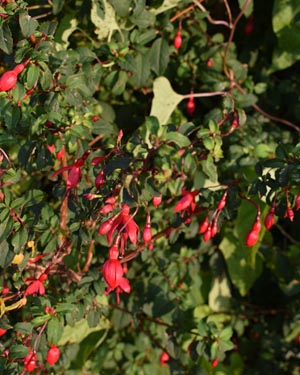
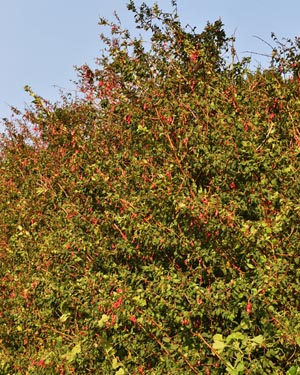
Fuschia (probably magellanica)
Hardy fuschia
A spreading deciduous shrub, planted in gardens and for hedging, often found surviving in the gardens of abandoned cottages or naturalized in hedgerows, scrub, by streams and amongst rocks and on walls. Reproduction is by suckering and from bird-sown seed. Generally lowland.( BSBI Plant Atlas description). A neophyte a plant not native to a region, introduced and escaped into the wild in recent history (after 1500). in the UK, originating from S Argentina and Chile. Head gardener at Milntown, Adam Quayle, on Gardeners' World (July 2021) said "F. magellanica is often called the Manx fuschia. Brought over in the 1850s it has escaped and naturalised all over the island."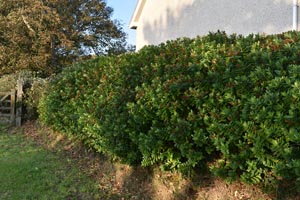
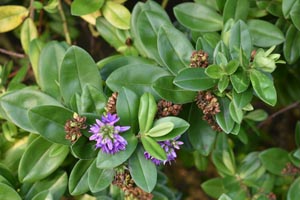
Hebe x franciscana
Hedge veronica
An evergreen growing up to 2m. Also listed as Hebe elliptica x H. speciosa, and also commonly called veronica or shrub speedwell. It is well naturalised across the island on coastal waste ground, rocky places, paving and walls, and sea-cliffs. It is a neophyte a plant not native to a region, introduced and escaped into the wild in recent history (after 1500). in the UK, originating from New Zealand.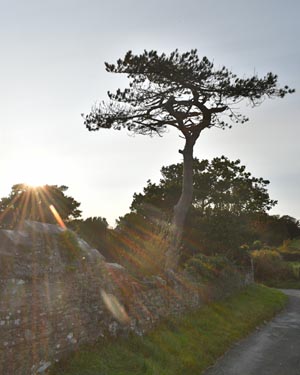
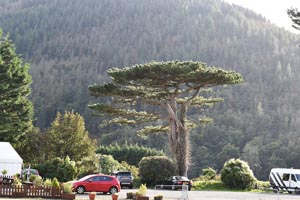
Pinus sylvestris
Scots pine
Sculptural forms of two Scots pines, one silhouetted against the skyline at Maughold, the other in the car park of The Tynwald Inn at St Johns, against the background of the plantation forest on Slieau Whallian Started in 1906 by the Manx Aboricultural Society, with re-stocking in 1989 of mixed broadleaf and conifers. . Scots pine are one of only 3 conifers native to the UK (along with juniper and yew). They can grow up to 35m, and live for 700 years.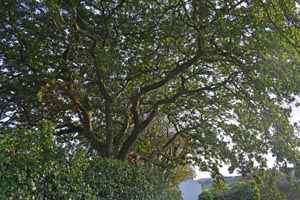
Quercus cerris
Turkey oak
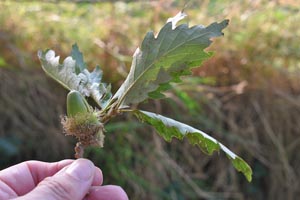
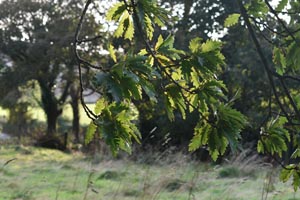
A Turkey oak growing on the edge of the graveyard at Kirk Maughold. A neophyte a plant not native to a region, introduced and escaped into the wild in recent history (after 1500). , first noticed in the wild in the 1850s, having been introduced in the 1730s. It is becoming invasive, growing much faster than our native oak. Acorns have a distinctive hairy cup.