×
![woodturning]()

Trees Gallery - Raby Castle
Near Staindrop, County Durham
www.raby.co.uk
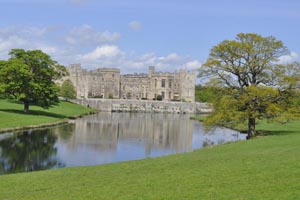
Raby Castle in County Durham is surrounded by 200 acres of lush green parkland, with specimen trees: old oaks, beech, lime and sycamore. It also has 5 acres of traditional 18th century ornamental walled gardens which include fabulous yew hedges, a fig house, rose garden, trees, plants and ornamental features.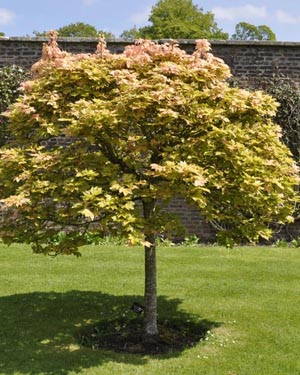

Acer pseudoplatanus brilliantissimum
Sycamore
With bright salmon coloured leaves in spring, turning to dark green later. A cultivar of the common sycamore, only growing to around 8 m in 50 years.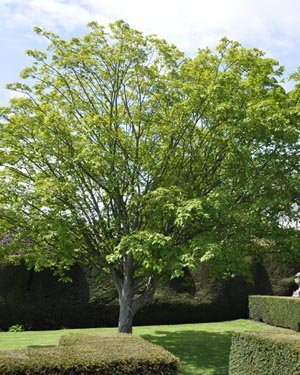

Acer davidii
Snake bark maple
Native to China, named after French botanist Pere David (1826 - 1900). A small (10 - 15 m) deciduous tree, with leaves turning yellow, red and orange in autumn. Pale vertical stripes on the bark.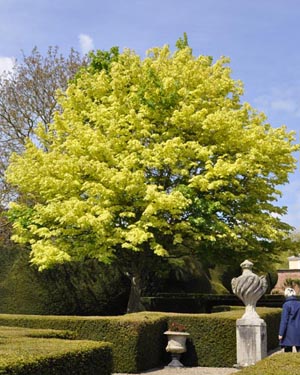
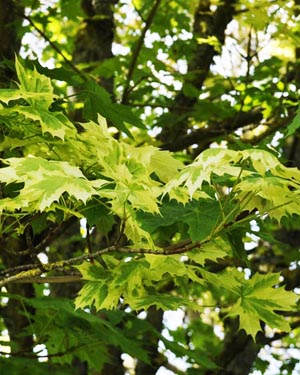
Acer Platanoides Drummondii
Variegated Norway maple
A maple cultivar with creamy white edged variegated leaves, turning orange in autumn. Masses of bright yellow flowers in spring - as shown here. Named after Scottish botanist Thomas Drummond (1790 - 1855).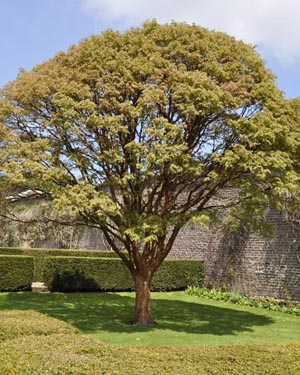
Acer griseum
Paper bark maple
Native to China, introduced to Europe in 1901. The flaking translucent orange bark is often lit up by sunlight, and the leaves turn brilliant shades of red and orange in autumn. A small to medium sized tree reaching 6 - 9 m height, and 5 - 6 m in width. Griseum means grey - relating to the underside of the leaves, not the bark.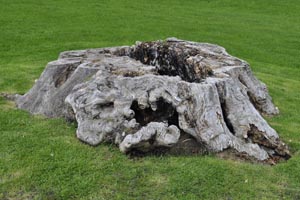
Acer pseudoplatanus
Sycamore stump
On the right as you drive in to the castle grounds. Listed in the Tree Register as a remarkable tree in 2016, with a height of 23.5 m, and girth 6.65 m. Sadly now felled (by 2021), but the stump remains as a reminder, and a fascinating mix of rot, decay and stubborn resistance.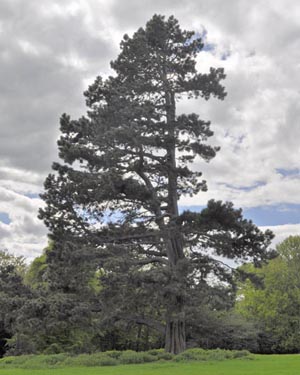


Pinus sylvestris
Scots pine
Standing in the parkland at the top of a hill is this fine pine tree. I suspect it is the Scots pine rather than the Austrian pine. The cones in the picture are male cones, clustering around the young shoots.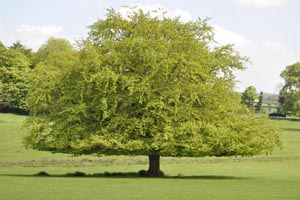
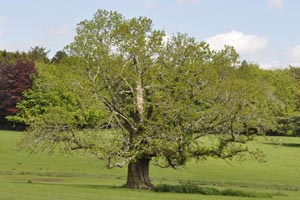
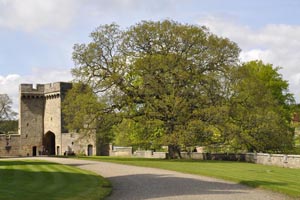

Quercus robur
Oak
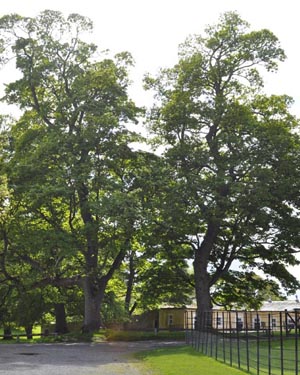
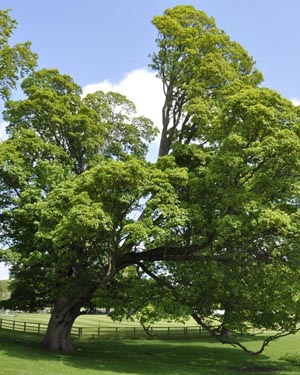
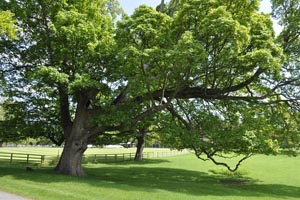
The parkland has many fine old oak trees standing proudly as specimen trees on their own. These are just a few.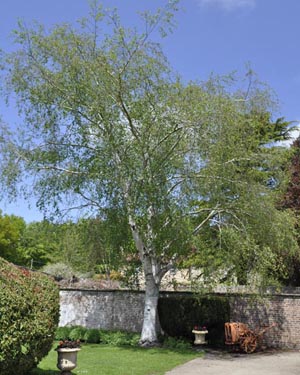

Betula pendula Youngii
Weeping silver birch
Youngii is a cultivar of the standard silver birch, with dense, twiggy, weeping growth. With no central leader, it requires grafting onto a standard stem of normal silver birch. Named after Alfred Prentice Young (1841 - 1919) a British botanist born in Bombay.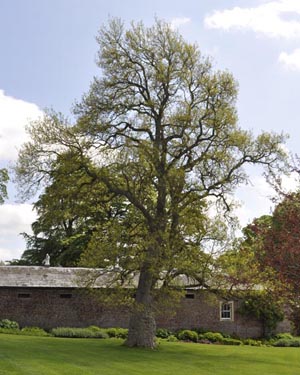

Liriodendron tulipifera
Tulip tree
Native to North America, introduced to Britain in the 17th century. We were too late to see the flowers (which appear in May - this is a member of the magnolia family) but the distinctive leaves (and a label!) give the identity of the tree away.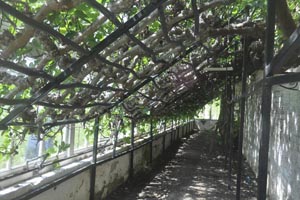
Ficus carica
Fig "White Ischia"
Brought from Italy in 1786 by Viscount Barnard, making it around 240 years old. A single tree, growing in its own house, which was renewed and enlarged in 2006-7. Native to Syria and Persia, not fully hardy in the UK - hence the warming wall and glasshouse.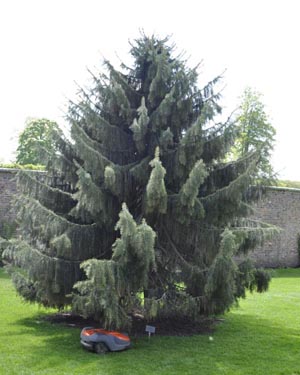
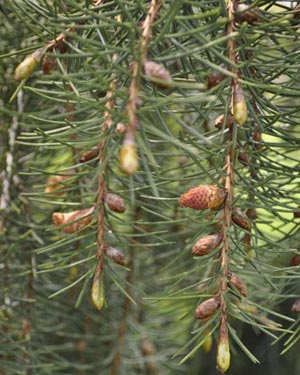
Picea breweriana
Brewer's weeping spruce
Presented to Lord Barnard in 1996 in recognition of 60 years of support for the National Garden Scheme. A relatively rare native of western North America, named after American botanist William Henry Brewer (1828 - 1910). Long hanging cones. Relatively slow growing.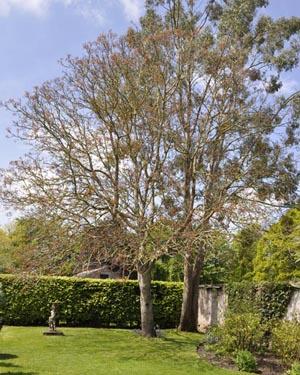
Juglans regia
Common walnut
A young walnut. Juglans regia is a large deciduous tree, attaining a height of 25–35 m (80 to 120 ft), and a trunk up to 2 m (6 ft) in diameter, commonly with a short trunk and broad crown, though taller and narrower in dense forest competition. They can live for 200 years. Catkins in spring are followed by glossy green pinnate leaves, which contain a natural herbicide, juglone, which limits undergrowth.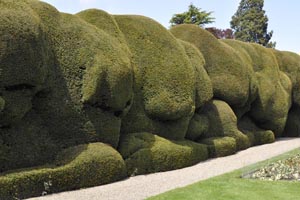
Taxus baccata
Yew
The large clipped yew hedges have been a feature in the garden for approaching 200 years - they are shown on an 1854 map - and have been incorporated into the more modern design (20th century) of the gardens as dividers between different areas of planting.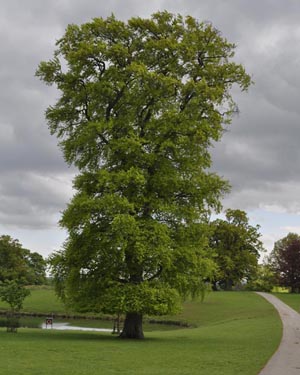

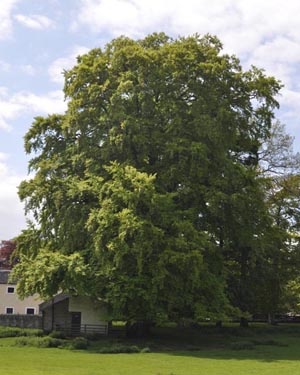
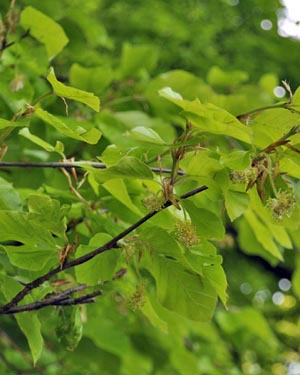
Fagus sylvatica
Beech
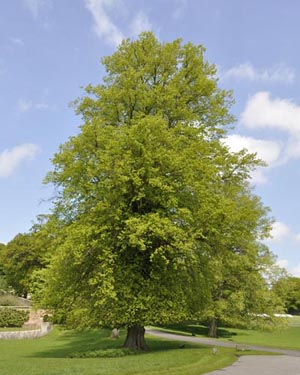
The parkland has many fine old beech trees which stand majestically as specimen trees. I have identified them from their leaves, so I hope I have it correct. I suspect different varieties given the variation in shape, but do not know enough to distinguish them.