×
![woodturning]()

Trees Gallery - RHS Harlow Carr - page 1
Crag End, Harrogate
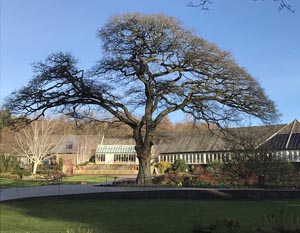
Harlow Carr Gardens
The Royal Horticultural Society took over Harlow Carr gardens from the Northern Horicultural Society in 2001. They had leased 26 acres of woodland from Harrogate Council, opening a botanical garden in 1950. The gardens have been developed to provide all year interest: some of these pictures were from visits in November, December and January, when the structure of the trees reveals itself; othrs are from spring and summer visits when flowers and leaves come to the fore.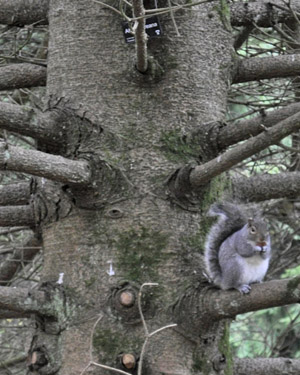 November 2021
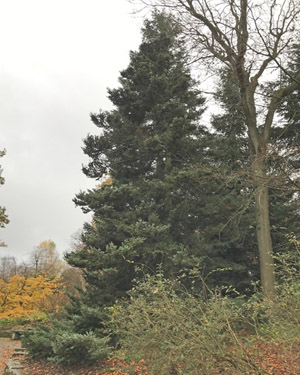 November 2021
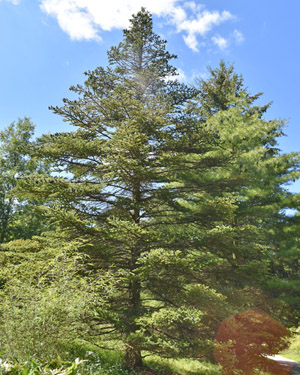 July 2022
 July 2022
 July 2022
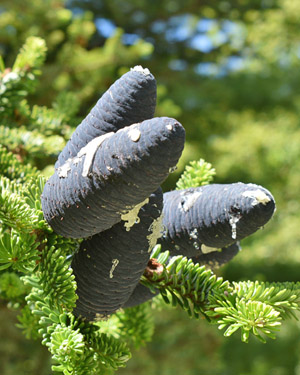
Abies koreana
Korean fir
Native to the higher mountains of South Korea, including Jeju Island. A small to medium-sized evergreen coniferous tree growing to 10–18 m, with a trunk diameter of up to 0.7 m. The bark is smooth with resin blisters and grey-brown in colour. The winged seeds are released when the cones disintegrate at maturity about 5–6 months after pollination. A squirrel was happily sat on a branch - there are lots of them in the garden, particularly near the bird hide, where they forage for fallen seeds and nuts.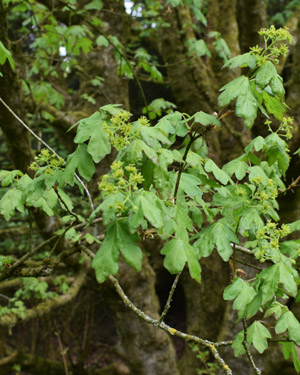 July 2022
 July 2022
 July 2022
 July 2022
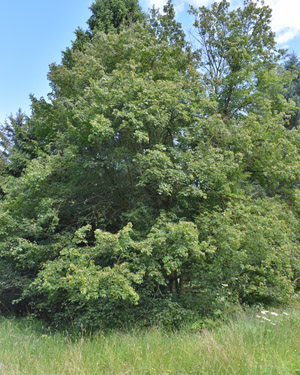
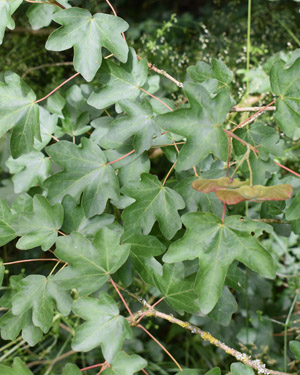
Acer campestre
Field maple
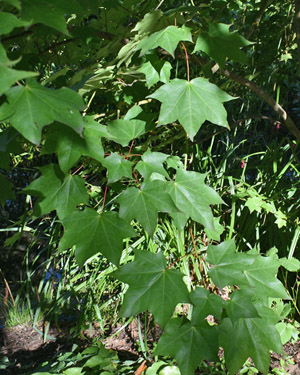
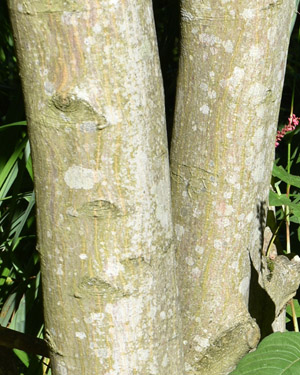
A native to Britain and much of Europe, field maple is also often planted as an ornamental. It is deciduous and usually monoecious male and female reproductive parts are on the same plant , and though slow growing its hard timber is used for woodturning and musical instruments. Clusters of yellow-green flowers open at the same time as the leaves in spring. August 2023
 August 2023
 August 2023
Acer cappadocicum
Cappadocian maple
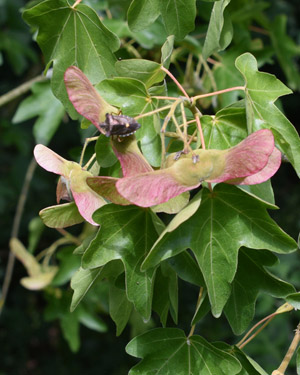
A native of Cappadocia, a region of Turkey, though widely distributed across Asia. It has been widely planted in Britain, and is a neophyte, having been recorded in the wild since 1977, spreading across most of the country. It will reproduce by suckering creating thickets, as well as by seed. The paired samaras a winged achene, a type of fruit in which a flattened wing of fibrous, papery tissue develops from the ovary wall. are at almost 180 degrees to each other.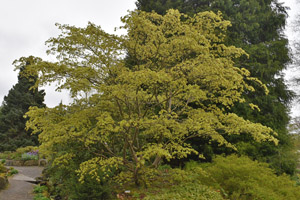 May 2022
Acer palmatum amoenum
Japanese maple
One of many a. palmatum cultivars, amoenum simply means "charming" or "pleasant". Typical of its species with palmate leaves that put on a rich show of yellow, orange and red colour in autumn. A. palmatum is native to Japan, China and Korea, and has many variations in the wild, expanded much further in cultivation. It was introduced to Britain in the 1820s.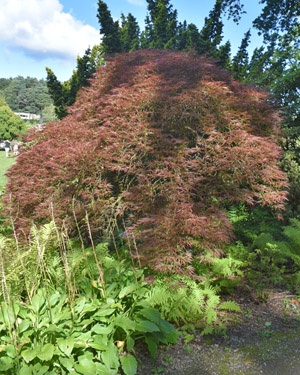 August 2023
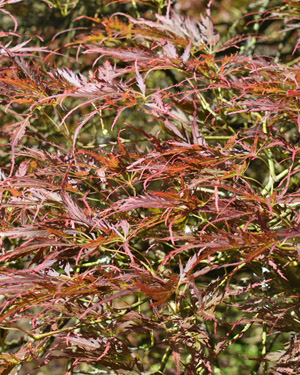 August 2023
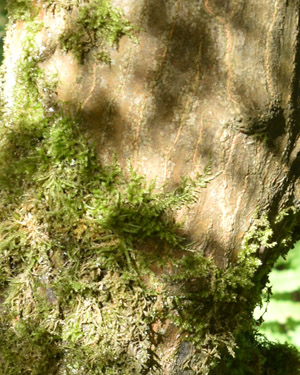 August 2023
Acer palmatum dissectum atropurpureum
Cut-leaved Japanese maple
A small deciduous tree or medium sized shrub which forms a broad dome of lacy, dissected foliage. Flowers are small and purple, but it is the leaves that make this plant a popular ornamental: claret coloured on emerging, then purple throughout the growing season, turning all shades of orange and yellow in autumn.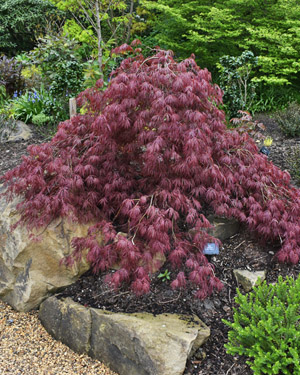 May 2022
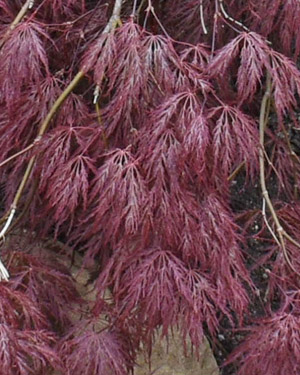 May 2022
Acer palmatum inaba shidare
Japanese maple
Inaba-shidare is a small but vigorous deciduous shrub with arching branches, growing perhaps to 8m at full maturity. The deep purple cut leaves mean that dissectum is often added to the Latin name. It grows in an upright manner, but its branches cascade - shidare means cascading. (Inaba is a former province on the north of Honshu, Japan.)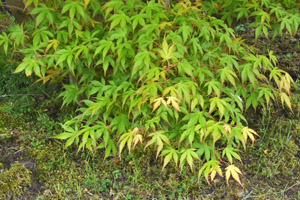 May 2022
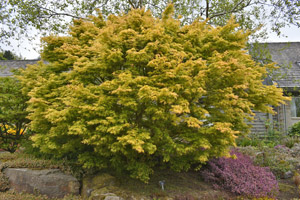 May 2022
Acer palmatum katsura
Japanese maple
A small deciduous tree growing perhaps to 6m, planted as an ornamental for its striking leaf colours which change throughout the seasons, pale orange - warm yellow with pink edges - bright green - rich orange. It has the classic palmatum leaf shape with 5 to 7 lobes. One of over a thousand acer palmatum cultivars.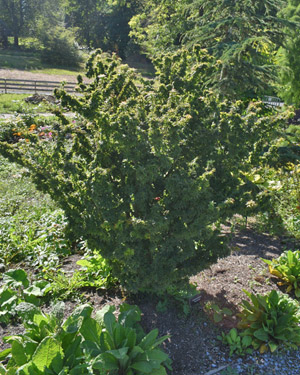 August 2023
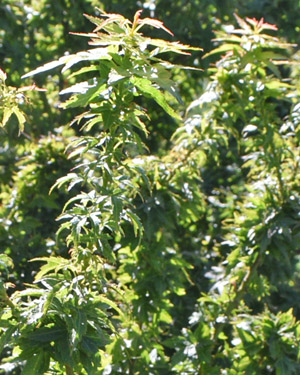 August 2023
Acer palmatum kotohime
Dwarf Japanese maple
Koto hime means "small harp", it has leaves clustered around long stubby branches, turning yellow to orange in autumn. It belongs to the yatsubusa dwarf group of plants which are prized for bonsai training. Left to grow naturally it will rarely exceed 1.2m. This cultivar is best when trained as a shohin a small bonsai tree, even smaller than the regular form because of the diminutive and tightly congested foliage May 2023
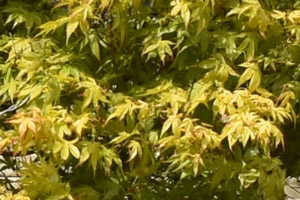 May 2023