×
![woodturning]()

Trees Gallery - RHS Harlow Carr - page 3
Crag End, Harrogate
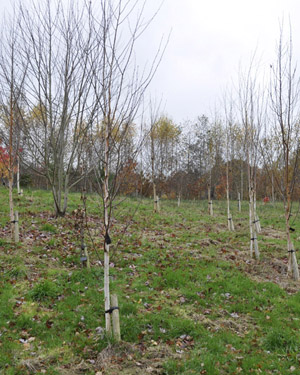 November 2021
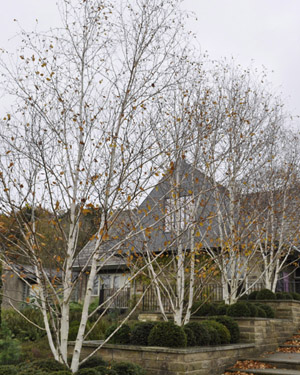 November 2021
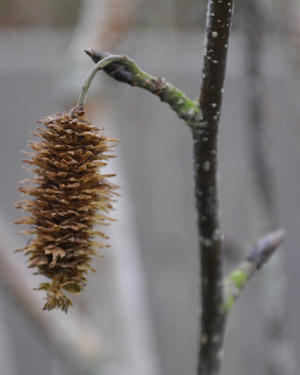 November 2021
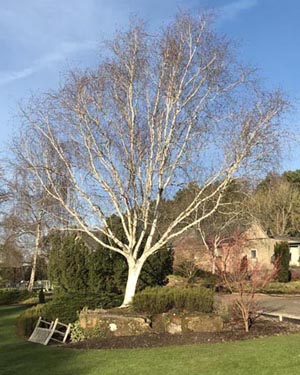 January 2022
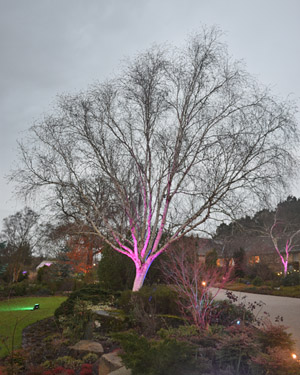 December 2023
Betula utilis 'Jacquemontii'
Himalayan birch
Betula utilis, the Himalayan birch, is a deciduous tree native to the Western Himalayas, growing at elevations up to 4,500 m. "utilis" means "useful", and refers to the many uses of the different parts of the tree. The white, paper-like bark was used in ancient times for writing Sanskrit scriptures and texts. It is still used as paper for the writing of sacred mantras, with the bark placed in an amulet and worn for protection. There are a number of stands of Himalayan birch in the gardens - their bold white trunks tend to look better in groups. Named after French botanist Victor Jacquemont 1801-1832. A fascinating open seed head lingered on one branch in the stand near the lake.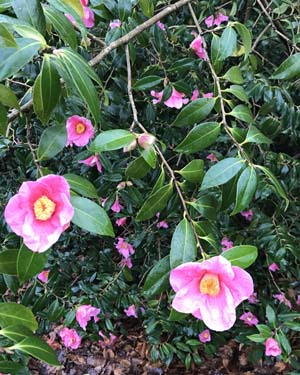 March 2024
Camellia japonica
Camellia
There was no label visible on this camellia, so I am guessing at c. japonica, variety unknown, until further evidence comes forward. There are thousands of cultivars, with very varied flower forms and colours. Despite its common name, it is native to China, not Japan, where its cultivation also started. Camellias have glossy-green leathery, evergreen leaves.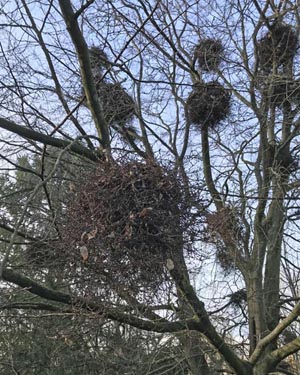
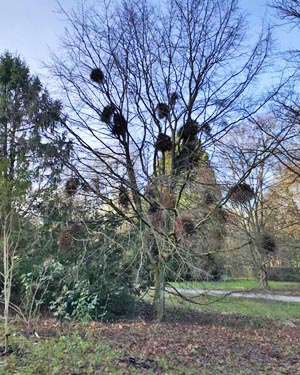
Carpinus betulus
Hornbeam with witches brooms
Looking like a dense tangled bird’s nest, witches’ brooms are a growth distortion that results in bunches of stem, leaf or root material growing from one point on a tree.' (Emilie Bonnevey, Woodland Trust). Probably caused by fungal or viral attack. Common on birch.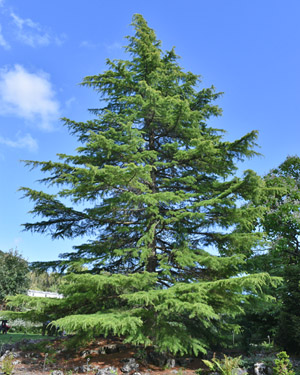 August 2023
 August 2023
 May 2023
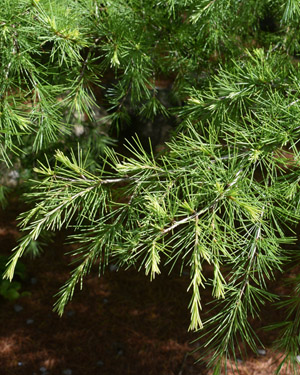
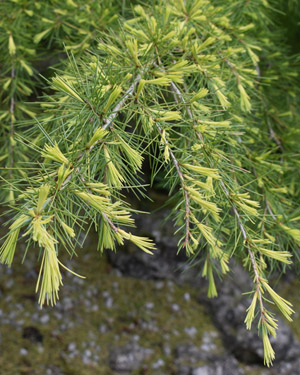
Cedrus deodara golden horizon
Deodar cedar
A large evergreen conifer growing to 50m, native to the Himalayas. It has level horizontal branches, with drooping branchlets, a contrast to the other true cedars, c. libani and c. atlantica. Deodara means wood of the gods.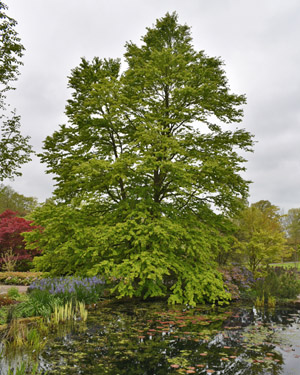 May 2022
 May 2022
 May 2022
Cercidiphyllum japonicum
Katsura tree
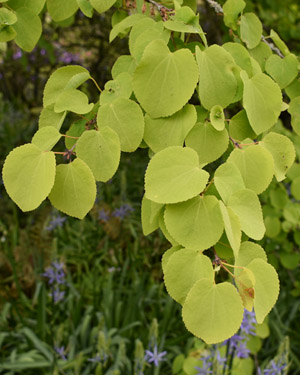
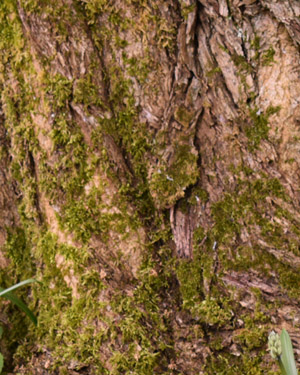
A native of Japan and China, growing to 45m, with up to a 2m diameter trunk. A popular ornamental tree, but also grown for timber in Japan. It is dioecious having male and female reproductive parts on separate plants , with inconspicuous flowers.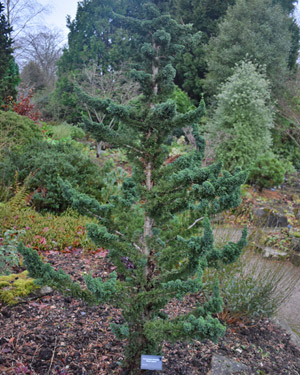 December 2023
 December 2023
Chamaecyparis Lawsoniana 'Wissel's Saguaro'
Lawson's cypress 'Wissel's saguaro'
A narrow, upright conifer to 6m tall and 1m wide. Its sparse, stout branches clothed in densely-packed blue-green foliage grow outwards and then up, reminiscent of the branching seen on the saguaro cactus - hence the name. Wissel was a Dutch plant grower, and this cultivar is a sport of c. l. Wissellii. Very much a dwarf of the species, which can grow to 65m, the tallest of the cypress family.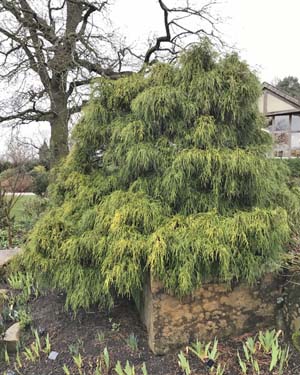 March 2024
 March 2024
Chamaecyparis pisifera filifera aurea nana
Threadleaf Sawara cypress
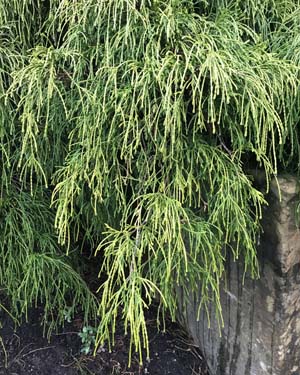
I couldn't find a label on this dwarf false cypress, but it has all the traits of c. filifera aurea nana - that is: dense, golden, weeping, thread-like foliage and small stature. The species is a native of the Japanese islands of Honshu and Kyushu.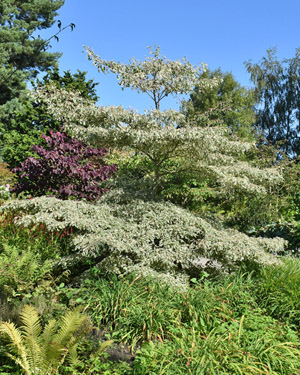 August 2023
Cornus controversa variegata
Wedding cake tree
A dogwood native to China, Korea, the Himalayas and Japan. The strongly tiered branches lead to its common name. It has narrowly ovate leaves broadly margined with cream and turning yellow in autumn. Small, cream flowers in flat clusters are followed by black berries.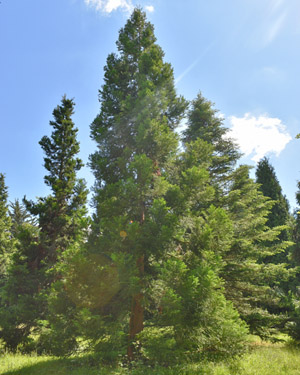 July 2022
 July 2022
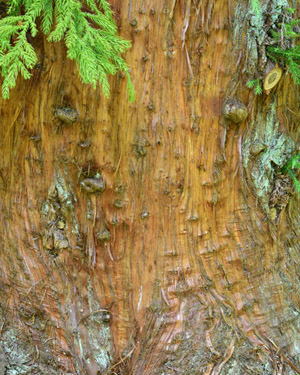 July 2022
Cryptomaria japonica
Japanese cedar
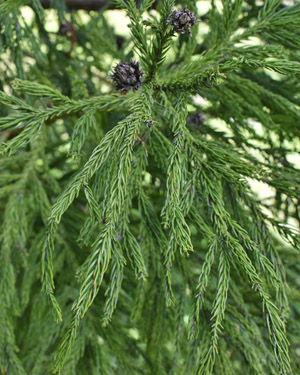
a very large evergreen tree, reaching up to 70m tall and 4m trunk diameter. A native of Japan, where it is known as Sugi. It is monotypic having only one type of species in a genus, japonica being the only species in the genus. The small seed cones are globular, with about 20–40 scales. It is superficially similar to the related giant sequoia (Sequoiadendron giganteum), from which it can be differentiated by the longer leaves and smaller cones, and the harder bark on the trunk (which is thick, soft and spongy in giant sequoia). August 2023
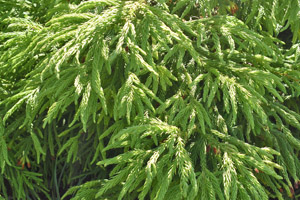 August 2023
Cryptomaria japonica spiralis
Granny's ringlets
Spiralis is a slow growing irregular mound or pyramid conifer with odd wedge-shaped twisted needles over all branchlets. Young plants have a ragged outline, developing into a spreading dome and ultimately a tall cone up to 6m tall.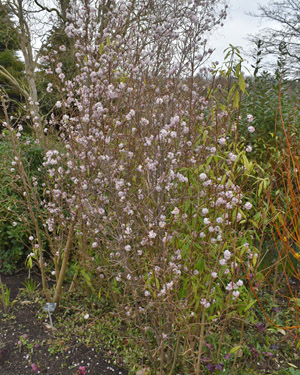 March 2023
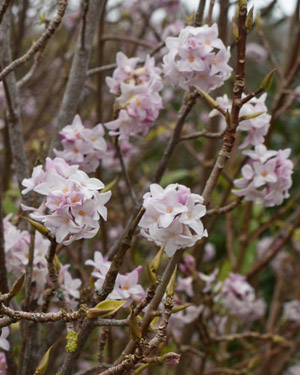 March 2023
Daphne bholua 'Jacqueline Postill'
Nepalese paper plant
A native of the Himalayas and neighbouring mountain ranges, from Nepal to southern China. It is a more or less evergreen, medium-sized shrub of erect habit with leathery oblanceolate leaves. The bark of D. bholua is used for making paper in the Himalaya.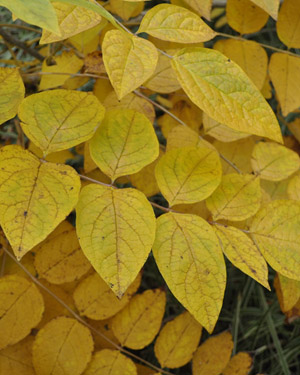 November 2021
 November 2021
Decaisnea fargesii
Blue bean shrub
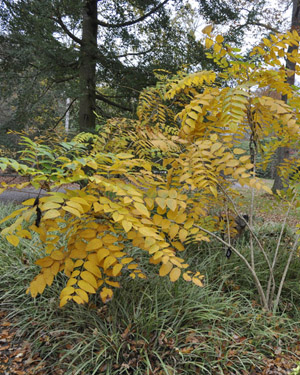
Autumn brings bright orange leaves on this large shrub - which can grow to 8m eventually. A native of Nepal, Tibet and China. The blue bean pods were barely noticeable on our visit, but can grow up to 10cm long, leading to the alternative name of "dead man's fingers".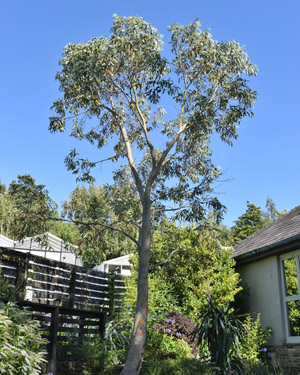 August 2023
 August 2023
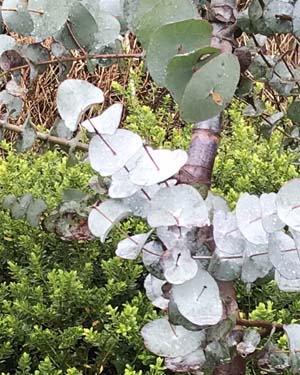
Eucalyptus pauciflora niphophila
Snow gum
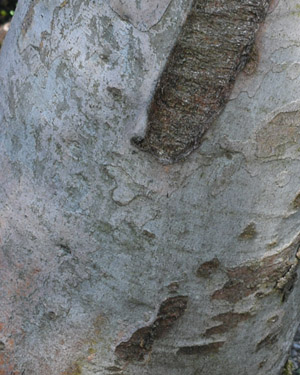
A small tree or large shrub growing to 7m, native to a few mountain peaks in eastern Australia (the Snowy Mountains of Victoria). It is the most cold-tolerant of the gum trees. It has the typical smooth bark of eucalyptus, with glossy green, lance-shaped to elliptical leaves, and flower buds in groups of between nine and fifteen. These produce white flowers and cup-shaped, hemispherical or conical fruit.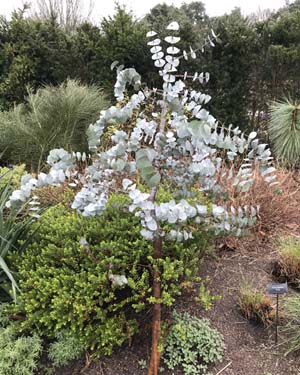 March 2024
 March 2024