
Trees Gallery - Nunnington Hall
Ryedale, North Yorkshire
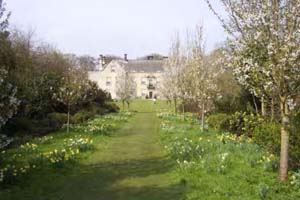
The Hall
Nunnington Hall is a National Trust property standing next to the River Rye in North Yorkshire. It has an orchard with spring bulbs, together with displays of geraniums, roses, clipped box and yew, irises, and a vegetable garden - a garden for ideas. There are some fine trees in its relatively small grounds (for a stately home - no parklands!). More from the National Trust Nunnington Hall site.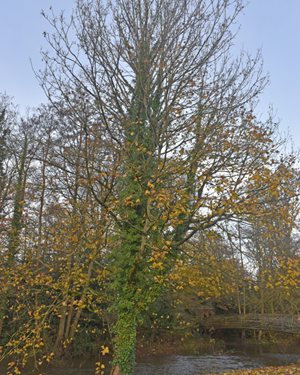
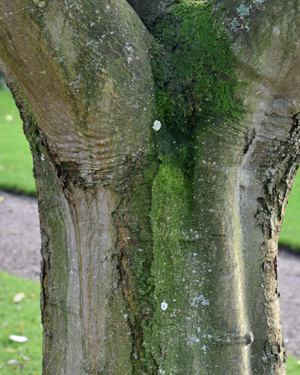
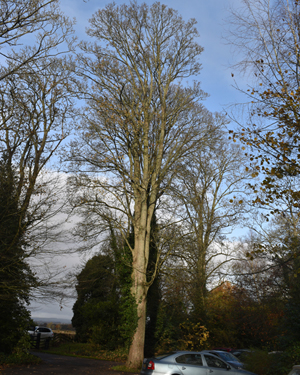
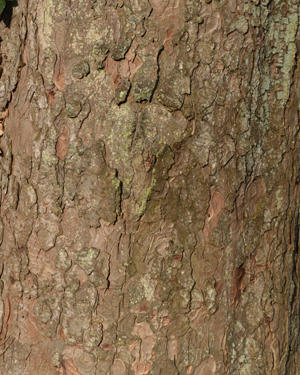
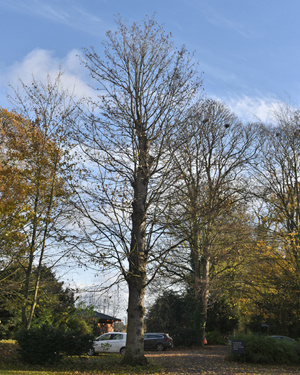

Acer pseudoplatanus
Sycamore
One of our commonest trees, though not a true native, even considered an invasive “weed” by some. It may have arrived with the Romans, or possibly the 1500s. Whenever it came, it offers good food and habitat for insects, birds and mammals, and many fine old specimens are revered in local landscapes (consider the national headlines when an old tree was felled in an act of vandalism at Sycamore Gap, Hadrians Wall, 28 September 2023). There are 14 notable usually mature trees which may stand out in the local environment because they are large in comparison with other trees around them or veteran in the second and mature stage of their life sycamores around the car park area listed on the Ancient Tree Inventory.
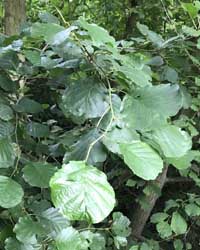
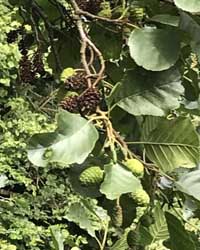
Alnus glutinosa
Common alder
Sometimes called black alder. Native to the UK, it thrives in wet conditions. The "cones" turn brown and remain on the tree all the year round - they are the female catkins of the plant, not true cones. A number of alders line the banks of the River Rye.
Carpinus betulus
Hornbeam
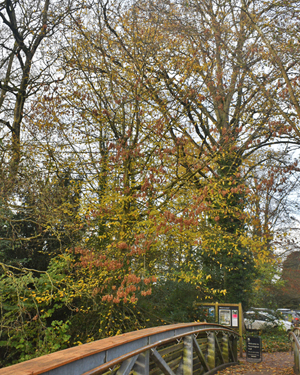
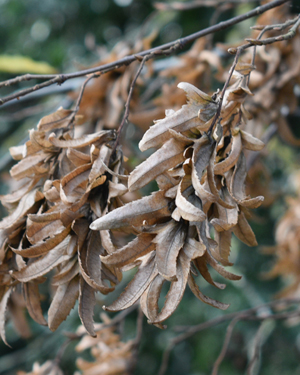
As you cross the bridge across the River Rye, on the right is a hornbeam tree, mixed in with alder and other bankside trees. Large clusters of three-lobed bracts appear in late summer, starting bright green, then turning yellow to brown in autumn.

Fagus sylvatica
Beech hedge
The large beech trees in the car park are probably a similar age to the stout hedge around the Hall courtyard. The top of the hedge has an annual haircut, and the sides are cut back in alternate years. Although the leaves die back in autumn, they retain the solid appearance of the hedge by staying on the branches, a feature known as marcescence retaining of leaves over winter on a deciduous (or "everciduous") tree, as on beech, hornbeam and sometimes oak .
Fraxinus ornus
Manna ash
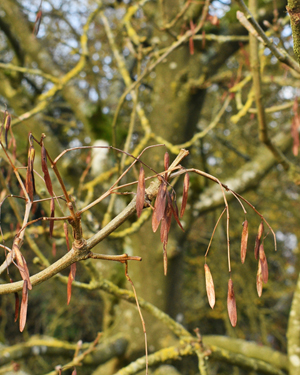
Also called flowering ash, as it produces an abundance of white flower panicles in May and June. It is smaller than our native ash, fraxinus excelsior, and the "keys" or samaras a winged achene, a type of fruit in which a flattened wing of fibrous, papery tissue develops from the ovary wall. , are also smaller and thinner. A sugary extract from the sap was historically compared to the biblical “manna from heaven”, hence the common name. A native of SE Europe and S Asia.
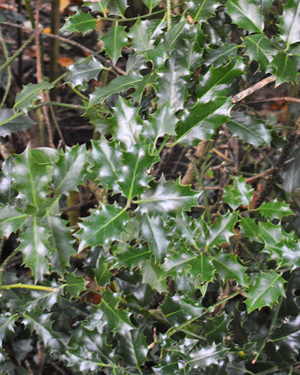
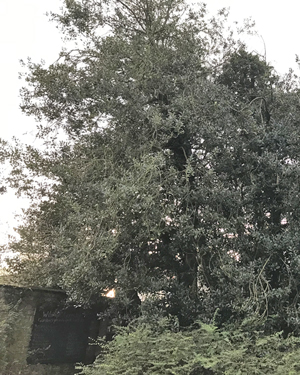
Ilex aquifolium
Holly
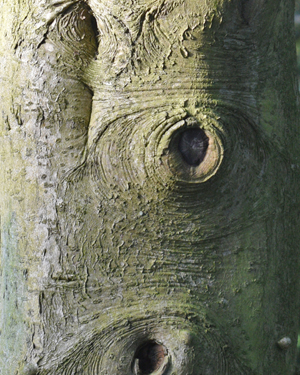
One of our native evergreens, recognised by its prickly leaves and bright red berries, a common sight everywhere. A dominant undershrub, but occasionally fulfilling its potential as a large tree as here. Look upwards and notice the leaves gradually lose their spikes, smoothing out to oval.
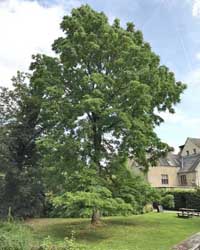

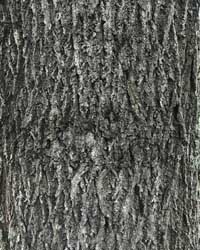
Juglans nigra
American Black Walnut
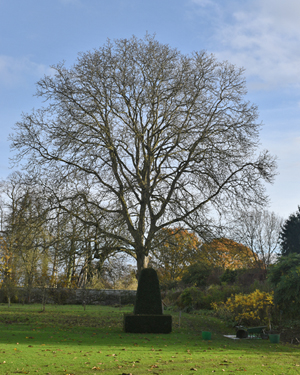
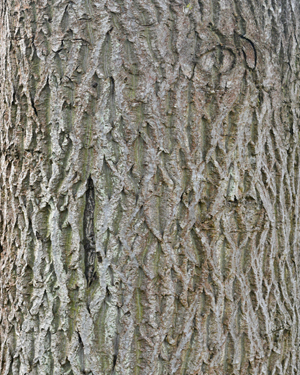
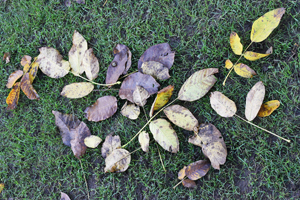
A native of eastern North America, introduced to Europe in the 1600s. The pinnate leaves have 15 - 21 fingers, like an ash leaf but more fingers, narrower than the common walnut, and more of them. The tree can grow 30m, with a 20m spread. "Black" refers to the dark bark. The tree is planted just to the left of the bridge when crossing from the car park to the hall.
Juglans regia
Common Walnut
There is a pair of European or common walnuts planted in the orchard, at the end of the lime avenue. Walnuts were probably introduced by the Romans who enjoyed their nuts, and are now widely naturalized across the country, in no small part due to the hoarding habits of squirrels. When the leaves are crushed a strong scent of furniture polish is released.
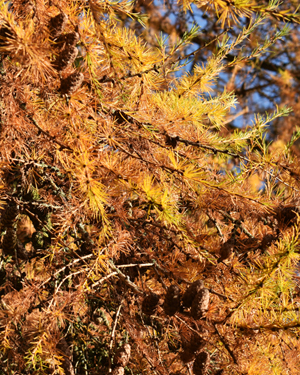
Larix decidua
European larch
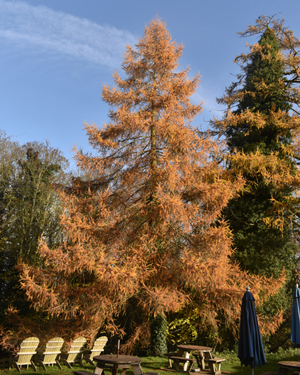
One of the few conifers that are deciduous, the needles turning bright orange before falling in late autumn. A long-lived tree in the wild, 200 years being common, with some specimens reported as over 1000 years old. Native to the mountains of central Europe - the Alps, Carpathia and the Pyrennes.
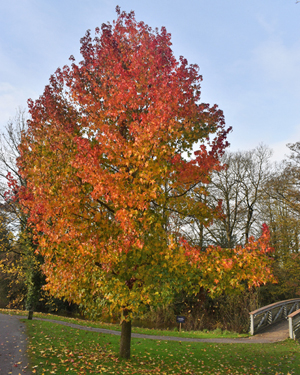

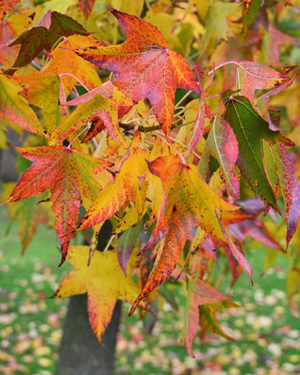
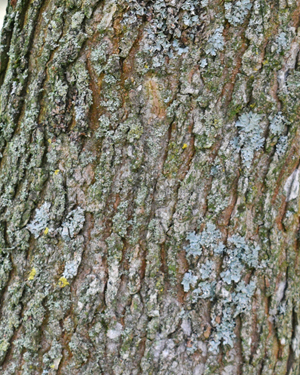
Liquidambar styraciflua
Sweet gum
The 5-lobed (occasionally 7-lobed) , maple like leaves put on a glorious show in autumn, turning every shade of red, orange and yellow. Both the common name and the Latin refer to the resin produced when the tree is bruised - a sweet scented turpentine-like gum. It is also known as American storax, hazel pine, bilsted, redgum, satin-walnut, star-leaved gum and alligator wood (on account of its plates of bark looking like alligator skin). A valuable forest tree in SE USA. It bears hard, spiked globed fruits.