
Trees Gallery - The Yorkshire Sculpture Park
West Bretton, near Wakefield
Yorkshire Sculpture Park
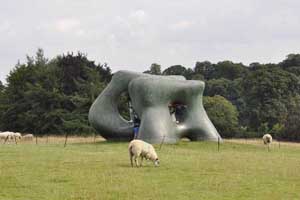
Yorkshire Sculpture Park has been a wealthy landowner's parkland, a drama and teacher training college, a branch of the University of Leeds, and now a visitor attraction with permanent displays and temporary exhibitions of world class art and sculpture. The Bretton Hall parkland remains as a large and varied backdrop for the statues, but also beautiful in its own right. Visit the YSP website. Look at a map of Bretton Country Park.
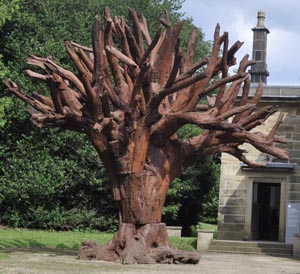

Iron tree
Ai Weiwei
A tree constructed from 97 cast iron pieces, riveted together in an exaggerated manner. This is by the Chinese artist Ai Wei Wei, famous for designing the 2008 Olympic stadium "The Bird's Nest" among other pieces. Also famous as a strong critic of the Chinese government regime.
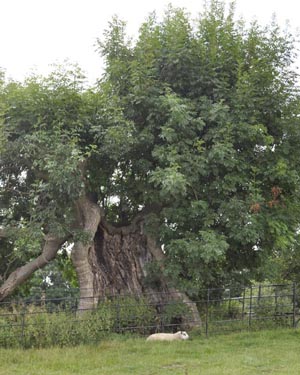
Fraxinus excelsior
Ash
An ancient pollarded tree still growing as a half shell. It would have had a girth of around 8 metres when whole. Recorded in the Ancient Tree Inventory number 68920.


Cedrus atlantica
Atlas cedar
A native of the Atlas mountains in Morocco. A large, evergreen tree, conical when young but broadening with age, with horizontally-spreading branches and downy young shoots. Narrow, needle-like leaves to 3.5cm long are a dull green to grey-green colour. Growing by the pond in the formal garden, in front of the visitor centre
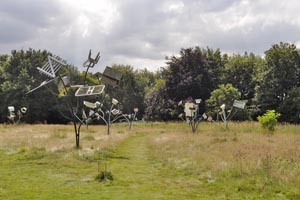
Alternative landscapes
Dennis Oppenheim
Trees: From Alternative Landscape Components 2005-6 investigates relationships between natural and artificial environments. The trees have branches laden with a range of curious domestic artefacts, including baths, toilets, sink, dog kennels, dustbins, plastic chairs and parts of fences.
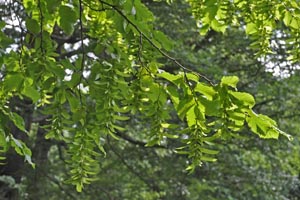
Carpinus betulus
Hornbeam
A hornbeam tree on the south side of the lake, difficult to photograph in its entirety as it is growing with other trees, hence just the leaves here. It is labelled as a hornbeam, as it has been adopted as part of a fundraising scheme run by the sculpture park. Long chains of samaras are also present - the papery fruits that develop from the female catkins.
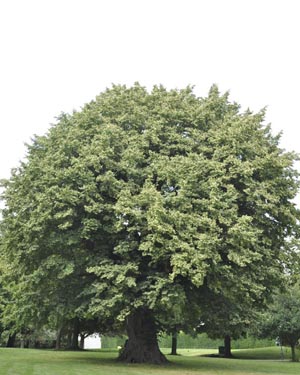

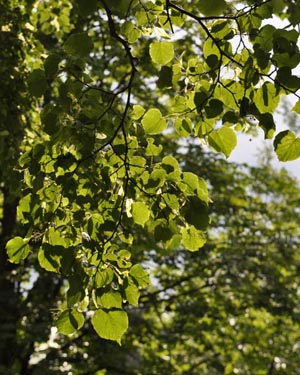
Tilia cordata
Small leaved lime
Recorded by the Tree Register in 2012 as Girth County Champion for West Yorkshire, with a girth of 525 cm . This one is near Barbara Hepworth's Family of Man sculptures. Tilia cordata is the common lime, native to Britain and most of Europe. They can grow 20 - 40 m tall, and ancient trees can have enormously wide trunks, some living 700 years or more. The timber is favoured by woodcarvers - Grinling Gibbons probably being the most famous.
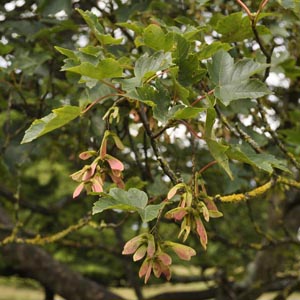
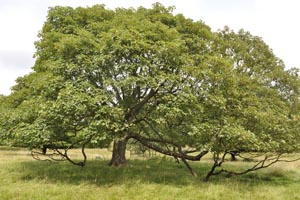
Acer campestre
Field maple
This old tree is recorded as an ancient tree, with a girth of 2.84 metres, in the Woodland Trust's Ancient Tree Inventory . Field maples have the classic five pointed acer leaves, and tell-tale "helicopter" winged seeds. A native of England, southern Scotland and much of Europe.
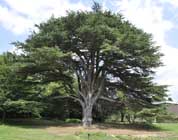
Cedrus libani
Cedar of Lebanon
Native to Mount Lebanon (in Syria, not Lebanon!) but it does also grow in Lebanon. Introduced to Britain in the 1630s, gaining popularity in the 19th century. This one at YSP is recorded by The Tree Register as the Girth County Champion of West Yorkshire (2012), at 489 cm.
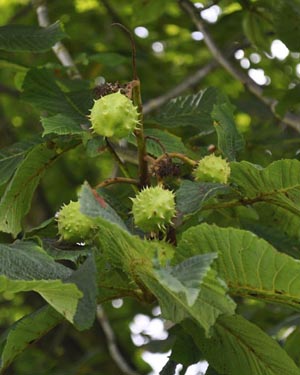
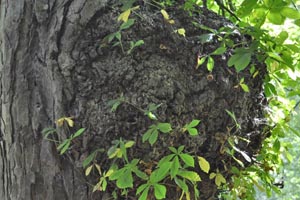
Aesculus hippocastanum
Horse chestnut
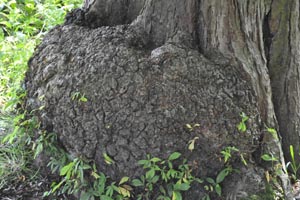
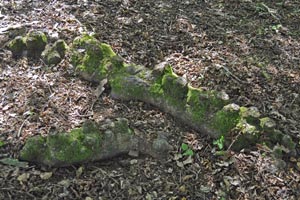
A common tree in Britain, but native to the Pindus mountains in the Balkans. Popular for its spectacular flowers in spring, and subsequent fruits in autumn - conkers. This tree had a fine burr unnatural mass of twiggy growth caused by the grain growing around a foreign object, a localised virus or fungus infection near its base, and burrs on exposed roots. It was growing in the Menagerie Woods, across the Cascade bridge from the main sculpture park, over the lake and River Dearne.

Juglans regia
Common walnut
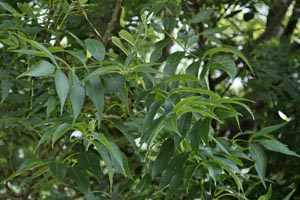
Juglans regia is a large deciduous tree, attaining a height of 25–35 m, and a trunk up to 2 m in diameter, commonly with a short trunk and broad crown, though taller and narrower in dense forest competition. They can live for 200 years. Catkins in spring are followed by glossy green pinnate compound leaf that has leaflets arranged in 2 rows either side of a midrib like a feather leaves, which contain a natural herbicide, juglone, which limits undergrowth. This one is growing in the formal terrace and garden area, near the main visitor centre.
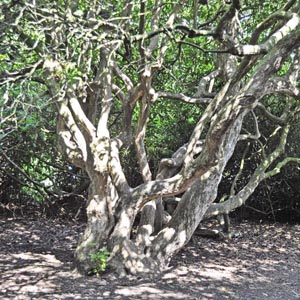
Rhododendron
Rhododendron
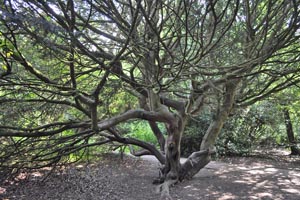
A native to west and eastern Mediterranean, Asia, and China. Most were introduced to Britain in Victorian times, and many have established themselves as invasive pests, out competing native species as their canopy excludes light, and their masses of flowers can be preferred to those of native plants by pollinating insects. There are campaigns of burning, slashing and poisoning being waged to eradicate Rhododendron ponticum from the Country's woodlands - particularly in Scotland. Having said all that, these trees at YSP seem to have been confined to one area, and their twisted stems and branches provide sculptural forms fitting to this park.
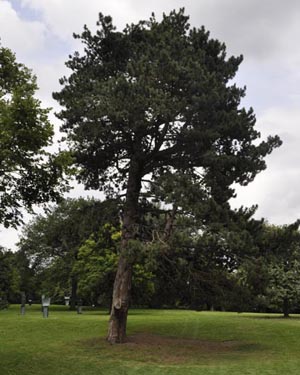
Pinus nigra
Austrian Pine
Also called the black pine. A native of the coastal areas of south eastern Europe, but planted in Britain in graveyards and for forestry. It is fast growing and long lived - 500 years is not uncommon. It can grow to 50 m tall and 14 m wide.
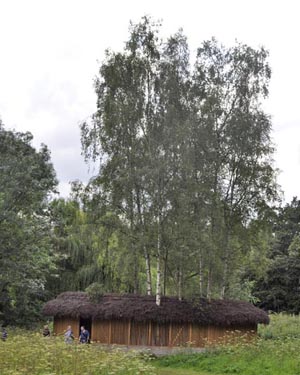
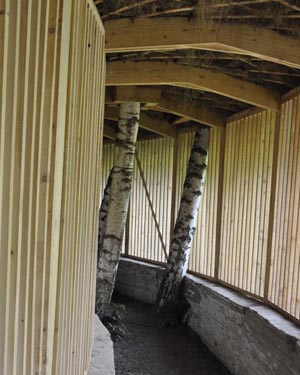
Alone in a world of wounds
The Oak Project launched its first commission, Silence – Alone in a World of Wounds, by Heather Peak and Ivan Morrison, and unveiled at YSP on World Environment Day, 5 June 2021. Trees grow in and through the structure.


Fagus sylvatica rotundifolium
Round leaved beech
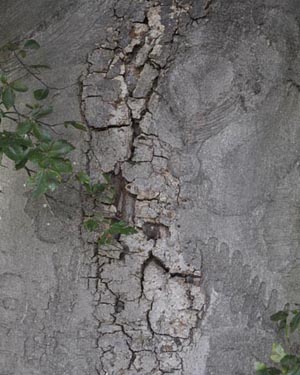
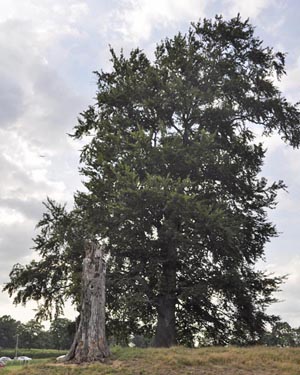
A rather slow growing variety of beech, growing 12 - 15 metres. Dark green rounded leaves. This tree grows near the car park, and there is an old stump next to it which is the equal any of the statues in the park, with intricate surfaces carved by decay.

Heart in hand
Ursula von Rydingsvard
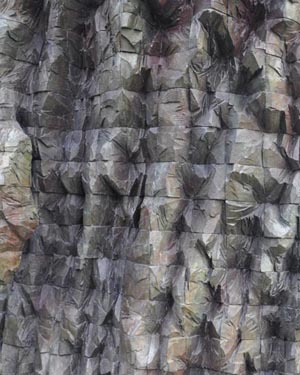
From a distance this almost looks like a strangely shaped tree stump, but in fact it is a sculpture cast in bronze, from a model made of 4 x 4 and 2 x 4 milled cedar blocks. The grain shows through the casting.
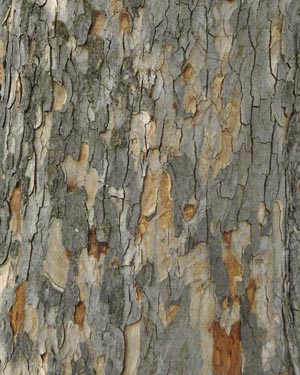
Acer pseudoplatanus and Quercus robur
Sycamore and oak
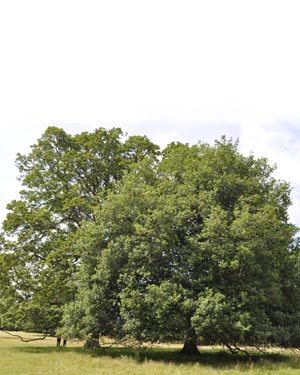
Two of our common trees growing closely together, but distanced from others. These are in the western area of the country park, near the Dam Head Bridge.