×
![woodturning]()

Trees Gallery - Antony House
Torpoint, Cornwall
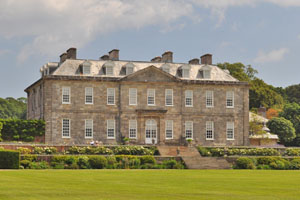
Antony House
Antony House is near Torpoint in Cornwall, across the River Tamar (by car ferry) from Plymouth. It is an 18th century building now managed by the National Trust.Specimen trees, some planted over 200 years ago, are planted in the grounds of the house and in the woodland garden, and a number have descriptive labels, which have been summarised below.
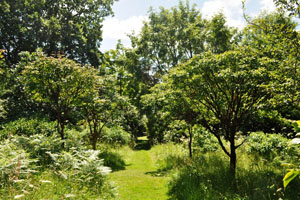
Carew Pole Woodland Garden
A woodland garden exists separately to the National Trust house and grounds, managed by the Carew-Pole Garden Trust. There is free admission for trust members. The woods cover 60 acres. They have good paths and a mixture of planting - specimens, groups, and wide open spaces. The woods lead down to the coast - on the Tamar estuary - so there are also views across the waters.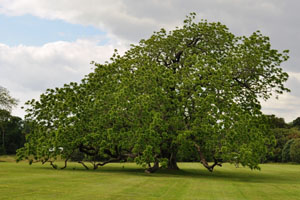
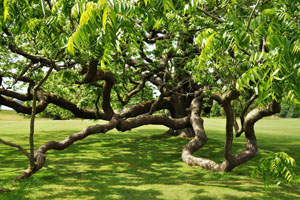

Juglans nigra
American Black Walnut
Planted in the 1790s. A native of central and eastern USA, this species was introduced to Britain in 1686. It is a member of the Juglandaceae family. This tree does produce nuts, but not in any great profusion. These can be difficult to extract from their husks unlike those from the Common Walnut. Both male and female flowers grow on the same tree (monoecious) and the leaves give off a strong aroma when crushed. Walnut wood is strong and highly sought after by cabinetmakers. It was also used to make aeroplane propellers during the First World War. The wood and roots carry a number of compounds which can adversely affect other plants if growing too close.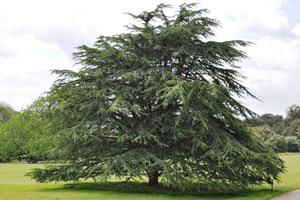
Cedrus liboni
Cedar of Lebanon
Native to the eastern Mediterranean, introduced to Britain in the early 17th century. They are found on the slopes of Mount Lebanon in Syria and appear on the national flag of Lebanon. They grow best in poor soils that are not waterlogged. The timber, popular in Victorian furniture, is very durable and resistant to rot and insect attack.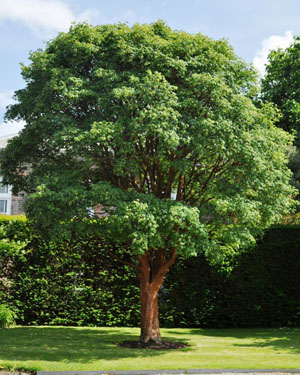
Acer griseum
Paper bark maple
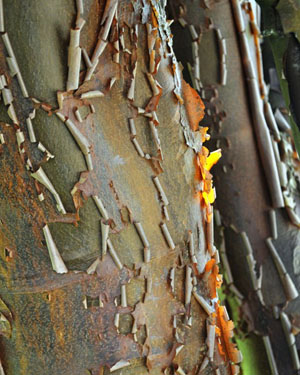
Grown for two key features - it's orange-brown peeling bark, and autumn leaves that turn brilliant shades of red and orange. I haven't quite managed to capture either feature at its best in these photos - it was summer, not autumn when we visited. They grow best in moist, well-drained soil in part shade.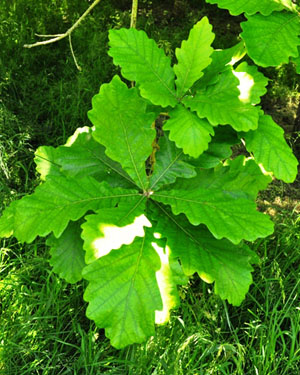
Quercus dentata
Japanese Emperor Oak
We visited in June, so the masses of magnolias, camellias, rhododendrons and azaleas in the woodlands were just about finished flowering, but the deciduous trees were newly in leaf. Many trees had labels on them to aid with identification - hence I know that this young oak tree was quercus dentata.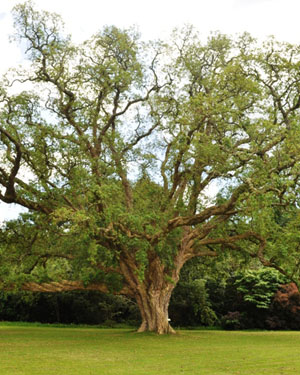
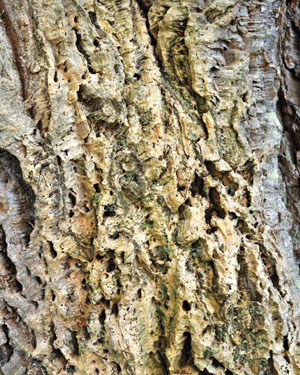
Quercus suber
Cork oak
A slow growing, long-lived tree, native to the coastal regions of the Western Mediterranean sea. They thrive in areas with cold, moist winters and hot summers - so we probably provide one out of two of these conditions in this country! The tree was probably planted in the late 1700s.

Ginkgo biloba
Maidenhair tree
A native of South East Asia, this tree species was introduced to the UK in 1727. It is a member of the Ginkgoaceae family and the only member of its genus. Ginkgo trees are either male or female (dioeceous). This tree, a male, produces yellow catkin-like flowers in May.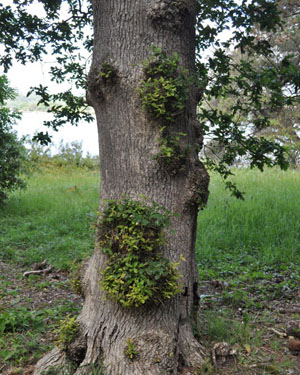
Quercus robur
Oak burr
A number of the oak trees at Antony had burrs on their trunks. This one is just beginning to sprout - no doubt these twigs will be trimmed back later in the season. Good material for woodturning sometime in the distant future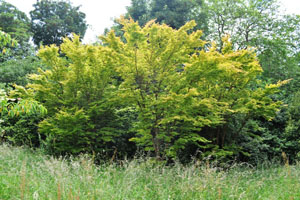
Acer palmatum Sango-kaku
Coral bark maple
Planted in 1984, lifted by the gale of January 1990, and replanted in March. The newly emerged leaves are pinkish-green in spring, turning to a rich green in summer, then brilliant yellows and oranges in autumn. The bark on the younger shoots is coral red, giving the tree its name. A hardy tree, liking a lightly shaded position, out of the wind.
Bracket fungus
A large bracket fungus in the woodland garden at Antony House. There are more pictures of fungi on the fungi page.