×
![woodturning]()

Trees gallery - Grove House - Isle of Man

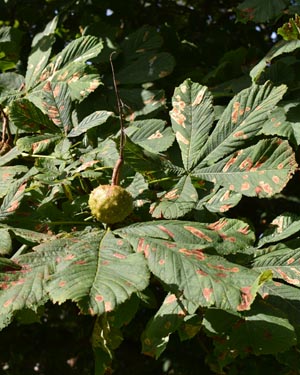
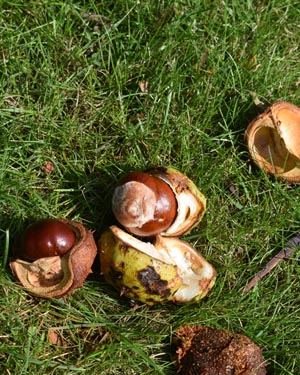
Aesculus hippocastenum
Horse chestnut
A large horse chestnut at the Grove House. There were lots of very healthy looking large conkers on the ground, but lots of unhealthy leaves on the tree, as is the case for most horse chestnuts across the country. Probably leaf miner a small moth with caterpillars that feed inside horse chestnut leaves, causing brown or white blotch mines to develop between the leaf veins. , but possibly leaf blotch an infection of the leaves of horse chestnuts by the fungus Phyllosticta paviae (syn. Guignardia aesculi), which causes irregular brown blotches, often with yellow margins..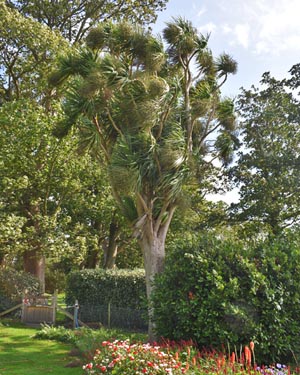
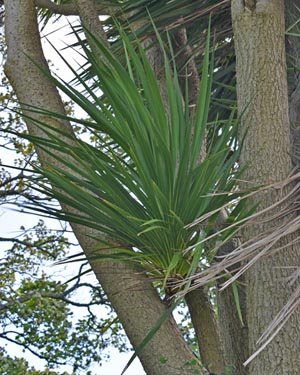
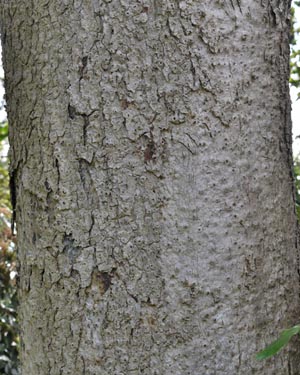
Cordyline australis
Cabbage tree
There was a large cordyline on a thick trunk, as well as smaller ones with multiple stems. It is a monocot or monocotyledons, grasses or grass like flowering plants tree from New Zealand. There were many examples planted across the island, many lining roadsides (natably around the airport), though not all as large as this one.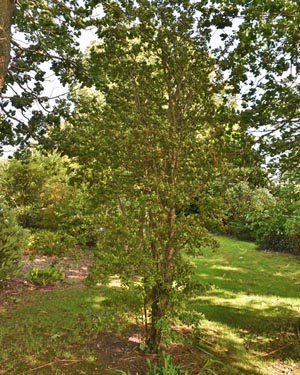
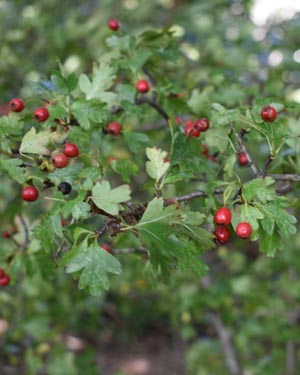
Crataegus monogyna
Hawthorn
A very common hedging plant, but growing here as a large bush. Also called May - the month it flowers - hawthorn can actually reach 15m as a tree. It can hybridise with the other native hawthorn, Midland hawthorn (Crataegus laevigata), and the two are difficult to tell apart.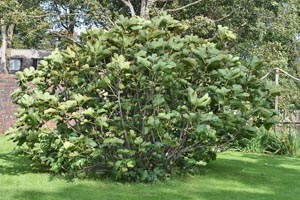
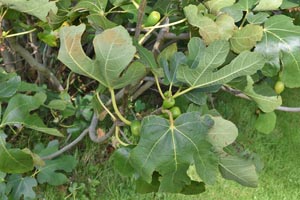
Ficus
Fig tree
Growing as small bushes near the vegetable garden, there were, I think, three fig bushes growing and thriving, with figs evident on all. They are self-fertile, so they were planted for effect rather than fertilisation. Normally grown against a wall for protection, presumably the milder maritime Manx climate allows these bushes to prosper. I am not sure what variety they are. Figs are native to Syria and Persia.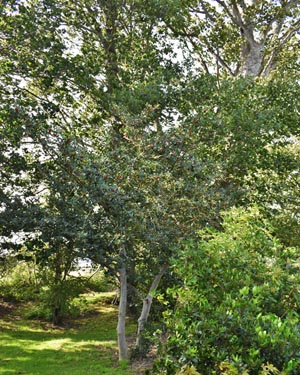
Ilex aquifolium
Holly
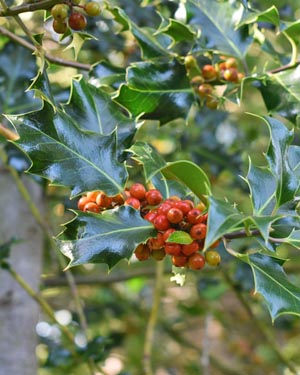
Nothing special but a holly bush is always worth a picture. This one is typically straggly, left to its own devices growing amongst other trees and shrubs. A plentiful supply of berries were colouring up well in mid September.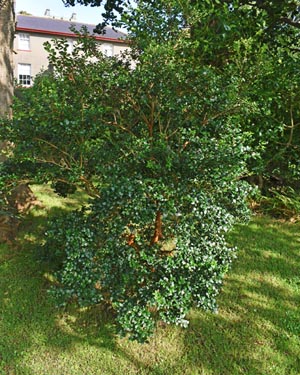

Luma apiculata
Chilean myrtle
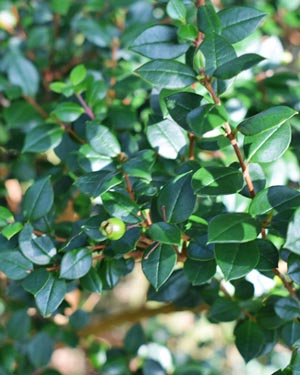
Something of a surprise in this garden. A small bush compared to the large trees spotted on St Mary's and Tresco on the Isles of Scilly, where it is tending towards its potential height of 10 to 15m. Philip Payne of Manx National Heritage tells me "it has shown little change in size over the past five years" . A neophyte a plant not native to a region, introduced and escaped into the wild in recent history (after 1500). , it appears in a number of places on the Isle of Man, and the BSBI Plant Altas describes it as "higly invasive" in SW Ireland, spreading rapidly by seed.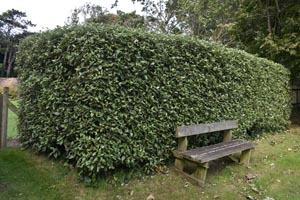
Olearia macrodonta
New Zealand holly
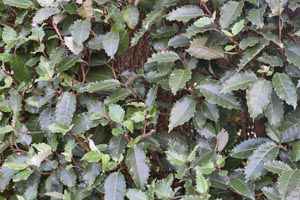
Also called mountain holly or arorangi in its native New Zealand. It can grow into a small tree (to 6m) if not clipped as here. A common choice for hedging, seen in a number of places formal and informal, planted and escaped, across the island.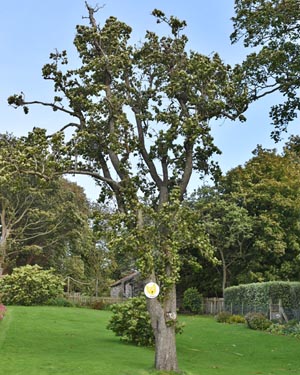

Pyrus communis?
Pear
This old tree growing near the vegetable garden looks like a pear, though no fruits were on its branches. The custodian could not confirm any particular variety: it could be pyrus communis, but it could be a cultivar. Whatever, it was probably once pruned to shape, but has been left to grow to tall naturally.