Trees gallery - The Arboretum - Isle of Man
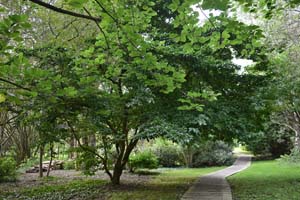
Tynwald National Park and the Arboretum is owned and maintained by the Department of Agriculture, Fisheries and Forestry (DAFF) and is situated close to the village of St.John’s. It was opened in 1979 to celebrate the Millenium of the Tynwald The High Court of Tynwald is the parliament of the Isle of Man; of Norse origin and over 1,000 years old, it is thus the oldest parliament in the world with an unbroken existence. and contains over 200 different species of both native and exotic plant species. Free car parking and free entry, a wonderful place to visit. A leaflet listing all the trees is available from DAFF, though this may not be too up to date, and it only indicates the area where a tree are planted - the plan to number the trees has not yet materialised. I didn't have it at the time of my visit, so as usual there was a lot of guesswork identifying the trees.
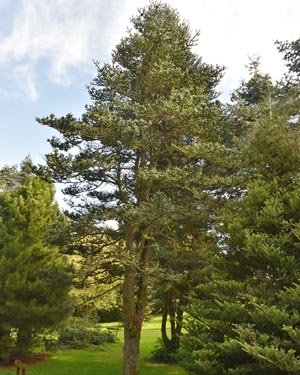

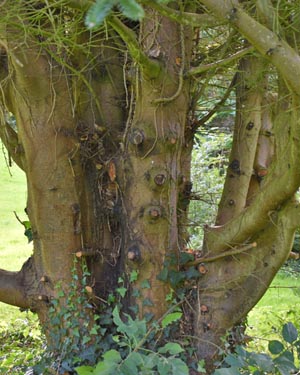

Abies spp.
Fir
Two abies species - but I am not sure which. There are 10 different species of Abies listed in the Arboretum guide. Firs are mountain trees, and grow to great heights - anything from 10 to 80m. Their long, thin cones grow upwards - as cedars do, but in contrast to the downward hanging cones of spruces, for example. They are native to North and Central America, Europe, Asia, and North Africa. The needles attach to the twig by a base that resembles a small suction cup. They are significantly flattened, sometimes even looking like they have been pressed.
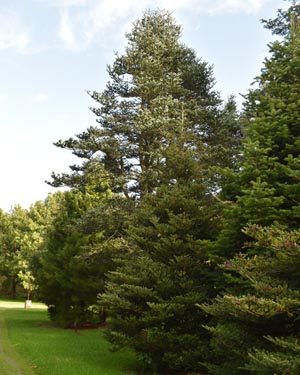
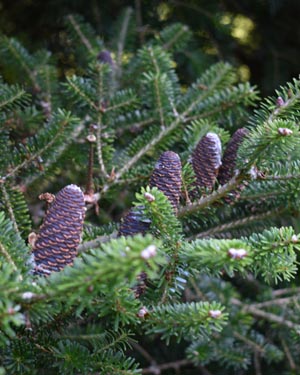
Abies koreana
Korean Fir
Another fir, but the purple cones on this one are quite distinctive and suggest this one is the Korean fir. ONe of the smaller firs, perhaps 15m eventually. A common garden choice, but it is endangered in the wild in its native South Korea, due to climate change and invasive species.
Acer campestre
Field maple
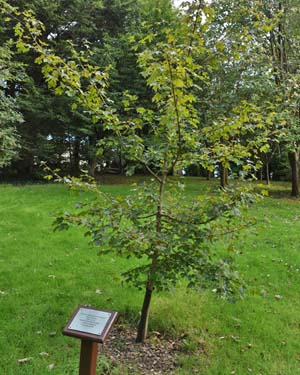
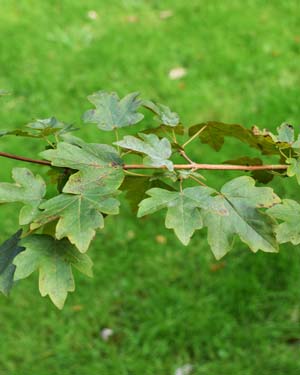
A young field maple, planted 'in memory of Rena Tarwinska, (1954-2103), Scotland's first female forester. A loved and respected Lady of the Woods'. One of our British natives, a deciduous, monoecious male and female reproductive parts are on the same plant tree with the classic palmate like a hand: having five or more lobes whose midribs all radiate from one point acer leaves, and pairs of winged samaras a winged achene, a type of fruit in which a flattened wing of fibrous, papery tissue develops from the ovary wall at 180° to each other.
Acer griseum
Paper bark maple
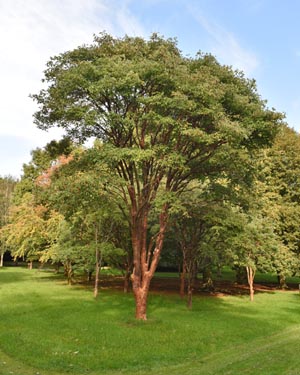
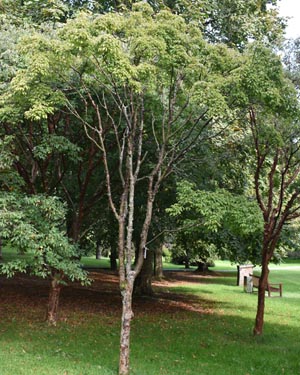
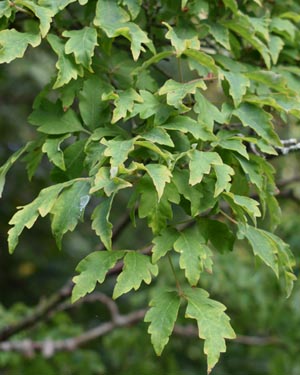
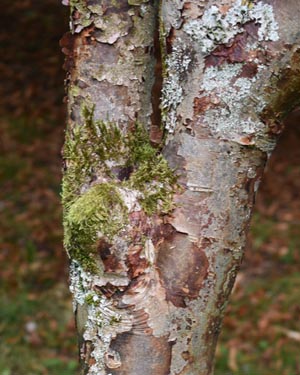
Paper bark maples planted in a group in section 4 of the arboretum (see the map in the guide). Some had a paler bark than others, but I think they was all A. griseum. There are 19 maples listed in the guide, but none in the same area as the A. griseum. Paper bark maple is native to China, and was introduced here in the early 1900s. Now commonly planted for it striking exfoliating loss of skin (bark) red-orange bark, boldly shown off on long, clear stems.


Arbutus unedo
Strawberry tree
Native to the mediterranean, this evergreen shrub or small tree has round, edible red berries which resemble strawberries, hence its common name. It has a very attractive low spreading habit, appealing in a group planting as here.


Alnus cordata
Italian alder
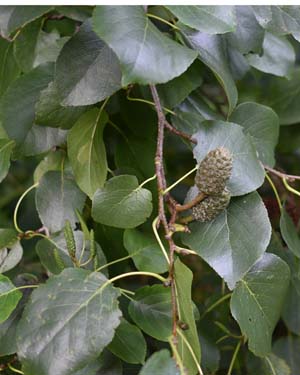
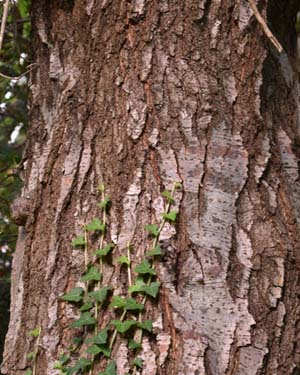
There are 4 species of alder listed in the arboretum guide. I think the glossy dark green leaves on this one suggest it is the Italian alder. Slender male catkins and cone-like female catkins appear on the same tree (it is monoecious). Native to southern Italy, its timber used for wooden structures that remain under water, where it will remain highly durable. It is a medium sized tree growing to 20m, and is more tolerant of drier soils than the more common A. glutinosa.
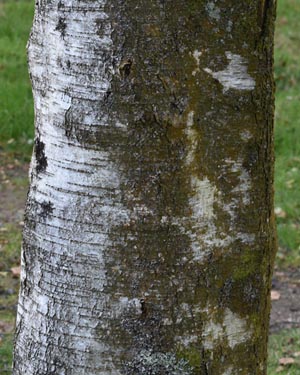
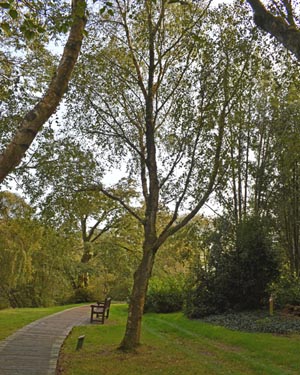
Betula pendula 'Tristis'
Weeping birch
A weathered plaque refers to a group of these trees, planted I think in either 1981 or 1991 (the plaque is badly corroded). Originating in the Netherlands, around 1865, it can grow much taller than the other common weeping birch, B. Youngii.
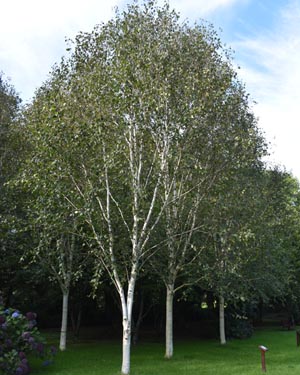
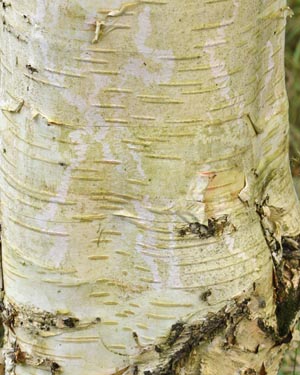
Betula utilis 'jacquemontii'
Himalayan birch
Native to the Western Himalayas, growing at great heights. Utilis means "useful", and refers to the many uses of the different parts of the tree: The white, paper-like bark was used for writing on, as well as wrapping, bandages and medicinal purposes. The timber is pliable and has been used for bridge building. It is used, excessively, as firewood, causing large areas of its native range to be depleted. 'Jacquemontii' was originally thought to be a different species, but is now recognised as a variety of utilis, probably the most popular on account of its exceptionally white bark.
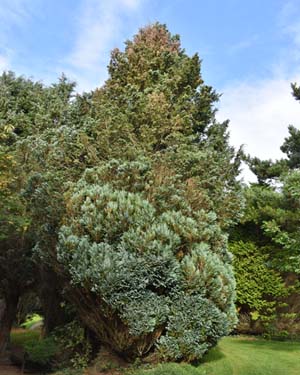
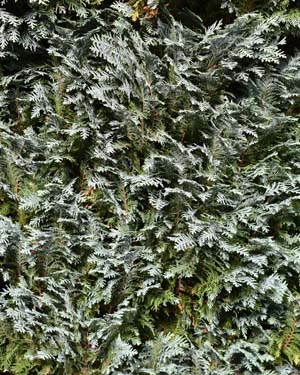
Chamaecyparis lawsoniana
Lawson's cypress
There are five varieties of Lawson cypress listed in the arboretum leaflet. I think this one may be C. l. 'columnaris glauca', as the leaves are blue-grey, and it does have a columnar habit. The main species is native of California.