Trees gallery - Milntown, Isle of Man - page 4
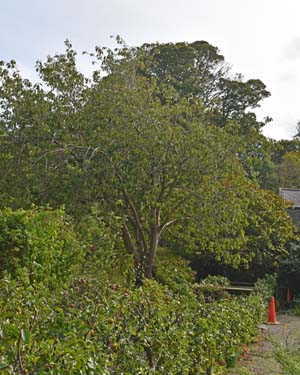
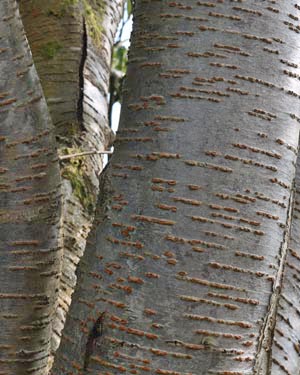

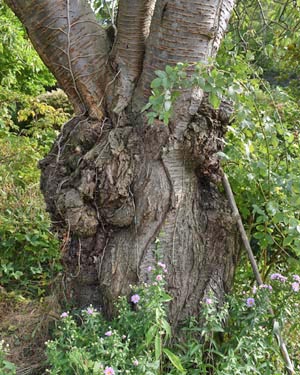
Prunus avium?
Wild cherry
A cherry tree growing near the kitchen garden. As with many other trees, I am not sure of which species it is, probably P. avium, the wild cherry, sweet cherry or gean. It has a fine short, thick bole with stems breaking out from its top. There are clear lenticels a loosely packed mass of raised pores in the bark of a woody plant, visible on the surface of a stem as a raised powdery spot, through which gaseous exchange occurs on these stems. Cherry trees are hermaphrodite containing both male and female floral organs: pistils and stamens . They are native to Britain, along with the bird cherry, P. padus, which of course given my lack of knowledge or information, this might well be.
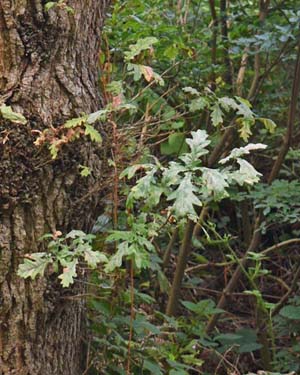

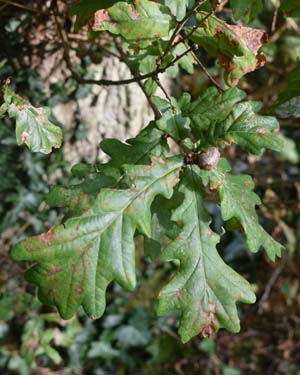
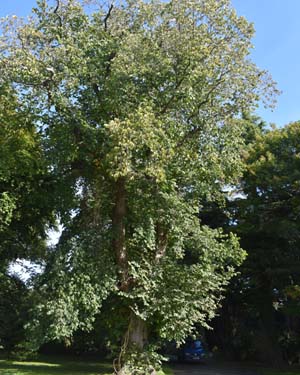
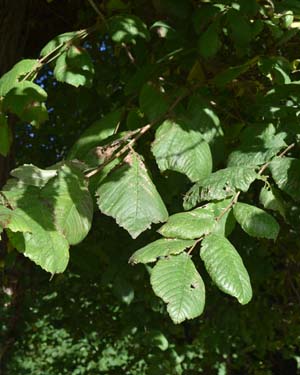
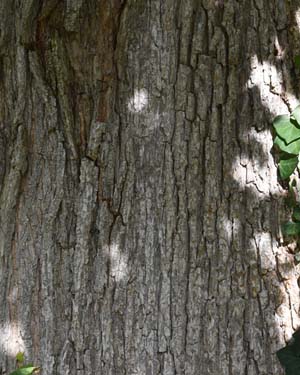
Quercus robur?
Oak
Without acorns and a leaf to hand, I have difficulty telling Q. robur and Q. petraea apart. I think this one is Q. robur, as I cannot see any leaf stalks in the photo. Whatever it is, it will make fine woodturning stock at some point in the future, with rich burr patterns along the length of the trunk. There is an oak gall in the last photo, possibly the oak apple gall, created by the wasp biorhiza pallida, .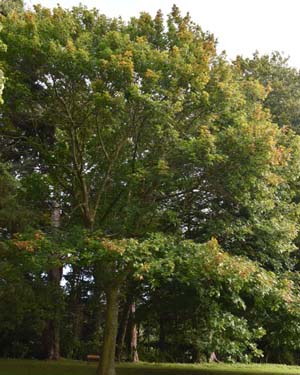
Quercus rubra
Red oak
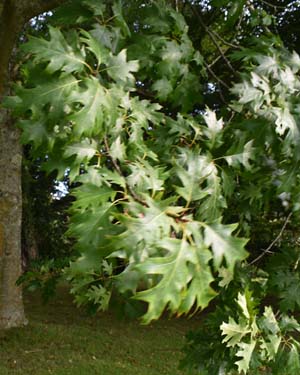
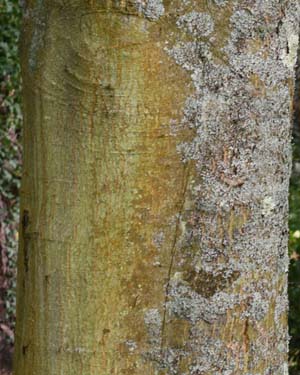
The red oak is native to North America; deciduous, growing quickly to 25m, with flaming red leaves in autumn - for which we were a little early. Its timber is useful, bu not as strong as the English oak or sessile oak, probably more used as lumber for packaging, fencing or flooring.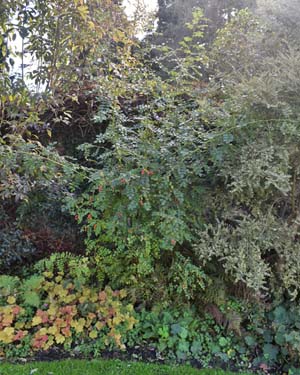

Rosa moyesii
Moyes rose
Also known as mandarin rose, a native of China. It is a vigorous climber capable of reaching 4m with some support. Covered in red, wild rose flowers in summer, these are followed by distinctive bottle shaped hips which persist into winter.
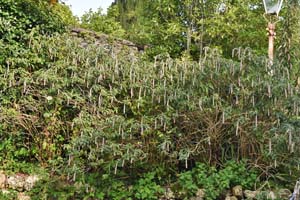
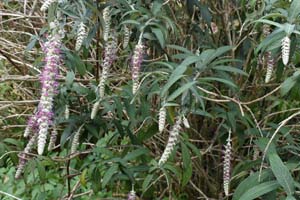
Rostrinuculum dependens
Weeping butterfly bush
An unusual shrub native to parts of China, it has an attractive arching habit, bearing racemes a flower cluster with the separate flowers attached by short equal stalks at equal distances along a central stem. The flowers at the base of the central stem develop first of pendulous pale pink flowers in late summer. Salvia-like mid-green leaves. Growing against a wall to protect against cold and winds.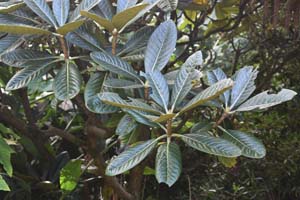
Rhododendron sinogrande
Great Chinese rhododendron
A large evergreen shrub or tree, capable of reaching a height of 10m. The dark green leaves can be 50cm or more in length. Large trusses of pale yellow or cream flowers, spotted with maroon on the interior, appear in late spring.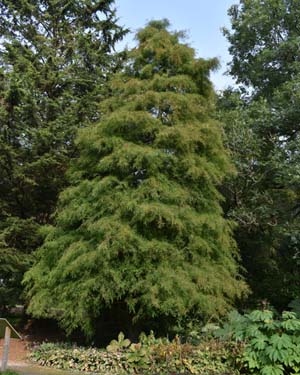
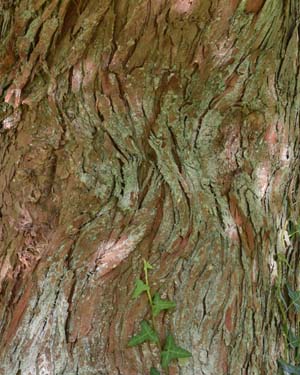

Taxodium distichum
Bald cypress
One of the few deciduous conifers, hence the bald cypress name. It is also called swamp cypress due to its liking for wetlands. Native to SE United States. It is noted for the russet autumn colour of its needles. It can grow to 40m with a diameter of 2m. It is monoecious male and female reproductive parts are on the same plant .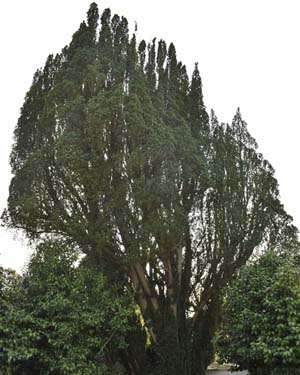
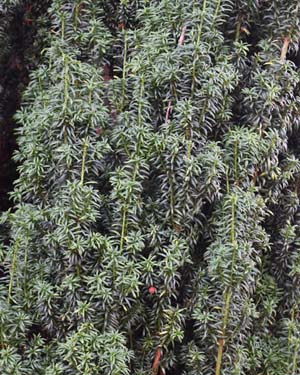
Taxus baccata
English Yew
One of three native conifers in Britain (the others being juniper and Scots pine), a long lived tree commonly found in churchyards. It is used widely as hedging, but often hedges are abandoned and the yews grow to tree sizes. Possibly this is the case with this one.