Trees gallery - The Arboretum - Isle of Man - page 3
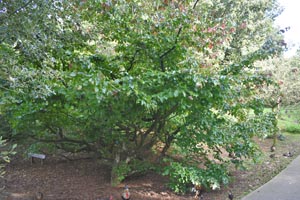
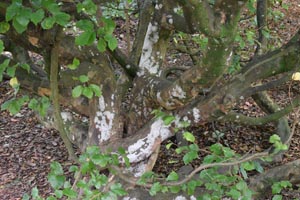

Parrotia persica
Persian ironwood
As its name indicates, the Persian ironwood is native to Iran, where it is critically endangered (according to the IUCN International Union for Conservation of Nature ). It is however widely planted as an ornamental tree across the world, prized for its display of brightly coloured autumn leaves, and red winter flowers, which resemble those of its close relative, the witch-hazel (hamamelis).
Much more to follow ... (18 October 2023)
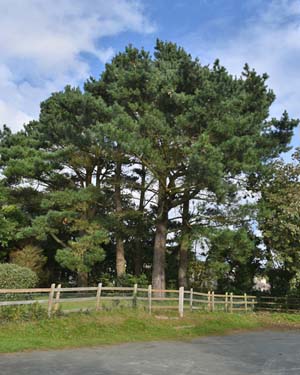

Pinus nigra?
Austrian pine
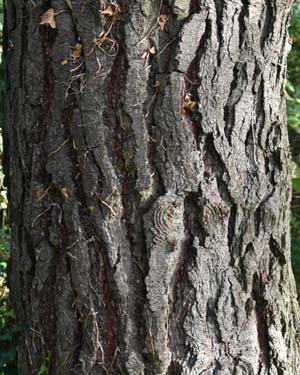
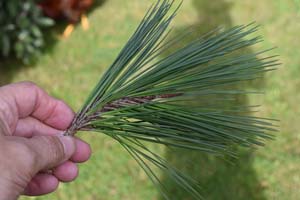
This group of pines was growing by the top car park, and I think it is P. nigra, certainly the best fit amongst the five pine species listed in the arboretum guide. Long needles, tall, furrowed bark, all fit the description. Its native range is across S and C Europe and the countries bordering the Mediterranean, but it is a common site in Britain, particularly in graveyards probably due to its longevity (500 years is not unusual), and the symbolism of the evergreen.
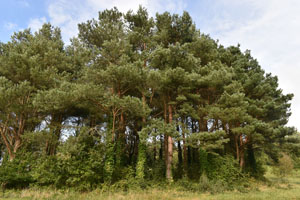
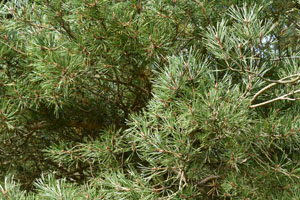
Pinus sylvestris
Scots pine
A roundel a group of trees in the form of a ring, or large clump of Scots pine, one of three roundels planted in the arboretum, the others being oak and beech. Scots pine is our only native pine tree, and one of only 3 native conifers the others being yew and juniper . It can live for 700 years. It is monoecious, the female flowers turnkng green and developing into cones. They mature the following season, so there are always cones of different ages on the one tree. Mature cones are grey-brown with a raised, circular bump at the centre of each scale. [Woodland Trust]

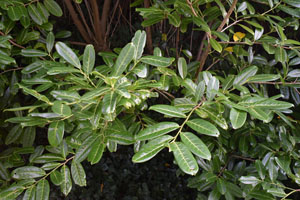
Prunus laurocerasus
Cherry laurel
P. laurocerasus was introduced into cultivation in Britain by 1611 and was known from the wild by 1886 (Oxfordshire), hence a neophyte a plant not native to a region, introduced and escaped into the wild in recent history (after 1500). . Originating in the Balkan Peninsula, western Caucasus and northern Iran, it is now very commonly planted in gardens as an evergreen ornamental or as hedging. The Woodland Trust on the Isle of Man warn against gardeners using it, as its invasive nature is creating "impenetrable thickets which shade out native vegatation" .

Quercus cerris
Turkey oak
Introduced to Britain in the 18th century from S and SE Europe and SW Asia, it has spread in the wild since at least 1844, and is now present in most of lowland Britain, including across the Isle of Man. Its acorns have hairy cups, its leaves have deep-cut lobes. It grows faster than our other oaks, resulting in timber of poorer quality.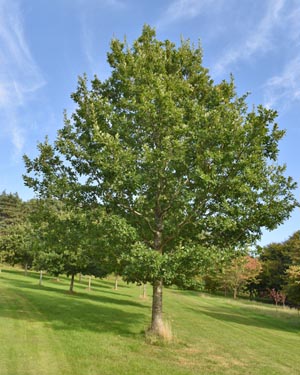
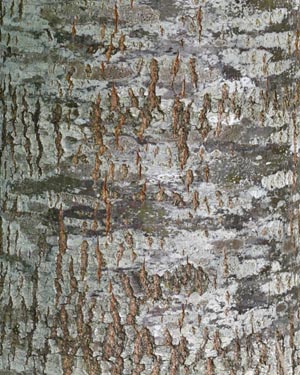
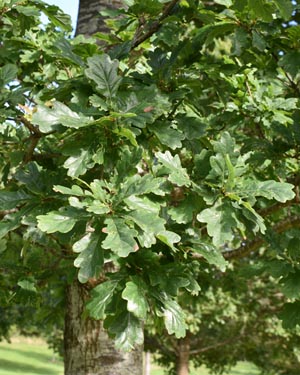
Quercus petraea
Sessile oak
A second roundel a group of trees in the form of a ring, or large clump of trees, this one is sessile oak. The roundels were planted in phase 3 of the arboretum, to the north of the site. Compared to Q. robur, Q. petraea has leaves with stalks, and acorns without stalks, and tends to grow taller and straighter. Also known as Durmast oak and Irish oak, it is native across nuch of Europe. These young trees will eventually grow to 40m.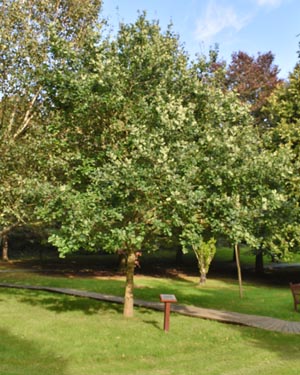
Quercus robur
Pedunculate oak
Also known as European oak, English oak and common oak, this tree is native to much of Europe and W Asia. "Pedunculate" refers to the stalks or peduncles a stalk bearing a flower or fruit on the acorns, though to confuse matters the leaves are stalkless (it is the opposite way round on Q. petraea). This tree was planted to commemorate the Queen's diamond jubilee in 2012.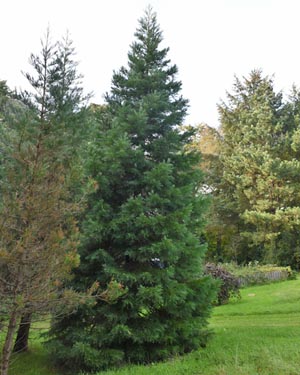
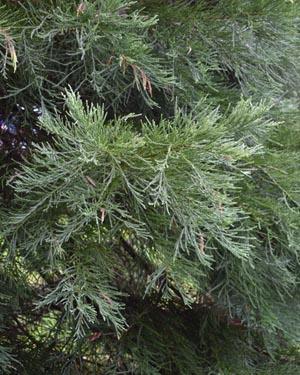
Sequoiadendron giganteum
Giant redwood
I think this is a young giant redwood. They can grow to an average height of 50–85m with trunk diameters ranging from 6–8 m, and bark at the base 1m thick. This one has quite some way to go.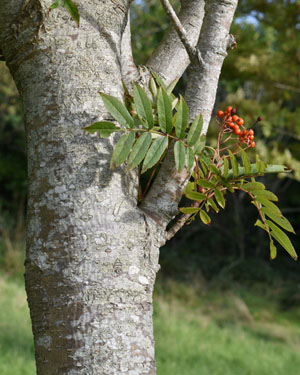
Sorbus aucuparia?
Rowan
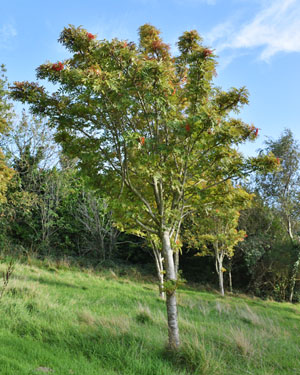
I think this is a rowan tree, often called mountain ash, though it is not related to ash. There are 8 sorbus species listed in the arboretum guide. The pinnate, toothed leaves with 8 pairs of leaflets plus one terminal leaflet, and bright red berries here suggest the rowan. Native to Britain and the higher areas of the northern hemisphere.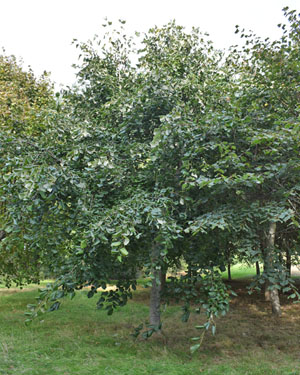

Tilia cordata 'Greenspire'?
Small Leaved lime
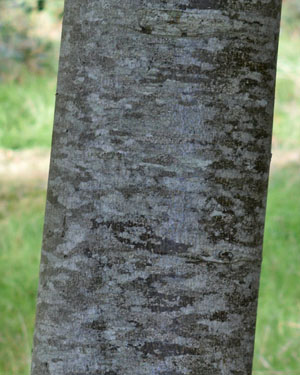
Telling limes apart remains a problem for me, but I think this one is a cultivar of the small-leaved lime. It is listed in the arboretum leaflet, it has small shiny heart shaped leaves, and appears compact in stature, all features of the cultivar.
Ulex europaeus
Gorse
A small shrub rather than a tree, though capable of heights up to 3m, which it reaches in the large clumps around the arboretum hedging. Also known as common gorse, furze or whin, it is native to the British Isles and Western Europe. There were still some flowers in late September, and they do appear throughout the year. It is a )">fire-climax plant readily catches fire but re-grows from the roots after the fire; the seeds are also adapted to germinate after slight scorching by fire. , and is an extremely tough and hardy plant, it survives temperatures down to −20 °C, and can live for about thirty years. It was bruised on a whin-stone before using as feed for horses and other livestock.