Trees gallery - Milntown, Isle of Man - page 3


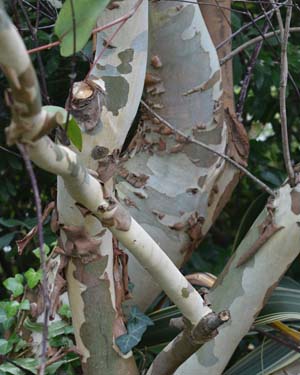
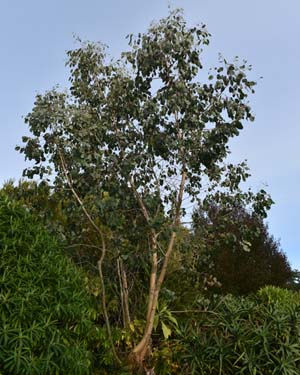
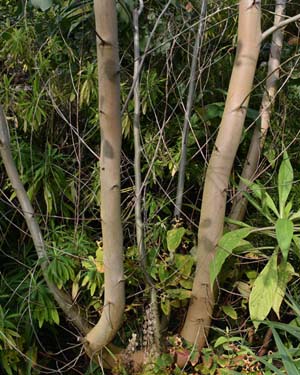
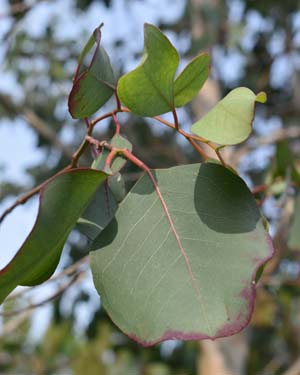
Eucalyptus spp.
Gum tree
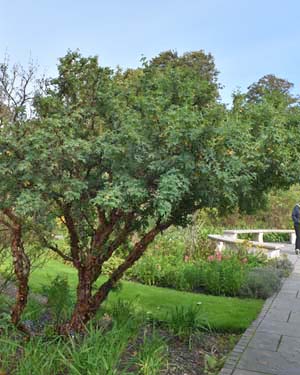
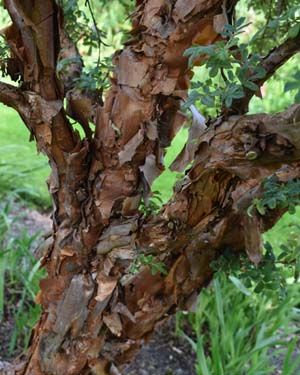
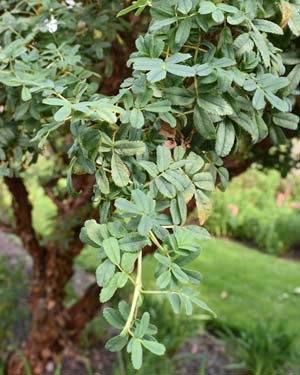
Back to guess work with these. I think they are eucalyptus, one growing in the car park, the other in the waterwheel garden, with different leaves and bark. I am not sure which variety either might be, possibly E. globulus for the long thin leaves, E. camphora for the rounded leaves.
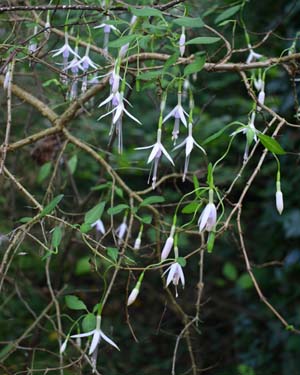
Fuschia magellanica alba ?
Hardy fuschia
The red variety has naturalised across the Isle of Man on account of the mild winters, and head gardener Adam Quayle says it is sometimes called the Manx fuschia locally. This beautiful subtle pink variety is probably F. magellanica alba. The species originates in Argentina and Chile, and is naturalised in Australia. A straggly bush overall, only becoming fascinating on approaching the delicate drooping flowers.

Juglans regia
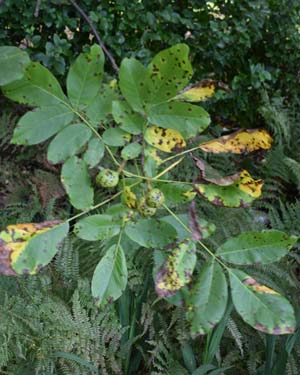
Walnut
Unassuming tree growing at the entrance from the car park to the house. Walnut is said to have been introduced by the Romans, so is classed as a cultivated archaeophyte long established alien plant, ie found in the wild before 1500 by some, though as a neophyte a plant not native to a region, introduced and escaped into the wild in recent history (after 1500). by others as it was not formally recorded in the wild until the 1830s. There are not many specimens on the Isle of Man. Walnut is a large deciduous tree with edible nuts, which squirrels cache in the ground, leading to new trees springing up not too far from the parent.


Magnolia grandiflora
Southern magnolia
A native of SE USA, this tree can grow to 35m, and the flowers can be 30cm across - hence the specific epithet grandiflora. It has been cultivated in Britain since the 1720s, and is often planted in urban areas due to its resistance to pollution. As is often the case, this specimen is planted against a wall to improve its frost hardiness, although frost is not a frequent concern in the Isle of Man.


Pieris sp.
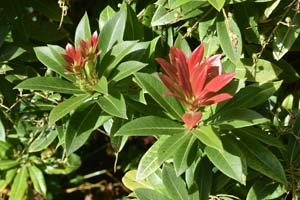
Pieris
The distinction between shrub small to medium sized perennial woody stemmed plant. Multiple stems in contrast to the more usual single stem of a tree and tree a perennial plant with an elongated stem, or trunk, usually supporting branches and leaves can be difficult in some cases, but pieris is very much in the shrub category. Native to E and SE Asia, E North America and Cuba. It is notable for its brightly coloured young leaves.

Pittosporum eugenioides ?
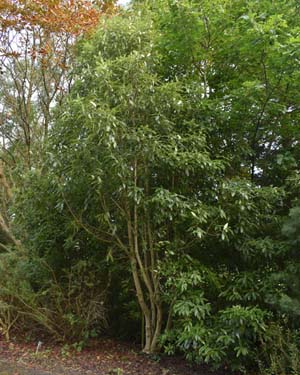
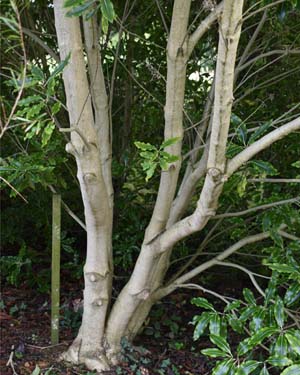
Lemonwood
I am fairly certain this is a pittosporum, but am less sure of its variety, with a large selection there are over 200 species of pittosporum within this genus to choose from. It does have the height and the black seed pods noted for the species. I didn't check for citrus scented leaves at the time. A native of New Zealand, pittosporum varieties were imported to the UK in Victorian times for its use as a tough evergreen hedging plant.

Pittosporum tobira
Japanese mock orange
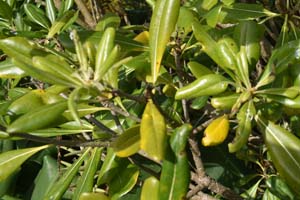
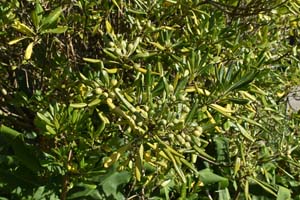
This one had a label (hooray!), so is a known variety. Also called Australian laurel and Japanese cheesewood, possibly on account of a foul smell when branches are cut, though the flower scent is sweet and honey-like. If left to grow it can reach a tree-like 10m, but it is often clipped as a bush or hedge. A widely spread native of E Asia. The flowers turn to small white pods which have seeds encased in a resinous substance, hence pittosporum from the Greek pitta - pitch, spora - seeds. Not generally hardy in the UK, but capable of surviving outdoors in the mild climate of the Isle of Man.