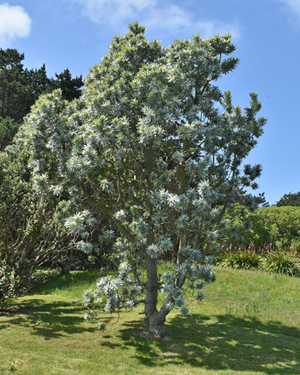
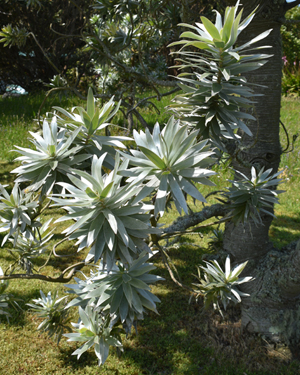
Trees gallery - Isles of Scilly - Tresco
A visit to the Isles of Scilly in May 2023 saw us take the inevitable day trip to Tresco and the Abbey Gardens.

Augustus Smith established Tresco Abbey Garden in the 19th century around the ruins of a Benedictine Abbey. Today, the garden is a sanctuary for some 2,000 specimens from across the southern hemisphere and subtropics, from Brazil to New Zealand; Myanmar to South Africa. His descendants, the Dorrien-Smiths, still live on the island and manage the gardens.
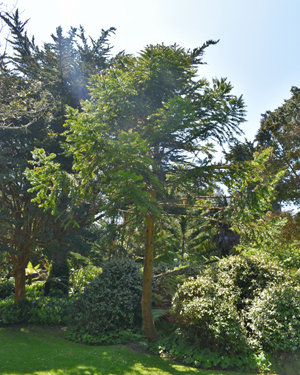
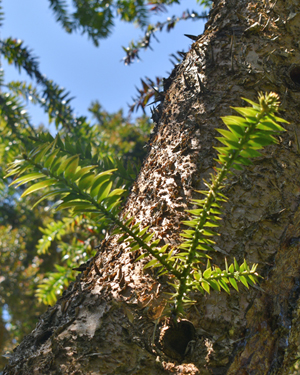
Araucaria Bidwillii
Bunya pine
A large tree (up to 50m) native to Australia, though this specimen is relatively young. Eventually the top of the tree will rise above the canopy in a dome shape. Sometimes called the false monkey puzzle tree - it is closely related to the more common monkey puzlle. It has very sharp triangular section sessile without a stem (usually of leaves, or acorns) leaves, capable of piercing skin. Large cones develop at the ends of the branches.
Banksia integrifolia
Coast banksia
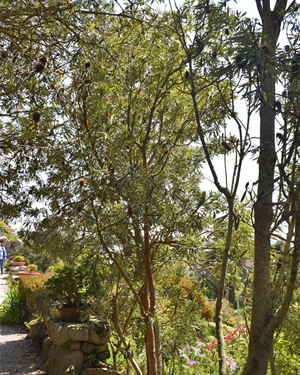
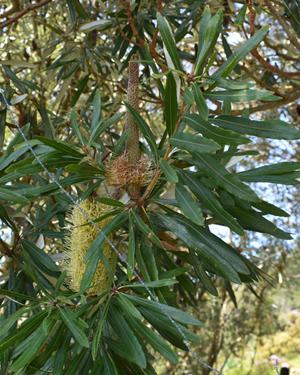
A native of Australia, noted for its large creamy bottle-brush flower spikes, followed by the hard woody banksia "nuts" (actually seed pods). It can grow up to 25m, and is very common in Australia, from coastal dunes to mountains.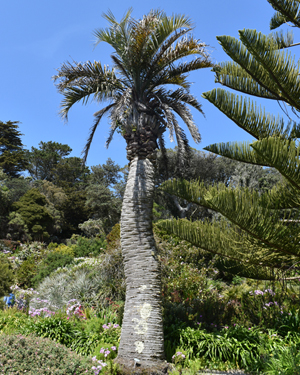
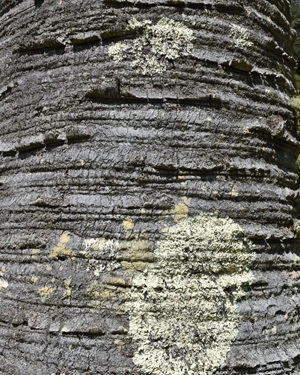
Butia capitata
Jelly palm
A native of Brazil, this palm has a thick trunk growing up to 8m, with feathery palm leaves at the top. In the right conditions it will produce a mass of small orange fruits.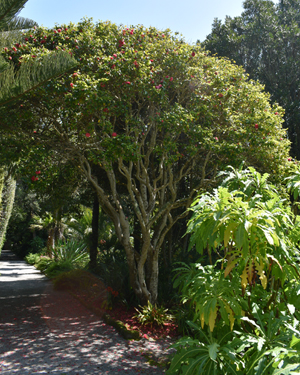
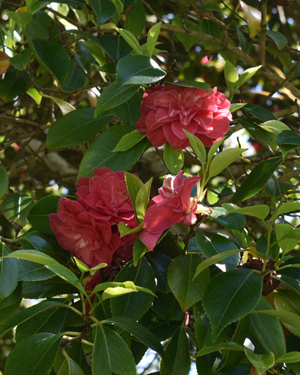
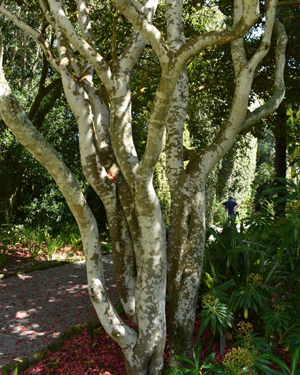
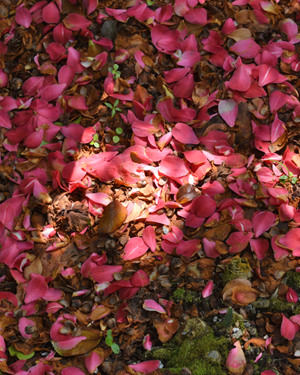
Camellia japonica
Camellia
I am not sure of the variety of this camellia, growing in the lower east part of the gardens. Whatever it is, it gives a fine show of bright red flowers on the tree, as well as a carpet of petals on the ground. A native of China, Taiwan and Japan, growing in the mountain forests.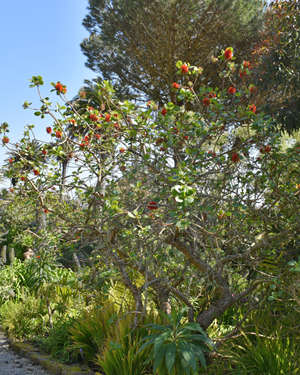
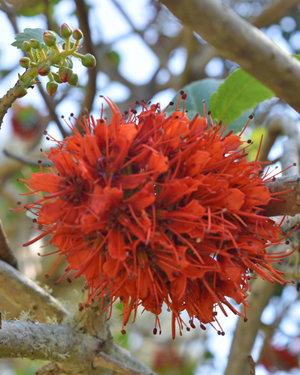
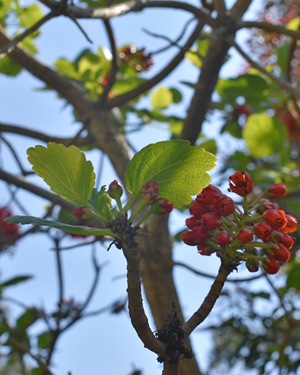
Greyia sutherlandii
Natal bottlebrush
From South Africa, the Natal bottlebrush has brush-like flowers similar to the Australian callistemon. A large shrub or small tree. The genus was named in honour of Sir George Grey (1812-1898) who was a Governor of the Cape Colony. The species name honours Peter Cormack Sutherland (1822-1900), a medical doctor from Aberdeen, surveyor-general of Natal in 1855.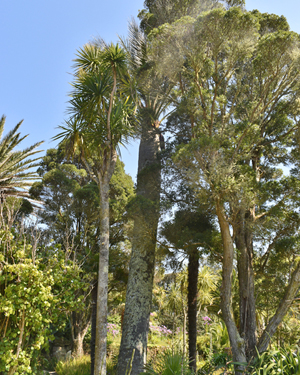

Jubaea chilensis
Chilean wine palm
The second-largest of all the 2600 palms. The label on the tree says Its barrel-like trunk contains 300-400 litres of sap - a natural sweetener, though it has to be felled to harvest it.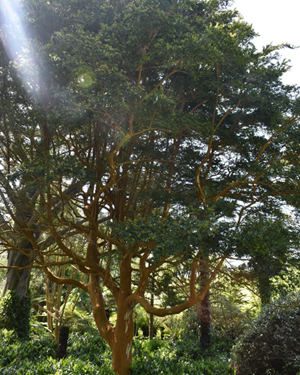
Luma apiculata
Chilean myrtle
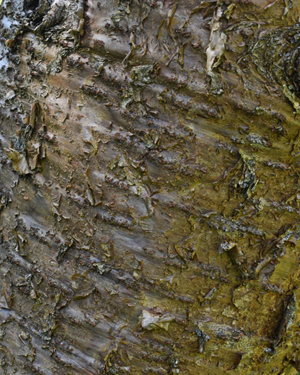
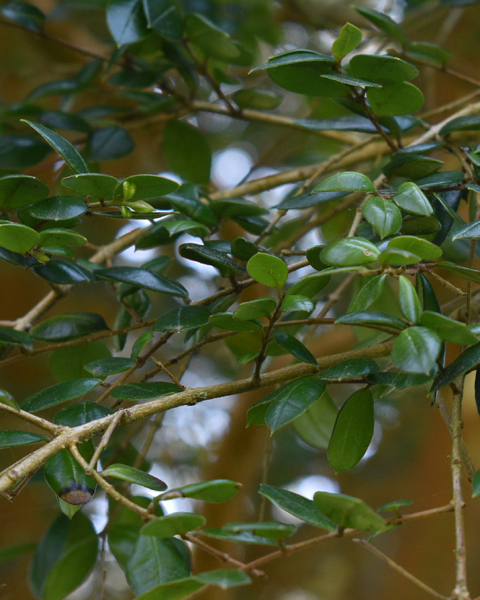
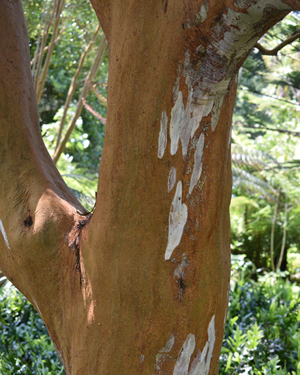
With distinctive orange bark and small glossy myrtle leaves, introduced to the UK from South America in 1844, now a (invasive) neophyte a plant not native to a region, introduced and escaped into the wild in recent history (after 1500) in the UK, springing up in the mild climate of South West Ireland and Cornwall. I spotted a smaller one in a garden in Holy Vale on St Mary's

Meyrta sinclairii
Puka or pukanui
A tree native to New Zealand, which can grow up to 8m. Named after Dr Andrew Sinclair, (1794–1861), Colonial Secretary and naturalist.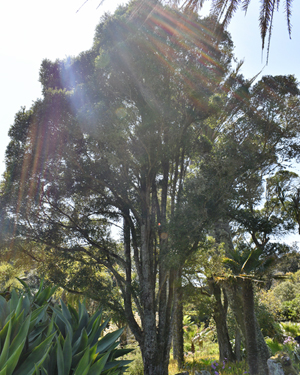
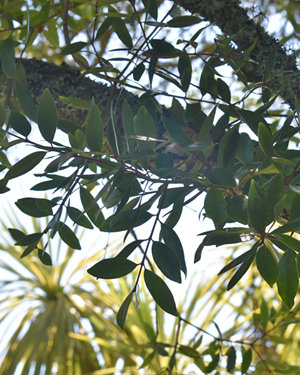
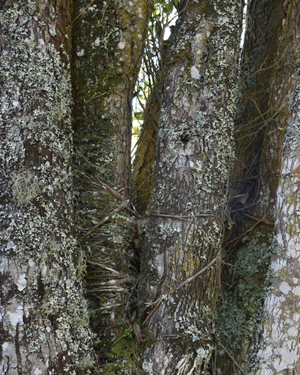
Metrosideros robusta
Northern rata
Native to New Zealand, this is a forest tree unlike the metrosideros excelsa, which is coastal. The tree sends out roots which twine around its trunk, or one of a host, descending and fixing in the ground.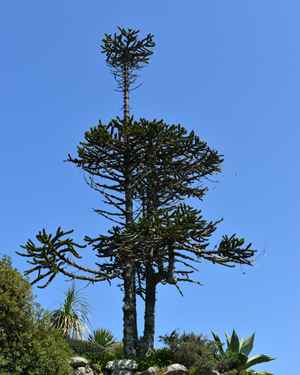
Auracaria araucana
Monkey puzzle, Chilean Pine
Native to Chile and Argentina, but planted in almost every stately home parkland in the UK, and in many private gardens - some not realising the size it will eventually achieve!. The leaves are thick, tough, and scale-like, triangular, 3–4 cm with sharp edges and tips. The leaves can live for 25 years. It is usually dioecious having male and female reproductive parts on separate plants , though occasional individuals bear cones of both sexes. I think this is one tree that has forked near its base.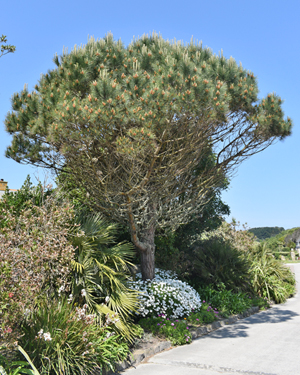
Pinus radiata
Monterey pine
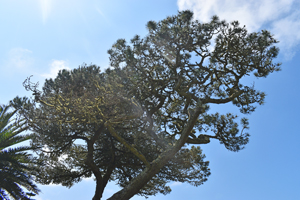
The Monterey pine has been used extensively in the shelter belt protecting the gardens, and now they occur across the island. The picture on the left here is of one growing by the roadside at New Grimsby. It has the new male cones in abundance, as well as the old female cones clinging limpet-like to the branches. The other picture is of high branches of a tree in the Abbey Gardens.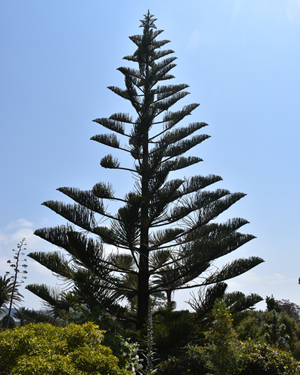
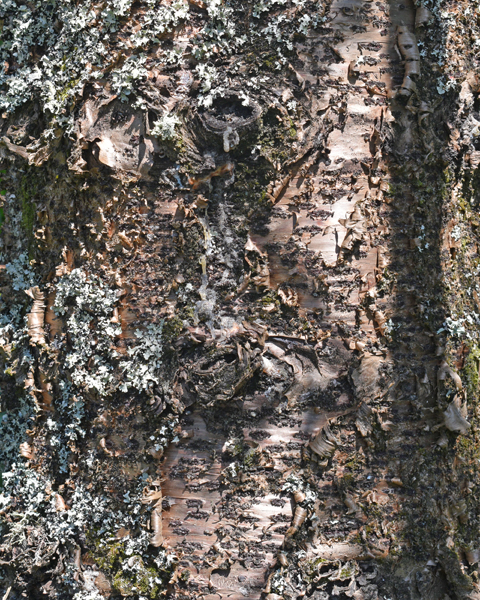
Araucaria heterophylla
Norfolk Island pine
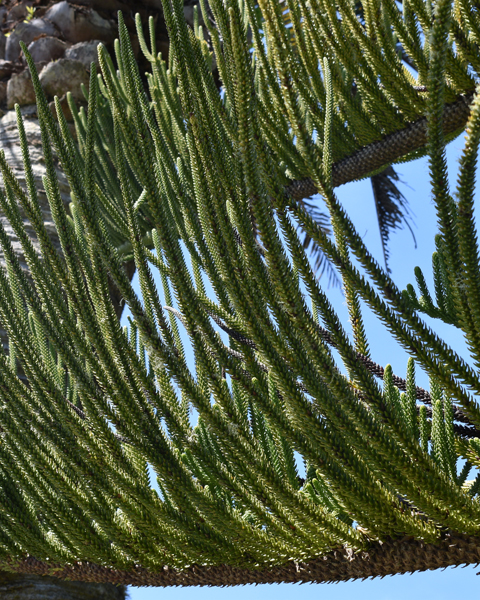
Norfolk Island is an Australian exterior territory in the Pacific Ocean. The tree is not a true pine, belonging to the same genus as the monkey puzzle. It is evergreen, needs a mild climate, and at home can grow to 60m with a 3m diameter trunk. Discovered by Captain Cook in the 1770s and brought into cultivation as an ornamental plant.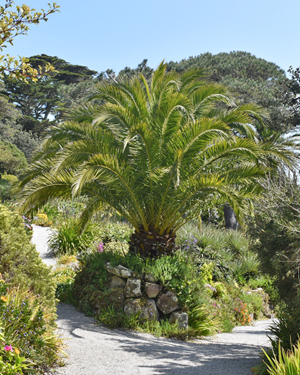
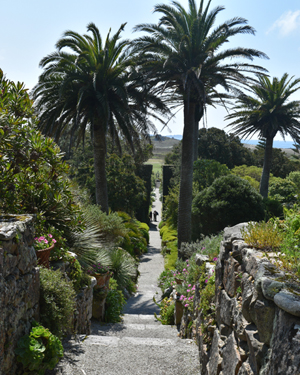
Phoenix canariensis
Canary Island date palm
The national symbol of its native Canary Islands, a distinctive palm. It can grow to 10m in 60 years, but sometimes it is pruned to create a pineapple shaped bole. Both versions are in the Abbey Gardens.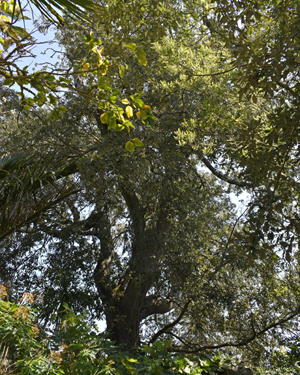
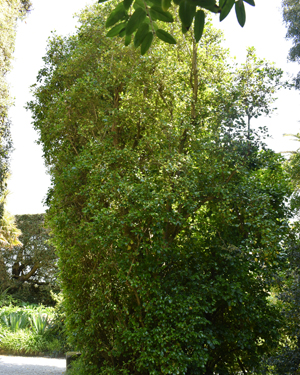
Quercus ilex
Holm oak
Quercus ilex has been used extensively in the shelter belt, its evergreen holly like leaves being resistant to the salt winds. It is also used in the garden, in places as a 7m tall hedge to shelter more tender planting.
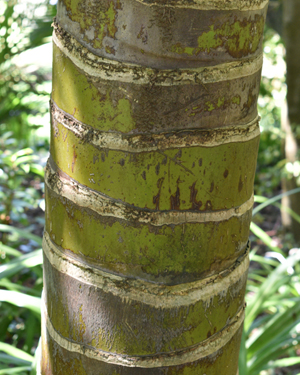
Rhopatostylis sapida
Nikau palm
The only palm native to New Zealand, and the most southerly palm in the world, growing on Chatham and Pitt Islands. It grows up to 15m on a thick green trunk which has leaf scars punctuating its upward progress.