×
![woodturning]()

Trees gallery - Nostell Priory - page 2 - parkland and lakeside
Wakefield, West Yorkshire

Nostell Priory is a National Trust property on the outskirts of Wakefield. It has a large area of woodland and parkland, as well as a kitchen garden, all with many unusual, mature and interesting trees. Thanks are due to Paul Dibb, garden and parklands manager, for taking the time to reply to a few of my questions about the trees. This page is mainly of trees and shrubs in the parkland around the middle lake. Another page looks at the kitchen garden trees and shrubs.
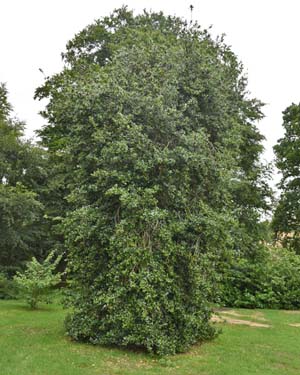
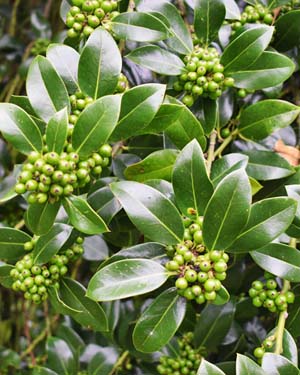
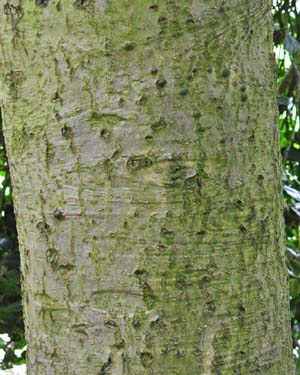
Ilex aquifolium
Holly
A large common holly at the rear of the hall, standing in the grassed area between the hall and the middle lake. Laden with berries. In the British Isles it is one of very few native hardwood evergreen trees. Slow growing, this one must be a good age given its height.
Ilex x altaclarensis Golden King
Variegated holly
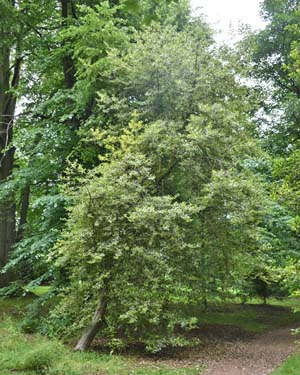
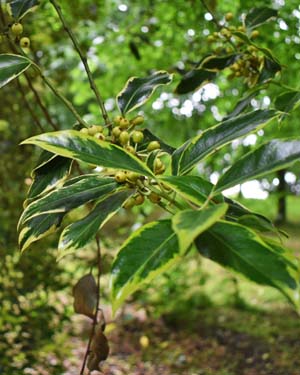
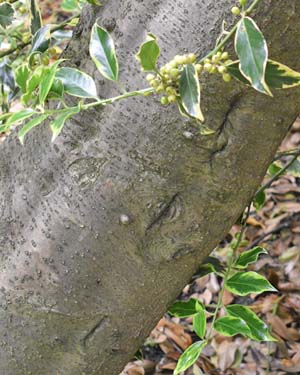
Another large holly, which the garden manager Paul identified as "altaclarensis, possibly golden king.". Can grow to 6m in height - as here - with broad, slightly spiny leaves. Holly is monoecious male and female reproductive parts are on the same plant , and despite the name, this cultivar is a female, so has plenty of berries.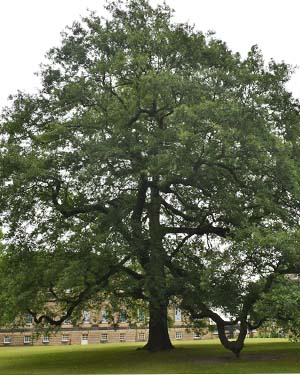

Quercus cerris
Turkey oak
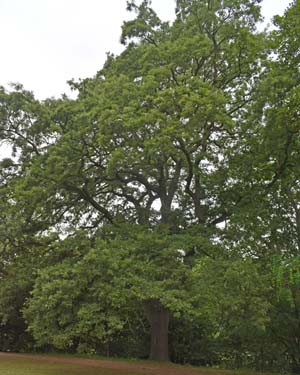
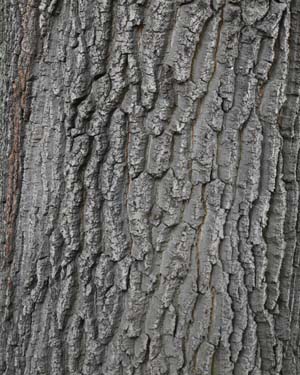
Native to SE Europe and Asia Minor. It can grow to 30m. Introduced to the UK as an ornamental in the 18th century (1735), but is now impacting our native oak populations - it is much faster growing and seeds freely, mainly in lowland, free-draining soil. A neophyte a plant not native to a region, introduced and escaped into the wild in recent history (after 1500) , naturalised across much of Britain since at least 1844. The timber is not as high a quality as quercus robur because of the speed of growth.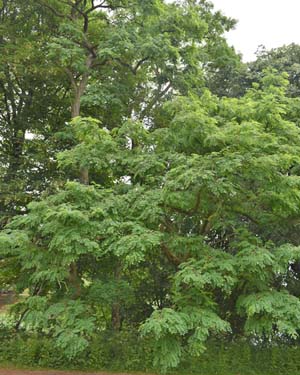

Robinia pseudoacacia
False acacia
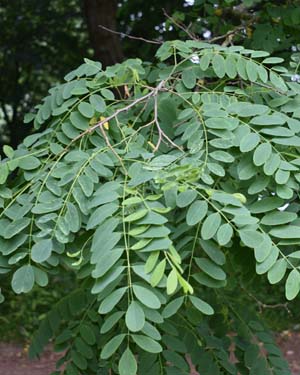
Also known as black locust, native to parts of the USA, but introduced and naturalised across America and Europe. Shade-intolerant, therefore typical of young woodlands and disturbed areas. Sometimes considered a weed tree. It also spreads by underground shoots or suckers. Young trees are often spiny, but mature trees often lack spines. In the early summer black locust flowers; the flowers are large and appear in large, intensely fragrant clusters. The leaflets fold together in wet weather and at night (nyctinasty). A neophyte a plant not native to a region, introduced and escaped into the wild in recent history (after 1500) , introduced in 1634 and was known from the wild by at least 1888 (South-west Yorkshire).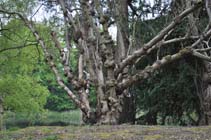
Fraxinus excelsior
Ash burr
A multi-stemmed trunk heavy with burrs. I think this is an ash, growing at the side of the middle lake. The photo was taken in 2016, I am not sure if the tree is still standing. If not, it would have made some very interesting woodturning!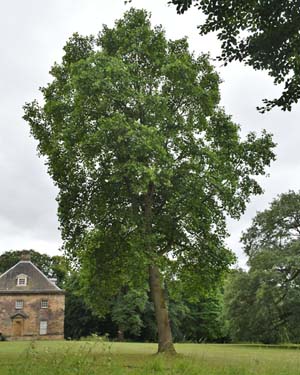
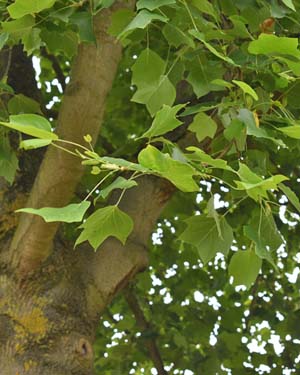
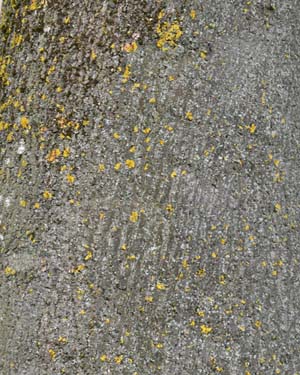
Liriodendron tulipifera
Tulip tree
Common to most parkland estates, the tulip tree is widely planted for its attractive leaves and flowers in gardens, parkland, estate woodlands, streets and other amenity areas. A neophyte a plant not native to a region, introduced and escaped into the wild in recent history (after 1500) , nowhere naturalized but seedlings have been reported close to parent trees in Berkshire (Crawley, 2005). Originally from Virginia.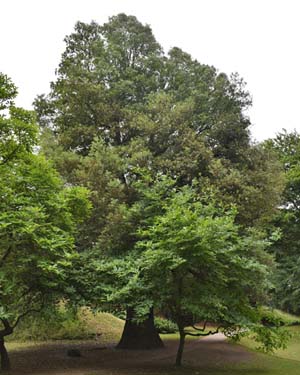
Quercus ilex
Holm oak
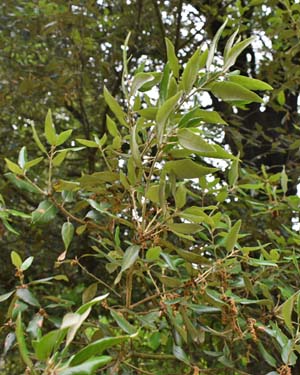
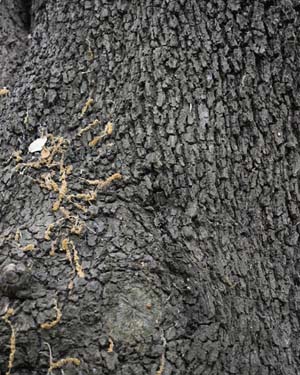
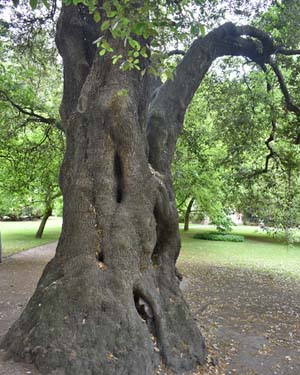
An evergreen broadleaf tree that can grow to 20m and develop a huge, rounded crown. It was introduced to Britain in the late 1500s, and recorded in the wild by 1862. Often planted in coastal regions, and widespread across much of the lowlands of southern England. This one is the girth county champion for West Yorkshire (Tree Register).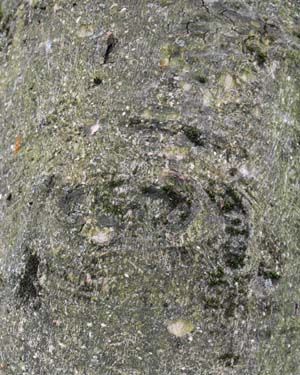

Magnolia spp.
Magnolia
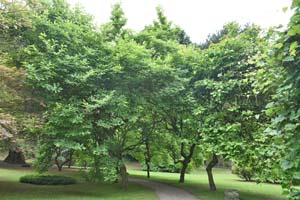
A grove of magnolias by the menagerie house which in late spring would be covered in bloom, but we were too late for this spectacle. Magnolias are native to SE Asia, but also America and West Indies. An ancient genus, with fossils found from over 20 million years ago. They are named after French botanist Pierre Magnol (1638-1715)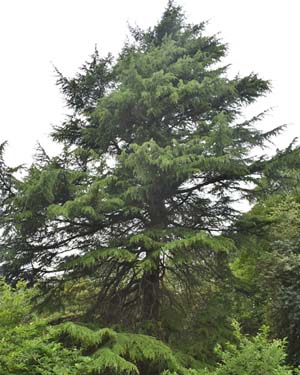

Cedrus deodar
Deodar cedar
I think this large cedar, growing near the menagerie, is a deodar cedar, mainly based on the long drooping blue-green needles. Also known as the Himalayan cedar, indicative of its natural range.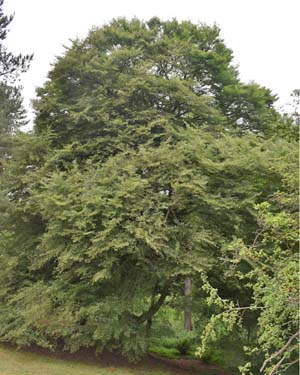
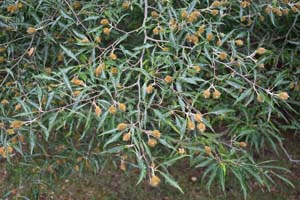
Fagus sylvatica asplenifolia
Cut leaved beech
Also known as the fern-leaved beech, a cultivar of the common beech. Modest in size, it can grow to 15m. It was introduced to the country in the 1800s. The high volume of nuts on show suggests this is an older, well-established tree. Ideally it should be free standing to show off its shape and its leaves, but this one seems to be coping well in the woodland to the west of the middle lake.