×
![woodturning]()

Trees gallery - Tyntesfield - page 3
Wraxall, North Somerset, near Bristol
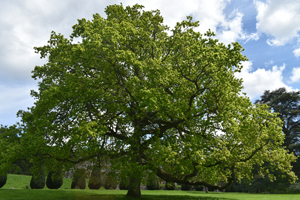
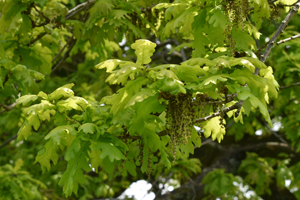
Quercus robur
English oak (41)
The Tree Guide says: The quintessential British tree, the English or Pedunculate Oak can live for 1000 years and reach 30m tall. England was once covered by oak forests. The best wood for building ships, it took 2000 trees to build a large ship and heavy use during the Napoleonic wars decimated the stock. It can be 50 years before an oak produces acorns. Many are eaten by scavengers so only a small proportion take root. It can then be 150 years before the timber is ready to use. The leaves are very recognisable as they form the logo of the National Trust.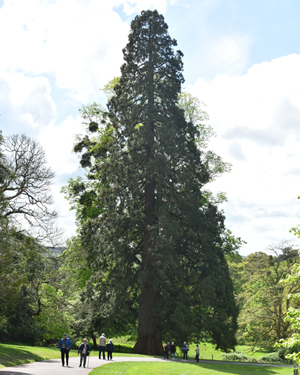
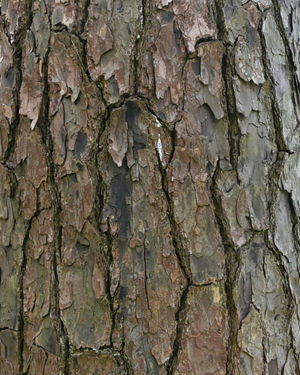
Sequoiadendron giganteum (A)
Giant redwood
The Tree Guide says: Native to California. Introduced into the UK by William Lobb for Veitch & Sons. A grove of these giant trees was found in California. The world's largest tree by volume, it can reach 100m in height and live for up to 3500 years. It has very small seeds in tiny cones and relies on bush fires to clear the ground around it for seeds to set. With little commercial use, it was extensively planted in the UK particularly when it was first named after the Duke of Wellington (Wellingtonia). The Caleveras grove, where it was found in California, became a great tourist centre. One tree was cut down and the flat stump turned into a dance floor 8m across. Girth County Champion noted in the Tree Register."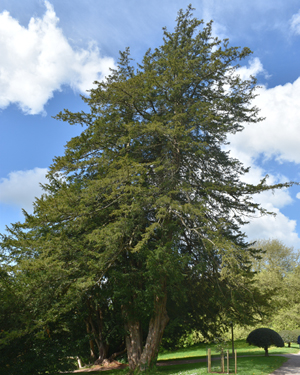
Taxus baccata
Yew
The Tree Guide says: Native to the UK. Long associated with churchyards. It is slow growing and can live to 3000 years. It is poisonous; not just the bright red arils in autumn* but the leaves, bark and wood. It is famous for providing medieval English bows, most notably for Agincourt in 1415. The staves are strong and flexible to give power to the arrow's flight. Taxus translates as 'bow' in Latin. [*Many sources (such as Kew) state the red fleshy aril an exterior covering or appendage of some seeds (as of the yew) that develops after fertilization as an outgrowth from the ovule stalk is not toxic - however the seed it surrounds is highly toxic, so it probably wise not to eat the flesh and attempt to spit out the seed!]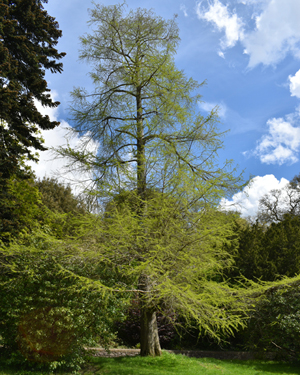
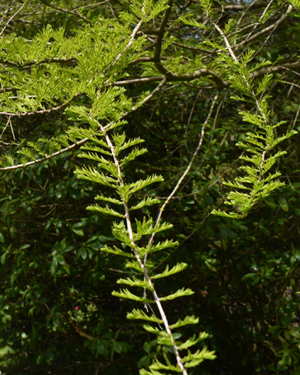
Taxodium distichum
Swamp cypress (56)
The Tree Guide says: Native to Eastern USA. Introduced by John Tradescant the younger, it likes damp soil so is often planted close to rivers and lakes. in waterlogged ground some of the roots will push up to the surface. These are known as 'knees' and help the roots to breathe. This location is well drained and far from its natural habitat. Although there are no breathers, you can see on the ground around it how close to the surface the roots are placed. It is one of the few conifers to shed its leaves in winter. It has both male and female flowers and produces seeds with open blades so that they blow across water to find land. The wood is waterproof, making it popular for window frames and barrel making.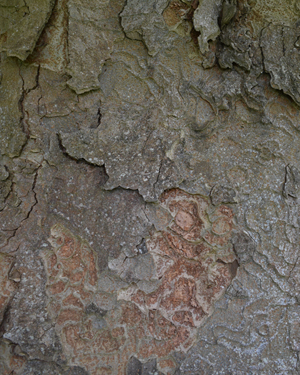
Zelkova serrata
Japanese Keaki
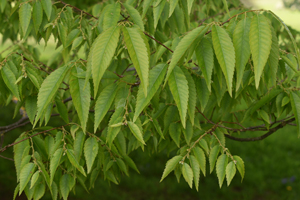
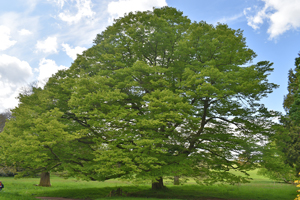
The Tree Guide says: Introduced by John Gould Veitch, a young son of the Veitch family sent to the newly opening Japan to collect. He took part in the first foreign expedition to climb Mount Fuji, collecting plant samples whenever he could. The timber is widely used in furniture in Japan, for timber roof supports in temples and to make traditional taiko drums. Serrata refers to its serrated leaves. i\t is sometimes known as 'saw leaf' keaki. The leaves turn a spectacular golden orange in autumn and the tree remains attractive in winter with its peeling multi-coloured bark. It was probably planted after the ha-ha was built in the 1880s and clings to its edge. [Also known as Japanese elm, monoecioous, with a short main trunk, low branching and a vase-shaped habit. The twigs are slender with small, dark conical buds in a zigzag pattern. The branches are usually glabrous. The bark is greyish-white to greyish-brown and either smooth with lenticels or exfoliating in patches to reveal orange inner bark. The branchlets are brownish-purple to brown.]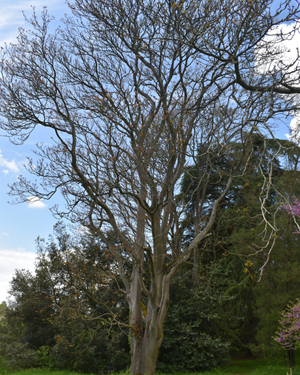
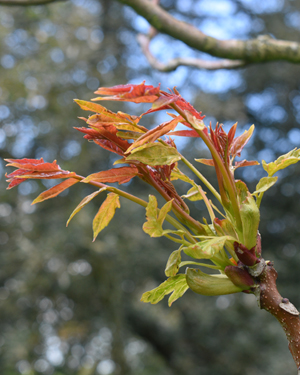
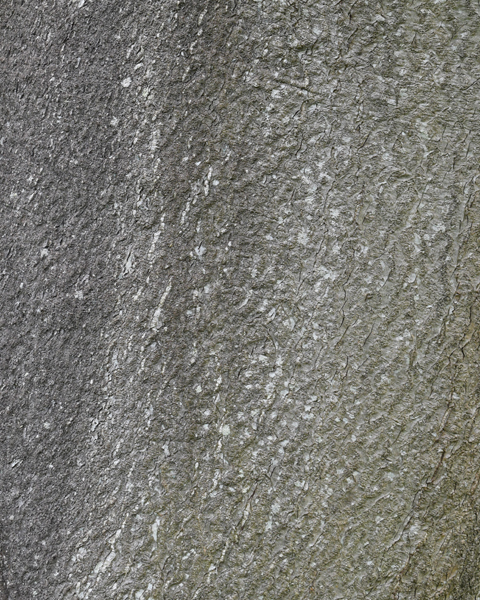
Ailanthus altissima
Tree of heaven (39)
The Tree Guide says: Native to China. Introduced in the mid-1700s, it became popular for garden display. The fruit has a very unpleasant smell. It is called the Tree of Heaven because the branches all grow directly upwards towards the sky. The tree puts out suckers from the roots: if you look around the labelled tree, you will see a dozen smaller trees between 10 and 15m away from the parent. The suckers can travel even further and we have found one 50m from the original. County Champion - a remarkable tree.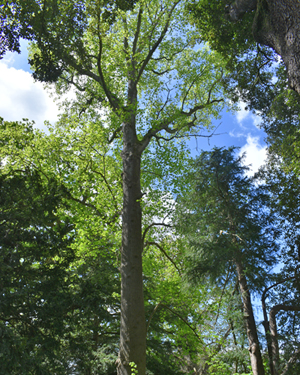
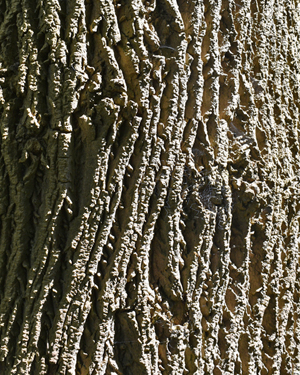
Liriodendron tulipifera
Tulip tree (26)
The Tree Guide says: Native to Canada and Mid-west USA. Probably introduced on one his three trips to Virginia by John Tradescant the younger, botanist and gardener to King Charles I. It is popular as an ornamental tree with stunning foliage and, after 20 years, the tulip-like flowers that give it its name. Native Americans in the Appalachians used tulip trees to make canoes, their trunks hollowed out to carry over 12 people. The wood is like white pine and makes good planks for furniture, boarding and coffins.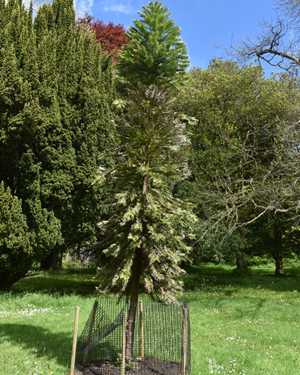
Wollemia nobilis
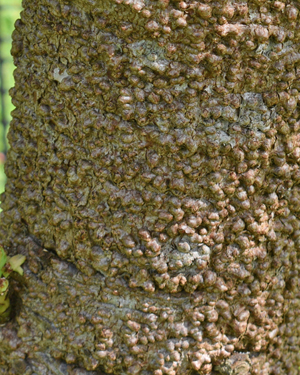
Wollemi pine (1)
The Tree Guide says: Native to Australia. Until 1994, this tree was only known from fossil records, dating between 201 and 145 million years ago. It was then discovered alive, deep in the Blue Mountains of Australia. It is registered as an extremely endangered species with fewer than 100 trees growing in the wild. The tallest know specimen is 40m high. It adapts well to pots and patios when grown from seed and has been successful in the ground as far north as Scotland. The tree is known for growing with several trunks and having very knobbly bark. A sample in Kew gardens is being grown in a cage to demonstrate how precious they are. The oldest known living Wollemi pine is known as 'King Billy' and is estimated to be around 1000 years old.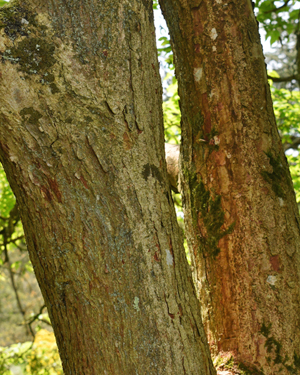
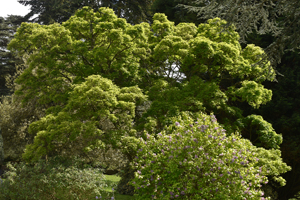
Acer triflorum (53)
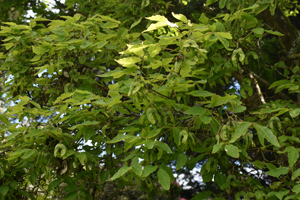
Three-flowered maple
The Tree Guide says: Native to Manchuria and Korea. Vaery rare outside specialist collections. The leaves are divided into three narrow-toothed leaflets which turn a stunning orange in autumn. There are yellow-green flowers in spring. it can grow to 10m but it is very slow growing. Champion tree for the British Isles - a Remarkable Tree.