×
![woodturning]()

Trees Gallery - RHS Bridgewater
Worsley, Salford
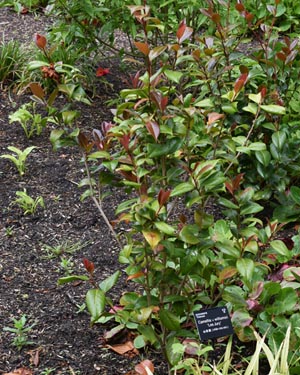
Camellia x williamsii 'Les Jury'
Camellia
This young shrub would have had bright crimson flowers earlier in the season, but we were a little too late. A cultivar bred in 1923 by John Williams at Caerhays Castle in Cornwall; he crossed c. saluenensis with c. japonica. 'Les Jury' later produced this variant in New Plymouth. New leaf growth is bronze, as here, turning to green as it matures.
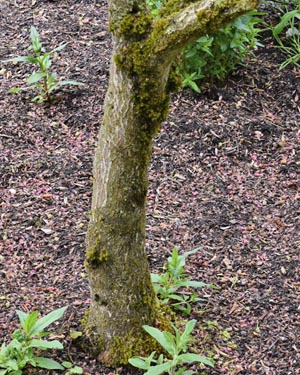
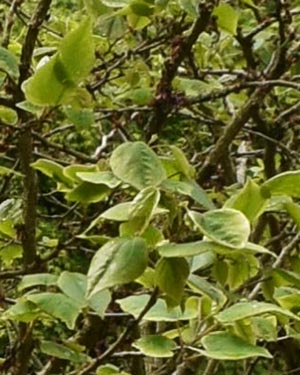
Cercis chinensis Avondale
Chinese redbud
Produces abundant, densely-clustered dark purple-pink flowers in late spring before the leaves appear; leaves are relatively large, heart-shaped and tinted red-purple when they unfurl. Sadly we were too late for the flowers.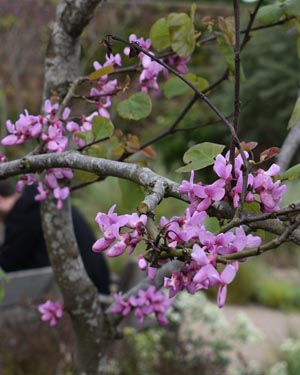
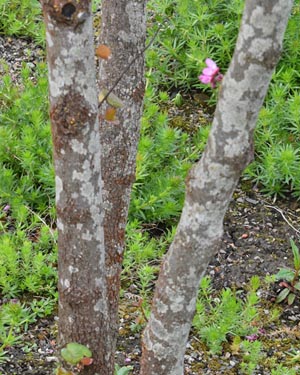
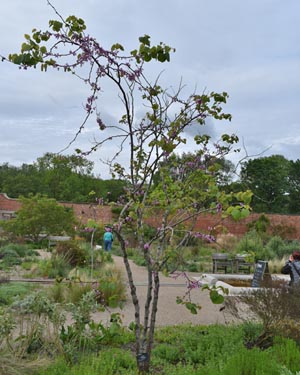
Cercis siliquastrum
Judas tree
A small tree up to 12m, native to S Europe and W Asia. The deep pink flowers are produced on year-old or older growth, including the trunk, in spring. They have five free petals and fused sepals, a flower shape typical of much of the pea family (Fabaceae). The leaves appear shortly after the first flowers emerge. These are cordate with a blunt apex and occasionally have a shallow notch at the tip. The tree produces long flat pods that hang vertically. The flowers are edible and reportedly have a sweet and tart taste.[Wikipedia]
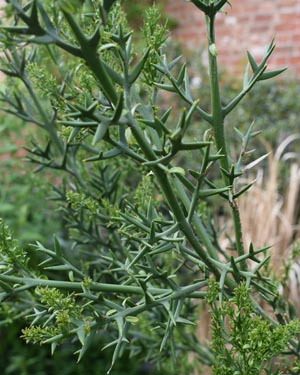
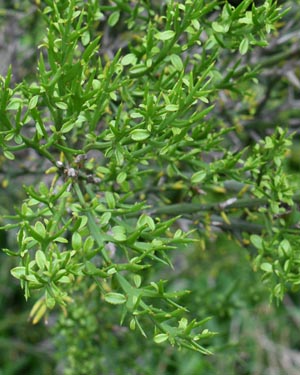
Colletia hystrix
Anchor plant
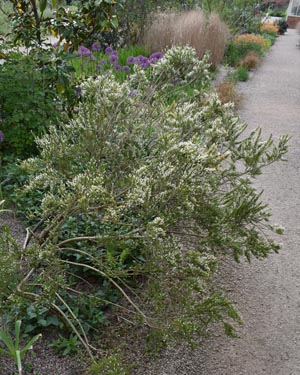
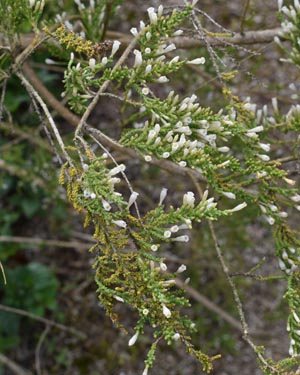
Also called the bristly colletia. A native of S. Chile, a shrub growing to 4 or 5m. Large, sharp spines, often with no leaves present on older stems. Flowers are small white or pale pink, waxy, tubular, appearing on the spikes from September to December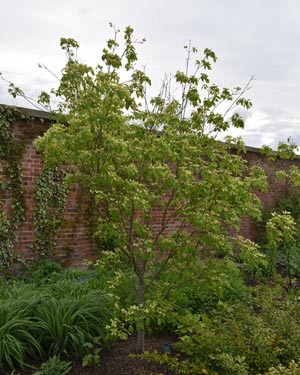
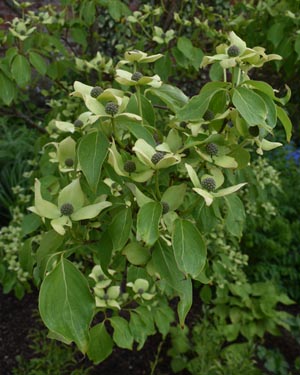
Cornus kousa chinensis
Chinese dogwood 'China Girl'
A large shrub or small tree, the species is native to China, Korea and Japan. Small clusters of tiny, greenish flowers appear in summer surrounded by large, showy, white bracts and are followed by fleshy, deep pink fruit.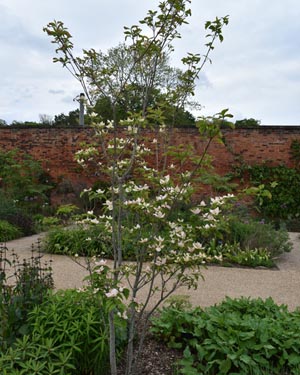
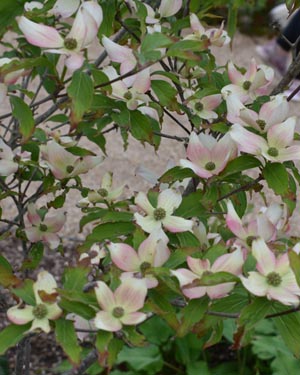
Cornus x Rutgersenis Rutgan
Cornus Stellar Pink
A hybrid dogwood tree created by crossing c. florida and c. kousa, developed at Rutgers University in New Jersey. Large pink flowers, larger and more numerous than on either parent.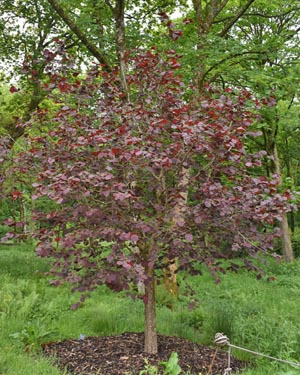
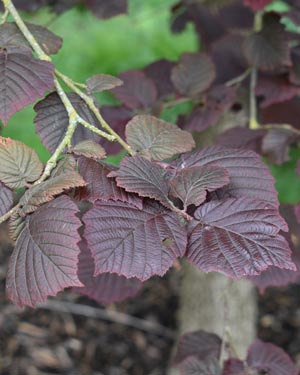
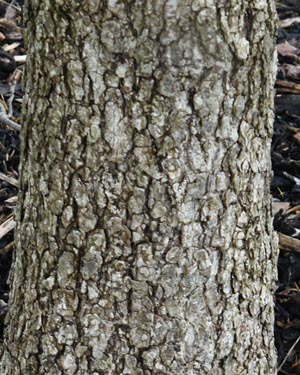
Corylus maxima purpurea
Purple leaved filbert
The species is a large deciduous shrub growing to 6m, not known in the wild, but cultivated for its long-husked edible nuts. It has pendulous red catkins on leafless twigs in late winter. C. purpurea has dark red leaves and red husks, though it does not bear nuts abundantly.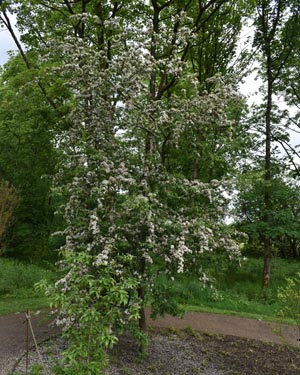
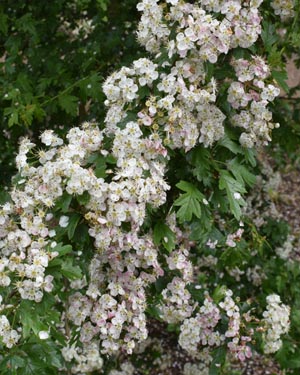
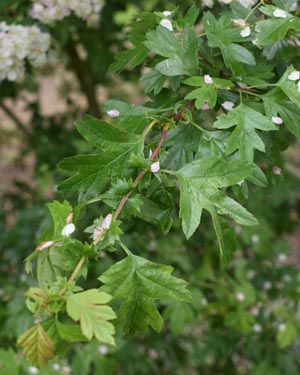
Crataegus (monogyna?)
Hawthorn
The common hawthorn is a shrub or small tree growing to 10m, with a dense crown. Younger stems bear sharp thorns, about 12mm long. Hermaphrodite containing both male and female floral organs: pistils and stamens flowers are produced in late spring (May - giving it its other common name) in corymbs a type of inflorescence in which the lower flowers have longer pedicels than the upper ones, creating a flat-topped appearance. of 5–25 together; numerous red stamens and a single style; they are moderately fragrant. The flowers are white or pink, pollinated by insects, and are followed by berries known as haws. The haw is a small, oval, dark red fruit, berry-like, but structurally a pome a fruit consisting of a fleshy enlarged receptacle and a tough central core containing the seeds containing a single seed within a stone. The haws develop in groups of two or three along smaller branches. They are pulpy and delicate in taste. [Wikipedia]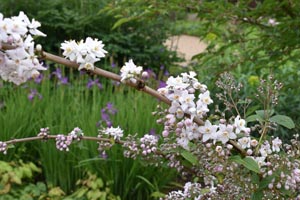
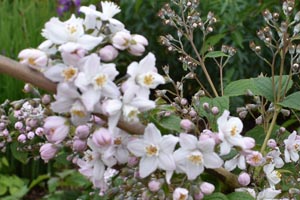
Deutzia
Deutzia
The species are mostly deciduous shrubs ranging from 1 to 4m in height, native to E and C Asia, C America and Europe. The leaves are opposite, simple, with a serrated margin. The fruit is a dry capsule containing numerous small seeds. Species identification can be difficult - this one didn't have a label.