×
![woodturning]()

Trees Gallery - Scone Palace page 3
Branklyn, Rodney gardens, Scone Palace
We have visited three gardens in and around Perth - Branklyn is managed by the National Trust for Scotland, Rodney Gardens and Norie-Miller Grdens are by the River Tay on the Kinnoul side of the city, and Scone Palace is just a few miles away. The trees on this page below are in Rodney and Norie-Miler lGardens
 July 2024
 July 2024
 July 2024
 July 2024
 July 2024
 July 2024
 July 2024
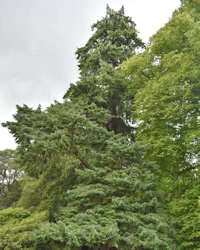
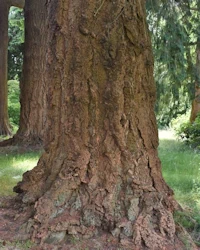
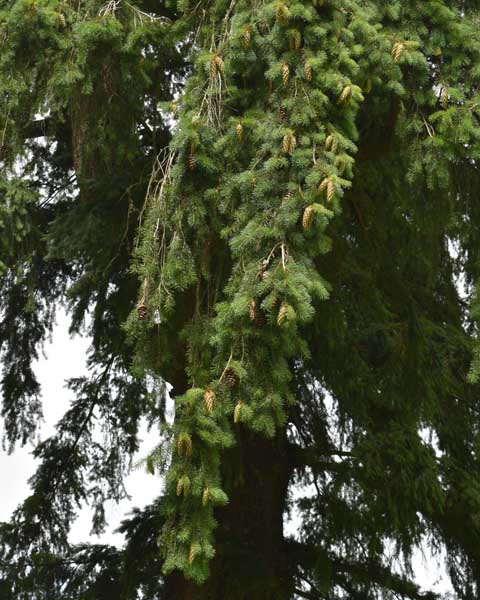
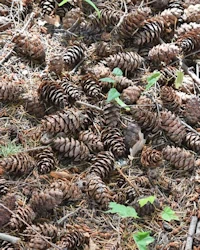
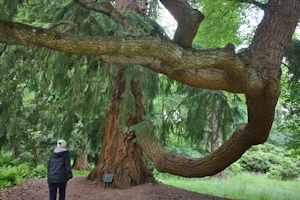
Pseudotsuga menziesii pseudo - Greek for false; tsuga - hemlock - the tree resembles hemlock but isn't hemlock menziesii - after Archibald Menzies, a Scottish naturalist and physician who first documented the tree on Vancouver Island in 1791
Douglas Fir after David Douglas, another Scottish botanist who collected and sent seeds of the tree back to Britain in 1827.
The label by the tree says: THE TREE COUNCIL, IN CELEBRATION OF THE GOLDEN JUBILEE OF HER MAJESTY QUEEN ELIZABETH II has designated THE SCONE DOUGLAS FIR one of fifty GREAT BRITISH TREES in recognition of its place in the national heritage JUNE 2002.An evergreen conifer that can grow to 55m and live for more than 1,000 years.
 July 2024
 July 2024
 July 2024
 July 2024
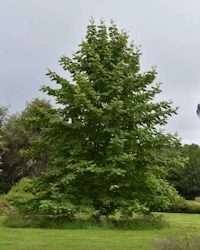
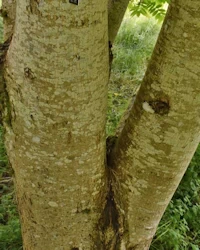
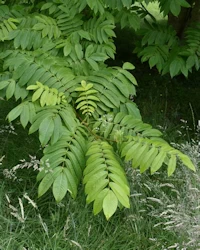
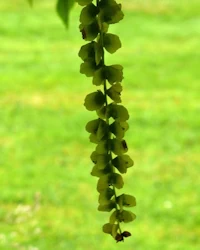
Pterocarya rhoifolia: from Greek pteron - wing and karyon - nut, referring to the tree's winged fruits; roa - pomegranate phyllon - leaf. It is not too clear what the connection to pomegranate would be - the leaves are not really similar.
Japanese wingnut
. A large tree growing to 30 m, native to Japan in moist areas along riverbanks and mountain streams. The timber is a soft light wood, with the heartwood yellowish-white in color. It produces epicormic shoots but rarely suckers (unlike other pterocaryas), with grey bark. This tree was planted in June 2011 to mark the launch of the National Tree Collections of Scotland at Scone.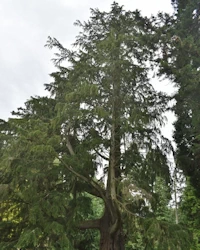 July 2024
 July 2024
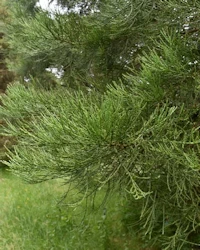
Sequoiadendron giganteum glauca Sequoia - probably relating to the cherokee tribe, possibly from Latin sequoia, relating the sequence of seeds per cone; dendron - tree; giganteum - giant. glauca - glaucous, blue-green
Giant redwood
Giant Redwood is arguably the world's most impressive tree. It is the largest tree by volume and can live for more than 3000 years. Publication of its discovery in the Sierra Nevada. California, in 1852 caused a sensation. The first seed to reach Europe arrived in Scotland in August 1853 with John Matthew, narrowly beating a consignment for Veitch Nurseries in Exeter. The main use of this tree is as a grand specimen, but some experimental forestry has been conducted in Britain. This glauca variety has blue-green foliage.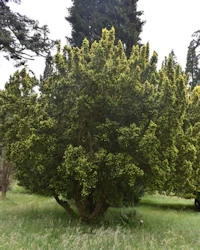 July 2024
 July 2024
Taxus baccata fastigiata aurea Taxus - from Greek 'toxus' or 'toxon'," meaning bow; or 'toxikon' meaning poisonous; baccata - Latin for 'bearing berries'; fastigiata - upright or columnar, aurea - Latin for 'golden'
Golden Irish yew
a medium-sized, evergreen shrub of narrowly columnar habit. Inconspicuous flowers are followed by red, berry-like fruits (arils).an evergreen conifer which can grow to 7m. The bark is grey-brown with purple tones, and it peels. Irish yew was originally discovered in County Fermanagh in 1780, and it is thought to be a mutant form of the common yew. All Irish yews are descended from this plant. Further hybridisation has resulted in many cultivars, including aurea.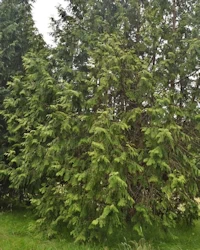 July 2024
 July 2024
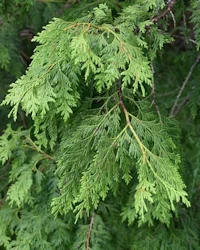
Thuja standishii Thuja - from Greek thuía, meaning aromatic wood; standishii - after John Standish (c. 1809-1875), who was the founder of Sunningdale Nurseries in England.
Japanese arborvitae Latin: tree of life
A.k.a. Japanese thuja, kurobe and nezuko (Japanese), an evergreen coniferous tree in the cypress family, native to S Japan, where it occurs on the islands of Honshū and Shikoku. It is a medium-sized tree, reaching 20–35 m tall and with a trunk up to 1 m diameter. The small cones are oval, yellow-green ripening red-brown, only 6–12 mm long.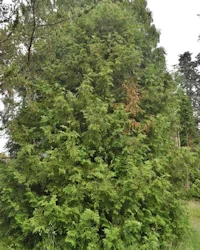 July 2024
 July 2024
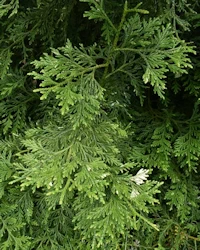
Thujopsis dolobrata thuja - from Greek thuía, meaning aromatic wood; opsis - Greek suffix meaning 'like' or 'resembling', so thujopsis resembles Thuja. dolabra in Latin means 'pick-axe' or 'hatchet'. This refers to the shape of the leaves, which fan out in a way that resembles the head of a hatchet.
Hiba
A.k.a. asunaro (あすなろ), false arborvitae or hiba arborvitae. Native to Japan, it is similar to the closely related genus Thuja (arborvitae), differing in its broader, thicker leaves and cones. A medium to large evergreen tree, reaching up to 40 m tall and 1.5 m trunk diameter, with red-brown bark which peels in vertical strips. The small seed cones are ovoid, 7–15 mm long, brown with a violet-white wax bloom when fresh. [Wikipedia]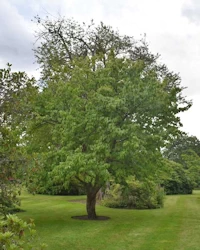 July 2024
 July 2024
 July 2024
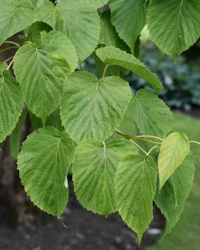
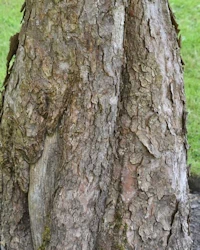
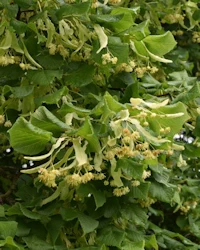
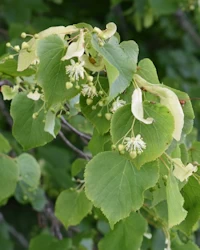
Tilia cordata tilia - Latin name for the lime tree cordata, meaning heart shaped, referring to the leaves.
Small leaved lime
Always difficult to tell which of three species of lime is here, but this could be t. cordata. Native to Britain, called pry in the SE, but the rarest of the three most common limes, now considered an indicator of ancient woodland. It is commonly planted as an ornamental, particularly in lime avenues on the entrances to large estates. It is possible to tell true species apart by the underside of the leaf. Common lime (T. x europaea) has tufts of white hairs between the vein joints, whereas these are rusty red in small-leaved lime. Large-leaved lime (T. platyphyllos) has hairs all over the underside. Common lime is a hybrid and is rare in the wild in the UK. Lime wood is soft and light, white-yellow and finely textured. It is easy to work and used in turnery, carving and furniture-making. The tree can grow to 40 m, with a trunk up to 1 m diameter.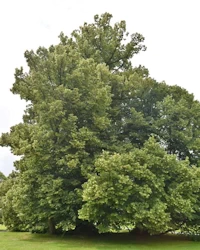 July 2024
 July 2024
 July 2024
Tilia europaea tilia - Latin name for the lime tree europaea, - European.
Common lime
Always difficult to tell which of the three main species of lime is here, but this could be t. europaea, the European lime or linden: a hybrid of two native limes - small and large leaved. Selected for its ornamental properties, it is propagated by layering or root cuttings, so every common lime is genetically identical. The trees produced are very uniform and are popular for planting in avenues. Highly attractive to bees when in flower, common limes produce an abundance of shoots from the base of their trunks. Ironically, despite being a selected variety or cultivar, most gardeners cut off these sprouts to reveal clear, if scarred, bark. Beneath that bark limes produce a fibre called bast, once important for rope-making. Today limes still produce piano keys, sound boards for instruments and refreshing tea.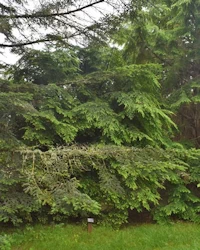 July 2024
 July 2024
Tsuga diversifolia tsuga - Japanese name for the hemlock genus, meaning 'mother tree' diversis, - differing, folia - leaves, referring to the different lengths of needles on a single branch.
Northern Japanese hemlock
An evergreen conifer native to the Japanese islands of Honshū, Kyūshū, and Shikoku, growing to 25 m. The crown is narrow, dense and conical. Young shoots are short, palely pubescent and bright orange to red-brown in colour. The bark is an orange-brown in colour, shallowly fissured and vertically peeling. The buds are a deep purple red. The dull purple, ovoid pistillate flowers are terminal on either long or short shoots. They measure about 5 mm and as they mature become pale green with the centre and margin of each scale being purple. The small cones are up to 2.8 cm long, cylindric-ovoid, and nearly sessile. They are dark brown, pendulous and the scales are slightly convex and ridged.[Wikipedia] July 2024
 July 2024