×
![woodturning]()

Trees gallery - Trelissick - page 3
Near Truro, Cornwall
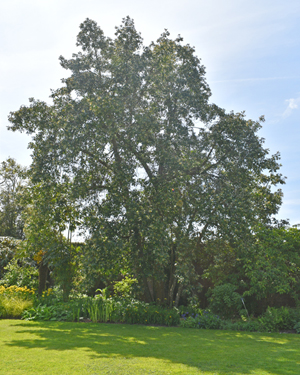
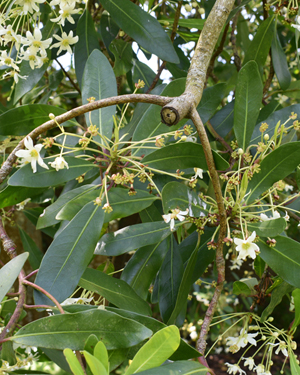
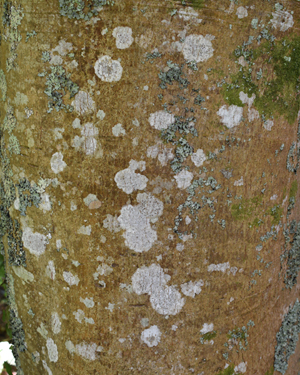
Drymis Winteri
Winter's bark
A native of the forests of Chile and Argentina. Evergreen, slender, multi-stemmed, growing to 6-10m. Bright green leathery leaves, clusters of creamy white flowers in late spring. Winteri refers to navigator John Winter (c.1540-96), not the season.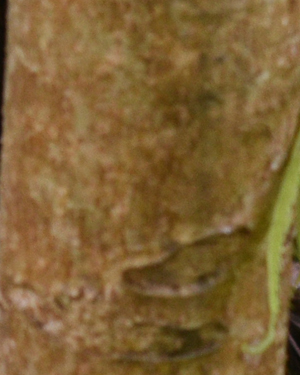
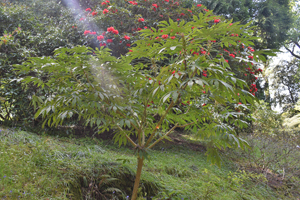
Fatsia polycarpa
Many fruited aralia
A native of Taiwan, this fatsia has large like a hand: having five or more lobes whose midribs all radiate from one point leaves, with 'fingers' much finer than on fatsia japonica. A cultivar often called 'Green fingers' is common. Spherical clusters of cream or white flowers are produced in winter, followed by black fruits in spring.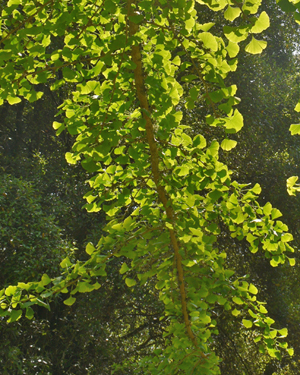

Ginkgo biloba
Maidenhair tree
The distinctive two-lobed leaves of the ginkgo, unique among seed plants being fan-shaped with veins radiating out into the leaf blade. A deciduous, dioecious having male and female reproductive parts on separate plants conifer male ginkgos produce pollen cones. Females produce two fruit-like ovules native to China, leaves turning bright yellow in autumn. A large tree capable of reaching 25m.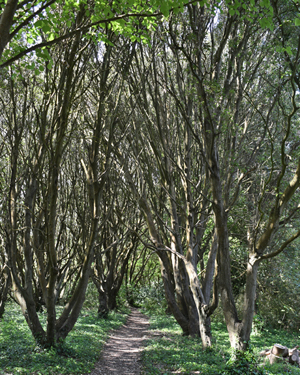
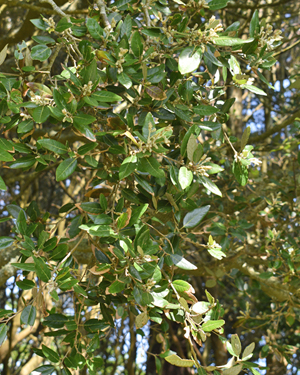
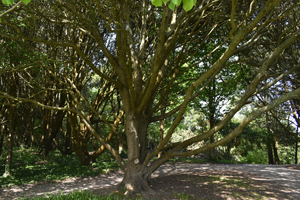
Quercus ilex
Holm oak
Wella Chubb, assistant head gardener, told me: The Quercus Ilex particularly do well in Cornwall as they grow well in exposed coastal situations and will tolerate dry and wet conditions (not boggy). At Trelissick they make up the earlier shelter belts as the don’t grow too quickly and will stay compact in windy situations. Equally they will make great statement trees if left to their own devices and pruned accordingly.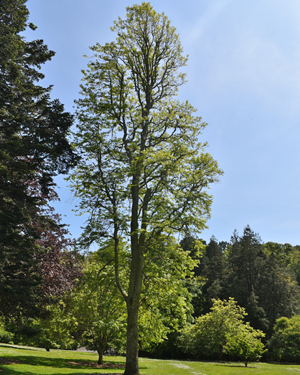
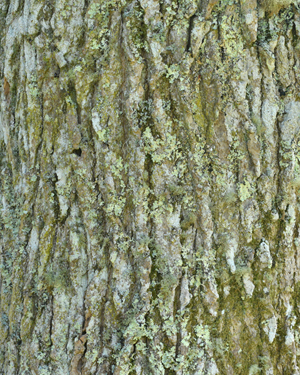
Liquidambar styraciflua
Sweetgum
Native to E. North and Central America. A medium sized tree growing to 45m in the wild. Star shaped leaves (similar to the unrelated maples) turn all colours of yellow to red in autumn, producing a 'conflagration' before falling. Used by the timber industry for lumber, veneer, plywood, fuel, and pulpwood. The timber trade can refer to it as 'satin walnut'. It exudes resinous gum when bruised.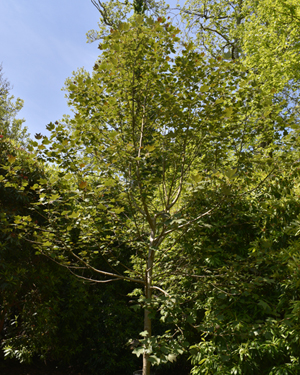
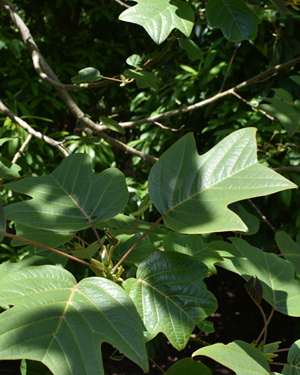
Liriodendron tulipifera
Tulip tree
A native of NE America, the common name refers to the tulip-like blossom that appears in May (which I am yet to witness!). It is a very large tree, growing to 50m with a trunk up to 1.8m in diameter. The timber is known as tulipwood, and is extensively used in construction.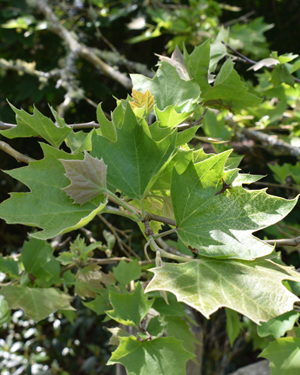
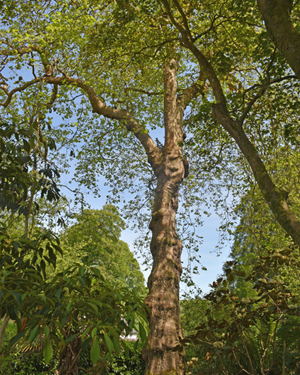

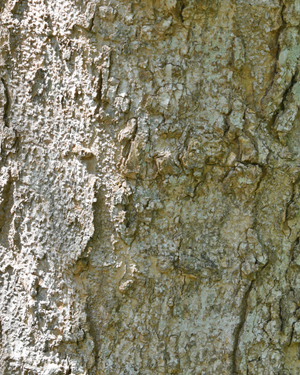
Platanus x hispanica
London plane
Probably a hybrid of Platanus orientalis and Platanus occidentalis. It has good resistance to pollution, and to root compaction, so is frequently planted in urban areas (along roadsides). It is sometimes called platanus acerifolia, due to its leaves being similar in shape to a maple (acer) leaf.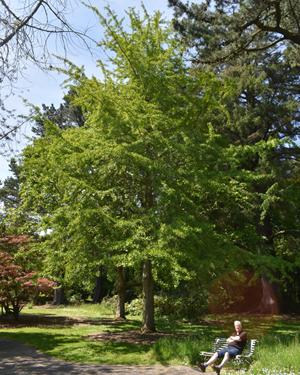
Magnolia campbellii Trelissick alba
Trelissick white magnolia
Large green oval leaves, and large white flowers. The species in native to Bhutan, Myanmar, Nepal, India and China. Sadly we missed the flowers.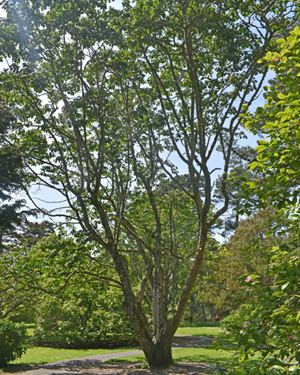
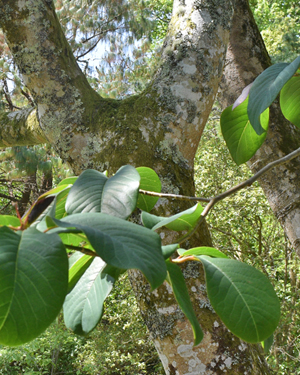
Magnolia dawsoniana
Dawson's magnolia
A native of high altitudes in China, this is a medium sized tree (it can grow to 20m), with pink flowers that appear before the leaves. Discovered in Sichuan by Armand Armand David (Pere David), French botanist (1826-1900) in 1869.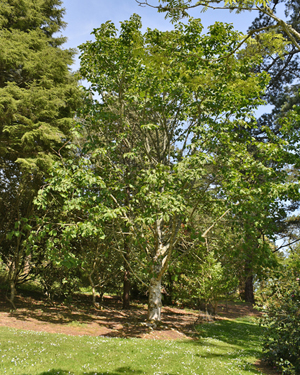

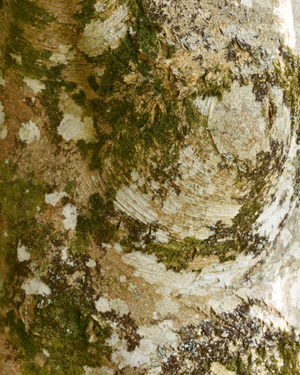
Magnolia x Emma Louise
Emma Louise magnolia
Magnolia cultivar of horticultural origin. There are hundreds of magnolia cultivars, and it looks like Trelissick may be responsible for introducing some of them. Propagated by soft wood cuttings in early summer, or semi-ripe in late summer. This one can grow to 24m