×
![woodturning]()

Trees gallery - Trelissick - page 4
Near Truro, Cornwall
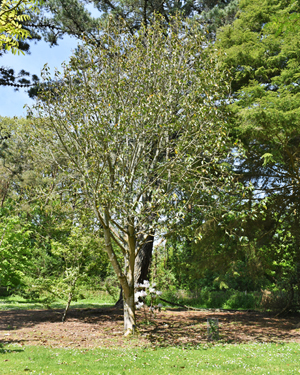

Michelia doltsopa
Himalayan white magnolia
Michelia belong to the magnolia family, and some consider it synonymous with magnolia. However the blossoms of Michelia generally form clusters among the leaves, rather than singly at the branch ends as Magnolia does.
Pinus radiata
Monterey pine
This tall, lonely tree is a remnant of the old shelter belt, standing amidst signs of others having been felled. The Monterey pine is a native of the coasts of Mexico and California, and is a firm favourite for coastal shelter belts protective border formed of tall trees and shrubs (over 4.5m) planted in three or four staggered rows , as it grows quickly (1 - 2m per year) and can withstands salt and strong winds. It is not a long-lived tree.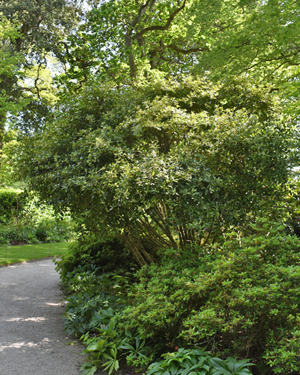
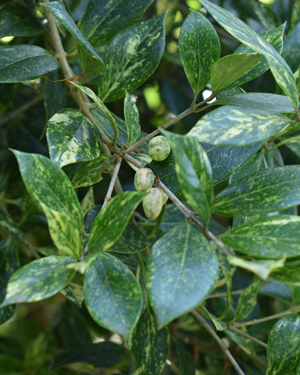
Osmanthus heterophyllus 'Goshiki'
Holly osmanthus
The common form is a native of Japan. This cultivar is slower growing, to 3m whereas the common form can grow to 10m. The leaves vary in size, are variegated, and very like holly.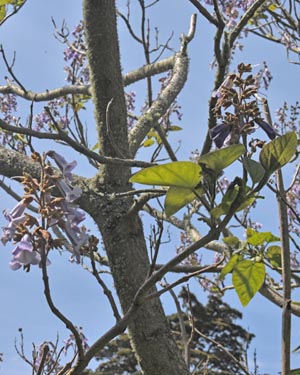
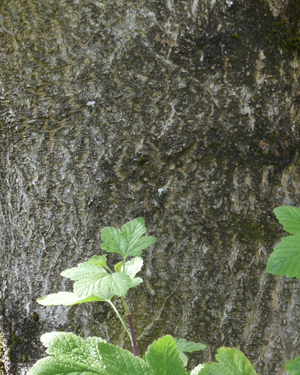
Paulownia tomentosa
Foxglove tree
The common name reflects the purple flower shapes. It is also called the empress tree or princess tree (named after Queen Anna Pavlovna of the Netherlands). It is rapid growing and can be invasive - a neophyte in the UK.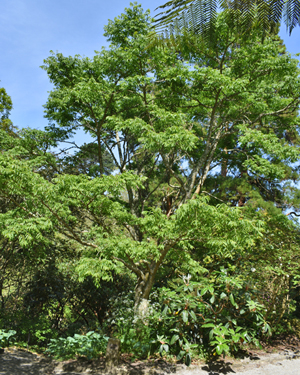
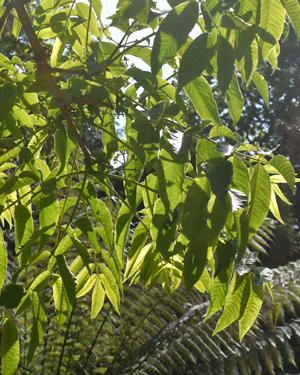

Phellodendron japonicum
Japanese cork tree
A deciduous medium sized tree (10m), native to Japan, with a cork-like bark and ash-like leaves (pinnate). The bark is not thick enough to produce commercial cork. It is potentially invasive in America. It has dioecious yellow-green flowers in spring, and black drupes that persist in winter.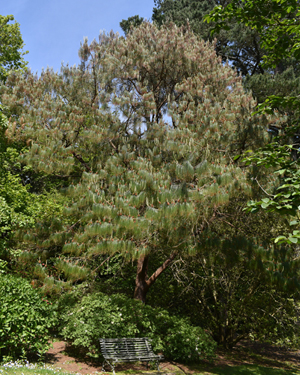
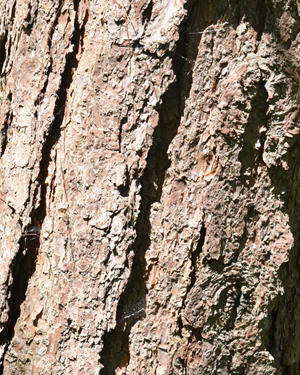
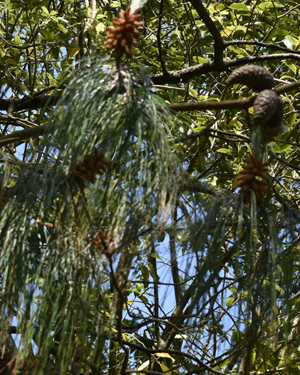
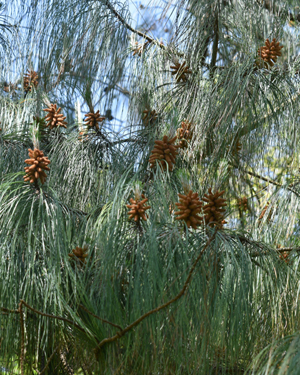
Pinus patula
Mexican weeping pine
Also known as jelecote pine, spreading pine or patula pine, a native to the highlands of Mexico. It can grow to 30m tall. It has been widely planted as a forestry tree in many parts of the world, but is becoming an invasive species in countries such as New Zealand, South Africa and Hawaii. Female cones are stalkless, and are 6-10cm long. As with other pines, clusters of small orange coloured male cones appear in spring.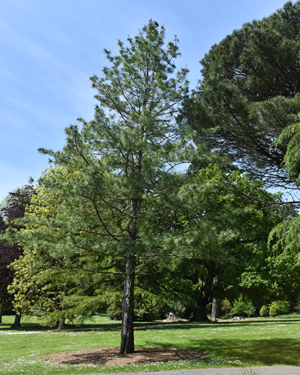
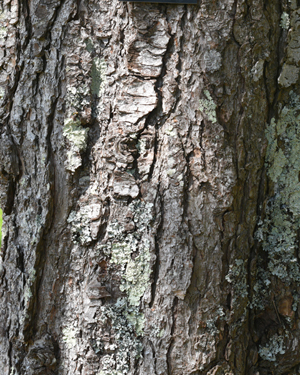
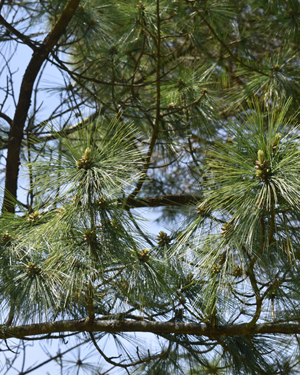
Pinus wallichiana
Bhutan pine
Also known as the Himalayan pine, pinus wallichiana is a coniferous evergreen tree native to the Himalaya, Karakoram and Hindu Kush mountains, from eastern Afghanistan east across northern Pakistan and north west India to Yunnan in southwest China. It has long drooping needles, and long slender cones - up to 30 cm in length. It produces very resinous timber, and is a source of turpentine.