×
![woodturning]()

Trees gallery - Tyntesfield - page 2
Wraxall, North Somerset, near Bristol
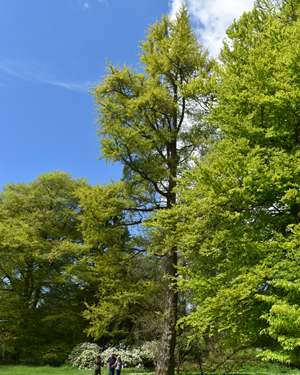

Ginkgo biloba
Maidenhair tree (25)
The Tree Guide says: Various ginkgo species were known from fossils but were assumed to have died out millions of years ago. But in 1691 a German merchant was astonished to find one growing outside a monastery in Japan. It is regarded as the oldest tree species in the world and can live for up to 3000 years. Its longevity seems to have given it religious significance, so trees were brought from a few small enclaves in China to grow around a Japanese temples. Trees are either male or female. We have three trees on the estate, all of which are male plants. They are generally used for ornament, as the female produces sticky, foul smelling seeds. Even in winter there are usually leaves to be found on the ground. They are a distinctive shape with no central spine and two characteristic lobes (bi-loba)


Cercis siliquastrum
Judas tree (40)
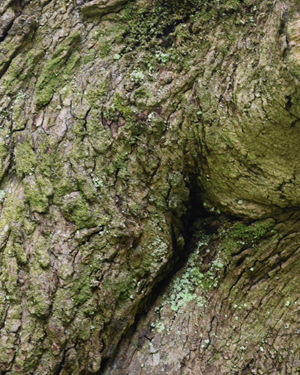
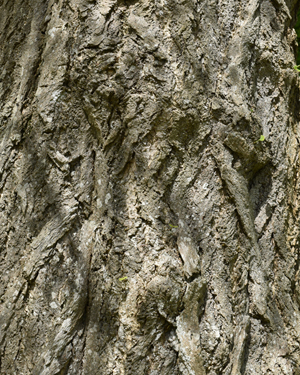
The Tree Guide says: The name probably refers to its origin in Judea. The species name siliquastrum comes from the Latin for 'pod' - it produces long brown seed pods in autumn and winter. Magenta flowers often grow straight from the trunk and appear before the leaves. The wood is fine grained, colourful, hard and is often used for veneers. It is used extensively in Chinese medicine. In Japan, the wood is used for the visible parts of building structures (door pillars etc.). Often planted in temples, it is also popular for bonsia (miniature) trees. Unusually shaped, this tree was badly damaged by wind during the winter of 2013/4. The original leader trunk has been lost so several shoots have formed at the bole and grown around each other.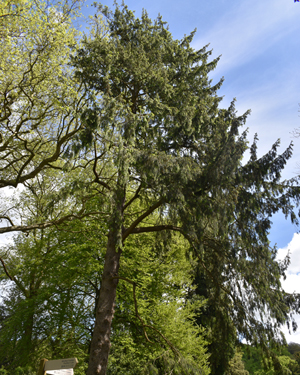
Picea smithiana
Morinda spruce (B)
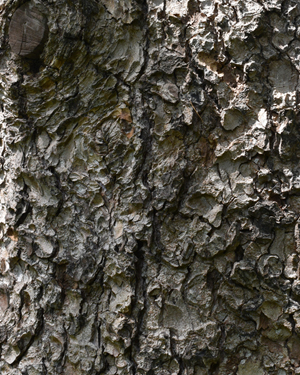
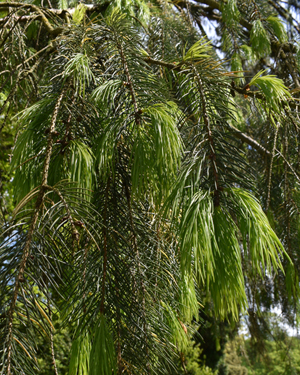
The Tree Guide says: Native to Afghanistan and Nepal. The tree was introduced by a Scotsman called Smith, giving it its Latin genus name. We believe that this one was planted here in the 1860s. It is distinguished by its very long needles, its distinctive male flowers on the end of branches in June, and 15cm long green cones. This species tends only to be grown for display. The Nepalese name Morinda translates as 'honey of flowers', after the resin on the seed cones.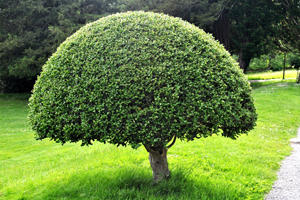
Ilex aquifolium
Holly topiary
A number of neatly clipped topiary specimens line the driveway to the house, including holly and yew. Holly can be clipped very tightly to shape, as as in these low growing hemispherical examples.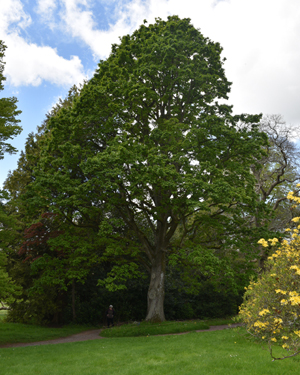
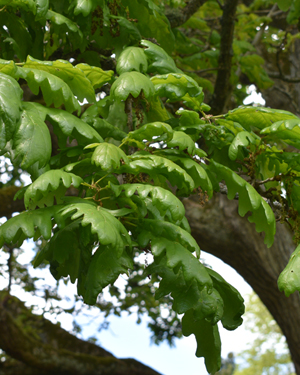
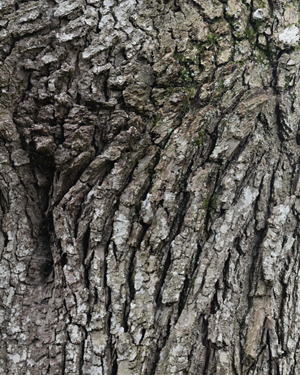
Quercus canariensis x robur
The Keble oak (47)
The Tree Guide says: Native to Morocco and Spain. This tree was planted by William Gibbs on 31 October 1872 to commemorate the visit of his friends: the Right Honourable Sir John Taylor Coleridge, the Reverend Edward Talbot, Warden of Keble College, Henry Hucks Gibbs Esquire, the Reverend John Hardie, and architect William Butterfield Esquire. These men met at Tyntesfield on 5 September 1872 to discuss William's proposal for the buiding of the chapel at Keble College, Oxford. William did not live to see the chapel completed. Until recently, it was assumed that this was a pure Algerian oak but it is now identified as a cross.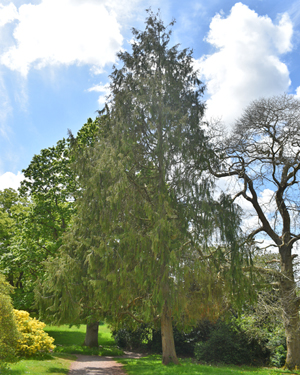
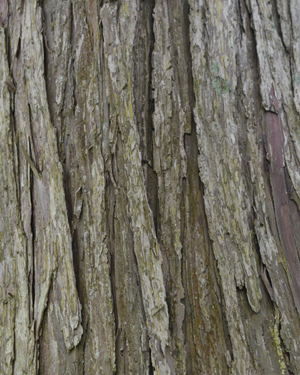
Chaemaecyparis nootkatensis
Nootka cypress (48)
Named for the Nootka inhabitants of Vancouver Island, Canada. It can grow to 36m in the wild and live for 2000 years. The dense timber was used for canoes. The Nootka produces attractive yellow flowers at the tip of its fronds and its crushed leaves have a strong smell.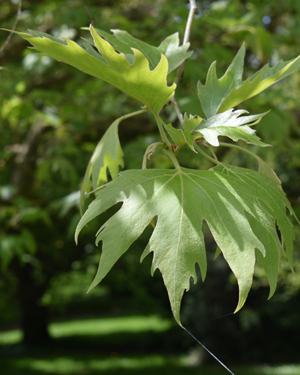
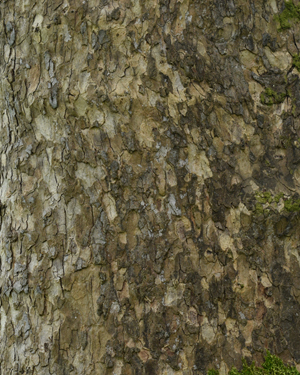
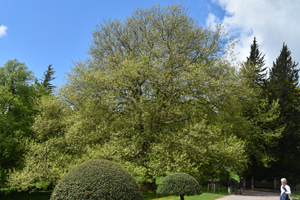
Platanus orientalis
Oriental plane (18)
The Tree Guide says: This large spreading tree can grow to 30m and is traditionally at home beside rivers. The wood is called 'lacewood' and is used for veneers in furniture. The London Plane, used extensively as a pollution resistant tree on the streets of London and other cities, is a cross betwen the Oriental and Occidental planes. You can see several of the large shallow roots that draw all the moisture from the surface and stop other growth under the tree.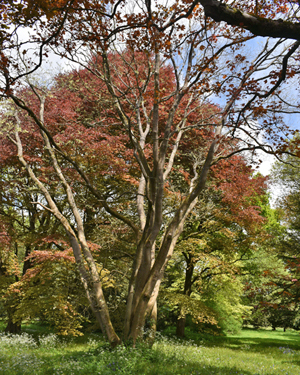
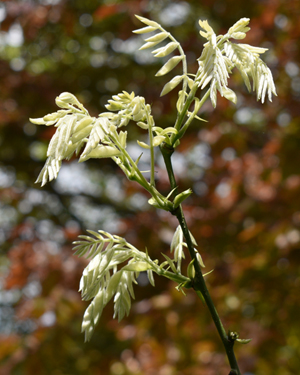
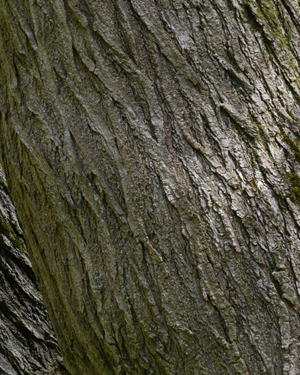
Sophora japonica
Pagoda tree (3)
The Tree Guide says: Native to China. This tree is popular because of its loose hanging arrays of pea-like white flowers. In China and Japan it is often planted in temples. It takes 30 years to produce its first flowers which are traditionally used as a staple in Chinese medicines.Only just coming in to leaf when we visited in May.
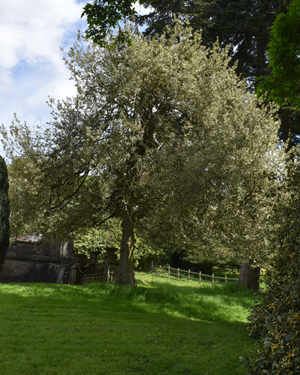
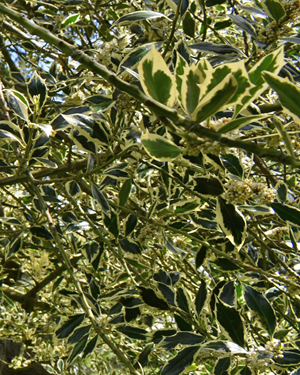
Ilex aquifolium argentea marginata
Silver variegated holly
Not in the Tree Guide. It is a cultivar, dioecious having male and female reproductive parts on separate plants female, with lots of red berries later in the season. Medium sized, about 8 - 12m.
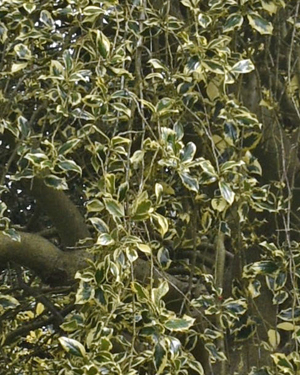
Ilex aquifolium 'Aurea Marginata Pendula'
Golden weeping holly
The Tree Guide says:. This is a weeping holly with dark stems and particularly prickly dark green leaves with broad bright yellow edges. Aquifolium means that the leaves are pointed. Girth county champion.