×
![woodturning]()

Trees Gallery - Dawyck Botanial Gardens. Page 6
Near Peebles, Scottish Borders
 August 2024
 August 2024
 August 2024
 August 2024
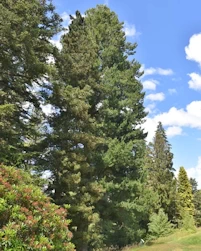
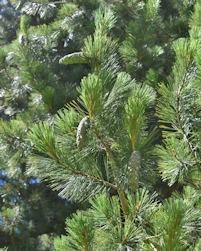
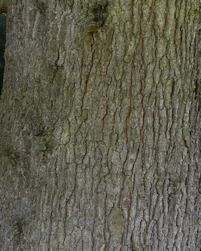
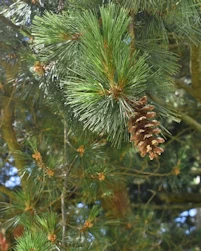
Pinus peuce pinus - Latin for pine; peuce - from Greek peuke, pine trees
Macedonian pine
The Majestic Tree trail information board says: In common with many other members of the white pine group, Macedonian pine has long slender cones that hang downwards. This species is native to mountains in the southwest Balkans. White pine blister rust is a serious problem for North American white pines and Macedonian pine has been used in breeding programmes to introduce disease resistance. This species is only rarely used for timber production in Britain.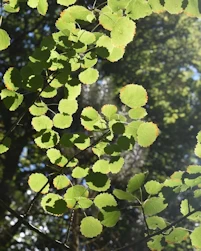 August 2024
Populus tremula populus - Latin for poplar; tremula -Latin for trembling or shaking, reflecting the characteristic movement of the leaves.
Aspen
The Scottish Tree trail information board says: Aspen. (Gaelic: critheann). Populus tremula (Willow family). Aspen leaves tremble, even in the slightest breeze. This has given rise to many of its common names, including its Gaelic form, which means 'quivering one'. Old beliefs suggest that it had been cursed by the devil and so could never rest. The tree often occurs in groups derived from a 'suckering' root system The timber is of poor quality, but has been used for matches and basic crates.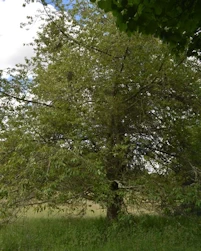 August 2024
 August 2024
 August 2024
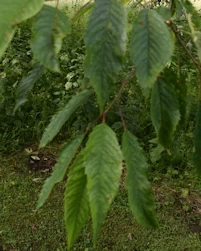
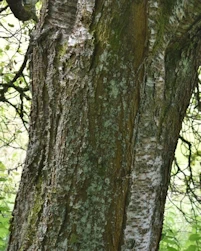
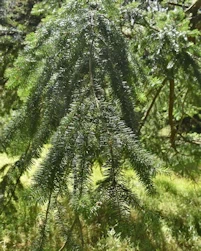
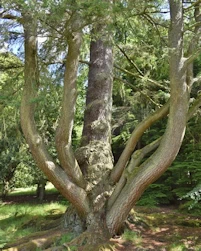
Prunus avium prunus - Latin for plum tree; avium -rs referring to the birds that eat the cherries, hence the birds' plum tree.
Gean
The Scottish Tree trail information board says: Gean. (Gaelic: geanais). Prunus avium (Rose family). The gean is a familiar presence in natural decidusous woodland, where its leggy form and above all its loose clusters of creamy-white summer flowers make it very recognisable. It is often encountered in hedgerows and has been widely planted in many urban areas. Its beautiful timber is highly prized by furniture makers and it is often used as a veneer. It is also much sought after by the makers of musical instruments. It is commonly known as wild cherry or sweet cherry.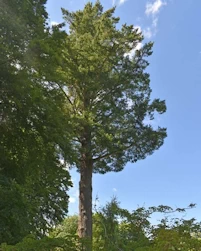 August 2024
 August 2024
 August 2024
 August 2024
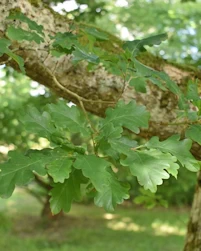
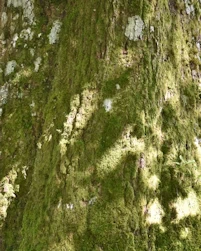
Pseudotsuga menziesii pseudo - Greek for false; tsuga -Japanese for hemlock; menziesii - after Scottish botanist Archibald Menzies (1754-1842).
Douglas fir - after Scottish botanist David Douglas, who introduced the tree to cultivation in Britain in 1827.
A tall, conical-shaped evergreen conifer that can grow to 55m and live for more than 1,000 years, native to W North America. The scales on cones are distinctive, with three pointed tips. When crushed, the leaves have a sweet resin smell. Its bark is non-flammable, offering good resistance to forest fires. August 2024
 August 2024
 August 2024
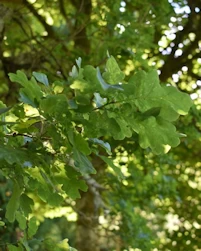
Quercus petraea quercus - Latin name for oak, derived from the Proto-Indo-European root kwerkwu; petraea - Latin, meaning of rocky places.
Sessile oak - Latin sessile - stalkless, referring to the acorns being directly attached to twigs at their base, without a peduncle
The Scottish Tree Trail information board says: SESSILE OAK (Gaelic: darach) Quercus petraea (Beech family). Oak is a very important tree in northern European mythology, representing strength and power. Our two native species are readily identified by the stalks of their fruit (acorns). Sessile oak has very short stalks; those of the English oak (Q robur), which occur in drier parts of eastern Scotland, are long. In the past oak was an important timber, used for ships, buildings and barrels.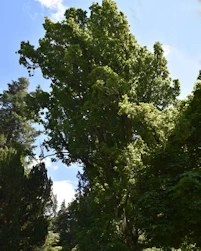 August 2024
 August 2024
 August 2024
Quercus robur fastigiata quercus - Latin name for oak, derived from the Proto-Indo-European root kwerkwu; robur - Latin for robust or strong, referencing the tree's sturdiness; fastigiata - from Latin fastigo meaning pointed or upright, which describes the tree's characteristic columnar growth habit.
Fastigiate oak
English oak is native to mixed woodland areas from the British Isles to the Caucasus, and has been widely planted in North America since the 1600s. It is a large, majestic, deciduous tree of the white oak group that typically grows in cultivation to 30 m with a broad-spreading, rounded crown. Insignificant monoecious separate male and female catkins appear on the same tree yellow-green flowers appear in spring as the leaves emerge. Fruits are oval acorns 2.5 cm long, on long stalks (peduncles). Forma fastigiata is a narrow-upright, columnar form of English oak featuring dense, upright branching that rises at a sharp and narrow angle from the trunk. It typically matures to 20 m.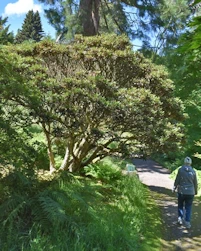 August 2024
 August 2024
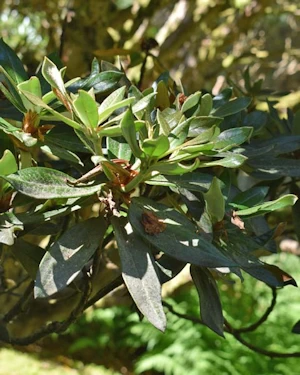
Rhododendron rhodon - Greek name for rose; dendron - Greek for tree; alutaceum iodes alutaceum - like soft leather, which describes the texture of the leaves; iodes - Greek for violet.
Rhododendron
An evergreen shrub native to Tibet and SW China, growing to 4m. The campanulate flowers, 10–20 in a dense truss, are white to pink, with crimson flecks and a purplish-red basal blotch, blossoming in April-May. The variety iodes is intermediate between var. alutaceum and var. russotinctum.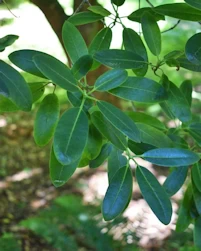 August 2024
 August 2024
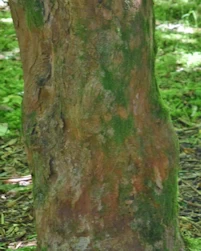
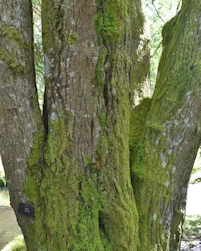
Rhododendron oreodoxa rhodon - Greek name for rose; dendron - Greek for tree; oreodoxa: Greek oros - mountain, doxa - glory; thus glory of the mountains.
Rhododendron
An evergreen shrub growing to 5 m, native to China. Eight to ten tubular bell-shaped flowers occur in a rounded truss 10 cm across. In the bud state the flower is almost blood-red, changing when open to carmine, then to a lilac shade. August 2024
 August 2024
Salix caprea Salix - Latin for willow; caprea - Latin for goat; possibly connected to historical use of the plant as goat fodder.
Goat willow
The Scottish Tree Trail information board says: Goat Willow (Gaelic: geal-sheileach). Salix caprea (Willow family) Regarded a weed by foresters, the goat-willow is actually one of our most valuable trees for wildlife. During early spring trees produce male and female flowers in separate catkins. Male catkins or 'pussy willows' are covered in silky hairs. Willow is a source of salicin, a compound chemically close to the painkiller Aspirin. The physician Hippocrates wrote of the medicinal benefits of willow bark and leaves in the 5th century BC.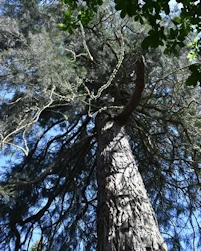 August 2024
 August 2024
 August 2024
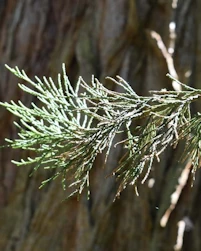
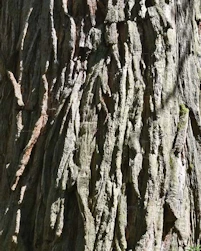
Sequoiadendron giganteum Sequoia - probably relating to the cherokee tribe, possibly from Latin sequi, relating the sequence of seeds per cone; dendron - tree; giganteum - giant.
Giant redwood
The Majestic Tree Trail information board says: Giant Redwood Sequoiadendron giganteum (Cypress family) Giant Redwood is arguably the world's most impressive tree. It is the largest tree by volume and can live for more than 3000 years. Publication of its discovery in the Sierra Nevada. California, in 1852 caused a sensation. The first seed to reach Europe arrived in Scotland in August 1853 with John Matthew, narrowly beating a consignment for Veitch Nurseries in Exeter. The main use of this tree is as a grand specimen, but some experimental forestry has been conducted in Britain.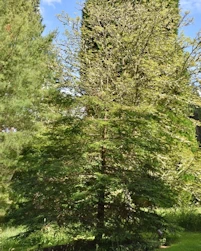 August 2024
 August 2024
Sequoia Sequoia - probably relating to the cherokee tribe, possibly from Latin sequi, relating the sequence of seeds per cone sempervirens semper virens - always green.
Coast redwood
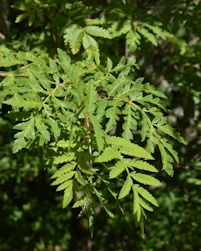
The sole living species of the genus Sequoia, capable of living 1,200 – 2,200 years or more. This species includes the tallest living trees on Earth, reaching up to 115 m. The bark can be very thick, up to 35 cm, quite soft and fibrous, with a bright red-brown color when freshly exposed (hence the name redwood). The species is monoecious pollen and seed cones on the same plant . Seed cones are ovoid, up to 32 mm long. Seeds are released when the cone scales dry and open at maturity.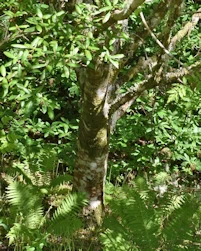 August 2024
 August 2024