×
![woodturning]()

Trees Gallery - Dawyck Botanial Gardens. Page 7
Near Peebles, Scottish Borders
 August 2024
 August 2024
 August 2024
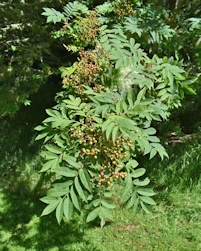
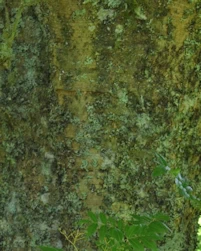
Sorbus commixta from Greek: sorbus - service tree; commixta, - mixed or mingled together, possibly referring to the variation within the species.
Japanese Rowan
A.k.a. Japanese mountain ash, a small to medium-sized deciduous tree growing to 7–10 m, It has a rounded crown and brownish to silvery-grey bark. The flowers are 6–10 mm in diameter, with five white petals and 20 yellowish-white stamens; they are produced in corymbs a type of inflorescence in which the lower flowers have longer pedicels than the upper ones, creating a flat-topped appearance. 9–15 cm in diameter in late spring to early summer. The fruit is a bright orange to red pome a fruit consisting of a fleshy enlarged receptacle and a tough central core containing the seeds, e.g. an apple, pear, quince, rowan 7–8 mm in diameter, maturing in autumn.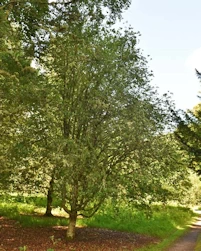 August 2024
 August 2024
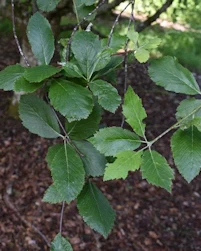
Sorbus kusnetzowii from Greek: sorbus - service tree; kunetzovii, - after Russian botanist Ivan Kusnetzov.
Kuznetsov's mountain ash
A.k.a. S. kusnetzowii, and possibly s. umbellifera, a small tree or large shrub native to Turkey and Caucasia, with creamy white flowers followed by colorful berries in autumn. It has most recently been assessed by the IUCN International Union for Conservation of Nature Red List as Near Threatened.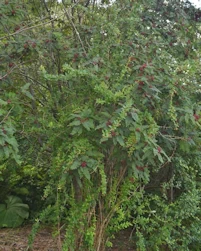 August 2024
 August 2024
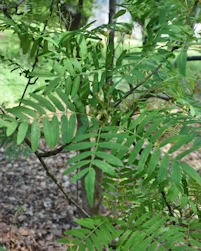
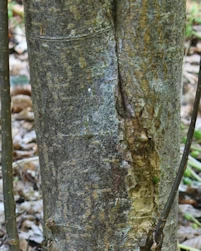
Sorbus microphylla from Greek: sorbus - service tree; microphylla - small-leaved
Small-leaved rowan
A shrub or small tree usually under 6 m in the wild, native to Himalaya. Flowers are pink or even red, few in a narrow, lax cluster. Fruits are white or pinkish, globular, 5 mm wide (but red on this specimen? Labelled s. microphylla agg., the agg. referring to a group of similar small leaved rowans.).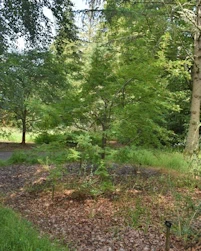 August 2024
 August 2024
 August 2024
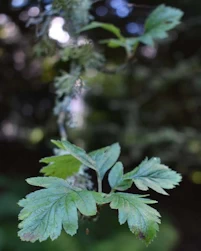
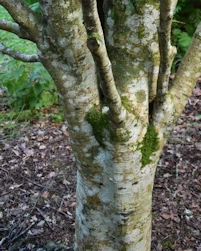
Sorbus monbeigii from Greek: sorbus - service tree; monbeigii - after French missionary Jean-Théodore Monbeig (1875-1914)
Monbeig's rowan
A shrub or small tree growing to 10 m, native to China. Leaves are narrow and small, white flowers followed by pink-white berries, hanging in drooping bunches.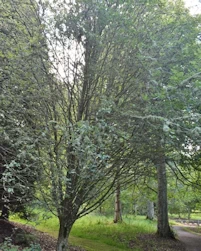 August 2024
 August 2024
 August 2024
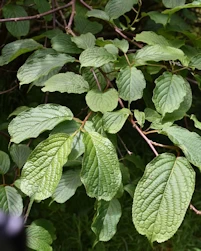
Sorbus pseudofennica from Greek: sorbus - service tree; pseudofennica - false Finnish, as it resembles a sorbus native to Finland
Arran service-tree
A.k.a. Hedlundia pseudofennica the taxonomy has been updated, with S. pseudofennica now classified within the newly created genus Hedlundia. and Arran cut-leaved whitebeam, a rare tree endemic to the Isle of Arran in Scotland, threatened by habitat loss. It is thought to be a naturally occurring hybrid between H. arranensis and Sorbus aucuparia. Hedlundia arranensis is itself a hybrid between Aria rupicola and sorbus aucuparia. Apomixis asexual development of seed or embryo without fertilization and hybridisation are common in some groups of sorbus species. There are at least two of these trees in the Garden, one labelled Hedlundia pseudofennica, the other sorbus pseudofennica.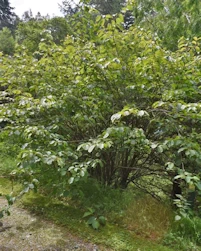 August 2024
 August 2024
Stachyurus chinensis from Greek stachys - ear of corn or spike; oura - tail, referring to the plant's cup-shaped pale yellow flower tassels that hang like a tail; chinensis - Chinese
Chinese stachyurus
A spreading deciduous shrub or small tree growing to 3 - 4 m, native to China and Taiwan, with pendant racemes of 4-petalled flowers that appear on bare branches before the leaves emerge.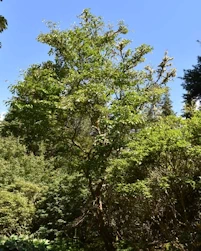 August 2024
 August 2024
 August 2024
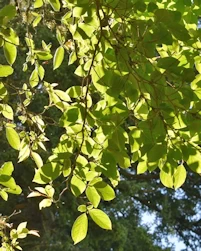
Stewartia pseudocamellia koreana stewartia - after John Stuart, earl of Bute; pseudocamellia - false camellia, because the flowers resemble those of the camellia; koreana - referring to the Korean origin of this variety
Korean stewartia
A.k.a. deciduous camellia, nogaknamu overripe cucumber tree in Korean , a small, open deciduous tree with flaking bark and broad-ovate leaves which turn red and orange in autumn. Solitary or paired, wide-open five-petalled white flowers 7cm in width appear in summer.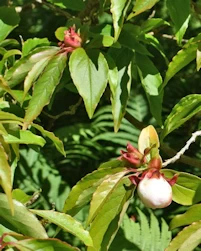 August 2024
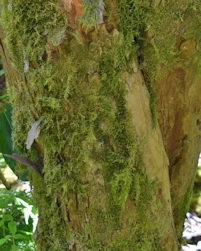
Stewartia sinensis stewartia - after John Stuart, earl of Bute; sinensis - Chinese
Chinese stewartia
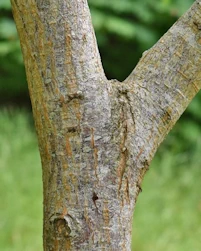
A small deciduous tree, growing to about 9 m, native to C and E China. It has smooth, peeling, papery brown and purple bark, and ovate leaves 5-10 cm long, turning bright crimson in autumn. Slightly fragrant white flowers 4-5cm across, open in mid summer.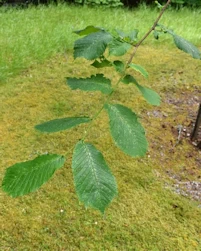 August 2024
 August 2024
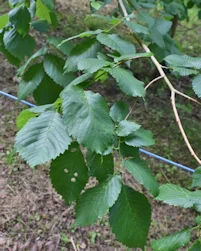
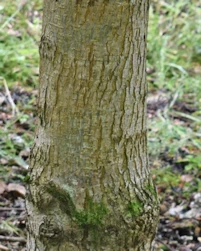
Ulmus glabra ulmus - traces back to the Proto-Indo-European root hélem - mountain elm. ; glabra - smooth, referring to the bark of the tree.
Wych elm
The Scottish tree trail information board says: WYCH ELM (Gaelic: ailm; leamhan) Ulmus glabra (Elm family) Wych elm mainly survives in northern and western Scotland, beyond the range of Dutch elm disease, which has destroyed so many elms elsewhere in Britain. Wych is from the Saxon wice, which means pliable. Elm timber is flexible, strong and rot resistant and so had many traditional uses including boat building, making drains and troughs, wheel hubs and longbows. Elms have easily recognised foliage, with a distinctive asymmetrical leaf base.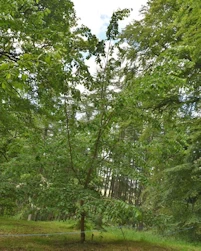 August 2024
 August 2024
 August 2024