×
![woodturning]()

Trees Gallery - Himalayan Garden
Grewelthorpe, near Ripon
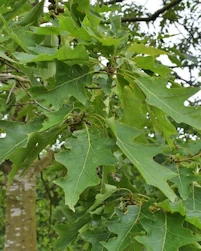
Quercus velutina rubrifolia
Black oak
Q. velutina is a deciduous tree growing to 25m, native of E North America. Called black oak due to its dark bark, though it is one of the red oak group. Leaves are oval or obovateegg shaped, with the narrower end at the base , 8-30cm long, with 5 or 7 deep, toothed lobes. The upper surface is dark green and shining, lower surface paler, covered with a thin, scattered scurf. Acorns are solitary or paired, scarcely stalked. The variety rubrifolia has leaves that turn red, yellow and brown in autumn.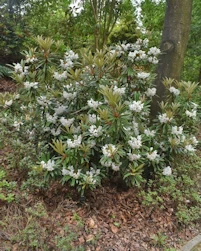
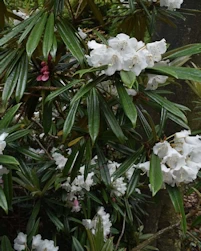
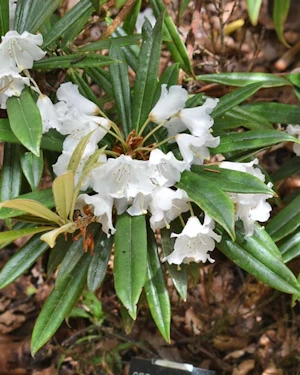
Rhododendron cephalanthum dwarf pink
Flowering head rhododendron
A low-growing shrub with compact habit rarely above 50cm tall. Native to W China in moorland, screes and cliffs, sometimes on limestone. Flowers can resemble those of daphne.
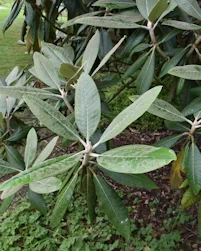
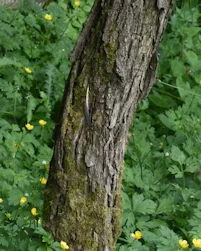
Rhododendron rex
King rhododendron
A large shrub or small tree, growing 2.5–12m, a native of China, India and Myanmar, where it is threatened by habitat loss. The flowers appear in dense trusses, creamy-white, or pale yellow to pink, with a crimson basal blotch, more or less regularly campanulate bell shaped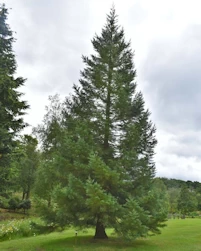
Sequoiadendron giganteum
Giant redwood
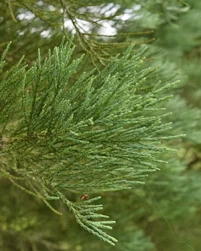
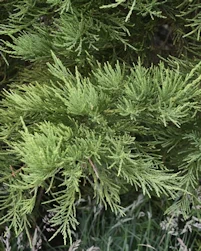
A very large and long-lived evergreen tree that reaches more than 100 metres in height in its natural region of origin. As a young tree it has a densely branched, conical habit. As the tree matures, the branches are more widely spread and conspicuously downswept. Upright cones appear after flowering and when ripe, the reddish-brown cones (5-8cm) hang down. [RHS]
Sorbus alnifolia
Korean mountain ash
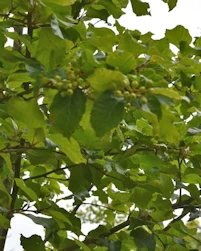
A.k.a Alniaria alnifolia and Aria alnifolia, alder-leaf whitebeam, or Korean whitebeam, a native of E Asia in E and N China, Taiwan, Korea and Japan. A medium-sized deciduous tree growing to 10–20 m tall with a trunk up to 30cm diameter and grey bark. Branches are angled upwards, with slender shoots. The autumn colour is orange-pink to red. The flowers are 10–18mm diameter, with five white petals and 20 yellowish-white stamens; they are produced in corymbs a type of inflorescence in which the lower flowers have longer pedicels than the upper ones, creating a flat-topped appearance. in late spring. Bright red pomes a fruit consisting of a fleshy enlarged receptacle and a tough central core containing the seeds, e.g. an apple, pear, quince, rowan. mature in mid autumn. [Wikipedia]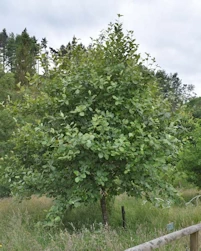

Sorbus aria lutescens
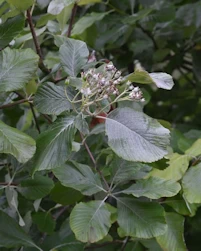
Whitebeam
A deciduous broadleaf cultivar that is compact and domed, growing to 12-15m. The young creamy white leaves appear as candles as they emerge and turn grey-green in summer, russet and gold in autumn. The bark and twigs are smooth and grey and the shoots are brick red in sunlight but greyish-green in shade. Clusters of creamy white flowers appear in April and May, followed by bunches of bright orange-red fruit in the autumn. Autumn colour is yellow-brown and the leaves tend to be among the first to fall.
Sorbus dodong
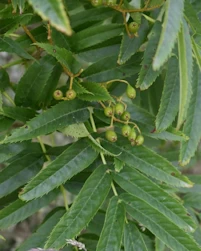
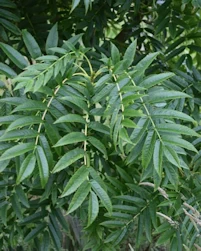
Japanese rowan
A medium-size tree, initially with narrow oval crown, eventually with an ovoid crown to 10m tall and 6 to 8m wide. Twigs are brown, old bark is grey and smooth. In May and June the white flowers appear in wide corymbs a type of inflorescence in which the lower flowers have longer pedicels than the upper ones, creating a flat-topped appearance. . Seed was collected in 1976 by a Swedish-Danish expedition to the Korean island of Ullung Do. Dodong is the name of the island’s port.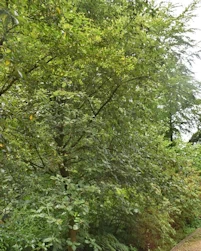
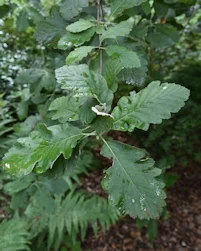
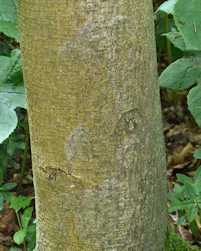
Sorbus mougeotii
Vosges whitebeam
A.k.a. Hedlundia mougeotii, and Mougeot's whitebeam, a deciduous shrub or small tree growing 8–10m, native to the mountains of C and W Europe from the Pyrenees east through the Alps to Austria, and north to the Vosges Mountains. The flowers are 10mm diameter, with five white petals and 20 yellowish-white stamens; they are produced in corymbs a type of inflorescence in which the lower flowers have longer pedicels than the upper ones, creating a flat-topped appearance. 5–10 cmdiameter in late spring. The fruit is a pome a fruit consisting of a fleshy enlarged receptacle and a tough central core containing the seeds, e.g. an apple, pear, quince, rowan. 10–12mm diameter, bright red, maturing in mid autumn. The fruit is dryish, and eaten by thrushes and waxwings, which disperse the seeds.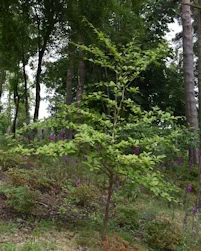
Stewartia pseudocamellia
Japanese stewartia
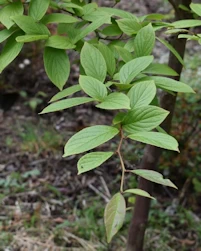
A.k.a. Korean stewartia, or deciduous camellia, is a small, slow-growing, pyramidal, deciduous tree native to the mountains of Japan and the Korean peninsula, with exfoliating, reddish-brown bark. It can reach 20m in the wild, but in cultivation typically matures over time to 13m tall with a slightly narrower canopy width. The tree produces white, cup-shaped camellia-like blooms with showy orange-yellow anthers between June and August, and its leaves turn orange, burgundy, or red in the autumn.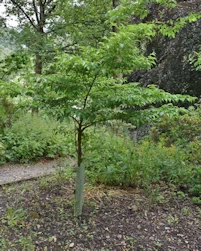
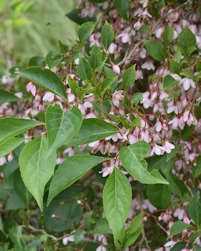
Styrax japonicus 'pink chimes'
Japanese snowbell
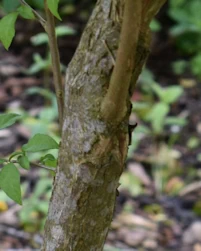
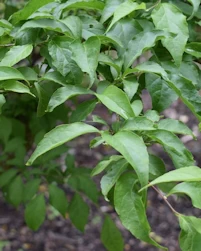
A.k.a. snowflake flower, a medium-sized deciduous tree native to Korea, Japan, and S China, growing to 12m. with spreading branches with finely-pointed ovate leaves turning yellow and orange in autumn. Masses of slightly fragrant, bell-shaped white (or pink as on this cultivar) flowers hang from the branches in summer, followed by grey-green fruits ( drupes a fleshy fruit with thin skin and a central stone containing the seed ) which resemble olives in both shape and colour. Long stalks extend from each drupe and attach with star-shaped calyx the outer whorl of a flower, consisting of separate or fused sepals . Each fruit contains one seed.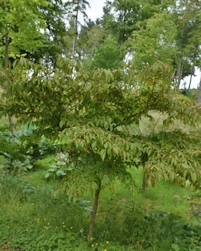
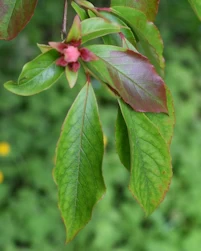
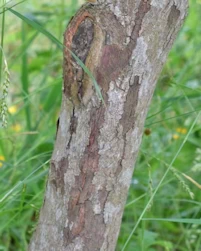
Stewartia rostrata
Beaked stewartia
A flowering shrub or small tree native to SE China, that produces white flowers with yellow stamens in the spring and red leaves in the autumn, followed by red to brownish capsules with a long beak. Named after John Stuart, 3rd Earl of Bute (1713-92). Rostrata means beaked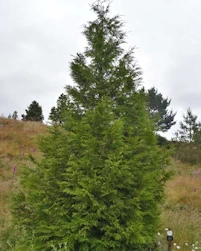
Thuja plicata
Western red cedar
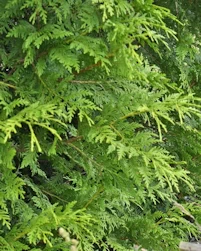
A.k.a. pacific red cedar, giant arborvitae, western arborvitae, cedar, giant cedar, or shinglewood. A large, evergreen, narrowly-pyramidal tree growing to 45-70m or more, native to Pacific NW North America. Cones are egg-shaped and around 1.3cm long. It is not a true cedar of the genus Cedrus. It can live well over a thousand years, with the oldest verified aged 1,460. The bark is thin, grey-brown, and fissured into vertical bands. Cones are slender, 10 to 18mm long, and 4 to 5mm broad. They are green to yellow-green, ripening brown in autumn about six months after pollination.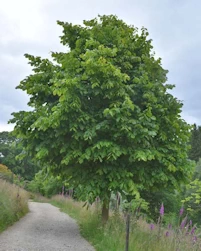
Tilia americana Redmond
American Linden
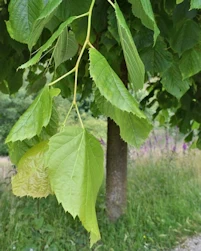
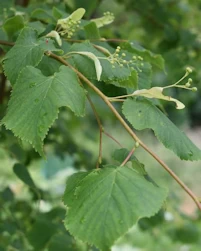
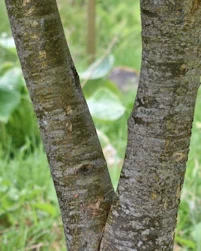
A.k.a. American basswood, a medium to large deciduous tree growing to 30m, native to C USA. It bears flowers in cymes A flower cluster with a flat or round top, the central flower blooms first, followed by the peripheral flowers. Each flower stalk ends in a single flower , with fragrant, pale yellow, late spring flowers. Small nutlets follow and ripen by late summer. Each cyme droops from a showy, papery, narrow, leaf-like bract where it is attached to the bract. Honey made from the nectar of these flowers is prized. Flowers have also been used to make tea. Syrup can be made from the sweet tree sap. ‘Redmond’ is a cultivar introduced by Plumtree Nurseries of Freemont, Nebraska in 1927, slighty smaller than the species.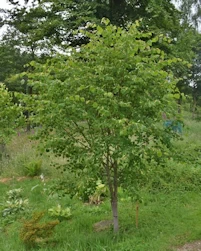
Tilia cordata Len Parvin
Small leaved lime
T. cordata is a large tree to 40m. The inflorescence is erect and held above the foliage (in contrast to tilia x europaea), usually with 5–8 flowers but occasionally with up to 30. This is the most widespread and common lime of Europe and W Asia, a tree of temperate lowlands. 'Len Parvin' is a very small-leaved form, with leaves 2–4cm across. It was Found in the Wye Valley, UK, by Len Parvin, before 2010.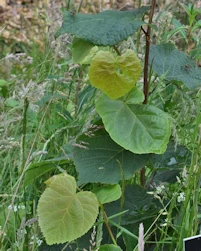
Tilia oliveri
Oliver's lime
A deciduous lime tree growing to 26m, native to China's mountain forests. Bark is light grey, with shallow longitudinal fissures developing with age. Large shiny buds develop into mid-green, glabrous free from hair or down; smooth. leaves 5–10cm long, the lower surface densely covered with a white tomentum densely matted woolly hairs of stellate hairs. They have marginal teeth well-spaced and asymmetric, with a pale mucronate ending in a short sharp point tip. The silver undersides of leaves ruffled by the wind look from a distance like large white flowers. The inflorescence a group or cluster of flowers arranged on a stem is drooping, compact, with 7–20 flowers. Small fruits are ellipsoidal, strongly mamillate nipple-like or bump-like , densely covered with a brown tomentum, with a thick wall (not breakable between fingers) [Trees and Shrubs Online].
Tilia tuan chenmoui
Chinese lime
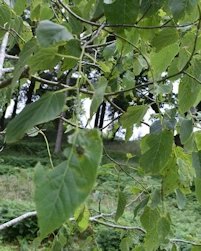
T. tuan is a tall, deciduous tree to 20m in height, with a slightly conical crown, and large dark or greyish-green, heart-shaped leaves, grey-hairy beneath, with up to 6 fragrant, long-stalked yellow flowers in compact clusters produced in summer. T. tuan var. chenmoui is a vigorous clone with angular leaves, the most widespread Chinese lime. Tuan is the Chinese name for the lime tree.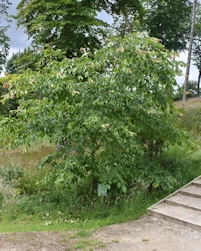

Ulmus davidiana var. japonica
Japanese elm
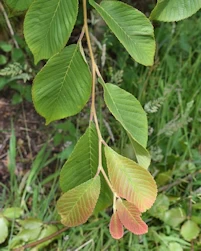
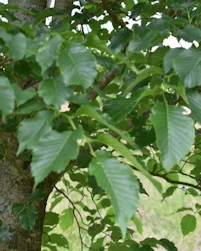
One of the larger and more graceful Asiatic elms, endemic to much of continental NE Asia and Japan, where it grows in swamp forest on young alluvial soils, although much of this habitat has now been lost to intensive rice cultivation. The size and shape is extremely variable, ranging from short and bearing a densely branched broad crown similar to the Wych elm to tall, single-stemmed, with narrow crown similar to the English elm. Young shoots often bear corky wings, similar to those of the European field elm U. minor, to which it is closely related. The perfect having both male and female parts , apetalous having no petals wind-pollinated flowers emerge in early spring, before the leaves. The samara a winged achene, a type of fruit in which a flattened wing of fibrous, papery tissue develops from the ovary wall. is obovate egg-shaped , occasionally hairy over its entire surface but more often glabrous free from hair or down; smooth . The species does not sucker from roots. [Wikipedia]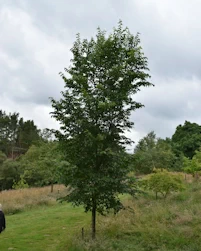
Ulmus dodoens
Dodoens' elm
A fast-growing elm, a Dutch hybrid cross between Exeter elm u. Exoniensis and Himalayan elm u. wallichianaha, growing to 18m, it has a narrow, upright habit when young, maturing into a broadly-oval tree. Young, smooth silvery bark develops fissures with age. It has some resistance to Dutch elm disease, but is not immune.

Viburnum plicatum kilimanjaro
Japanese snowball
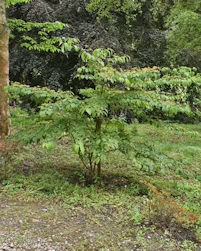
A compact, multi-stemmed, slow-growing deciduous shrub with heart-shaped dark-green, deeply veined leaves. White flushed pink lacecap flowers in profusion, cover the plant in spring and become flushed with an apple-blossom pink during summer. Flowers are followed by deep-red berries which become black. There is a rich autumn foliage colour of orange and red.