×
![woodturning]()

Trees Gallery - The Yorkshire Arboretum - page 2
Castle Howard, North Yorkshire
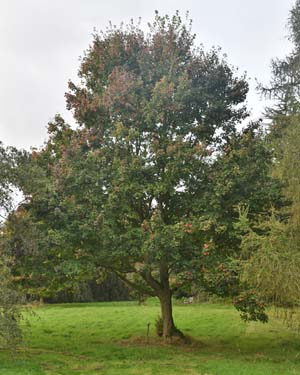 October 2023
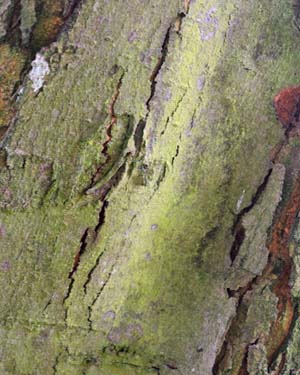 October 2023
 October 2023
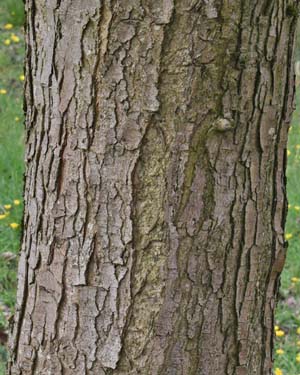 April 2024
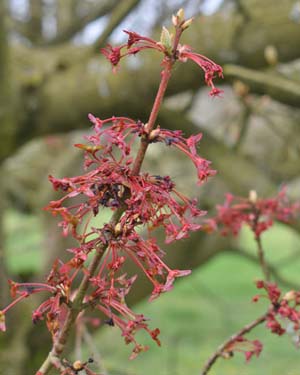 April 2024
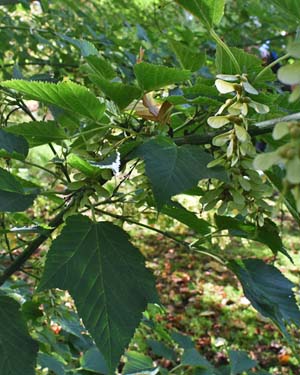
Acer rubrum 'October glory'
Scarlet Maple
Despite visiting in mid October, this tree had not yet turned to the magnificent reds and oranges for which it is known, possibly due to a wet and warm September. A medium sized tree, growing to 12m or more, the species is native to E and C North America, growing in large numbers.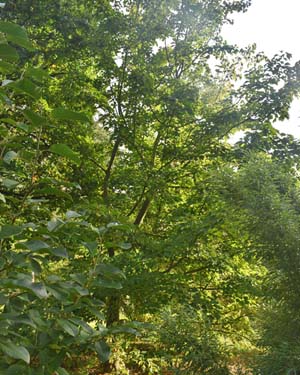 October 2023
 October 2023
 October 2023
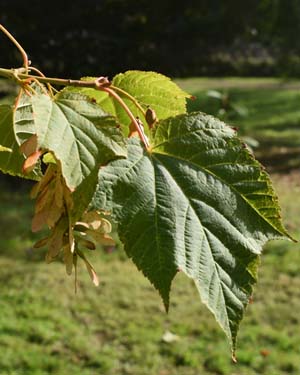
Acer rufinerve
Red vein Maple
A native of Japan, it was introduced to Britain in 1879. A small deciduous tree growing to 15m. Rufinerve, or red vein, refers to the rusty red deposits seen along the veins on the underside of the leaves.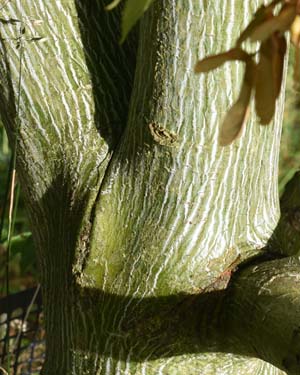 October 2023
 October 2023
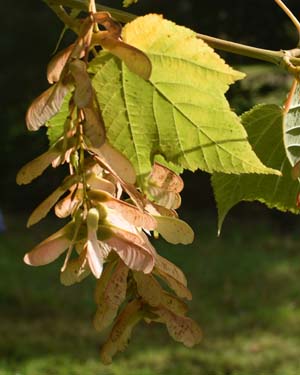 October 2023
Acer tegmentosum 'White tigress'
Manchurian striped maple
A native of E Russia, China and Korea, medium sized, growing to 15m. Another of the snake bark maple group at the arboretum. October 2022
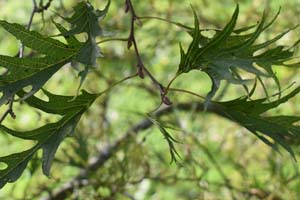 October 2022
Alnus glutinosa imperialis
Cut leaved alder
A cut-leaved variety of the common alder. As with all alders, it favours wet conditions, and is planted close to the lake at the Arboretum. Glutinosa refers to the sticky feel of young twigs and buds. It is slow growing, reaching medium height (10m) in time, and developing attractive drooping branches. It has insignificant female catkins, with male strobili reproductive structures characterized by overlapping scalelike parts, as a pine cone or the fruit of the hop reaching 7cm in September.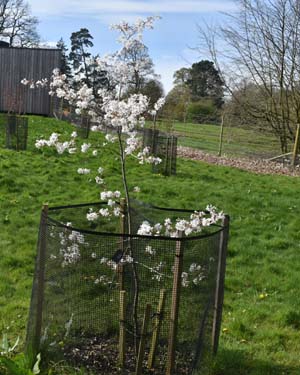 April 2024
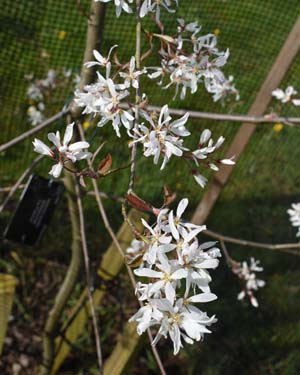 April 2024
Amelanchier
'La Paloma'
Serviceberry
'La Paloma' is a small tree or large shrub with red-bronze foliage and drooping sprays of white flowers in spring. The pure white, pendulous flower clusters look sensational against the almost luminous coppery-red young leaves in April. The foliage turns orange and red in autumn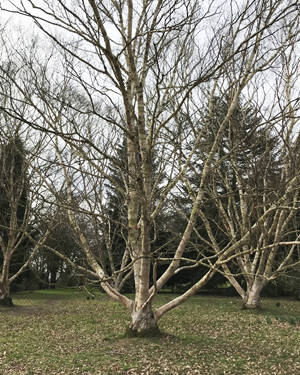 March 2022
Betula ermanii
Erman's birch
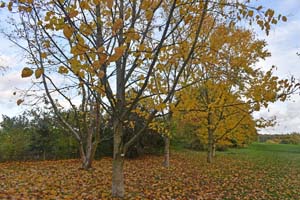
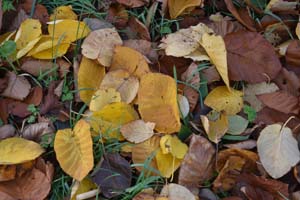
Strikingy white bark marks out this group of Erman's birch at the south of the arboretum. It tends to go pink as the trees age. "Erman" is probably Georg Adolf Erman (1806 – 1877), a German physicist, but it is difficult to find definite confirmation of this attribution. Native to NE China, Korea, Japan, and Far E Russia.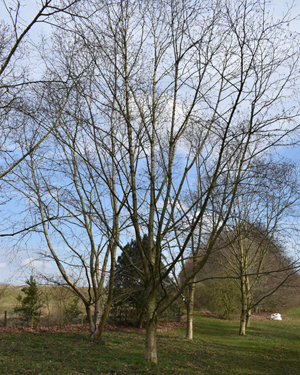 March 2022
 October 2022
 October 2022
Betula maximowicziana
Monarch birch
A species native to the Kuril Islands and N to C Japan. It is a valuable timber tree in Japan, and is also grown as an ornamental for its bark. It can grow to 25m, with a broad crown and pink-tinged, grey-white bark, orange-brown when young, and peeling in narrow strips, coppery on the branches. Dark green heart-shaped leaves to 15cm long turn yellow in autumn; yellow brown male catkins are produced in early spring [RHS]. This is the girth and height county champion for N Yorkshire [Tree Register]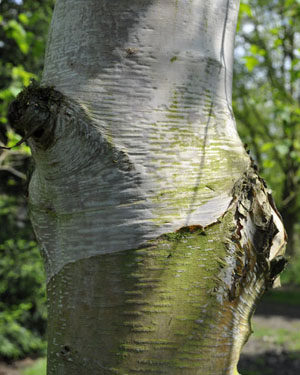 May 2018
Betula utilis
Himalayan birch
A stand of these stunning white paper bark trees is at the top of the arboretum, and can be quite spectacular in winter when the leaves around have fallen, leaving a stark contrast with the white of these trunks. Apparently the bark was used as writing paper, and still is for sacred texts.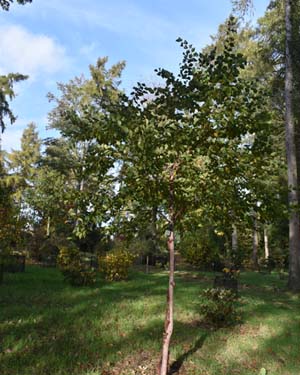 October 2022
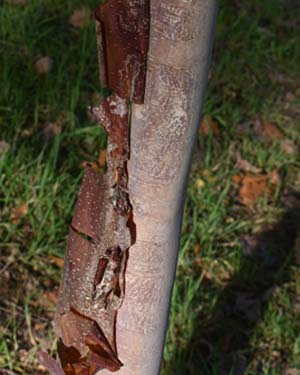 October 2022