×
![woodturning]()

Trees Gallery - The Yorkshire Arboretum -page 6
Castle Howard, North Yorkshire
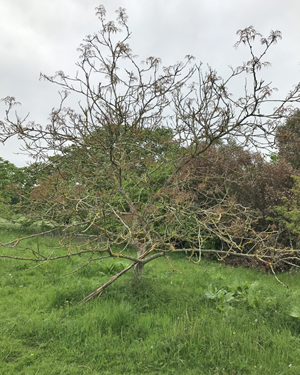 May 2022
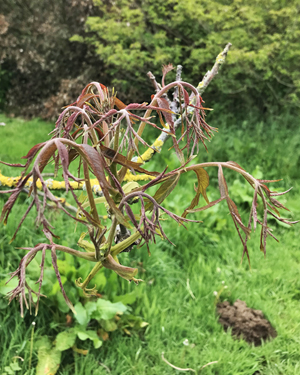 May 2022
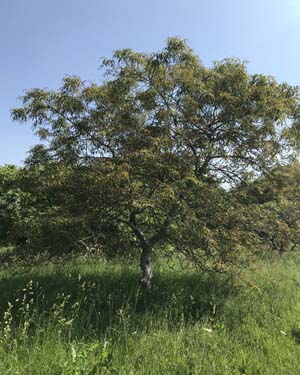 June 2023
Juglans regia laciniata
Cut leaved walnut
This sapling will grow into a medium-size to large tree with rather irregular, round crown, up to about 15m tall. The bark of the trunk and mature branches is light grey and deeply grooved. The blossom and fruits are typical of the species, but ‘Laciniata’ does not generally bear many fruits. The exact origin of this old cultivar is unknown. This is the Girth and Height County Champion for N Yorkshire [Tree Register 2020]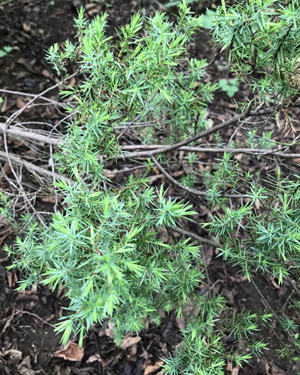 May 2022
Juniperus communis
Juniper
One of our three native conifers (the others being yew and Scots pine), though you don't see cones on it: juniper cones are more like berries, with three fleshy scales encasing the seed. This is different to the arils an exterior covering or appendage of some seeds (as of the yew) that develops after fertilization as an outgrowth from the ovule stalk on a yew tree, which is a single fleshy coating. Juniper berries are used for flavouring gin. The tree can grow to 6m tall; this one is prostrate, spreading horizontally rather than vertically.The needles grow in clusters of three around the stem, each with a broad white band on the inner surface. The tree is dioecious having male and female reproductive parts on separate plants .
 June 2023
 June 2023
 June 2023
Liriodendron chinense
Chinese tulip tree
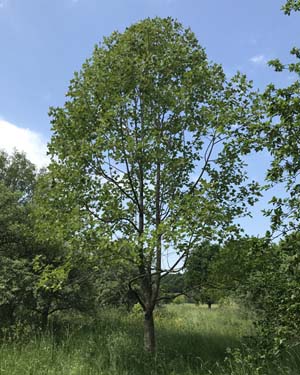
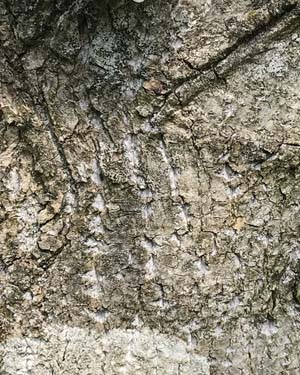
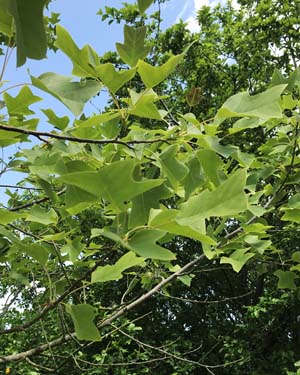
The Asian version of the tulip tree which grows in America. It can reach 40m, and is usually deicduous. Popular as an ornamental tree in Britain and other countries.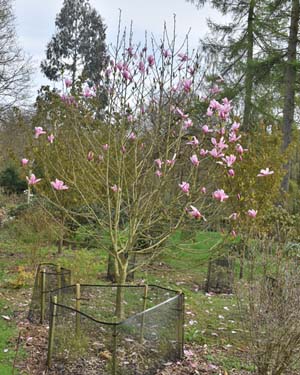 April 2024
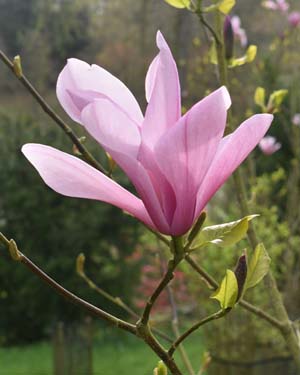 April 2024
Magnolia 'Galaxy'
A medium-size tree, initially with a regular, ovoid crown and a straight central leader. The crown later becomes almost round, with an eventual height of about 9m. The flower buds only develop in spring, so they cannot freeze in the winter. The large flowers open around late April. They retain a narrow tulip shape for a long time, but eventually open to a broad saucer shape. [Van den Berk]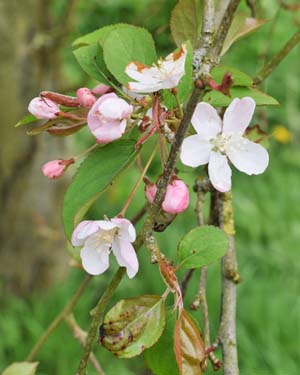 April 2024
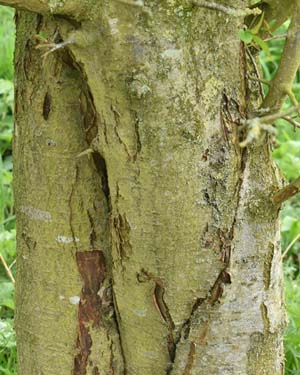 April 2024
Malus hupehensis
Hupeh crab apple
A native of Sichuan in China, a vigorous medium-sized deciduous tree with a broad crown of dark, ovate leaves. Buds are pink, opening to single white, fragrant flowers 3cm in width, followed by small, globose red fruits.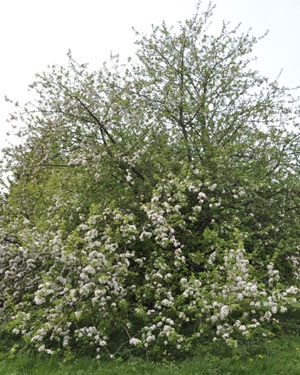 May 2018
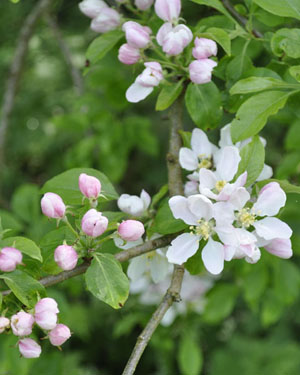 May 2018
Malus Kirghisorum
Khirgiz apple
An apple, or crab apple, native to Kazakhstan, here in full blossom near the dew pond at the Arboretum. The tag on this one (all trees in the arboretum have aluminium tags with species details, dates and catalogue numbers) says 1981.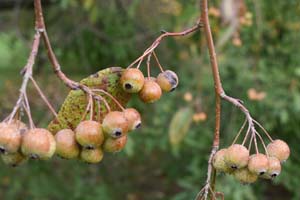 October 2022
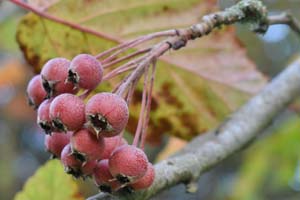 October 2022
Malus sp.
Crab apples
Crab apples berries. I don't know the species.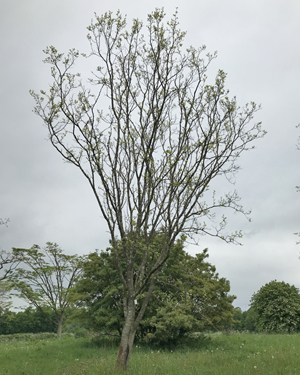 May 2022
 May 2022
 May 2022
Morus alba
White mulberry
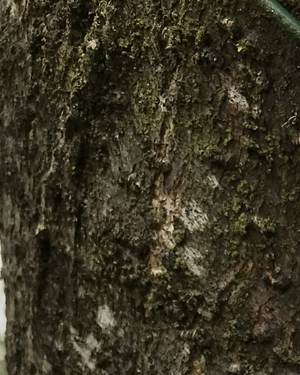
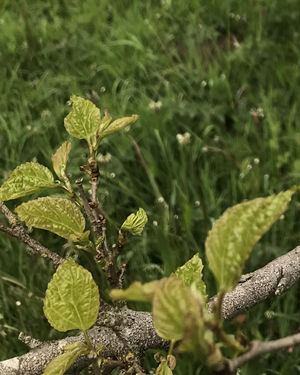
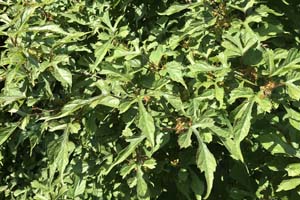
White mulberry is the tree cultivated for its leaves being the food for silkworms, and is a native of China and India. It is fastgrowing and can reach 20m in its relatively short life (less than 100 years normally). The fruits are white to pink in cultivation, deep purple in the wild. They are not as flavoursome as the black mulberry. The pollen explodes from the catkins with stamens acting as catapults, in one of the fastest movements in the living world.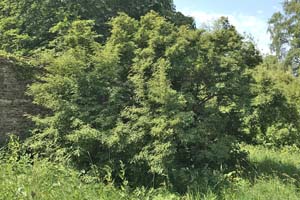 June 2023
 June 2023
Morus alba australis
Korean mulberry
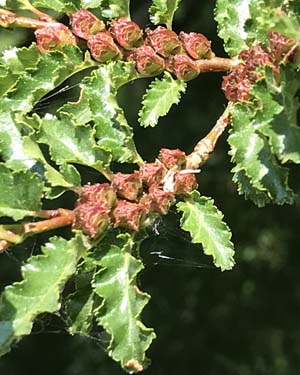
A mulberry native to E and SE Asia. Also known as Russian mulberry, Chinese mulberry or scyamine tree. Pale green catkins are produced in late spring and early summer, followed by edible, raspberry-like fruits that begin white and develop to reddish-pink or near-black. Silkworms are traditionally fed on the leaves of this tree. [RHS]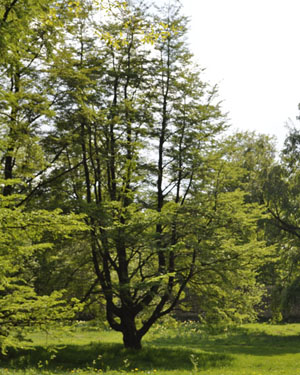 May 2018
 June 2023