×
![woodturning]()

Trees Gallery - Dalemain
Near Penrith, Lake District
 April 2022
Dalemain
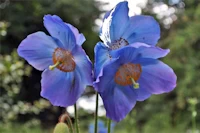
Dalemain is a historic house set in a large estate with extensive gardens, near Penrith. The Hasells have tended the award winning gardens for generations, with interesting plantings including meconopsis blue poppies, Tudor Knot Garden, old fashioned roses and sleeping giantess. There is a 200 year old tulip tree, old Spanish chestnuts and walnuts, and Greek silver fir, the Girth Champion for England according to the Tree Register.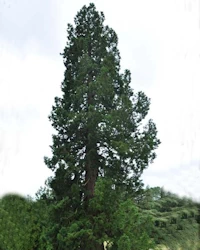 April 2016
 April 2022
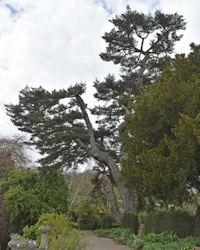
Abies cephalonica abies - Latin name for fir, possibly a coprruption of Greek 'á bios' meaning long-lived; cephalonica refers to the Greek island of Cephalonia (Kefalonia), where this species of fir is native.
Greek fir
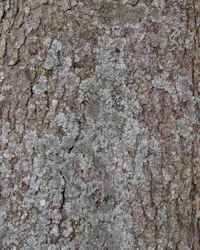
A.k.a. Cephalonian Fir, a medium-size evergreen coniferous tree growing to 25–35 m, native of the mountains of Greece. Needles are flattened, up to 3 cm long, thick, glossy dark green above, and with two blue-white bands of stomata below, with pointed tips. The cones are 10–20 cm long. This specimen is the Girth Champion Tree of all England on The Tree Register. It has an unually large side limb..
 April 2022
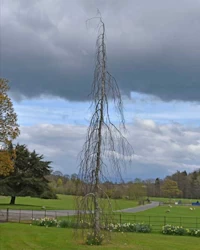
Betula pendula betula - birch, possibly from betu, meaning tar or bitumen, which can be extracted from the tree, pendula - hanging down (L.); Youngii - after English nurseryman Maurice Young who found a chance seedling in 1874 Youngii
Young's weeping birch
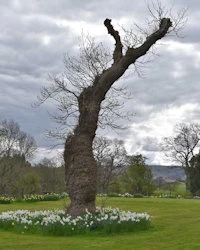
I am making a guess that this is b. pendula Youngii, based on an article by Dalemain's owner, Jane Hasell-McCosh where she mentions planting a weeping beech to commemorate the birth of her twins Beatrice and George in 1990. A few leaves would help in identification, but this was early spring and just the tall skeletal form was on show.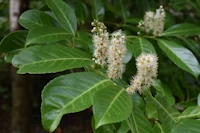 April 2022
Prunus laurocerasus prunus - Latin for plum or cherry; laurus - laurel; cerasus - cherry;
Cherry laurel refers to the similarity of foliage and appearance to bay laurel (Laurus nobilis, the true laurel)
A.k.a. common laurel, an evergreen shrub or small to medium tree, growing to 5 to 15 m, native to regions bordering the Black Sea in SW Asia and SE Europe. The fruit is a small cherry 1–2 cm broad, turning black when ripe in early autumn. It is considered an invasive species in Britain, where it forms dense thickets in woodlands and on hillsides.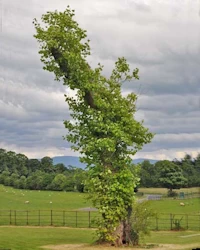 June 2016
 April 2022
 April 2022
Liriodendron tulipifera Leirion - Greek (λιριο) for lily>; Dendron - (δένδρο) tree; Tulipa - tulip flower; fera - bearing or producing
Tulip tree
. A.k.a. tulipwood, tuliptree, tulip poplar, whitewood, fiddletree, lynn-tree, hickory-poplar, and yellow-poplar; native to E North America. It can grow to more than 50 m, often with no limbs until it reaches 25–30 m, making it a very valuable timber tree. No longer called a hardwood, the term midwood was created expressly for the wood. The bark is brown, furrowed, aromatic and bitter. The wood is light yellow to brown, and the sapwood creamy white. Leaves are alternate, simple, pinnately veined, with four lobes. In autumn they turn a clear, bright yellow. The flowers are pale green or yellow (rarely white), with an orange band on the tepals; they yield large quantities of nectar.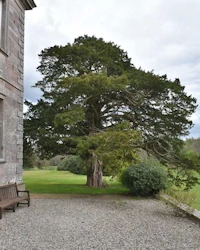 April 2022
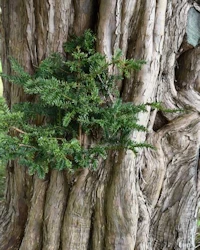 April 2022