×
![woodturning]()

Trees gallery - Hutton in the Forest - page 3
Near Penrith, Cumbria
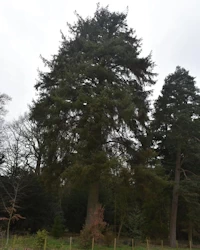
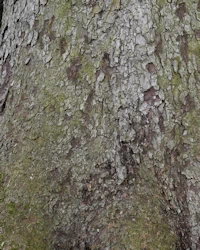

Picea sitchensis
Sitka spruce
Native to Sitka in SE Alaska, and W coast of Canada and USA. It can exceed 90 m in height. Its name is derived from the community of Sitka in southeast Alaska, where it is prevalent. It accounts for around half of UK commercial plantations. Cones have crinkled and toothed margins; needles are flattened when viewed in a cross section, and have a woody peg at the base of every needle.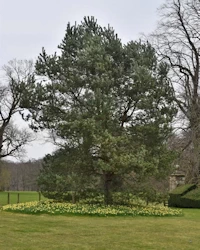
Pinus sylvestris
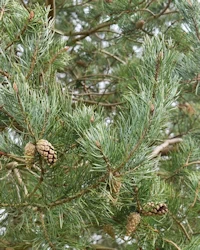
Scots pine
Native to northern Europe. Mature trees grow to 35m and can live for up to 700 years. The bark is a scaly orange-brown, which develops plates and fissures with age.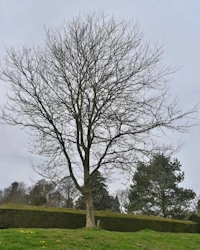
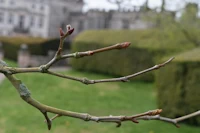
Platanus x hispanica
London Plane
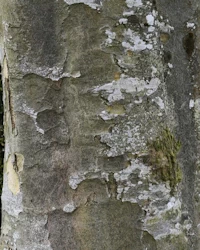
A hybrid of American sycamore and Oriental plane, it was first discovered in the 17th century then widely planted in the 18th. It can grow to 35 m and live for several hundred years. The bark is olive green to grey, with large scaly plates that peel off to reveal a creamy bark beneath. Young twigs are green-brown.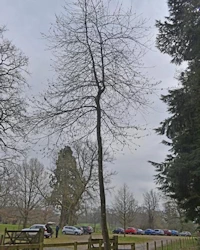
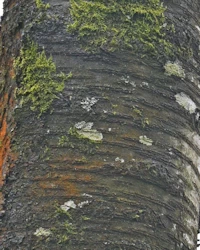
Prunus avium
Wild cherry
A.k.a. gean. Wide native range across Europe. Growing 15–32 metres tall, with a trunk up to 1.5 m in diameter. Young trees show strong apical dominancethe main, central stem of the plant is dominant over other side stems; with a straight trunk and symmetrical conical crown.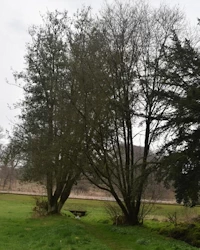

Prunus padus
Bird cherry
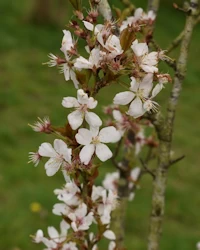
A small tree or large shrub native to Britain. It has bitter black cherries, only eaten by birds - hence the name. It bears masses of long tails of white blossom in early spring, though sadly we were too early for this one to be in flower. This tree was layering itself to create another bush. Positioned on the right of the wildflower meadow, near the lake.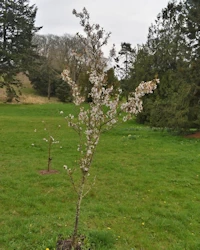
Prunus shirofugen
Japanese cherry
Medium-sized tree with large double flowers, pink in bud, opening to pure white - hence the Japanese name meaning "White God". Possibly the largest of all the Japanese Cherries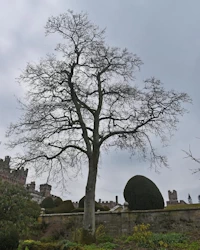
Quercus cerris
Turkey oak
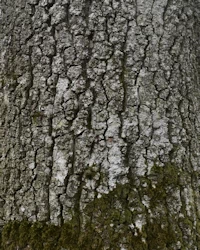
Native to SE Europe and Asia Minor. It can grow to 30m. Introduced to the UK as an ornamental in the 18th century, but is now impacting our native oak populations - it is much faster growing.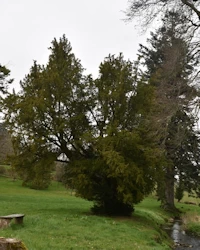
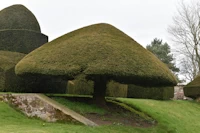
Taxus baccata
Yew
Yew is present at Hutton both as natural growth forms (Irish and Common) and as topiary specimens. The topiary is old and long established - look at the width of the trunk on this specimen. It is native to Britain and much of Europe, NW Africa and SW Asia. All parts are posionous.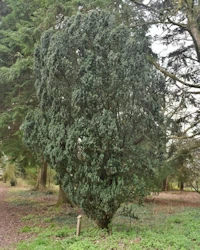
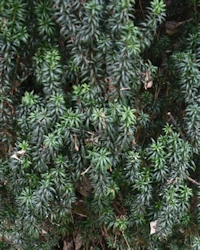
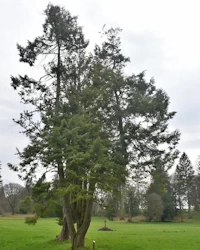
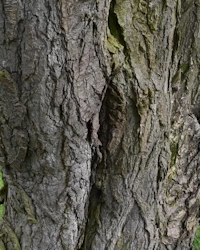
Taxus baccata fastigiata
Irish yew
All Irish yews are descended from cuttings of one tree found in County Fermanagh in the 1700s. It has been commonly planted in churchyards.
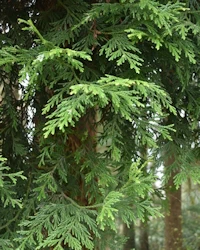
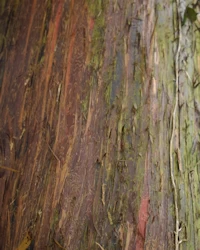
Thujopsis dolobrata
Hiba
Hiba is a medium to large evergreen coniferous tree, reaching heights of up to 40 m with a 1.5 m trunk diameter, with red-brown bark which peels in vertical strips. It is native to Japan. It is in the cypress family; very similar to thuja.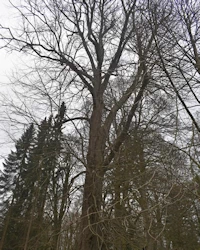
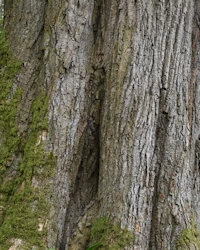
Tilia platyphyllos
Large leaved lime
Large-leaved lime is the rarest of our native limes and is only subtly different from small-leaved lime. The bark is darker than that of small-leaved lime, and smooth, developing flaky plates with age.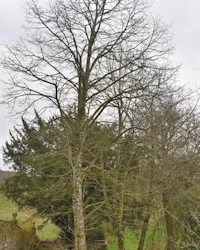
Tilia tomentosa
Silver lime
Native to SE Europe and SW Asia. A large, deciduous tree growing to 20–35 m tall, with a trunk up to 2 m in diameter, of variable habit but usually broadly pyramidal. Erect branches are often pendent at their tips with white-felted shoots. Rounded leaves 5-13 cm long are sharply-toothed, dark green above and covered in a silvery-white felt beneath, turning yellow in the autumn. Fragrant, small, creamy-white flowers are borne in late summer.