×
![woodturning]()

Trees gallery - Hutton in the Forest - page 2
Near Penrith, Cumbria
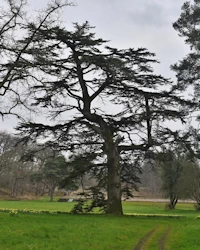
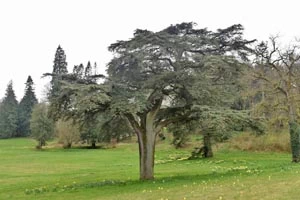
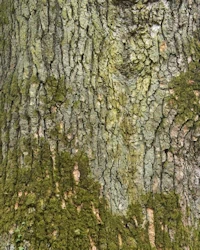
Cedrus libani
Cedar of Lebanon
Cedar of Lebanon is one of three true cedars commonly found in parkland in Britain, the others being Atlas and Deodar. The Cedar of Lebanon has flat points to the tips of its branches. All three have the classic large barrel-shaped cones. Native to Lebanon, Syria and SE Turkey, it was introduced to Britain in the 17th century.
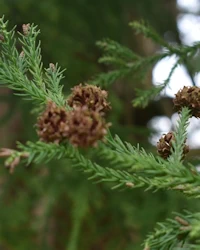
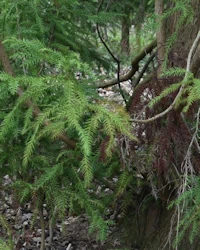
Cryptomeria japonica
Japanese red cedar
Japanese red cedar can grow to 70 metres. Native to Japan, where it is known as Sugi. It is widely cultivated as an ornamental tree in Britain and elsewhere.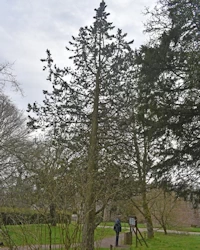
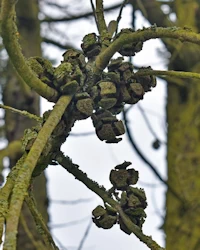
Cupressus arizonica
Arizona cypress
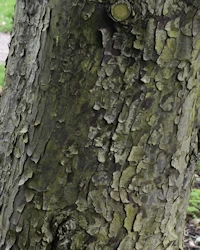
This is a North American species native to the southwestern United States and Mexico. It grows 10 - 25m in height. The globous cones can remain closed for years, only opening after the bearing branch dies.

Juglans regia
Common walnut
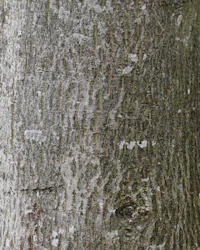
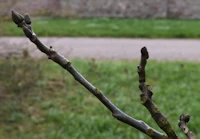
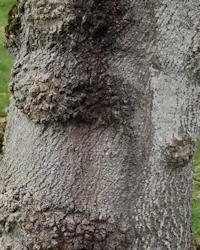
Native range is from the Balkans to SW China. It can grow to 35m. Typically it has a short trunk and broad crown, though can be narrower if grown in a woodland situation. The bark is smooth and olive-brown when young, developing fissures and fading to silver-grey with age. Twigs are stout, green and curving.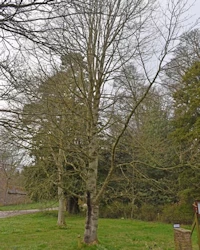
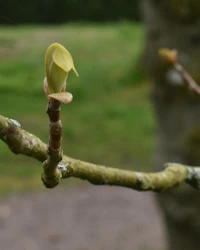
Liriodendron tulipifera
Tulip tree
Native to N America. The name reflects their large flowers superficially resembling tulips. A.k.a. tulip poplar or yellow poplar, and the wood simply as "poplar", although not closely related to the true poplars. Other common names include canoewood, saddle-leaf tree, and white wood. A large tree, 18–60 m high and 60–120 cm in diameter. Leaves are distinctive, having four lobes in most cases and a cross-cut notched or straight apex. Leaf size varies from 8–22 cm long and 6–25 cm wide.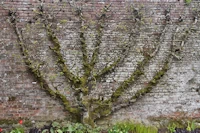
Malus domestica
Apple - Beauty of Bath
Beauty of bath is an old-fashioned English apple, probably from the Victorian era. A dessert apple, it fruits as early as late July. This one has been trained in the walled garden over many years.

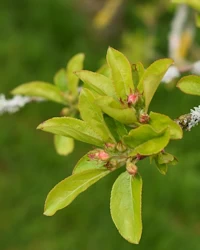
Malus Red Sentinel
Crab apple
Green leaves emerge bronze coloured and have red-tinted stems. Flowers grow 4 to 8 together and are single. In bud the flowers are pink but they turn white when open. Bright red fruits later in the season.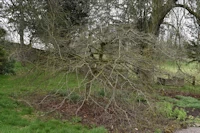
Parrotia persica
Persian ironwood
Closely related to the witch-hazel, Hamamelis. It is native to Iran's Caspian region. It was named by Carl Anton von Meyer to honor his predecessor at the University of Dorpat, German naturalist Georg Friedrich Parrot.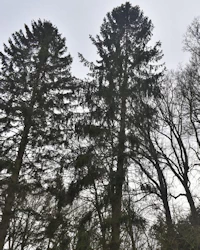
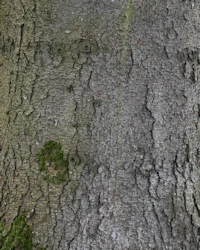
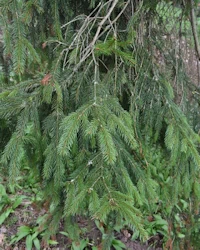
Picea abies
Norway spruce
Native to N, C and E Europe. Branchlets typically hang downwards, and it has the largest cones of any spruce, 9–17 cm long. Used as the main Christmas tree in several countries around the world. It is large, fast-growing to 35 – 55 m tall and with a trunk diameter of 1 - 1.5 m. Named picea abies because it is like a fir (abies)