×
![woodturning]()

Trees Gallery - Guernsey
Candie Gardens
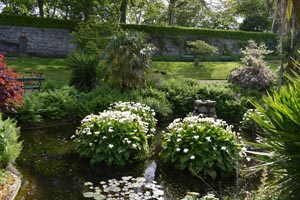
These historic gardens were established in 1894 in the grounds of Candie House and offer excellent panoramic views over the rooftops of St. Peter Port to the neighbouring islands. The Lower Gardens were sympathetically refurbished and restored in 1998-99 and are a rare surviving example of a Victorian Public Flower Garden. Visitors to the gardens can discover a wide variety of plants from all over the world.
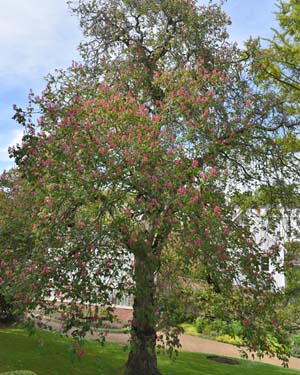
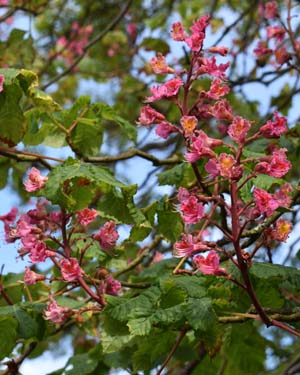
Aesculus x carnea
Red horse chestnut
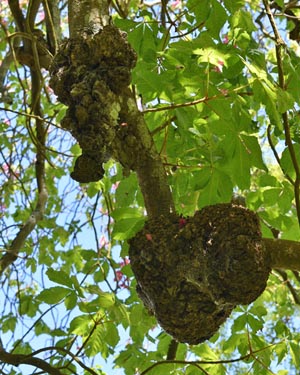
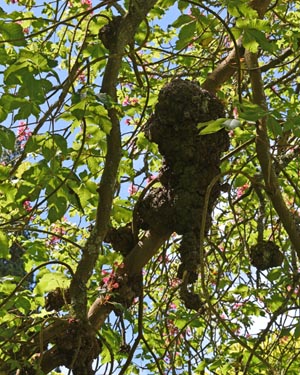
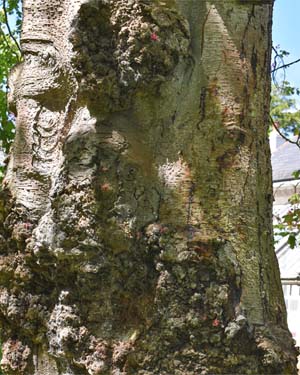
There is a red horse chestnut in the lower Candie gardens, between a yew and a maidenhair tree. It has a number of curious burrs high up on branches, curious because usually these would appear on the trunk rather than a branch. The tree seemed healthy, so it would be interesting to know why these have appeared. Injury or disease perhaps?A. carnea is a medium-sized artificial hybrid between A. pavia (red buckeye) and A. hippocastanum (horse-chestnut). It inherits the red flower colour from A. pavia.

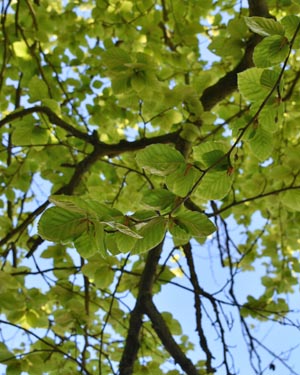

Carpinus betulus ?
Hornbeam
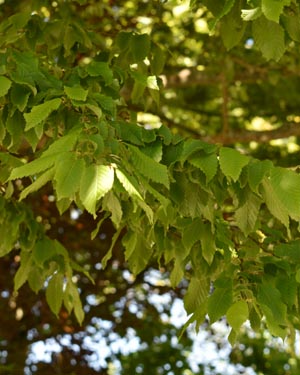
I am fairly certain this is a hornbeam, growing near the museum in Candie gardens. A deciduous small to medium-size tree reaching heights of 15–25 m, rarely 30 m (98 ft), and often has a fluted and crooked trunk. It is monoecious male and female reproductive parts are on the same plant , and the wind-pollinated male and female catkins appear in early summer after the leaves. We visited too early in the season for the distinctive three-pointed leafy involucres one or more whorls of bracts situated below and close to a flower, flower cluster, or fruit. to have formed.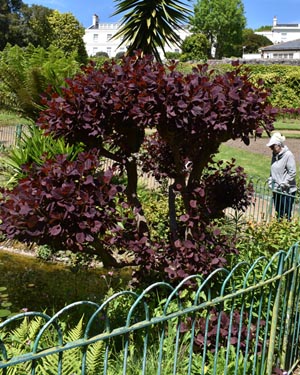
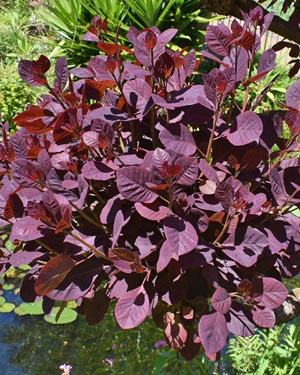
Cotinus coggygria (Royal Purple?)
Smoke bush
A multi-stemmed deciduous shrub growing to 7m with an open, spreading, irregular habit, only rarely forming a small tree. The flowers are numerous, produced in large inflorescences, with five pale pink petals. Most of the flowers in each inflorescence abort, elongating into yellowish-pink to pinkish-purple feathery plumes (when viewed en masse these have a wispy 'smoke-like' appearance, hence the common name "smoke tree") which surround the small drupaceous a drupe is a fleshy fruit with thin skin and a central stone containing the seed fruit that develop.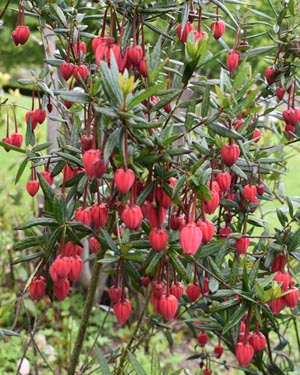
Crinodendron hookerianum
Lantern tree
A native of Chile, crinodendron is a shrub or small tree with ash-grey bark reaching up to 8m and having a trunk up to 30 cm in diameter. Leaves are alternate, lanceolate with toothed edges and acute apex, petiolate, dark green above and hairy whitish green below. Flowers are hermaphrodite, solitary and axillary, pinkish to red. The corolla is campanulate, composed of 5 free petals terminating in 3 teeth, with 15 to 18 stamens, the style longer than the stamen. Fruit is a white, pubescent, leathery capsule with 3 to 5 valves. Seeds are ovoid and glossy. [Wikipedia]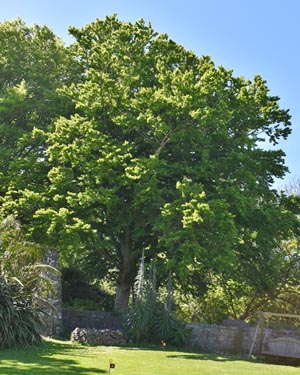
Fagus sylvatica
Common beech
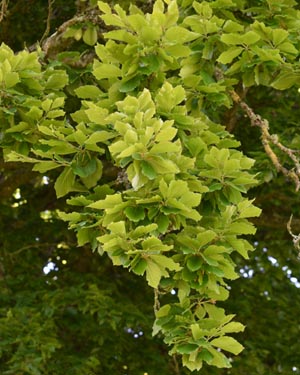
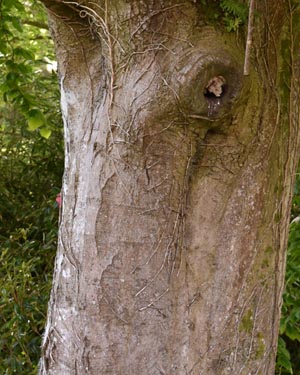
A.k.a. European beech, a large deciduous, monoecious male and female reproductive parts are on the same plant tree growing to a height of more than 40m, developing a huge domed crown. The reddish brown, torpedo-shaped leaf buds form on short stalks and have a distinctive criss-cross pattern. Tassel-like white male catkins and paired female flowers surrounded by a cup which becomes a beech nut, encasing one or two seeds known as beech mast.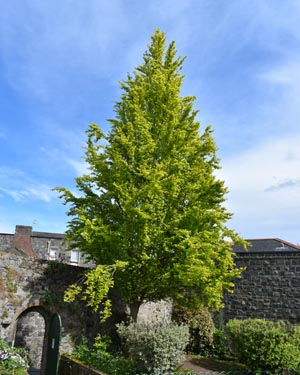
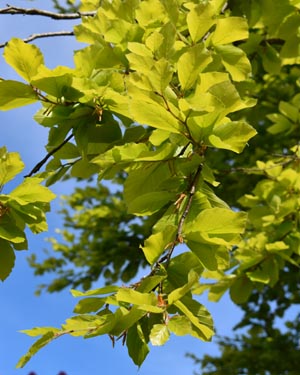
Fagus sylvatica (Dawyck Gold?)
Golden fastigiate beech
A.k.a. Golden upright beech, golden columnar beech. This upright form of the common beech was selected at Dawyck Botanic Gardens in Scotland for its stunning yellow to lime green foliage.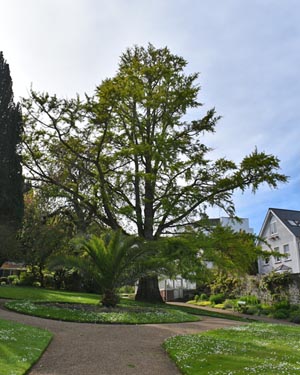
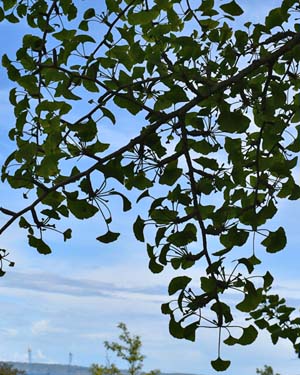
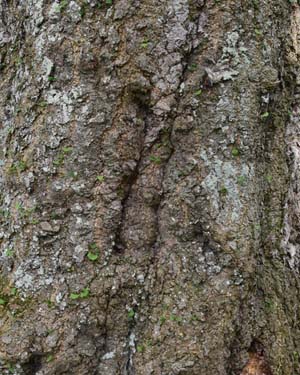
Ginkgo biloba
Maidenhair tree
A large tree, the Tree Register has this as the Girth Champion of the Channel Islands, and height champion of Guernsey. This specimen is a female tree, unusual in cultivation in Britain where most are male, as the female produces an unpleasant rancid smelling fruit.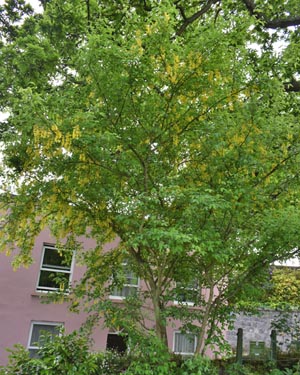
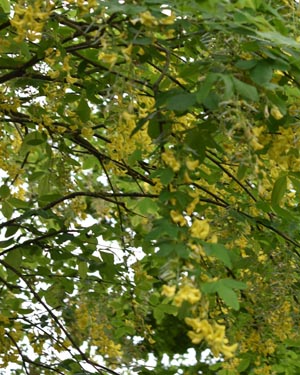
Laburnum (anagyroides?)
Common laburnum
A.k.a. golden chain or golden rain, a small deciduous tree native to the mountains of S Europe from France to the Balkans. All parts of the plant are poisonous, with the main toxin in the plant cytisine a nicotinic receptor agonist. The flowers were just going over on this specimen in late May.