×
![woodturning]()

Trees Gallery - La Seigneurie, Sark (page 2)
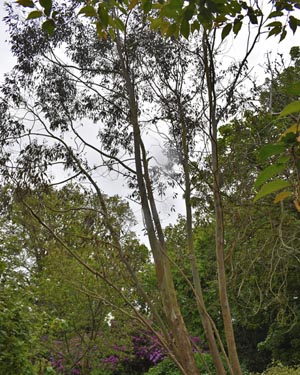
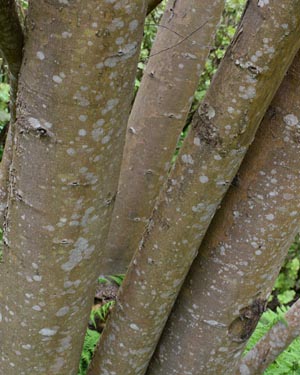
Eucalyptus spp.
Eucalyptus
I am uncertain of the species of this eucalyptus tree growing at the side of the formal garden - there are more than 700 species in the genus. Most are of Australian origin. This one looks like one that retains its dead bark rather than shedding it in flakes and ribbons.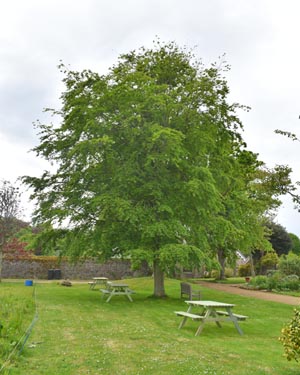
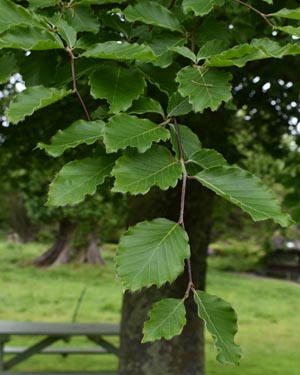
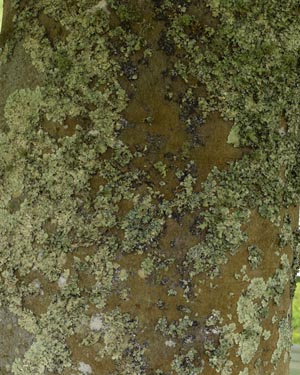
Fagus sylvatica
Beech
Mature trees grow to a height of more than 40m and develop a huge domed crown. Beech is monoecious both male and female flowers grow on the same tree . In April and May the tassel-like male catkins hang from long stalks at the end of twigs, while female flowers grow in pairs, surrounded by a cup. The reddish brown, torpedo-shaped leaf buds form on short stalks and have a distinctive criss-cross pattern. [Woodland Trust]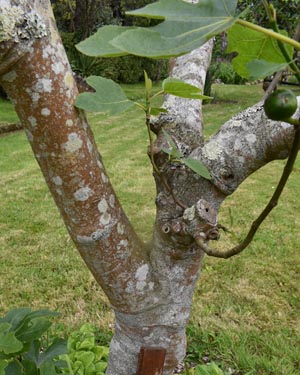
Ficus carica
Brown Turkey
Fig
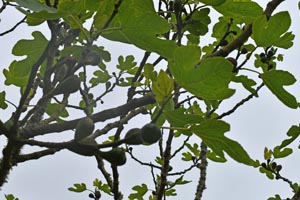
A multi-stemmed, woody, deciduous shrub with edible fruit, part of the mulberry family. This cultivar was bred to improve cold hardiness. It can grow to 10m. Native to the Mediterranean region, together with W and S Asia. Its fruit is a syconium a fruit that has developed from more than one flower, in which the flowers were tightly clustered, and matured into a tight cluster of individual fruits , tear-shaped with a green skin that may ripen toward purple or brown, and sweet soft reddish flesh containing numerous crunchy seeds. The milky sap of the green parts is an irritant to human skin.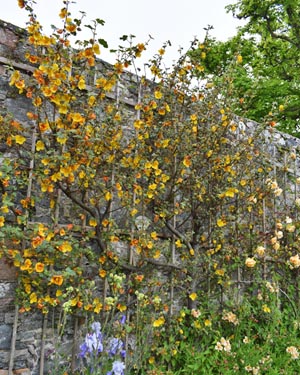
Fremontodendron Californicum
California flannelbush
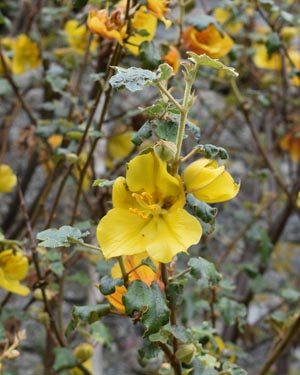
A.k.a. California fremontia, and flannel bush, a flowering evergreen shrub native to NW North America, growing to 5m. Leaves are olive to gray−green, fuzzy and flannel-like, palmately to pinnately lobed. The hairs covering the leaves are easily brushed off in human contact, and can be a skin and eye irritant. The bottom sides of the leaves are distinct with a velvety brown coating.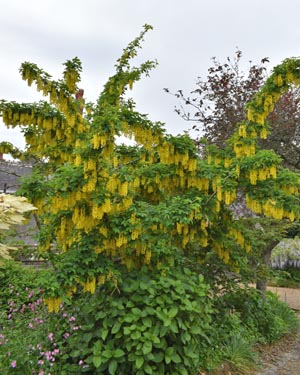
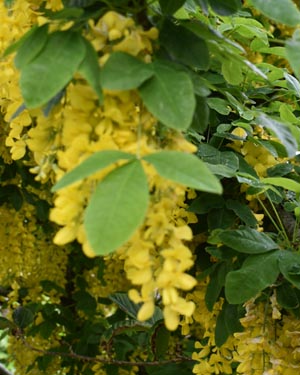

Laburnum (l. x watereri Vossii?)
Golden rain
A.k.a. golden chain tree, and false ebony (old laburnum timber is very dark), a small tree or large shrub growing up to 7m. The seeds are legumes with large numbers of black seeds that contain cytisine, an alkaloid somewhat poisonous to humans as well as goats and horses, especially when not ripe. However, some wild animals such as hares and deer can feed on them without any problems, and because of this the plant is believed to have magic properties in some regions. The most common ornamental variety, which this specimen probably is, is a hybrid between l. anagyroides and l. alpinum — Laburnum × watereri.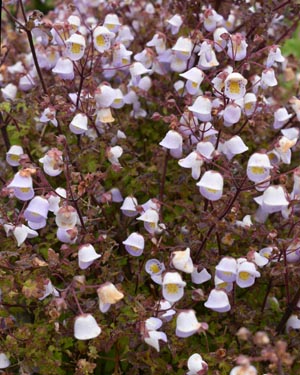
Jovellana Violacea
Violet teacup flower
A.k.a. calceolaria violacea, and violet slipper flower, growing up to 2m. Native to Chile and New Zealand. An upright, semi-evergreen, suckering, sub-shrub a dwarf shrub, especially one that is woody only at the base with oval, dark-green, coarsely toothed, lobed leaves carried on dark red stems. Sprays of nodding, bell-shaped flowers appear in summer - they are pale purple with a yellow throat marked with small, dark purple spots. [RHS]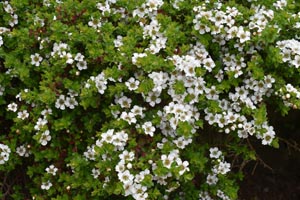
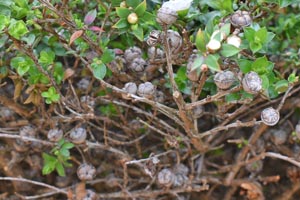
Leptospermm scoparium
Tea tree
A.k.a. mānuka, mānuka myrtle, broom tea-tree, or just tea tree, a native of New Zealand and SE Australia. A prolific evergreen shrub-type tree growing to 2–5m, but can grow into a moderately sized tree, up to 15m. The flowers are white, occasionally pink, with five petals. The wood is tough and hard. Its nectar produces Mānuka honey.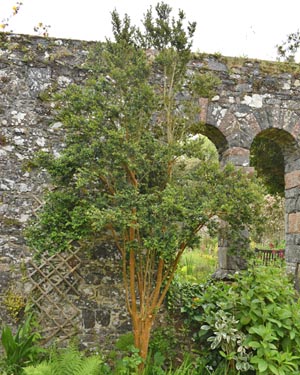
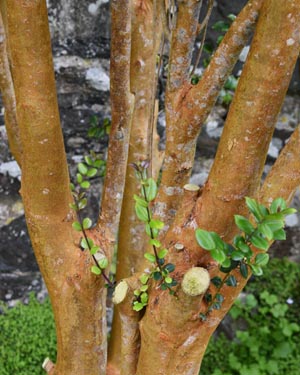
Luma apiculata
Chilean myrtle
A.k.a. arrayan or temu. A native of the Andes in Chile and Argentina, forming a small tree of around 10 to 15m. It is evergreen, with small, fragrant, oval leaves, with profuse white flowers in early to mid summer. Its fruit is an edible black or blue berry.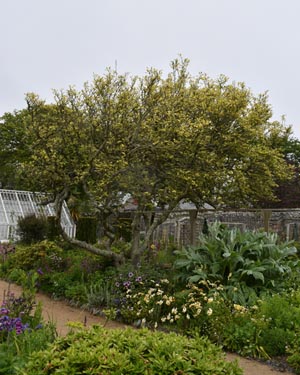
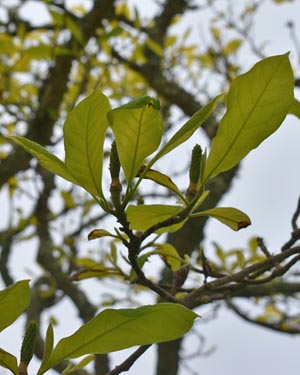
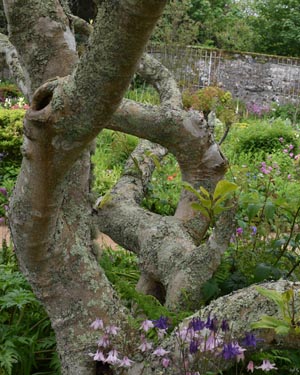
Magnolia sp.
Magnolia
These widely grown ornamental trees and shrubs flower spectacularly in spring or early summer, displaying their abundant blooms on bare branches for maximum impact. There are also evergreen types with large fragrant blooms in late summer. Magnolias produce large goblet-, bowl- or star-shaped blooms, mainly in shades of pink or white. On deciduous species these usually open on bare branches before the leaves appear, while on evergreen species they stand out well among the dark, glossy foliage. Magnolias can be shrubs or trees, of all sizes.