×
![woodturning]()

Trees Gallery - La Seigneurie, Sark (page 3)
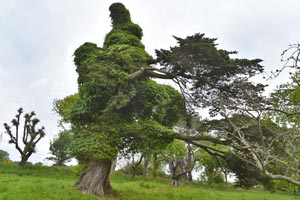
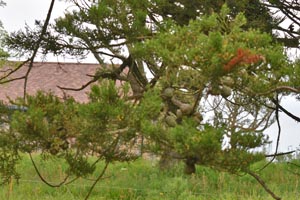
Pinus radiata
Monterey pine
A Monterey pine coated in ivy, with just a couple of the actual pine branches poking through the dense invader.
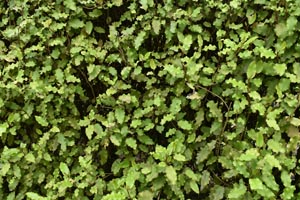
Pittosporum (tenuifolium?)
Kohuhu
A.k.a black matipo, and by other Māori names kohukohu and tawhiwhi, a small evergreen tree endemic to New Zealand – growing up to 10m. It has a slender trunk with a mottled dark grey bark that progressively turns black towards the tips of the branches. Flowers are filled with nectar and exude a honey scented fragrance in the evenings. These develop into small globe shaped fruits which harden and turn almost black, splitting into two or three segments when ripened. Inside are black seeds, encased in a very sticky substance.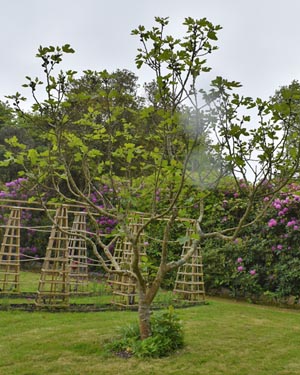
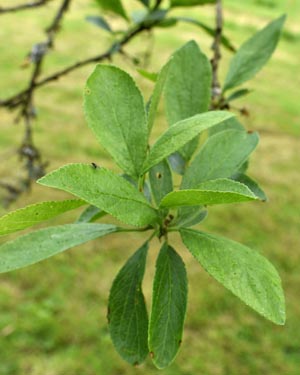
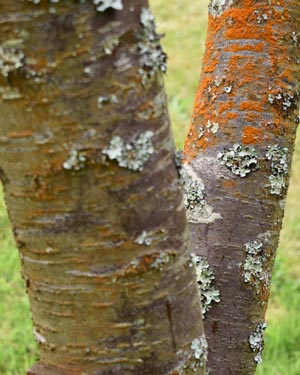
Prunus mirabelle de Nancy
Mirabelle plum
A small deciduous tree growing to 6m, bearing late season, heavy crops of classic, yellow, small sweet plums from September. Originally from Asia, but cultivated in France (Nancy) since the 15th century.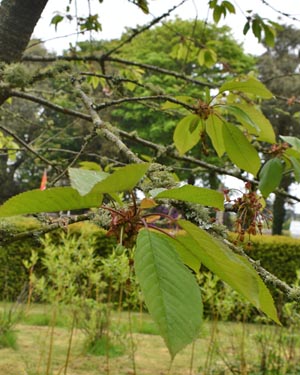
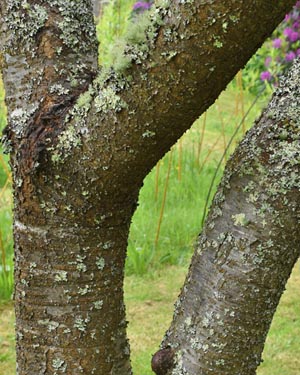
Prunus avium 'Stella'
Stella sweet cherry
A black cherry with large, rich, sweet fruits. It is a hybrid produced in British Columbia in the 1960s, with the intention of creating a high quality self-fertile tree. It will grow to 10m, blossoms and fruits early, with moderate to heavy crops. The species, known as wild cherry or gean, is native to Europe across to W Asia.
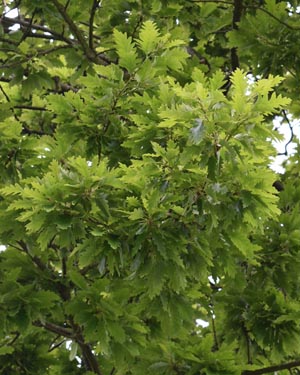
Quercus (cerris?)
Turkey oak
I couldn't get close to this oak growing on the margins of La Seignurie, but I think it is a Turkey oak. A deciduous broadleaf tree which can grow to 30m, introduced to the UK as an ornamental tree in the 18th century, now impacting our native oak for dominance as it is faster growing and naturalising across the country. The bark is dark grey, maturing with various plates and deep fissures. On older trees, the trunk fissures are often streaked with orange near the base.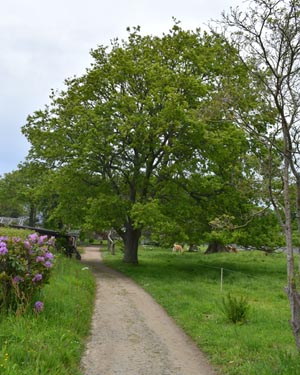
Quercus (frainetto?)
Hungarian oak?
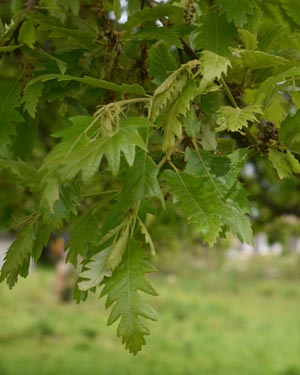
This could be a Hungarian oak, or perhaps another Turkey oak. The more I look at the photo of the leaves, the more I think probably the Turkey oak - Hungarian leaves are larger, wider at the tip narrowing towards the stalk. I have emailed La Seigneurie in the hope of any guidance.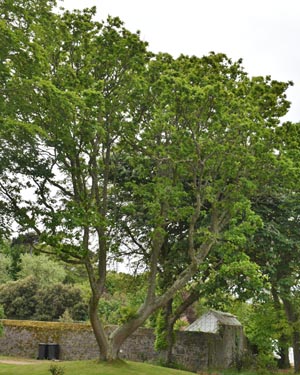
Quercus robur
English oak
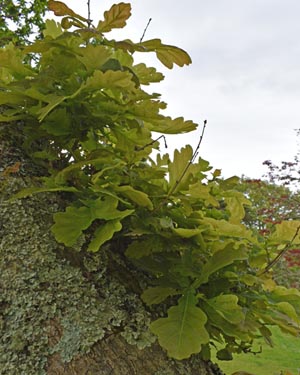
This oak has a cast iron plaque in frOnt of it: PRESENTED BY THE MEN OF THE TREES. BLENHEIM OAK. IN MEMORY OF WINSTON CHURCHILL. I am assuming this is grown from an acorn or sapling brought from Churchill's home at Blenheim Palace, where the ancient oaks are upwards of a thousand years old.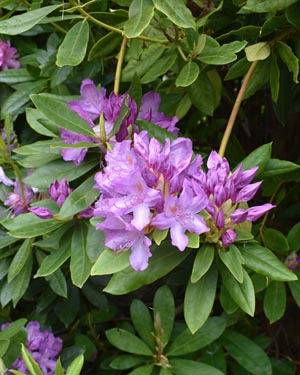
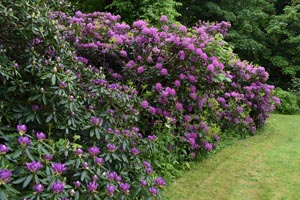
Rhododendron ponticum
Rhododendron
A native of SW Europe (the Iberian peninsula) and NW Asia (Caucasus). A dense, suckering shrub or small tree growing to 5m. An 18th century UK introduction, it easily naturalises and has become invasive in some situations, often covering whole hillsides (especially in Snowdonia and the western Scotland). In the British Isles, it colonises moorlands, uplands, shady woodlands (alongside escaped laurels and the native holly) and in areas of acid soils.
Robinia pseudoacacia
False acacia
A.k.a. black locust, a native of the USA, growing to 25m, with deeply furrowed rough bark and spines formed from stipules a small leaflike appendage to a leaf, typically borne in pairs at the base of the leaf stalk. on twigs and suckers. The dark green leaves comprise 5-11 pairs of oval leaflets. Dense, drooping clusters of slightly scented white flowers, each 15-20mm long and with a yellow blotch at the base of the standard petal, are borne in late spring and summer and are followed in autumn by hairless, linear to oblong pods containing 4-10 seeds. [RHS]
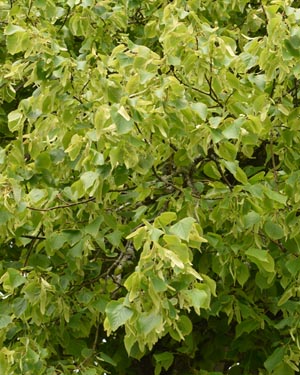
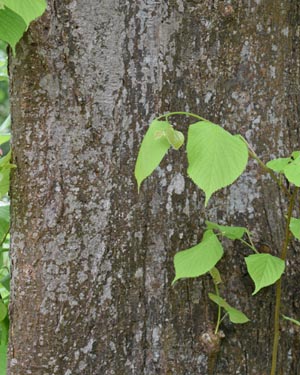
Tilia (x europaea?)
Lime
This is definitely a lime, but I have my usual uncertainty about what variety, so am opting for the hybrid common lime. A cross between small-leaved and large-leaved lime, common lime has characteristics of both species.