×
![woodturning]()

Trees Gallery - Guernsey
Candie Gardens - page 2
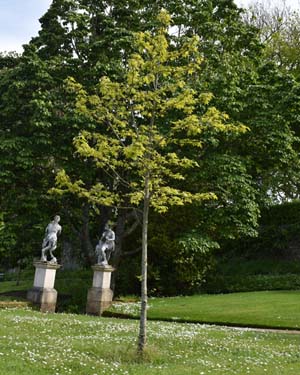

Liquidambar styraciflua
Sweet gum
A deciduous, monoecious male and female reproductive parts are on the same plant , shade tree native to S USA and Mexico, growing to 30m, pyramidal in youth, gradually developing an oval-rounded crown. Yellow-green flowers appear in spherical clusters in spring, with female flowers giving way to gum balls which are hard, spherical, bristly fruiting clusters up to 4cm in diameter. The gum has been used for chewing gum, incense, perfumes, folk medicines and flavourings. [Missouri Botanical]
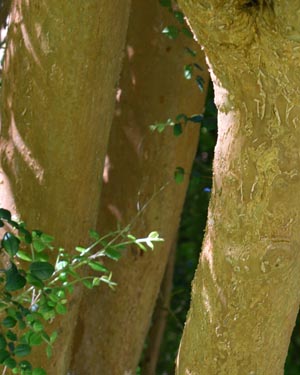
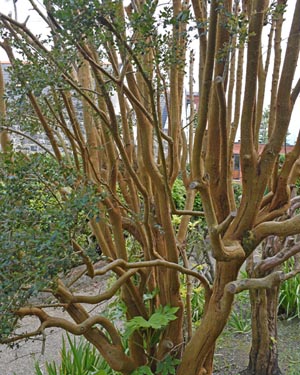
Luma apiculata
Chilean myrtle
An evergreen tree native to Chile and Argentina, growing to 10 - 15m, with decorative cinnamon peeling bark and white fragrant flowers, followed by red and black fruits which are edible and sweet. It is becoming naturalised in southern Britain, considered invasive in SW Ireland and Cornwall. Some specimens in Candie gardens have undergone severe pruning, down to a 3m high bush.
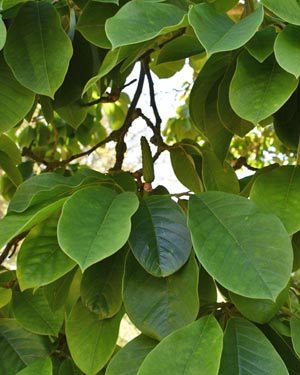
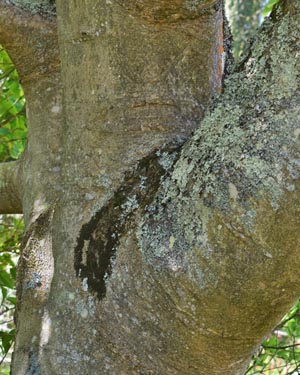
Magnolia (Campellii?)
Magnolia
I think this is the m. campellii listed in the Tree Register as height champion of Guernsey (at 14m, capable of 30m in the wild). Certainly a large magnolia. A native of the Himalayas, usually with pink flowers, though there are white varieties in the wild and in cultivation.

Podocarpus salignus
Willow-leaf podocarp
A native of Chile, where it is on the IUCN International Union for Conservation of Nature list as vulnerable, threatened by habitat loss. An evergreen conifer growing up to 20m and 1m diameter with a straight, cylindrical, reddish-grey trunk is. The arching branches bear long, narrow, willow-like leaves, and red fleshy oval fruits where male and female plants are grown together.
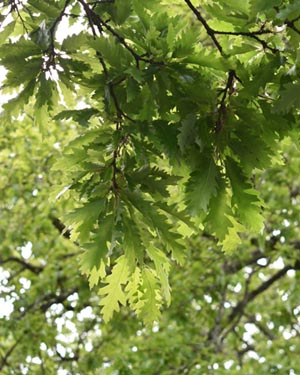
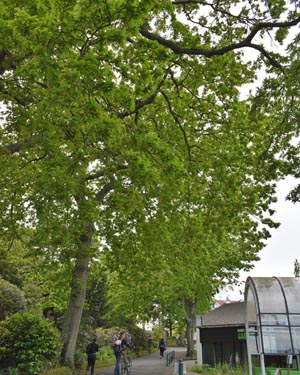
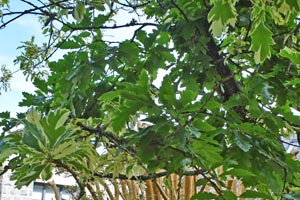
Quercus cerris
Turkey oak
The Turkey oak seems to be widely planted around the island, and there are a number of them in and around Candie Gardens. A couple have variegated foliage (q. cerris argenteovariegata), though they are reverting to type. It is used as a street tree probably due its more rapid growth compared to q. robur, and as a coastal windbreak. Its timber is of far less value compared to English oak, with a tendency to split and warp. It harbours a gall wasp that damages the acorns of native oaks.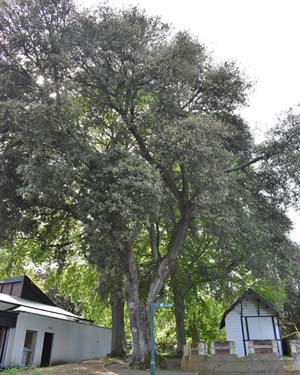
Quercus ilex
Holm oak
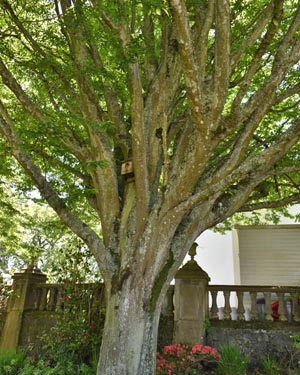
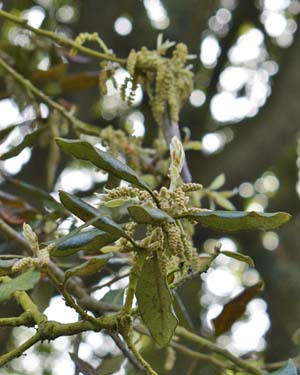
A.k.a. holly oak or evergreen oak. A large tree up to 28m, developing a huge head of densely leafy branches. Terminal portions of the branches are usually pendulous in old trees. The trunk can be over 6m in girth. The young shoots are clothed with a close gray felt. Acorns are produced one to three together on a short downy stalk, ripening in the first season, the cups with appressed Lying close and flat, pointing toward the apex of the plant or structure, usually referring to leaves growing up against the stem , downy scales. [Wikipedia]
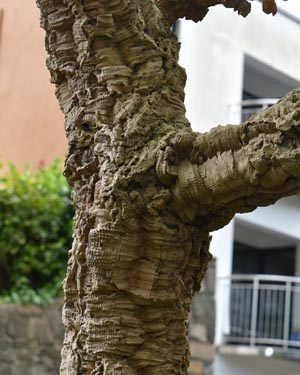

Quercus suber
Cork oak
A native of the W Mediterranean basin, Spain, Portugal and Italy, growing to 25m. Acorns appear in clusters of 2 to 8. Its bark is the source of cork, used for bottle stoppers, buoyancy aids, shoe linings, insulation, flooring, cricket balls and more. The cork can be repeaedly harvested from a tree starting around 25 years old, then every 9 years for around 150 years, with the third and subsequent harvest producing the best quality. It can hybridise in the wild, producing q. crenata when crossed with q. cerris. [Trees and Shrubs Online]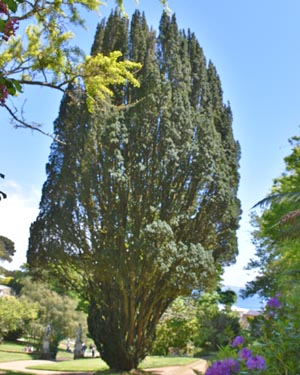
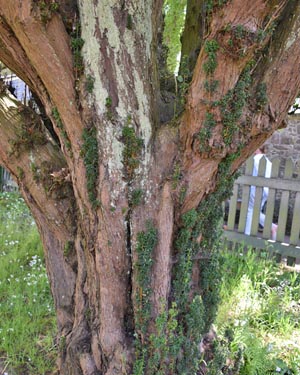
Taxus baccata
Yew
Small to medium-sized evergreen trees, growing to 20m with a trunk up to 2m in diameter. The poisonous leaves are flat, dark green needles arranged spirally on the stem, but aligned in two flat rows on either side of the stem. Instead of a cone the fruit is an aril an exterior covering or appendage of some seeds (as of the yew) that develops after fertilization as an outgrowth from the ovule stalk, a bright red berry-like case for the seeds. The seeds are poisonous and bitter, but the gelatinous aril is not.