×
![woodturning]()

Trees Gallery - Herm
Herm (page 2)
Herm is the smallest of the Bailiwick of Guernsey islands, and has the gentlest coastlines with long unspoilt beaches and bays. No cars and no crowds, a half hour ferry ride from Guernsey. The whole island is run by Herm estate: the estate manager, Lee Stewart, kindly helped me with a few identifications He told me that they have a lot of Australian and South African plants on the island.
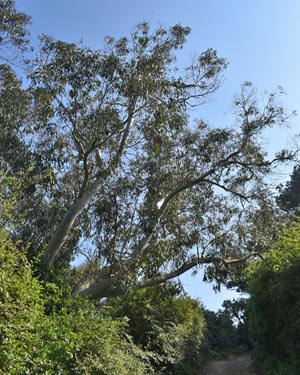
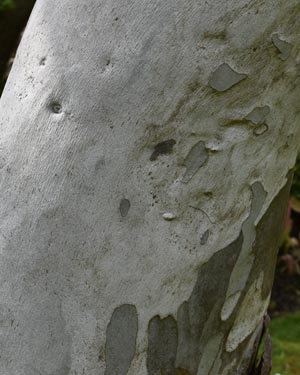
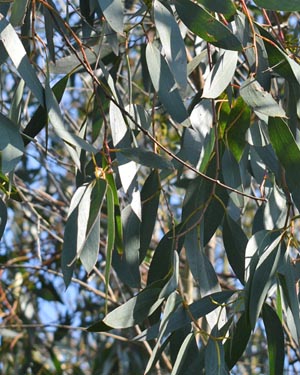
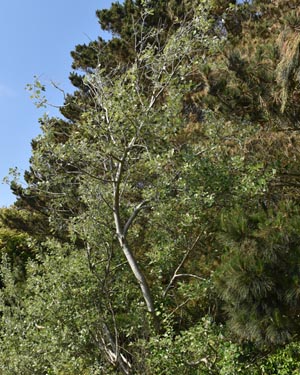
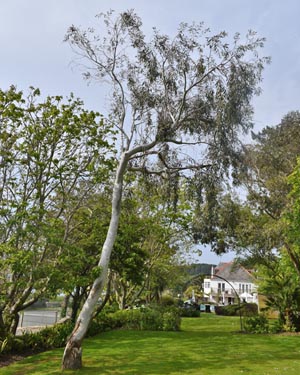
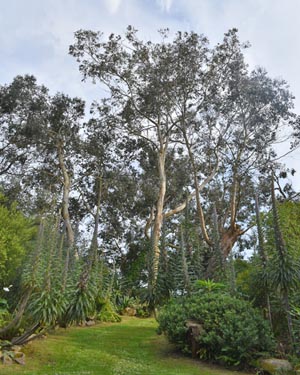
Eucalyptus (globulus?)
Blue gum
A tall, evergreen tree endemic to SE Australia, growing to 45m but may grow as tall as 100m. It can form a lignotuber a woody swelling of the root crown providing a protection against destruction of the plant stem, such as by fire . The fruit is a woody conical or hemispherical capsule, hence the globulus epithet.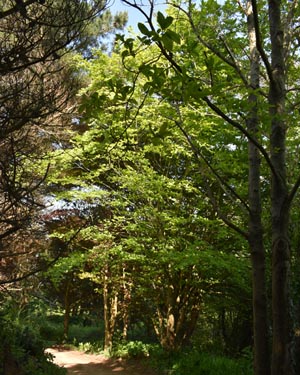
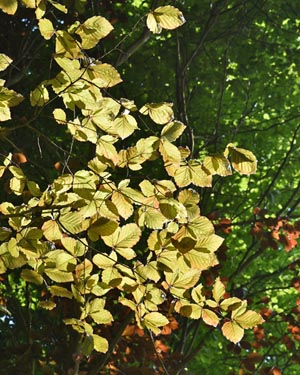
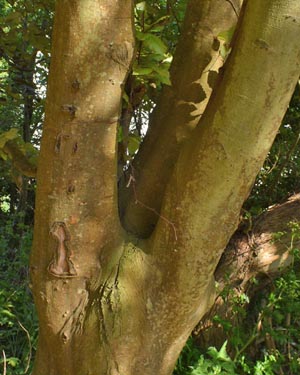
Fagus sylvatica
Beech
It would be surprising not to find beech trees almost anywhere in Britain, and there were plenty in the woods on Herm. This one had a trunk splitting into three a couple of metres off the ground, probably due to some injury or frost attack (do they have frost in Herm?) in earlier days.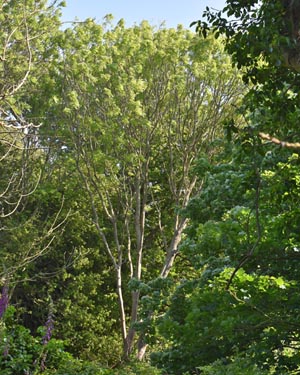

Fraxinus excelsior
Ash
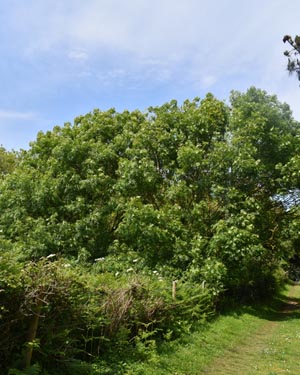
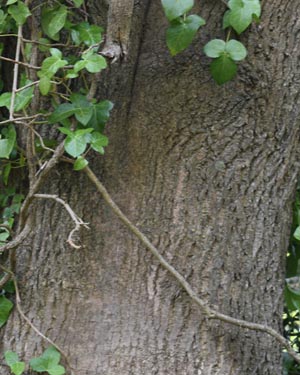
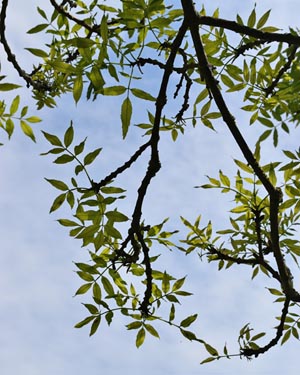
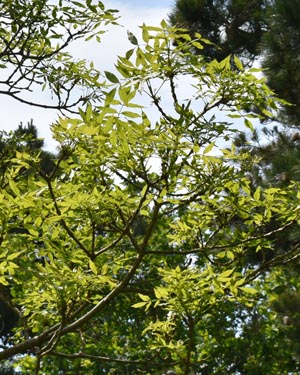
A relief to see healthy ash trees growing in the woodlands around Herm. I don't think we saw any dieback (chalera or Hymenoscyphus fraxineus) ), though no doubt it will be only a matter of time. The disease was noted on Guernsey in 2012 and is fairly widespread on the main island. Importation of ash trees and wood has been banned since 2012.
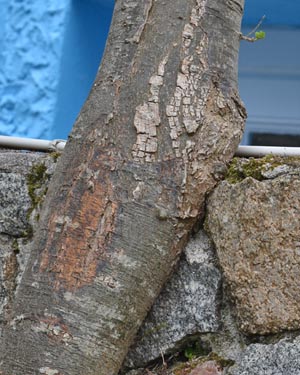
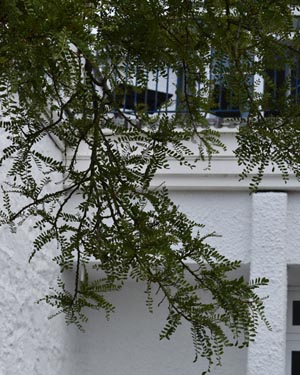
Gleditsia triacanthos
Honey locust
A large, elegant, deciduous tree to a height of 30m or more. The trunk and stems can be spiny - some of these spines are up to 15cm long - though cultivated varieties are often chosen to omit these. Small-green-white flowers are produced in summer and if it has been a long hot summer, long, twisted brown seed pods follow in autumn [RHS]
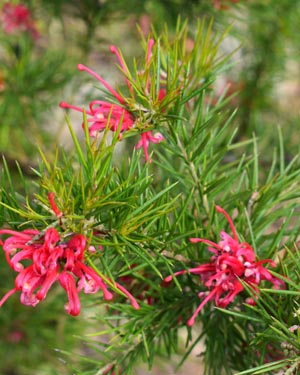
Grevillia rosemarinifolia
Coastal rosemary
A.k.a. rosemary grevillia, a native of Australia, it is usually an erect shrub growing to 2m, with linear, narrowly elliptical leaves with the edges rolled under, and loose clusters of pink to red flowers. The flowers are arranged on the ends of the branches, usually in groups of 4 to 12 on a glabrous rachis smooth stem bearing flowers at short intervals . Flowering usually occurs from August to December (though these photos were taken in May), and the fruit is a small, hairy, oblong follicle 8–11 mm long.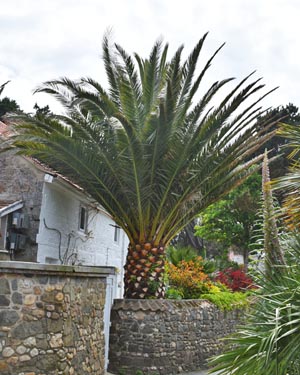
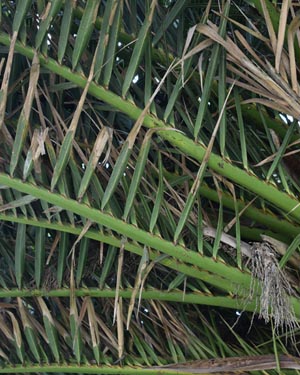
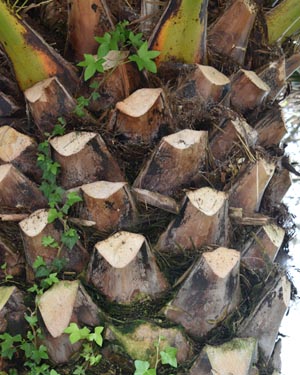

Phoenix canariensis
Canary Island Palm
A.k.a. the Canary Island date palm or pineapple palm, native to the Canary Islands off the coast of N W Africa, growing to 10–20m, occasionally to 40m. The fruit is an oval, yellow to orange drupe containing a single large seed; the fruit pulp is edible, but not the best of dates. Regularly used for landscaping in subtropical and Mediterranean regions, whee winter temperatures remain above -8C. It is a surivor, even considered invasive in some areas such as Bermuda and S USA.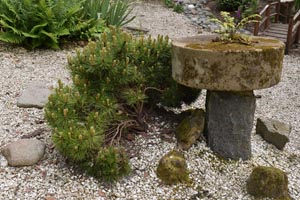
Pinus mugo
Dwarf mountain pine
A.k.a. scrub mountain pine, Swiss mountain pine, bog pine, creeping pine, or mugo pine. Native to high elevation habitats from C and S Europe, where it spreads as a low growing shrub. It has become invasive in some areas where it has been planted across the world, such as New Zealand an Scandinavia. Though dwarf, it can reach 4m in 50 years.